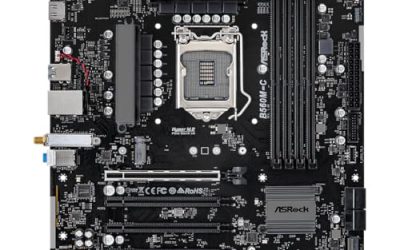
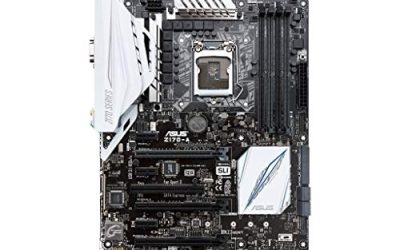
No motherboard encodes your stream for you; the processor, graphics card, and capture hardware do that. What the board decides is everything around them: whether your upload connection stays stable, whether you can fit a game drive plus a separate recording drive, whether there are enough fast USB ports for a capture card, camera, and microphone, and whether the power circuitry can feed a processor that is gaming and encoding at the same time. That is the real meaning of a streaming-friendly board.
This guide is for new streamers choosing between the older AM4 platform and the newer AM5 platform, and for builders who want a clean second-PC or single-PC streaming setup. We judge each board only from its listed specs, and as of 2026 the central trade-off is between cheaper DDR4 AM4 boards and DDR5 AM5 boards with a longer upgrade runway. One candidate was a complete prebuilt PC rather than a board, so it is left out of the reviews below.
Our Top Picks
 ASUS Prime B550M-K WiFi AM4 mATX MotherboardMicro ATX9.6 x 8.7 x 1.5 inches1.1 poundsCheck on Amazon




Top 3 picks at a glance
Quick Picks
As an Amazon Associate we earn from qualifying purchases at no extra cost to you.


| Product | Best for | Key spec from the title |
|---|---|---|
| ASUS ROG Strix B550-F Gaming WiFi II | Feature-rich AM4 streaming rig | PCIe 4.0, WiFi 6E, 2.5Gb LAN, BIOS Flashback |
| GIGABYTE B650 AORUS Elite AX | AM5 single-PC streaming | AM5, DDR5, 14+2+1 power phase, PCIe 5.0 M.2, USB-C |
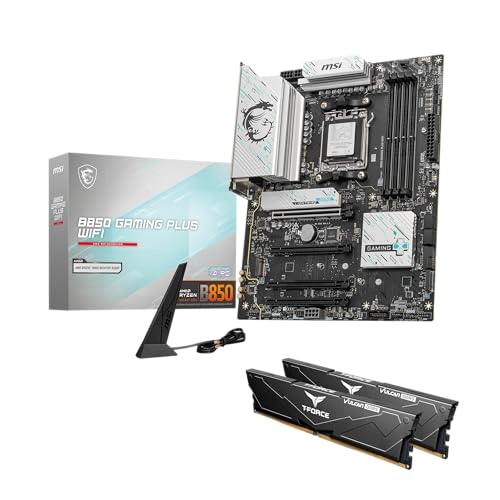
| MSI B850 GAMING PLUS WIFI | Newest-platform future-proofing | AM5, DDR5, PCIe 5.0 x16, M.2 Gen5, Wi-Fi |
| GIGABYTE B550 Gaming X V2 | Value AM4 ATX with extra storage | 10+3 power phase, 2X M.2, PCIe 4.0 |
| ASUS Prime B550M-A WiFi II | Compact AM4 with fast wireless | Micro ATX, WiFi 6, ECC memory support, HDMI 2.1 |
| ASUS Prime B550M-K WiFi | Budget compact build | Micro ATX, 2xM.2, WiFi 6, 3-year warranty |
| MSI A520M-A PRO | Minimum-cost basic streaming | PCIe 3.0, M.2, USB 3.2 Gen 1, Micro-ATX |
How to Choose
Platform: AM5 or AM4
AM5 boards support DDR5 memory and the newest Ryzen 9000, 8000, and 7000 processors, which gives you a path to future CPU upgrades. AM4 boards use DDR4 and top out at the Ryzen 5000 generation, but they cost less and pair with inexpensive memory. If your stream runs on a single PC and you plan to keep the machine for years, AM5 is the safer long-term choice. If you are reusing parts, AM4 remains perfectly capable.
Networking and connectivity
Stability matters more than headline speed. Look for a wired LAN port, ideally 2.5Gb, and treat Wi-Fi as a backup rather than a primary stream connection. Count USB ports too: a capture card, webcam, microphone, and audio interface add up quickly, and front-panel USB-C is a convenience bonus. Boards listing USB 3.2 Gen 2 offer faster ports for external drives and capture devices. A practical threshold is at least four rear USB ports beyond the keyboard and mouse, plus a header for front-panel ports, so you never need to unplug the camera to connect a headset. Remember that some capture cards want a dedicated USB 3 port rather than a shared hub.
Storage slots and PCIe lanes
Streamers often want a game drive and a separate recording drive. Aim for at least two M.2 slots, and note whether the board offers PCIe 5.0 or only 4.0, since 4.0 is already fast enough for current games. A second full-size graphics slot is rarely necessary, but if you plan to add an internal capture card or an audio card, check the slot layout so the card does not collide with your graphics cooler.
Power delivery and where cheaper boards cut corners
Streaming loads a processor in bursts, so look for a decent power phase count, such as the 14+2+1 and 10+3 layouts listed here, paired with a mainstream chip. The lowest-priced boards save money with fewer power phases, older PCIe 3.0 slots, a single M.2 slot, and no wireless. That is acceptable with a modest processor but limiting later.
The 7 Best Options
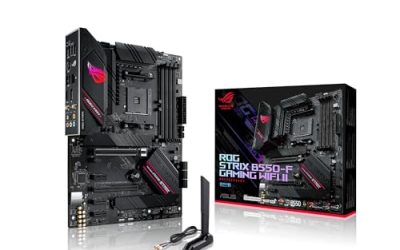
ASUS ROG Strix B550-F Gaming WiFi II
This ATX AM4 board lists PCIe 4.0, WiFi 6E, 2.5Gb LAN, BIOS Flashback, and HDMI 2.1, aimed at the gaming-first buyer. For a streamer building on AM4, the 2.5Gb wired port and modern wireless cover networking with room to spare. The Strix line is also known for a fuller port selection than its budget siblings, which helps when a microphone, camera, and capture device all need a USB connection at once.
- Strength: a 2.5Gb LAN port suits stable uploads to a streaming service.
- Strength: BIOS Flashback helps update the firmware for a newer Ryzen 5000 chip without an older processor installed.
- Trade-off: it uses DDR4 on the older AM4 platform, so the upgrade path ends at Ryzen 5000.
Skip it if you want DDR5 and support for the newest Ryzen generations.
GIGABYTE B650 AORUS Elite AX
This AM5 ATX board supports Ryzen 9000, 8000, and 7000 processors with DDR5 memory, a 14+2+1 power phase design, a PCIe 5.0 M.2 slot, USB-C 3.2 Gen 2, and Wi-Fi. It suits a single-PC streaming build that needs processor headroom. Because it accepts three Ryzen generations, you can start with a mid-range chip and step up later without replacing the board, memory, or cooler mounting.
- Strength: a strong power phase layout suits a gaming-plus-encoding processor load.
- Strength: PCIe 5.0 M.2 and USB-C Gen 2 give modern storage and capture-device options.
- Trade-off: DDR5 memory raises total platform cost compared with AM4.
Skip it if you are reusing DDR4 memory.
MSI B850 GAMING PLUS WIFI
The B850 is a newer-generation AM5 board supporting Ryzen 9000 to 7000, DDR5 at 8200+ MT/s with overclocking, a PCIe 5.0 x16 slot, a Gen5 M.2 slot, and Wi-Fi. It targets buyers who want the latest platform features. Because it lists the same Ryzen support range as the Gigabyte option, the choice between them often comes down to layout, port mix, and which brand’s firmware you prefer.
- Strength: PCIe 5.0 on both the graphics slot and M.2 prepares you for faster future hardware.
- Strength: DDR5 support at high rated speeds suits enthusiast memory kits.
- Trade-off: those newest features sit at a higher tier than most streaming setups strictly need.
Skip it if you are on a tight budget or will not use PCIe 5.0 devices.
GIGABYTE B550 Gaming X V2
This ATX AM4 board supports Ryzen 5000, 4000, and 3000 processors, with DDR4, a 10+3 power phase design, two M.2 slots, PCIe 4.0, and front USB connectivity. It balances cost and capability for a streamer building on AM4. If you already own an AM4 processor and DDR4 memory, this board lets you reuse them while gaining a second drive slot for recordings, and an inexpensive Wi-Fi adapter can fill the wireless gap.
- Strength: two M.2 slots allow separate game and recording drives.
- Strength: a 10+3 power layout is respectable for mainstream Ryzen processors.
- Trade-off: the title does not mention built-in wireless, so you may need a separate adapter.
Skip it if you want integrated Wi-Fi out of the box.
ASUS Prime B550M-A WiFi II
A Micro ATX AM4 board with DDR4, PCIe 4.0, WiFi 6, ECC memory support, HDMI 2.1, and an RGB header. It suits a compact streaming PC where space matters and Wi-Fi is handy. The ECC memory mention is a niche feature for most gamers, but it hints at a sturdier design than a barebones board, and the RGB header helps if you want to match lighting to a stream backdrop.
- Strength: WiFi 6 and PCIe 4.0 are included in a small footprint.
- Strength: HDMI 2.1 output is useful for newer displays.
- Trade-off: Micro ATX limits the number of expansion slots for capture cards and add-ons.
Skip it if you need several PCIe expansion cards.
ASUS Prime B550M-K WiFi
This Micro ATX AM4 model lists DDR4, PCIe 4.0, two M.2 slots, WiFi 6, Aura Sync RGB, and a 3-year warranty. It is a budget-friendly way to get two drive slots and wireless on a compact board. It suits a first streaming PC where the plan is a Ryzen 5000 processor, a mid-range graphics card, and a wired connection for the stream, with Wi-Fi reserved for convenience tasks like downloads.
- Strength: two M.2 slots support separate game and recording storage.
- Strength: the 3-year warranty adds peace of mind at this tier.
- Trade-off: a basic feature set means fewer ports and slots than the larger boards.
Skip it if you want extensive USB or expansion options.
MSI A520M-A PRO
The A520M-A PRO is a Micro-ATX AM4 board listing Ryzen 5000 support, DDR4, PCIe 3.0, SATA 6Gb/s, one M.2 slot, USB 3.2 Gen 1, and DVI and HDMI outputs. It is the entry-level pick in the group. A streamer using it should pair it with a modest processor and plan on a separate adapter or a wired connection for networking, since the title does not mention built-in wireless or a second M.2 slot.
- Strength: the lowest-cost route to a working AM4 build.
- Strength: supports Ryzen 5000 processors for a respectable upgrade ceiling.
- Trade-off: PCIe 3.0 and no listed wireless limit its streaming setup potential.
Skip it if you need fast storage, built-in Wi-Fi, or more than the basics.
Which One Fits Your Situation
You stream and game on one PC and want to upgrade for years
Choose the GIGABYTE B650 AORUS Elite AX. Its AM5 platform, strong power design, and USB-C Gen 2 suit a high-load streaming setup.
You want the newest connectivity and storage standards
The MSI B850 GAMING PLUS WIFI offers PCIe 5.0 on both the graphics and storage sides, which helps if you plan to add fast drives later.
You are building on AM4 with premium features
The ASUS ROG Strix B550-F Gaming WiFi II provides 2.5Gb LAN and modern wireless, giving the most complete AM4 networking package.
You are building a small, low-cost streaming PC
The ASUS Prime B550M-K WiFi gives two M.2 slots and Wi-Fi in a compact format, which suits tight spaces and modest budgets.
Common Mistakes
- Assuming the motherboard determines stream quality when the processor and graphics card do the encoding.
- Relying on Wi-Fi for the primary stream connection instead of a wired port.
- Choosing a board with a single M.2 slot and then having no room for a recording drive.
- Pairing a high-end processor with a minimal power delivery design.
- Buying DDR5 memory for an AM4 board, or DDR4 for AM5, which do not fit.
Related guides
- How To Check Gpu Compatibility With Your Motherboard And Cpu
- High-Performance Gaming Desktop Specifications
- Desktop Computer For Working From Home
Frequently Asked Questions
Does a motherboard affect stream quality?
Indirectly. The processor and graphics card do the encoding, but the board affects networking stability, storage options, and power delivery, which all influence a smooth stream.
Is AM4 still a good choice for streaming?
Yes, with a Ryzen 5000 processor it handles gaming and streaming well. The limit is the end of the upgrade path, since AM4 boards cannot take newer processor generations.
How many M.2 slots do I need?
Two is a good target, so you can keep games on one drive and recordings on another. More is useful if you archive footage locally.
Do I need PCIe 5.0 for streaming?
No. PCIe 4.0 is fast enough for current games and capture hardware. PCIe 5.0 is mainly a future-proofing feature at this point.