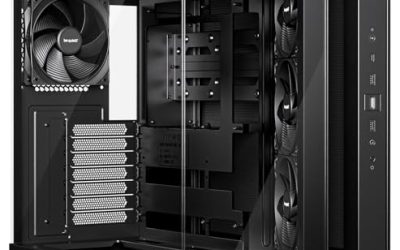
Buying a full tower is a deliberate choice to give up desk space in exchange for room: room for an E-ATX board, for a 360mm or 420mm radiator, for a graphics card that would scrape the front of a mid tower, and for hands that need to reach behind the motherboard tray without losing skin. If your build is a standard ATX board with one GPU and a tower cooler, a full tower is overkill. If you are planning a custom loop, a dual-radiator layout, or a long-lived workstation that keeps adding drives and cards, the extra volume earns its footprint.
This guide covers six genuine full-tower cases, from fan-heavy airflow designs to a dual-chamber glass showcase and an older-generation RGB heavyweight. Two mid-tower cases appeared in the original search results and are left out of the reviews below because their own titles label them mid tower. Read the sections that follow to match case size, fan count, and radiator support to the system you actually plan to build in 2026.
Our Top Picks
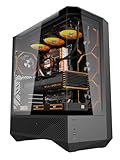
 CORSAIR 7000D Airflow Full-Tower ATX PC Case7000 Series21.65 x 9.76 x 23.62 inches41.23 poundsCheck on Amazon

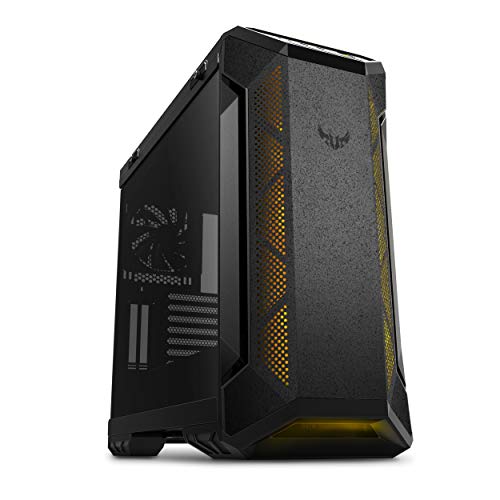
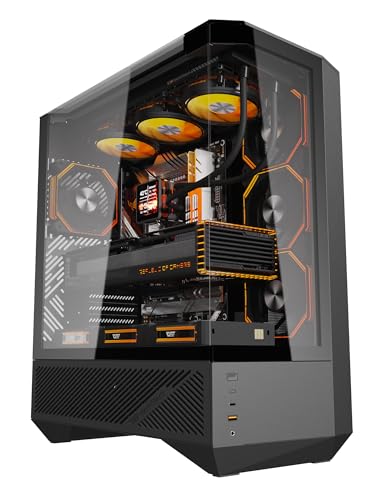
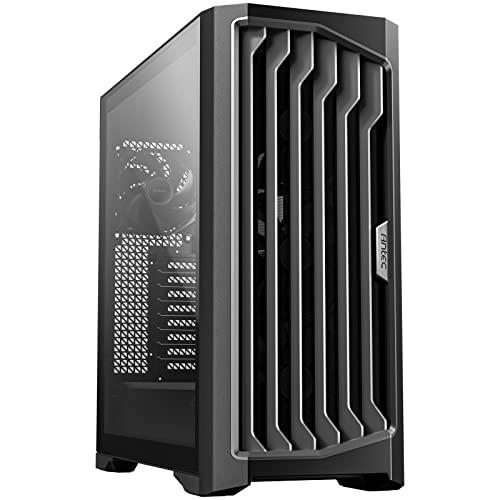
Top 3 picks at a glance
Quick Picks
As an Amazon Associate we earn from qualifying purchases at no extra cost to you.



| Product | Best for | Key spec from the title |
|---|---|---|
| Antec C8 | Showcase builds with your own fans | E-ATX, dual-chamber, no fans, 360mm radiator |
| Antec Flux Pro | Airflow-first builds out of the box | 6 PWM fans, walnut wood front, 420mm support |
| Corsair 7000D Airflow | Spacious, easy-to-work-in builds | 3x 140mm AirGuide PWM fans, high-airflow front |
| ASUS TUF Gaming GT501 | RGB builds with liquid cooling | E-ATX, dual 360mm radiator support |
| darkFlash DY460 | Panoramic glass on a value-minded budget | 4 ARGB PWM fans, 330 degree glass, 360mm radiator |
| Antec Performance 1 FT | Thermals-focused builds with a temp readout | High-airflow mesh front, PWM fans, temp display |
How to Choose
Motherboard and component size
Full towers are built around E-ATX boards, which are wider than standard ATX. Confirm the case lists E-ATX if you own a workstation or flagship enthusiast board; the Antec C8, Flux Pro, Performance 1 FT, and ASUS GT501 all do in their titles. The darkFlash DY460 and Corsair 7000D list ATX, so verify your motherboard before ordering. Think about the power supply and drive plans too, since a full tower is often chosen because a builder expects to add storage or a second chassis-mounted component later. Then check graphics card clearance: the darkFlash title cites room for a 400mm GPU, while Antec titles mention RTX 40 Series support, a useful shorthand for long, thick modern cards.
Cooling layout and radiator support
Look at what the case can mount, not just what it ships with. A 360mm radiator is the practical ceiling for most single-loop builds, and the ASUS GT501 pushes further with dual 360mm support, while the Antec Flux Pro lists 420mm. Compare the fans included: six PWM fans on the Flux Pro, three 140mm PWM fans on the Corsair 7000D, and zero on the Antec C8 mean very different shopping lists. PWM fans let your motherboard control speed, which is more important than raw count if you value a quiet idle. Also count your own needs: a flagship GPU, a high-wattage CPU, and several NVMe drives each add heat, and a case that ships with fewer fans simply moves the purchase to a later date.
Airflow versus glass
Tempered glass panels look dramatic, but they restrict intake when placed on the front. Mesh fronts, as on the Antec Performance 1 FT and Corsair 7000D, keep air moving to the GPU and CPU. The darkFlash DY460 and Antec C8 favor glass, so plan for extra intake fans or a well-vented side. If the case sits in a dusty room, ask whether the front and top have filters, and expect to clean them every few months. A practical compromise is a mesh or perforated front with glass reserved for the side panel, which is how most airflow-focused towers in this group are laid out.
Features worth paying for
USB-C on the front panel is worth having; the darkFlash DY460 lists a 10Gbps port. Built-in fan hubs, temperature displays, and a rotated PSU mount, such as the 90 degree layout on the Flux Pro, are nice conveniences, not requirements. Ignore the marketing term RGB unless you actually want lighting: ARGB headers still need to be present on your board. Budget cases tend to cut corners with thin steel, plastic fan blades, and cable routing space that is tight behind the tray. A full tower should leave generous room behind the motherboard tray; if a listing never mentions cable management, plan extra time and extra zip ties for the build. Finally, think about weight: steel and glass towers get heavy once loaded, so decide where the case will live before you start building.
The 6 Best Options
Antec C8 Full-Tower E-ATX
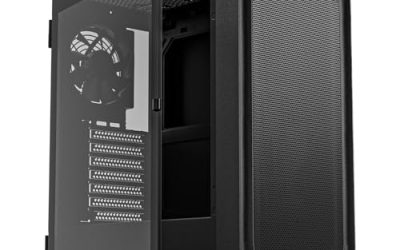
The C8 is a dual-chamber, glass-fronted tower aimed at builders who want to show off hardware and choose their own fans. The title lists E-ATX support, tempered glass on the front and side panels, RTX 40 Series GPU support, and a 360mm radiator. It ships with no fans, which keeps the entry cost down but means you must budget separately for intake and exhaust.
- Strength: dual-chamber layout and glass panels suit showcase builds.
- Strength: E-ATX and 360mm radiator support leave room to grow.
- Trade-off: it includes no fans, so thermals depend on what you buy.
Skip it if you want a case that cools well straight from the box.
Antec Flux Pro Full-Tower E-ATX
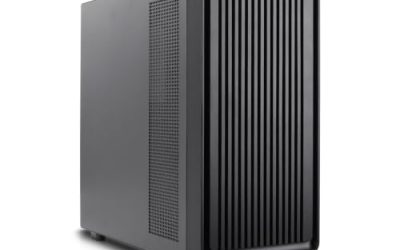
Flux Pro pairs a walnut wood front panel with a high-airflow design and six PWM fans already installed. The title also mentions a 90 degree rotated PSU mount and support for 420mm cooling, which together hint at a layout designed to feed air to hot components. It is the most complete package in this group for someone who wants a finished-looking build without hunting for fans.
- Strength: six PWM fans are included, which is the most in this lineup.
- Strength: the walnut front panel gives it a distinct, furniture-like look.
- Trade-off: the wood front and airflow focus may not suit a stealth-black aesthetic.
Skip it if you want a dark, all-glass showpiece.
Corsair 7000D Airflow Full-Tower ATX
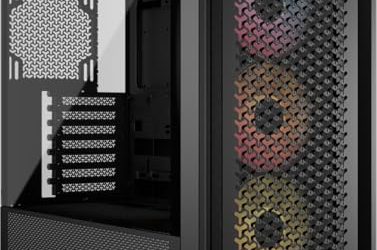
The 7000D Airflow is described around a spacious interior, a high-airflow front panel, and easy cable management, with three 140mm AirGuide fans using PWM. Those traits make it a natural choice for builders who plan to fill the case with drives, radiators, and a big GPU, and who want room to work. Its full-tower size is the main story, so measure the space before you order.
- Strength: a spacious interior makes assembly and upgrades easier.
- Strength: the high-airflow front and three 140mm PWM fans support strong cooling.
- Trade-off: the title lists ATX rather than E-ATX, so check board compatibility.
Skip it if desk or floor space is limited.
ASUS TUF Gaming GT501 E-ATX Full-Tower
The GT501 is a full tower that is especially interesting for liquid-cooling builders. The title lists three front 120mm RGB fans, one rear 140mm PWM fan, and support for dual 360mm radiators. That dual-radiator capacity is the main draw, since very few cases support two large radiators without modification, and E-ATX board support is included.
- Strength: dual 360mm radiator support suits ambitious water-cooled builds.
- Strength: four fans, including RGB front fans, are installed.
- Trade-off: the title does not confirm modern conveniences like front USB-C.
Skip it if you want a current front I/O layout and a minimalist look.
darkFlash DY460 ATX Full Tower
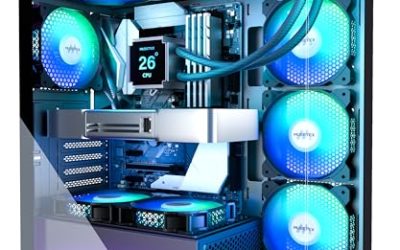
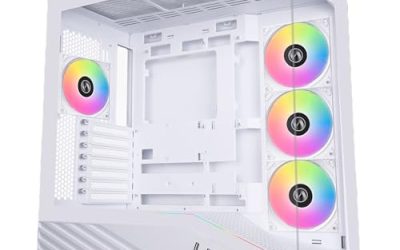
The DY460 leans on panoramic glass and lighting. The title lists four ARGB PWM fans, a 330 degree panoramic glass view, USB-C at 10Gbps, 360mm radiator support, and clearance for a 400mm graphics card. It targets builders who want an all-in-one showcase with fans included at a value-oriented tier, and who plan a build where the glass and lighting are part of the point of the machine.
- Strength: four ARGB PWM fans are included and sync with your lighting.
- Strength: a 10Gbps USB-C port and 400mm GPU clearance are helpful.
- Trade-off: it is listed as ATX, so E-ATX boards are not addressed.
Skip it if you own an E-ATX motherboard or prefer a plain case.
Antec Performance 1 FT Full Tower E-ATX
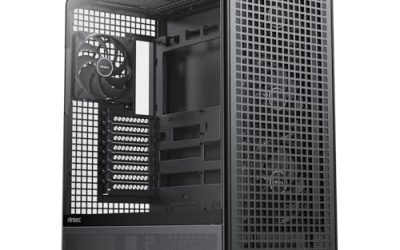
This tower emphasizes thermals, with a high-airflow mesh front panel, PWM fans, RTX 40 GPU support, and a temperature display. The listing text mentions both three and four fans, so confirm the exact count before purchase. It is a sound pick for builders who care about temperatures and want a visible readout on the case itself, and for anyone who prefers function over a glass-heavy exterior. Because the title names RTX 40 GPU support, it also signals that the case was designed with large modern graphics cards in mind.
- Strength: the mesh front panel prioritizes airflow to hot components.
- Strength: E-ATX support and a temperature display add practicality.
- Trade-off: the inconsistent fan count in the listing requires verification.
Skip it if you want a glass-heavy look from every angle.
Which One Fits Your Situation
You want to build a custom liquid loop
The ASUS TUF Gaming GT501 stands out because its title lists dual 360mm radiator support. If you plan a single large radiator, the Antec Flux Pro at 420mm is also workable.
You want a complete, cool-running build immediately
The Antec Flux Pro includes six PWM fans and a high-airflow layout, so it needs the least additional spending to perform well.
You want a glass showcase with lighting
The darkFlash DY460 provides panoramic glass and four ARGB fans, while the Antec C8 is better if you want to pick your own fans and keep a dual-chamber layout.
You expect to keep adding drives and cards
The Corsair 7000D Airflow lists a spacious interior and easy cable management, which favors upgrades over time.
Common Mistakes
- Buying a full tower for a small ATX build and paying in desk space for room you never use.
- Assuming every full tower supports E-ATX, when some list only ATX in the title.
- Choosing an all-glass front without planning for extra intake fans.
- Forgetting that a fan-free case like the Antec C8 needs a fan budget on top of the purchase.
- Measuring a GPU length but not checking whether a front radiator reduces clearance.
Related guides
- How To Check Gpu Compatibility With Your Motherboard And Cpu
- High-Performance Gaming Desktop Specifications
- Desktop Computer For Working From Home
Frequently Asked Questions
Do I need a full tower for a high-end GPU?
Usually not. Many mid towers handle current large cards, but a full tower gives more clearance, such as the 400mm GPU room listed for the darkFlash DY460. It is mainly about future flexibility.
Is E-ATX support important?
Only if your motherboard is E-ATX. Several cases in this group list it, but an ATX board fits any of them, so choose based on your actual board and plans.
How many case fans do I need?
A common setup is two to three intake and one to two exhaust fans. Cases that ship with six PWM fans, like the Antec Flux Pro, reach that without extra purchases.
Are glass panels a problem for cooling?
Glass does not heat the system by itself, but a solid front limits intake. Look for side or top vents and add fans if you pick a glass-fronted case.