Gaming PC budget should be set by your resolution and refresh-rate target, not a round number pulled from a forum thread — a 1080p/144Hz esports build lands around $700-900, a 1440p/100Hz+ build runs $1,200-1,600, and a 4K/60Hz build starts around $2,200. Spending more than your resolution target requires just means paying for fps headroom you can’t see on a monitor that can’t display it; spending less means turning settings down sooner than you’d like.
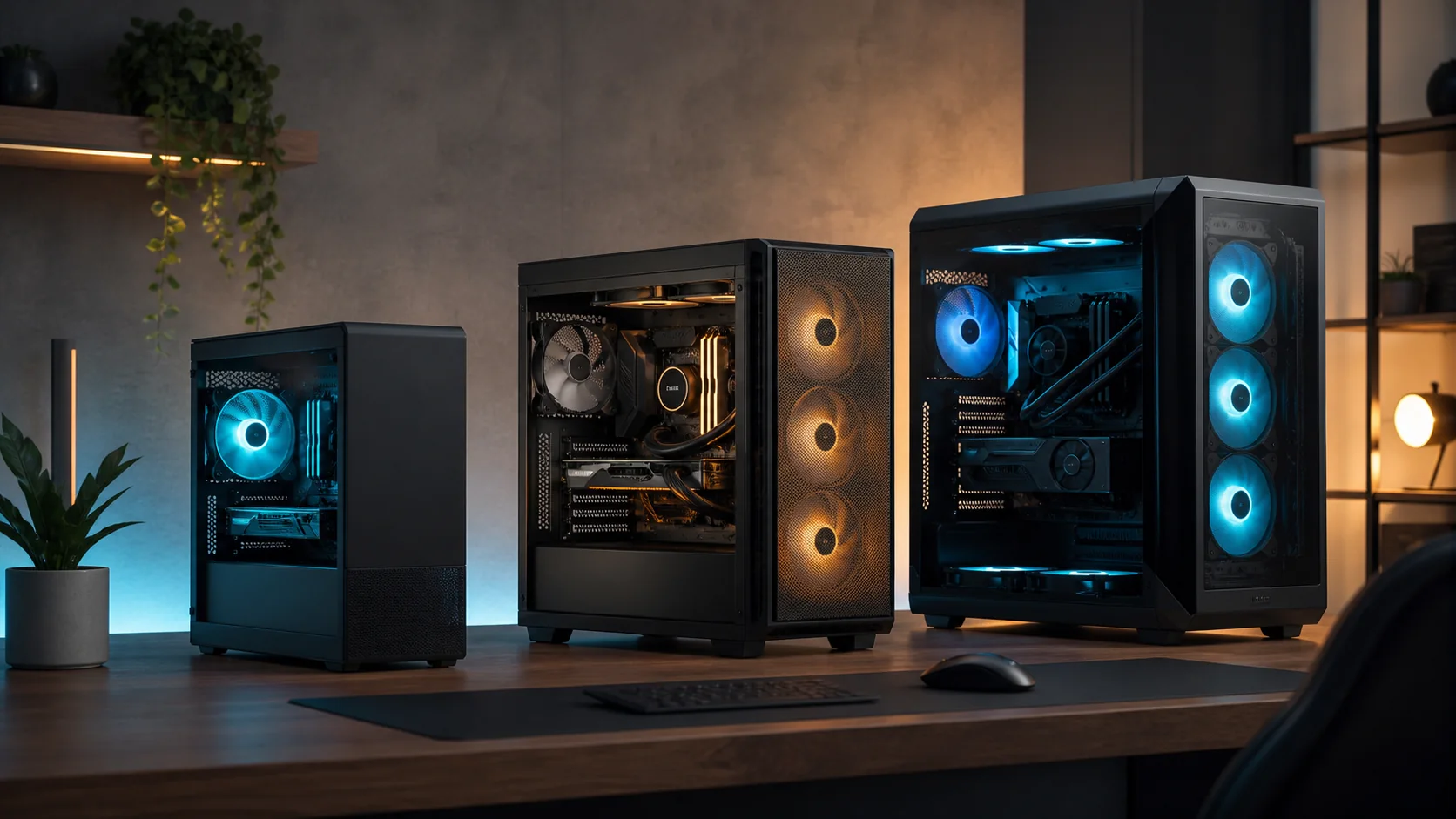
Top 3 picks at a glance
Set your budget from resolution and use case first
The monitor you already own, or plan to buy alongside the PC, should be the first input into the budget decision, not the last. A $2,500 PC paired with a 1080p/60Hz monitor is money spent on GPU performance the display can’t show; a $900 PC paired with a 1440p/165Hz monitor won’t come close to using the panel’s refresh rate in demanding titles, leaving the monitor’s capability mostly unused.
As an Amazon Associate we earn from qualifying purchases at no extra cost to you. Product prices and availability are accurate as of the date shown and are subject to change.


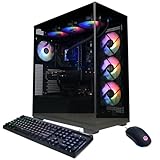


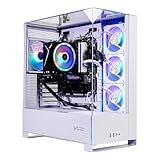
Gaming PC budget should be set by your resolution and refresh-rate target, not a round number pulled from a forum thread — a 1080p/144Hz esports build, see Best Entry Level Gaming PC, lands around $700-900, a 1440p/100Hz+ build, see Best Gaming PC For 1440P, runs $1,200-1,600, and a 4K/60Hz build, see Best Gaming PC For 4K Gaming, starts around $2,200. Decide resolution and refresh rate first, then use the table below as a starting budget.
Budget tiers and what they get you
| Budget range | Target | Example GPU | Example CPU | RAM / Storage | Typical fps, high settings |
|---|---|---|---|---|---|
| $700-900 | 1080p / 144Hz esports | RTX 4060 | Ryzen 5 7500F | 16GB / 500GB NVMe | 140-220 fps in esports titles |
| $1,000-1,300 | 1080p high-refresh AAA | RTX 4070 | Core i5-14600KF | 16GB / 1TB NVMe | 90-120 fps AAA at 1080p |
| $1,300-1,700 | 1440p / 100Hz+ | RTX 4070 Ti Super | Ryzen 7 7700 | 32GB / 1TB NVMe | 75-100 fps AAA at 1440p |
| $1,800-2,300 | 1440p / 165Hz+ or entry 4K | RTX 4080 Super | Core i7-14700KF | 32GB / 2TB NVMe | 100-140 fps at 1440p, 55-70 at 4K |
| $2,500+ | 4K / 120Hz+ | RTX 5080 or higher | Ryzen 7 7800X3D | 32GB / 2TB NVMe | 90-130 fps at 4K |
What you’re trading away at each lower tier
Moving down a tier doesn’t just lower fps proportionally — it changes what you have to turn off to hit a comfortable frame rate. Dropping from the $1,800-2,300 tier to the $1,300-1,700 tier usually means giving up ray tracing in demanding titles rather than losing raw frame rate outright, since ray tracing carries a disproportionate performance cost relative to its visual impact on most scenes.
Dropping from $1,300-1,700 to $1,000-1,300 typically means settling for high settings instead of ultra, which in most titles costs 5-10% visual fidelity for a 15-25% fps gain — a favorable trade for most players once you actually compare screenshots side by side rather than assuming ultra is always worth chasing. Understanding exactly which setting gets sacrificed at each tier makes it much easier to pick the right budget instead of just picking the highest number you can afford.
Where to spend extra dollars first if your budget grows
GPU tier first, always — it has the largest single impact on fps at 1440p and above, and a $100-150 step up in GPU tier typically buys more visible frame rate improvement than the same money spent anywhere else in the build. After that, RAM capacity from 16GB to 32GB if you multitask or stream, since the jump costs $40-70 and measurably smooths frame times under multitasking rather than raising average fps in isolation.
After RAM, storage capacity, since a second NVMe drive avoids the compromise of uninstalling games to make room for new ones every few months. CPU upgrades beyond the tier already matched to your GPU choice deliver the smallest return per dollar in a pure gaming build, since the GPU remains the limiting factor at 1440p and above regardless of how much faster the CPU gets past that matching point.
Where not to spend extra dollars
RGB lighting — however good it looks in our Best Rgb Gaming PC picks — a tempered glass side panel, and a premium case beyond basic mesh-front airflow don’t affect fps at all; they’re worth paying for only if aesthetics matter to you personally, not as a performance decision that improves your actual gameplay experience.
Similarly, a motherboard priced $80-150 above the minimum needed for your CPU and RAM speed target usually buys extra M.2 slots and overclocking headroom that a typical gaming-only build won’t use. A PSU rated well beyond what your GPU and CPU combination actually needs also delivers diminishing returns past the 20-30% headroom point covered elsewhere in this guide.
Used and open-box GPUs — where the savings are real
Buying a one-tier-higher GPU used or open-box instead of a new card one tier lower is one of the more reliable ways to stretch a fixed budget, as long as the risk is priced in correctly. This tactic is most worth the extra diligence at the tier covered in Best High End Gaming PC, where the dollar gap between tiers is largest and the savings are most meaningful in absolute terms.
Open-box listings from major retailers typically carry a 90-day to 1-year warranty and sell for 10-20% below new pricing, which is close to risk-free since the return and warranty process matches a new purchase. Used GPUs sold peer-to-peer carry no warranty at all and typically sell for 25-40% below new pricing, which can move a build up an entire GPU tier for the same total budget, but only makes sense if you can verify the card’s condition and operating history first.
Budgeting for the parts that don’t affect fps
The PC price tag isn’t the full cost of gaming at a given resolution. A monitor matched to your target resolution and refresh rate runs $180-350 for 1440p/144Hz and $400-700 for a good 4K/120Hz+ panel; a mechanical keyboard and gaming mouse add $60-150 combined depending on features and build quality.
Windows 11 Home adds $99-139 if not already owned or included with the system. Set these aside from the PC budget itself so the resolution-target table above stays accurate, rather than discovering the true total cost only after checkout when a matching monitor and peripherals get added to the cart.
Common mistakes buyers make with budgeting
Buying a GPU tier above what the monitor can display spends money on fps headroom that never shows up on screen, which is one of the most common and most avoidable budgeting mistakes. Cutting RAM or storage to afford a slightly higher GPU tier often creates a bottleneck elsewhere that costs more of the GPU’s potential than the GPU upgrade gained in the first place.
Forgetting to budget for a monitor at all when the number being compared is PC-only leads to sticker shock at checkout once a matching display is added to the total. Assuming a higher price always means a better-balanced build is another trap — some prebuilts spend disproportionately on GPU and cut RAM, storage, or PSU quality to hit a headline price point. Setting a budget based on a friend’s build without accounting for a different resolution or refresh-rate target can lead to overspending or underspending by an entire tier from what you actually need.
The real total cost of ownership beyond the PC price tag
The number on a listing is the start of the budget conversation, not the end of it. Electricity, peripherals, and the eventual GPU or platform upgrade covered earlier in this guide all add up to real annual costs that rarely show up when someone quotes a build price in a forum thread, and skipping them is one of the most common reasons a “$1,500 gaming PC” ends up costing noticeably more in year one than the number on the box.
Electricity cost scales directly with system wattage and how many hours a day it runs under load. A mid-tier system averaging 400W while gaming, run for 4 hours a day at the U.S. national average residential rate of roughly $0.16 per kWh, works out to 1.6 kWh per session, or about $0.26 a day, which adds up to roughly $94 a year just for gaming sessions — before counting idle or light-use time the rest of the day, which typically adds another $20-40 annually at a much lower draw.
That number scales with tier. An entry-level $700-900 system averaging closer to 250W under load runs about $58 a year in gaming-session electricity at the same 4-hours-a-day assumption, while a high-end $2,500+ system averaging 500W or more under sustained load can run $120-140 a year just from gaming sessions, before idle time and before accounting for a monitor, which typically adds another $10-25 a year depending on size and brightness settings.
Peripherals are the next line item buyers underbudget for. A decent gaming headset runs $50-150 depending on whether it’s wired or wireless and whether it includes a dedicated USB DAC; a basic webcam for voice chat or streaming adds $40-100; and a UPS (uninterruptible power supply) to protect a $1,500+ system from a sudden outage or brownout runs $80-150 for a unit sized appropriately for a gaming PC’s peak draw, though it’s an optional rather than mandatory line item for most buyers.
The GPU or platform upgrade covered in depth elsewhere in our upgrade-timeline coverage is also worth amortizing into an annual figure rather than treating as a distant one-time cost. A $400-600 GPU upgrade roughly every three years works out to an effective $130-200 a year of additional ownership cost, on top of the sticker price of the original system, and factoring that in up front avoids the sticker shock of discovering it only when the upgrade is actually due.
None of these additional costs should scare a buyer away from a given tier — they’re manageable and mostly predictable once you know to plan for them. The point is that a $1,300 PC and a $1,300 PC plus a realistic first-year total of electricity, a monitor, and basic peripherals are two different numbers, and budgeting from the larger, more honest one avoids an unpleasant surprise at checkout or on the first electric bill after the new system arrives.
Buyers upgrading from a much older, less efficient system sometimes see the opposite effect — a new GPU with better performance-per-watt can actually lower the electricity bill compared to an aging card working harder to hit the same frame rate, which is worth factoring in if the comparison point is an existing five-plus-year-old system rather than a fresh purchase.
True total budget: PC vs. peripherals by tier
Putting the PC price and the surrounding costs side by side by tier makes it easier to see where the real budget line sits for a given target, rather than anchoring only on the PC’s advertised price. The table below assumes a mid-range monitor matched to the tier’s resolution target, a basic mechanical keyboard and mouse combo, and the gaming-session electricity estimate from above at 4 hours a day.
| Budget tier | PC only | Monitor | Keyboard + mouse | First-year electricity | True first-year total |
|---|---|---|---|---|---|
| $700-900 (1080p esports) | $800 | $130-180 | $60-90 | ~$65 | ~$1,055-1,135 |
| $1,000-1,300 (1080p AAA) | $1,150 | $150-220 | $70-100 | ~$80 | ~$1,450-1,550 |
| $1,300-1,700 (1440p) | $1,500 | $180-280 | $80-120 | ~$95 | ~$1,855-1,995 |
| $1,800-2,300 (1440p high-refresh) | $2,050 | $220-350 | $90-140 | ~$105 | ~$2,465-2,645 |
| $2,500+ (4K) | $2,700 | $400-700 | $100-150 | ~$135 | ~$3,335-3,685 |
The gap between “PC only” and “true first-year total” runs roughly $250-350 at the entry tier and grows to $600-1,000 at the 4K tier, mostly driven by the monitor, which scales up in price faster than any other line item as resolution and refresh-rate targets climb. That gap is worth planning for at the same time you’re choosing the PC tier, not after the PC purchase is already finalized and the remaining budget for a monitor turns out to be thinner than expected.
The most common mistake this table exposes is treating the PC-only column as the full budget and discovering the monitor and peripheral costs only at checkout, which frequently pushes buyers into a lower PC tier than they intended once the true total is added up, or into skipping a needed monitor upgrade entirely and pairing a strong GPU with an outdated display that can’t show what it’s capable of.
Working from the true total column backward is usually the more reliable way to budget: decide on an all-in number you’re comfortable spending, subtract a realistic monitor and peripheral estimate for your resolution target using the ranges above, and use what’s left as the actual PC budget rather than the other way around.
Frequently asked questions
How much should I spend on a gaming PC for 1080p gaming?
$700-900 covers a comfortable 1080p/144Hz esports build with room for a six-core CPU and 16GB of RAM. Budget closer to $1,000-1,300 if you want high frame rates in demanding AAA titles at 1080p rather than esports titles alone, since those games lean harder on GPU horsepower than competitive shooters typically do.
What’s a reasonable budget for 1440p gaming?
$1,300-1,700 covers 1440p at 100Hz+ with high settings in most current titles, paired with 32GB of RAM and a 1TB NVMe drive. $1,800-2,300 adds enough GPU headroom for 165Hz+ monitors or occasional ray tracing without dropping settings down from high to medium in newer releases.
Is $1,000 enough for a good gaming PC?
Yes for 1080p gaming, including high refresh rates in esports titles like Valorant and Counter-Strike 2, though AAA titles at ultra settings will need some setting adjustments to hit higher frame rates at that price point specifically. It’s a reasonable starting budget as long as expectations match the resolution tier.
How much should I budget for 4K gaming?
$2,200-2,500 is the realistic starting point for 4K/60Hz at high settings with a GPU like the RTX 4080 Super. $2,500+ is worth it for 4K/120Hz+ or consistent ray tracing performance, since 4K rendering is disproportionately demanding on the GPU compared to 1440p at the same settings.
Should I include the monitor in my gaming PC budget?
Yes, set it aside as a separate line item. A 1440p/144Hz monitor runs $180-350 and a 4K/120Hz+ panel runs $400-700, and pairing the wrong monitor with your PC budget wastes GPU performance in either direction, whether you overspend on the PC or underspend on the display that shows what it renders.