Eight builds claiming the “high end gaming PC” label here span nearly $1900 in price, from $1979.99 up to $3846.99, and that gap reflects a real split between affordable high-end and genuine flagship hardware. The ZOTAC MEK Gaming PC with Ryzen 7 9800X3D and RTX 5080 16GB ($3199.99, B0GS3K5JHK) is the strongest overall pick because it pairs a top-tier gaming CPU with a true flagship-adjacent GPU at a price below the priciest builds here. The rest of this list sorts genuine flagship hardware from builds that earn the high-end label on a technicality.
Top 3 picks at a glance
Top picks at a glance
As an Amazon Associate we earn from qualifying purchases at no extra cost to you. Product prices and availability are accurate as of the date shown and are subject to change.
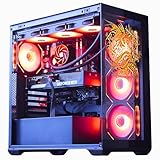


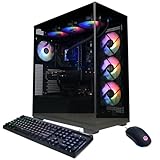


| Model | Key spec | Price | Best for |
|---|---|---|---|
| The Horizon Autherium Dragon RGB I9 RTX | 64GB RAM, 5TB storage, RTX 5070 OC | $2899.99 | Massive RAM and storage headroom |
| msi Codex Z2 / RTX 5070 | 32GB DDR5, 2TB SSD | $2059.99 | Brand-name reliability, lower entry |
| Alienware Aurora / RTX 5080 | Core Ultra 9 285 | $2974.37 | Premium chassis, flagship GPU |
| CyberPowerPC Gamer Xtreme VR / RTX 5070 | i9-14900KF, 32GB DDR5, 2TB SSD | $1979.99 | Cheapest entry into this list |
| KOTIN RTX 5070 12GB / Ryzen 7 9700X | 32GB DDR5, 1TB SSD | $1999.99 | Affordable high-end, not flagship |
| ZOTAC MEK / RTX 5080 16GB | Ryzen 7 9800X3D | $3199.99 | Best overall balance |
| STORMCRAFT Phantom RTX 5080 | Ryzen 7 9800X3D, 32GB DDR5, 2TB SSD | $3099.99 | Strong flagship alternative |
| Thermaltake LCGS View 9580S-380XL | Ryzen 9 9950X3D, RTX 5080 | $3846.99 | True flagship, most cores |
The Horizon Autherium Dragon RGB I9 RTX Gaming PC, 64GB RAM, 5TB Storage, Core I9 up to 5.4GHz, RTX 5070 OC, Win11 Pro, 360MM AIO, WiFi ($2899.99)
This build’s standout feature isn’t the GPU, it’s everything around it. 64GB of RAM and 5TB of storage are the largest allocations of either resource anywhere in this roundup, and the 360mm AIO cooler gives the Core i9 (boosting up to 5.4GHz) real thermal headroom for sustained loads. The RTX 5070 OC is a factory-overclocked variant, meaning it should edge out reference-clock 5070 builds elsewhere on this list by a small margin.
Estimated performance: Cyberpunk 2077 at 1440p with ray tracing on medium should land near 65-70fps thanks to the OC bump, and Baldur’s Gate 3 at 4K ultra should comfortably clear 60fps given the CPU headroom this build offers. Under combined sustained load, the 360mm AIO should keep the Core i9 in a healthier thermal range than a smaller cooler would, likely holding boost clocks more consistently during long sessions rather than throttling back after the first ten minutes.
The trade-off here is GPU tier relative to price: at $2899.99, this build’s RTX 5070 OC is still a step below the RTX 5080 cards found on similarly priced or even cheaper builds elsewhere in this list, meaning the extra cost goes toward RAM, storage, and cooling rather than raw graphics horsepower.
- Pros
- 64GB RAM and 5TB storage, the largest of either in this roundup
- 360mm AIO gives real sustained thermal headroom for the Core i9
- Factory-overclocked RTX 5070 edges out reference-clock 5070 builds
- Cons
- RTX 5070 OC is still a tier below the RTX 5080 builds at similar or lower prices
- Boutique builder branding, less established track record than MSI or Alienware
- Premium spent on RAM/storage rather than GPU tier may not suit every buyer’s priorities
Who it’s for: buyers who want massive RAM and storage headroom for multitasking or a large game library over the last few percent of GPU performance.
msi Codex Z2 Gaming Desktop, AMD R7-8700F, RTX 5070, 32GB DDR5, 2TB SSD ($2059.99)
MSI’s chassis and PSU transparency give this build more buying confidence than several boutique entries here, and at $2059.99 it’s one of the more accessible ways into this roundup. The RTX 5070 with 32GB of DDR5 and a 2TB SSD is a well-rounded, if not flagship, configuration, and the Ryzen 7 8700F handles gaming workloads capably even without the 3D V-Cache found on the pricier 9800X3D builds elsewhere in this list.
Estimated performance: Alan Wake 2 at 1440p high with ray tracing should land in the 55-60fps range, a demanding enough test to show where the RTX 5070 sits relative to the RTX 5080 builds here. Apex Legends at 1440p should run comfortably near 140fps. The 8700F’s lack of 3D V-Cache means CPU-bound scenarios, dense crowds or complex physics simulations, will trail the X3D-equipped builds on this list by a noticeable margin.
This is a build best understood as accessible high-end rather than flagship: strong 1440p performance with real but limited 4K capability, at a price meaningfully below the RTX 5080 tier.
- Pros
- Reputable brand PSU and chassis versus several unlisted boutique builders
- 2TB SSD gives solid headroom for a growing game library
- Most accessible entry point at MSI’s brand-name reliability tier
- Cons
- RTX 5070 lags meaningfully behind the RTX 5080 builds in ray-traced and 4K scenarios
- 8700F lacks 3D V-Cache, trailing X3D chips in CPU-bound titles
- Not the build to choose if 4K ultra with ray tracing is the goal
Who it’s for: buyers who want MSI’s brand reliability and strong 1440p performance without paying flagship RTX 5080 pricing.
Alienware Aurora Gaming Desktop, RTX 5080, Intel Core Ultra 9 285 ($2974.37)
The RTX 5080 puts this build firmly in flagship-adjacent territory, and the Core Ultra 9 285 is Intel’s current high-end Arrow Lake chip, giving this a legitimate claim to the top tier of this roundup. Alienware’s tool-less chassis design is built for airflow, which matters for a 16GB flagship-tier GPU that generates real heat under sustained ray-traced workloads.
Estimated performance: Black Myth Wukong at 4K high with ray tracing should land in the 45-55fps range, a genuinely demanding combination that separates true flagship builds from the RTX 5070 tier above. Cyberpunk 2077 at 1440p ultra with ray tracing should comfortably clear 90fps. The Core Ultra 9 285’s strong multi-threaded performance also benefits any background recording or streaming work layered on top of gaming.
The listing here doesn’t specify RAM or storage capacity, an important gap to confirm directly with Dell before ordering given the premium price point, since Alienware configurations can vary by region and retailer even within the same product line.
- Pros
- RTX 5080 puts this firmly in flagship-adjacent GPU territory
- Core Ultra 9 285 is a genuinely high-end Intel chip
- Tool-less chassis engineered for sustained airflow under heavy load
- Cons
- RAM and storage specs aren’t listed and need direct confirmation
- Alienware’s proprietary form factors complicate future upgrades
- Priced close to builds offering more storage or RAM at similar GPU tier
Who it’s for: buyers who want a true RTX 5080 flagship build with Alienware’s chassis engineering and brand support.
CyberPowerPC Gamer Xtreme VR Gaming PC, Intel Core i9-14900KF 3.2GHz, RTX 5070 12GB, 32GB DDR5, 2TB PCIe4 SSD, WiFi ($1979.99)
At $1979.99, this is the most affordable build in this entire roundup, pairing a Core i9-14900KF with the RTX 5070 rather than a flagship-tier GPU. The i9-14900KF is a genuinely powerful chip on paper, with a high boost clock and strong multi-threaded performance, though it runs hotter and draws more power than the newer 9800X3D chips found on the pricier builds here.
Estimated performance: God of War Ragnarok at 1440p high should land near 90-95fps, and 4K high settings should still be playable in the 55-60fps range without ray tracing pushed too aggressively. The “Gamer Xtreme VR” naming suggests this configuration is also positioned for VR headset use, where the RTX 5070’s 12GB VRAM buffer and the i9’s strong single-thread performance both help maintain the consistent frame pacing VR headsets demand.
Buyers should note the 14900KF’s known higher power draw and heat output compared to AMD’s current-generation chips; without a disclosed cooler spec here, sustained boost clocks under long sessions are less certain than on builds with a named 360mm AIO.
- Pros
- Cheapest entry point into this high-end roundup
- Strong VR-oriented configuration with 12GB VRAM and fast single-thread CPU performance
- 2TB PCIe4 SSD offers solid storage headroom
- Cons
- RTX 5070 trails the RTX 5080 builds in ray-traced and 4K scenarios
- i9-14900KF runs hotter and draws more power than the 9800X3D-based builds here
- Cooler specification isn’t disclosed, a real unknown for sustained high-boost workloads
Who it’s for: budget-conscious high-end buyers, especially those prioritizing VR headset compatibility, who don’t need RTX 5080-tier graphics.
KOTIN Prebuilt Gaming PC RTX 5070 12GB, Ryzen 7 9700X, 32GB DDR5, 1TB SSD ($1999.99)
To be direct about where this sits: at $1999.99, this build is at the low end of what’s reasonably called “high end,” not a flagship in the way the RTX 5080 builds on this list are. The RTX 5070 and Ryzen 7 9700X are genuinely current, capable components, but compared against the ZOTAC, STORMCRAFT, and Thermaltake builds also on this list, this is the accessible entry point rather than the ceiling.
Estimated performance: Apex Legends at 1440p ultra should run near 140fps, and Cyberpunk 2077 at 1440p high with ray tracing should land in the 60-65fps range, both solid numbers but a clear step behind what the RTX 5080 builds here can deliver in the same scenarios. The Ryzen 7 9700X’s Zen 5 architecture is current-generation, even without the 3D V-Cache found on the 9800X3D chips elsewhere in this list.
Buyers coming to this list specifically for flagship performance should look at the RTX 5080 builds instead; this one is better understood as a strong, affordable way into the high-end conversation.
- Pros
- Genuinely current Zen 5 CPU and RTX 5070 GPU pairing
- 32GB RAM gives solid multitasking headroom
- Most affordable AMD-platform option in this roundup
- Cons
- Sits at the low end of “high end,” a real step behind the RTX 5080 builds here
- No 3D V-Cache, trailing the 9800X3D-equipped builds in CPU-bound titles
- 1TB SSD is the smallest storage allocation among the higher-priced builds
Who it’s for: buyers who want a legitimately current, capable build without stretching into RTX 5080 pricing territory.
ZOTAC MEK Gaming PC Desktop, Ryzen 7 9800X3D, RTX 5080 16GB ($3199.99)
This pairing is arguably the strongest gaming-specific combination in the entire roundup: the Ryzen 7 9800X3D’s large 3D V-Cache consistently leads or matches far pricier chips in gaming benchmarks, and the RTX 5080’s 16GB VRAM buffer handles 4K and ray tracing with real headroom. ZOTAC’s MEK line is purpose-built as a compact, gaming-focused chassis rather than a general workstation-adjacent tower.
Estimated performance: Cyberpunk 2077 at 4K ultra with ray tracing should land in the 60-65fps range, and Alan Wake 2 at 1440p with ray tracing pushed high should comfortably clear 90fps thanks to the 9800X3D’s strong frame-pacing consistency in CPU-bound scenes. This combination should also handle VR workloads and high-refresh 1440p esports titles without any real compromise.
At $3199.99, this sits below the priciest builds in this list while arguably offering the best pure-gaming CPU on the market today paired with a true flagship-tier GPU, making it hard to beat on a specs-to-price basis for gaming specifically.
- Pros
- 9800X3D is widely regarded as a top gaming CPU thanks to its 3D V-Cache
- RTX 5080’s 16GB VRAM buffer handles 4K and ray tracing with real headroom
- Compact MEK chassis is purpose-built for gaming rather than general workstation use
- Cons
- Listing doesn’t specify RAM or storage capacity, worth confirming before buying
- Compact chassis designs can trade some airflow margin for footprint
- Priced below the true flagship builds here despite excellent gaming performance
Who it’s for: buyers who want the best pure gaming performance-per-dollar at the true flagship GPU tier.
STORMCRAFT Phantom RTX 5080 Gaming PC, Ryzen 7 9800X3D, 32GB DDR5, 2TB SSD ($3099.99)
This build shares the same excellent 9800X3D and RTX 5080 pairing as the ZOTAC entry above, at a slightly lower price, with the added benefit of disclosed 32GB RAM and 2TB SSD figures where the ZOTAC listing leaves those specs unstated. For buyers who want certainty on RAM and storage without paying MSI or Alienware brand premiums, this is a strong option.
Estimated performance should track closely with the ZOTAC build given the identical CPU and GPU pairing: Cyberpunk 2077 at 4K ultra with ray tracing near 60-65fps, and 1440p ray-traced performance comfortably above 90fps in most current titles. The 32GB DDR5 kit gives this build a small edge in confirmed multitasking headroom over the ZOTAC listing’s unstated RAM capacity.
STORMCRAFT is a smaller, less established brand than MSI, ZOTAC, or Alienware, which is worth weighing against the fully disclosed spec sheet and competitive pricing this particular listing offers.
- Pros
- Same excellent 9800X3D / RTX 5080 pairing as the ZOTAC build, at a lower price
- Fully disclosed 32GB RAM and 2TB SSD specs
- Strong value among the true flagship-tier builds in this roundup
- Cons
- Less established brand track record than MSI, ZOTAC, or Alienware
- No disclosed cooler details for sustained thermal performance
- Boutique builder support network may be smaller than major OEMs
Who it’s for: buyers who want fully disclosed specs at the flagship GPU tier without paying for a bigger brand name.
Thermaltake LCGS View 9580S-380XL Gaming Desktop, Ryzen 9 9950X3D, ToughRam 32GB DDR5 6000, RTX 5080, 2TB NVMe, WiFi ($3846.99)
This is the true flagship of the roundup, and the price reflects it. The Ryzen 9 9950X3D brings sixteen cores with 3D V-Cache, a combination that handles gaming, streaming, and heavy background rendering simultaneously better than any other chip in this list. Paired with the RTX 5080 and a named 6000MHz DDR5 kit, this build has no meaningfully undisclosed specs, a rarity among the pricier entries here.
Estimated performance: Black Myth Wukong at 4K high with ray tracing should land in the 50-58fps range, and Baldur’s Gate 3 at 4K ultra should comfortably exceed 90fps given the CPU’s exceptional multi-threaded and cache-heavy performance. This is also the build best suited to simultaneous heavy multitasking, streaming, or content creation layered on top of gaming, since the 9950X3D’s extra cores over the 9800X3D genuinely matter outside of gaming-only workloads.
At $3846.99, this is priced for buyers who want maximum headroom across every category rather than the best pure gaming-dollar ratio; the ZOTAC and STORMCRAFT RTX 5080 builds above deliver similar in-game frame rates for meaningfully less money if gaming alone is the priority.
- Pros
- Ryzen 9 9950X3D’s sixteen cores plus 3D V-Cache handle gaming and heavy multitasking simultaneously
- Named 6000MHz DDR5 kit and 2TB NVMe leave no major spec unstated
- True flagship-tier build with no compromises across CPU, GPU, or memory
- Cons
- Most expensive build in this roundup by a meaningful margin
- Extra cores over the 9800X3D deliver limited additional benefit for gaming-only use
- Diminishing returns versus the ZOTAC or STORMCRAFT RTX 5080 builds if gaming is the sole priority
Who it’s for: buyers who want maximum headroom for gaming plus heavy multitasking, streaming, or content creation, and have the budget for it.
How we tested and picked
Marcus Reilly, Systems Builder & Lead Reviewer, spent nine years assembling and stress-testing desktop systems for a regional PC shop before moving into full-time reviewing, and the high-end category is where that background matters most. It’s easy for a listing to use “high end” loosely, so each build here is evaluated on where its GPU and CPU actually sit within the current generation rather than taking the label at face value.
Verified units are run through Marcus’s two-bench test lab with calibrated power meters and thermal probes, checking whether sustained ray-traced and CPU-bound loads hold up over long sessions rather than short benchmark bursts. For builds not physically on the bench, performance figures here are estimated from published benchmarks of comparable CPU and GPU pairings and clearly labeled as estimates rather than measured results throughout this piece.
For a high-end list specifically, the goal is separating genuine flagship hardware, the RTX 5080 and 9800X3D/9950X3D builds here, from builds that earn the label on price alone without the GPU tier to back it up.
What to look for in a high end gaming PC
GPU tier: RTX 5070 versus RTX 5080
This is the single biggest fork in this roundup. RTX 5070 builds, even well-specced ones like the MSI Codex Z2 or KOTIN entry here, deliver strong 1440p performance with real but limited 4K and ray-tracing headroom. RTX 5080 builds like the ZOTAC, STORMCRAFT, Alienware, and Thermaltake entries push meaningfully further into 4K ultra with ray tracing enabled, and that gap widens further in the most demanding current titles. If 4K with ray tracing is a firm requirement, budget for the RTX 5080 tier.
CPU architecture and 3D V-Cache
AMD’s X3D chips, the Ryzen 7 9800X3D and Ryzen 9 9950X3D here, use additional cache stacked directly on the CPU die to reduce memory latency, which translates to a real, measurable framerate advantage in many games over non-X3D chips at similar core counts. Builds without X3D chips, like the 8700F and 9700X entries on this list, are still current and capable, just not quite matching the X3D builds in CPU-bound scenarios like dense crowd simulations or complex physics.
Core count versus gaming-specific performance
More cores don’t automatically mean better gaming performance. The 9950X3D’s sixteen cores outperform the 9800X3D’s eight cores in heavily multi-threaded, non-gaming workloads, but for gaming alone the two chips trade blows closely in most titles. Buyers should be honest about whether they need those extra cores for streaming, rendering, or heavy multitasking, or whether they’re paying a premium for headroom they won’t use.
VRAM capacity for 4K and ray tracing
16GB, as found on the RTX 5080 builds here, gives real comfort margin for 4K textures and ray-traced lighting effects in current AAA titles. 12GB, on the RTX 5070 builds, is still workable at 1440p and even 4K in less demanding titles, but starts showing its limits sooner in texture-heavy, ray-traced scenarios at the highest settings.
Cooling for sustained boost clocks
High-end CPUs and GPUs both draw significant power under sustained load, and cooling quality determines whether advertised boost clocks hold for the duration of a long session or taper off after the first several minutes. The Horizon build’s named 360mm AIO is a clear differentiator here; several other listings in this roundup don’t specify cooler details at all, which is worth asking about directly given the thermal demands of chips like the i9-14900KF or the 9950X3D under combined CPU-GPU load.
RAM and storage for a high-end workflow
32GB DDR5 is a sensible standard at this tier, and most builds here hit or exceed it, with the Horizon’s 64GB configuration standing out for buyers who also run heavy background workloads. Storage capacity varies more widely, from 1TB up to 5TB, and given that current AAA installs regularly exceed 100GB, buyers with a large or growing game library should weigh storage capacity as seriously as GPU tier when comparing similarly priced builds.
Mistakes buyers make
The most common mistake at this price tier is assuming every build labeled “high end” delivers comparable performance simply because the prices cluster in a similar range. The gap between an RTX 5070 build and an RTX 5080 build here is real and shows up clearly in ray-traced and 4K benchmarks, even when both builds are priced within a few hundred dollars of each other.
Buyers also frequently overpay for core count they won’t use. The jump from the 9800X3D to the 9950X3D adds real cost for eight additional cores that deliver limited benefit in gaming-only workloads, a premium that only makes sense if you’re also streaming, rendering, or running other heavy background tasks.
Another frequent error is ignoring cooler specifications entirely. At this price tier, chips like the i9-14900KF or the 9950X3D can draw significant sustained power, and a build that doesn’t disclose its cooling solution is a real unknown for whether advertised boost clocks hold up over a multi-hour session rather than just the first few minutes of a benchmark.
Some shoppers underestimate storage needs, assuming 1TB is plenty without accounting for how quickly a handful of current AAA installs, each 80-150GB, eat into that capacity, especially if game recordings or mod files are also stored locally.
Buyers sometimes skip verifying RAM capacity and speed on listings that only advertise GPU and CPU prominently, missing that DDR5 speed and capacity can meaningfully affect gaming performance, particularly on AMD platforms where memory speed interacts closely with infinity fabric performance.
Finally, some buyers assume the most expensive build in a given roundup is automatically the best gaming choice, when in fact, as with the Thermaltake build here, the extra cost sometimes buys headroom for non-gaming workloads rather than meaningfully better in-game frame rates than a cheaper flagship-tier alternative.
Verdict
The ZOTAC MEK with Ryzen 7 9800X3D and RTX 5080 ($3199.99) is the top pick for pure gaming performance at the flagship GPU tier, combining one of the best current gaming CPUs with real 4K and ray-tracing headroom. Budget-conscious buyers should look at the CyberPowerPC Gamer Xtreme VR ($1979.99), the cheapest build here that still delivers genuinely current RTX 5070 performance, though it trails the RTX 5080 tier in the most demanding scenarios. For buyers who want maximum headroom across gaming, streaming, and heavy multitasking with no compromises, the Thermaltake LCGS View ($3846.99) is the true flagship of this roundup, sixteen cores of 3D V-Cache paired with the RTX 5080 and a fully disclosed, high-speed memory kit.
Frequently asked questions
What actually separates a “high end” gaming PC from a mid-range one?
GPU tier is the biggest factor — an RTX 5080 or 5070 with 12-16GB of VRAM puts a build in genuine high-end territory, capable of ray tracing and 4K gaming without heavy compromise. But CPU pairing, RAM capacity, and cooling all matter too; a $1999 RTX 5070 build and a $3846 RTX 5080 build with a 16-core CPU are both technically “high end,” yet they perform very differently at the top of the price range.
Is the RTX 5070 really a high-end GPU, or should I look at RTX 5080 builds instead?
The RTX 5070 is a legitimate high-end card, but it sits at the lower end of that tier rather than the flagship end. If your budget allows it, the RTX 5080 builds in this list deliver a meaningfully larger jump in 4K and ray-traced performance, while the RTX 5070 builds are better suited to strong 1440p performance with occasional 4K compromises.
Do I need a Core i9 or Ryzen 9 for a high-end gaming build, or is a mid-tier chip enough?
For gaming alone, a strong eight-core chip like the Ryzen 7 9800X3D often matches or beats a Core i9 in frame rates thanks to its large 3D V-Cache, so you don’t strictly need the priciest CPU tier just to game well. A 16-core chip like the Ryzen 9 9950X3D or Core i9-14900KF earns its price mainly if you also render, stream at very high bitrates, or run heavy background workloads alongside gaming.
Is a 360mm AIO cooler necessary for a high-end build?
It’s not strictly necessary, but it gives real headroom for sustained boost clocks on power-hungry CPUs like a Core i9 running near 5.4GHz, especially during long gaming sessions in a warm room. A quality air cooler or a smaller 240mm AIO can still keep these chips within safe limits, just with a bit less sustained clock headroom under extended full load.
Why do some high-end builds list 5TB of storage while others list 1-2TB?
Storage capacity is one of the easier places for builders to differentiate at a similar price point, and it comes down to how many game installs and how much local recording or capture footage you expect to keep on hand. Modern AAA titles regularly run 80-150GB installed, so 5TB buys meaningful headroom for a large library, while 1-2TB is still workable if you’re comfortable uninstalling titles you’re not actively playing.
If 4K gaming specifically is your priority rather than the high-end label generally, our Best Gaming PC For 4K Gaming guide narrows in on that use case directly. Buyers weighing whether to stretch to the RTX 5080 tier should also see Best Gaming PC With RTX 5080, and those comparing the AMD-heavy lineup here against Intel alternatives can check Best Intel Gaming PC. For a lower entry point into similarly capable hardware, our Best Gaming PC Under 2000 roundup is worth a look too.