A power supply is the component inside your PC case that converts wall-outlet alternating current into the steady low-voltage direct current that your motherboard, graphics card, drives, and fans all require. Choosing one sounds simple until you realize that a weak unit can throttle performance, crash a system under load, or in the worst case damage every other part it feeds. The question of what is a power supply really becomes urgent the first time you need to pick one, and that is where most buyers get lost.
The market splits into tiers that serve genuinely different needs. A budget build running integrated graphics has almost no overlap with a high-end gaming rig that pulls significant wattage through multiple PCIe connectors. Within the mid-range, differences in efficiency certification, modularity, fan behavior, and connector standard compliance separate units that last a decade from those you will swap after two years. This roundup compares eight options on published specifications, current pricing, and owner feedback collected from retail listings to help you match a unit to your actual system.
As an Amazon Associate we earn from qualifying purchases at no extra cost to you. Product prices and availability are accurate as of the date shown and are subject to change.




Top 3 picks at a glance
Quick Picks
| Product | Best for | Price |
|---|---|---|
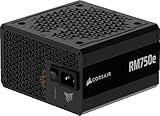
| CORSAIR RM750e | High-end single-card builds | $89.99 |
| MSI MAG A750GL | Modular compact builds with latest GPUs | $94.99 |
| Thermaltake GF1 850W | Quiet high-wattage builds | $79.95 |
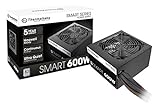
| Thermaltake SMART 600W | Entry-level office and light gaming rigs | $42.99 |
| ASRock PRO 750G | Value-focused ATX 3.1 builds | $54.99 |
| Thermaltake Smart 500W | Budget builds without discrete GPUs | $39.99 |
| Jesverty DC Bench PSU | Electronics hobbyists and repair work | $42.74 |
| Thermaltake Toughpower GT 850W | High-power builds needing native GPU cable | $79.99 |
How We Picked
We evaluated every unit on four criteria that consistently appear in owner complaints and reviewer callouts. First, connector standard compliance: ATX 3.1 and PCIe 5.1 readiness determines whether the supply natively supports modern graphics card cables or forces you to use a less reliable adapter. Second, efficiency certification and its real-world thermal implication, since a higher-rated unit runs cooler and draws less wall power under identical load. Third, warranty length, because a longer commitment from the manufacturer usually signals confidence in internal component quality. Fourth, physical size and cable configuration, which matter for case compatibility and build tidiness.
The 8 Best What Is A Power Supply in 2026
CORSAIR RM750e
This fully modular unit suits builders pairing a 750W supply with a single high-end GPU and wanting the most conservative choice in its class. CORSAIR has a long track record of low return rates on its RM series, and the RM750e continues that reputation with quiet operation and stable rail output. The ATX 3.1 and PCIe 5.1 readiness means it ships compatible with the latest connector standard out of the box.
- Pro: Proven CORSAIR reliability reputation backed by strong owner feedback
- Pro: Fully modular cabling keeps case interiors clean
- Con: Priced higher than direct 750W competitors with similar certifications
Skip it if you are on a strict budget and the MSI or ASRock alternatives offer comparable specs for less money.
MSI MAG A750GL
MSI targets the builder who wants a compact fully modular unit with a native dual-color 12V-2×6 cable, making GPU connection straightforward without a separate adapter. The ten-year warranty is the longest commitment in this group and directly addresses the fear of PSU failure destroying components. At under $95 it sits in the upper tier of the 750W segment.
- Pro: Ten-year warranty signals strong confidence in build quality
- Pro: Native dual-color 12V-2×6 cable eliminates adapter risk
- Con: Highest price among all 750W units on this list
Skip it if you do not need a 12V-2×6 connector right now and want to save a few dollars elsewhere.
Thermaltake GF1 850W
Builders who need headroom above 750W but still want Gold efficiency and near-silent idle will find this a logical pick. The Zero RPM mode keeps the fan stopped during light workloads, which owners consistently praise for office and media PC use. At $79.95 it undercuts the 850W CORSAIR equivalents that commonly sell higher.
- Pro: Zero RPM fan mode delivers genuine silence at low load
- Pro: Lower price than most 850W Gold-certified competitors
- Con: Thermaltake warranty terms on this model are shorter than MSI’s decade-long promise
Skip it if you need ATX 3.1 native support and cannot verify the unit ships with the updated connector standard.
Thermaltake SMART 600W
This is a no-frills supply for basic office machines, home theater PCs, or entry-level gaming rigs that will never pull close to 600W. The 80 Plus certification keeps electricity costs modest, and the active PFC design protects against power factor issues. At $42.99 it fills a genuine gap between the very cheapest units and the Gold-certified tier.
- Pro: Affordable price for a certified 600W supply
- Pro: Active PFC and broad voltage compatibility
- Con: Not modular, so cable management inside the case will be messier
Skip it if your GPU recommends anything above 550W or you plan future upgrades that increase draw.
ASRock PRO 750G
ASRock enters the PSU space with a straightforward value proposition: 80 Plus Gold efficiency, ATX 3.1 and PCIe 5.1 readiness, and a native 12V-2×6 connector at a price well below the CORSAIR and MSI options. The 120mm low-noise fan and three-year warranty round out a package aimed at budget-conscious upgraders who want modern compliance without premium branding tax.
- Pro: Gold efficiency and latest connector standards at the lowest price in this group
- Pro: Native 12V-2×6 connector included
- Con: Three-year warranty is the shortest among the 750W units listed here
Skip it if warranty length is your top concern and you prefer the security of a longer commitment.
Thermaltake Smart 500W
The cheapest entry in this roundup serves builds that pair integrated graphics or an ultra-low-power GPU with a modest system. The 80 Plus White certification and 120mm quiet fan make it suitable for HTPCs and light workstations. At $39.99 it answers the question of what is a power supply for someone whose primary concern is keeping the build cost under control.
- Pro: Lowest absolute cost for a certified ATX supply on this list
- Pro: 120mm fan provides adequate cooling for low-load systems
- Con: Not suitable for any build with a mid-range or higher GPU
Skip it immediately if you plan to install any dedicated graphics card requiring external power.
Jesverty DC Bench PSU
This unit is fundamentally different from every other entry because it is not a PC power supply. It is a variable bench-top DC supply for electronics hobbyists, repair technicians, and students who need adjustable voltage and current with precision display. The 0-30V and 0-10A range covers most low-power prototyping work, and the USB port adds convenience for charging devices during testing.
- Pro: Variable output with fine and coarse adjustment suits prototyping and repair
- Pro: Four-digit LED display provides clear real-time readings
- Con: Cannot replace a PC power supply; it is a bench instrument, not an internal ATX unit
Skip it if you are building or repairing a desktop PC and need a standard ATX form-factor supply.
Thermaltake Toughpower GT 850W
The Toughpower GT delivers the highest wattage among the PC supplies here while including a native PCIe 5.1 connector rated for 450W output to the GPU. That single fact makes it the safest pick for a build pairing a current-generation flagship card without relying on adapters. Smart Zero Fan logic keeps noise low at idle, and the five-year warranty sits between ASRock’s three and MSI’s ten.
- Pro: Native 450W-rated PCIe 5.1 connector for high-draw GPUs
- Pro: ATX 3.1 compliance at a competitive 850W price point
- Con: Standard form factor may not fit ultra-compact cases
Skip it if your case has tight clearance and you need a smaller physical footprint, in which case the MSI compact design serves better.
Buying Guide
Wattage Headroom and GPU Requirements
Always start with the wattage your GPU manufacturer recommends and add roughly 100 to 150 watts for the rest of the system. A 750W supply comfortably handles most single-card builds, while flagship cards benefit from 850W or more to absorb transient spikes without triggering over-current protection. Undersizing a supply risks instability under load even if average draw seems adequate.
Efficiency Certification and Its Practical Impact
80 Plus certification tiers from White through Gold indicate what percentage of wall power reaches your components as usable DC. Higher efficiency means less waste heat inside the case, a slower fan curve, and lower electricity bills over years of use. For a system running many hours per day, Gold certification pays for its small price premium relatively quickly.
Modularity and Connector Standards
Fully modular supplies let you attach only the cables you need, improving airflow and ease of assembly in compact cases. More importantly, ATX 3.1 and PCIe 5.1 compliance determines whether you can connect a modern GPU with a single native cable rather than a conversion adapter. The 12V-2×6 standard reduces risk of connector overheating and is worth prioritizing for any build using a current-generation card.
Our Verdict
The MSI MAG A750GL earns the top pick overall for its ten-year warranty, native dual-color 12V-2×6 cable, and compact modular design at a price that remains competitive with the CORSAIR alternative. The budget pick is the ASRock PRO 750G, which delivers Gold efficiency and full ATX 3.1 compliance for less than any comparable unit. If your build uses a flagship GPU that recommends 850W or higher, the Thermaltake Toughpower GT 850W becomes the best choice because its native 450W-rated PCIe 5.1 connector removes all adapter concerns.
FAQ
What is a power supply and why does it matter in a gaming PC?
A power supply converts high-voltage AC from your wall outlet into the low-voltage DC rails that every PC component needs. It matters because an inadequate or poorly made unit can deliver unstable voltage, causing crashes, throttling, or in extreme cases permanent damage to other hardware.
How do I know what wattage I need?
Check your GPU manufacturer’s recommended supply wattage, then add 100 to 150 watts for the CPU, drives, fans, and peripherals. A modern mid-range gaming build typically lands between 600W and 750W, while high-end configurations may call for 850W or above.
Is a fully modular power supply worth the extra cost?
For most builders yes, because it lets you route only the cables actually used, which improves airflow and makes future upgrades easier without a tangled mess. The price gap between modular and fixed-cable units has narrowed significantly, so the value proposition now favors modular at most wattage levels.
Can I use a bench power supply instead of a PC supply?
No. A bench supply like the Jesverty DC unit outputs variable DC for testing circuits and components, while a PC supply follows the ATX standard with fixed voltage rails, specific connectors, and power-good signaling that motherboards require. They serve entirely different purposes and are not interchangeable.