A gaming rig that crashes during a storm or a brownout loses more than your session — it can corrupt a save file, degrade an SSD controller, or damage a motherboard VRM in a single bad moment. A back up power supply solves this by switching to battery when utility power drops, giving you enough time to close games, save progress, and shut down cleanly. For anyone running a high-draw GPU alongside a modern CPU, the margin between “fine” and “fried” is measured in seconds, which is exactly what these units provide.
What separates a good UPS from a mediocre one comes down to three things: runtime under realistic load, power delivery quality (standby versus line-interactive versus pure sine wave), and how gracefully the software handles the shutdown sequence. Cheap standby units are adequate for a router; they are not adequate for a $2,000 PC with an RTX-class card. This roundup covers options from sub-$70 to nearly $250 so you can match the unit to your actual risk level and budget.
As an Amazon Associate we earn from qualifying purchases at no extra cost to you. Product prices and availability are accurate as of the date shown and are subject to change.


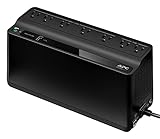


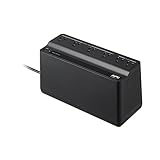
Top 3 picks at a glance
Quick Picks
| Product | Best for | Price |
|---|---|---|
| CyberPower ST425 | Router and modem | $59.95 |
| CyberPower CP1500PFCLCD | High-end gaming PC | $239.95 |
| APC BE600M1 | Mid-range desktop | $83.99 |
| CyberPower EC850LCD | Office workstation | $119.95 |
| APC BX1500M | Enthusiast single-GPU build | $189.99 |
| CyberPower ST625U | Small form-factor PC | $79.95 |
| CyberPower CP1500AVRLCD3 | Multi-monitor setup | $199.95 |
| APC BE425M | Minimal protection | $62.50 |
How We Picked
We evaluated each unit on published power capacity (VA and wattage), outlet configuration, topology type, owner-reported runtime figures, and software compatibility for automatic shutdown. Price-to-capacity ratio mattered, but we gave extra weight to pure sine wave output because modern active-PFC power supplies respond poorly to simulated sine wave. We also flagged units where owners reported premature battery degradation or noisy fans, since a UPS sits under your desk for years.
The 8 Best Back Up Power Supply in 2026
CyberPower ST425
The ST425 is a standby-architecture UPS rated at 425VA, designed for lightweight networking gear rather than a full gaming PC. Owners consistently praise its compact footprint and the fact that it passes surge protection through to every outlet, making it a practical choice for keeping a router, cable modem, and a single USB-charged device alive through short outages. The automatic voltage regulation handles mild brownouts without draining the battery. The main limitation is raw capacity: 425VA is simply too low to support a desktop with a discrete GPU, and the standby transfer time, while acceptable for electronics, can cause sensitive audio equipment to pop during switchover. Skip this if your PC draws more than about 200W during gaming, or if you need software-controlled graceful shutdown.
- Pros: Small enough for a shelf; all outlets surge-protected
- Con: Not suited for any system with a dedicated GPU
CyberPower CP1500PFCLCD
This line-interactive UPS delivers pure sine wave output at 1500VA/1000W, making it the standout choice for high-end gaming rigs with active-PFC power supplies. Twelve outlets, six battery-backed, give you room for the tower, a monitor, and peripheral chargers. Owners report that the LCD panel makes it easy to read real-time load percentage and estimated runtime, and the AVR smooths voltage fluctuations before they reach your components. The trade-off is physical size and weight — it occupies noticeable desk or floor space, and the fan runs audibly under heavy load. If you have a sub-$100 budget or only need to protect networking gear, this is overspec’d and oversized.
- Pros: Pure sine wave; generous outlet count
- Con: Bulky mini-tower form factor
APC BE600M1
APC’s BE600M1 is a standby UPS rated at 600VA/330W, aimed at users who want to protect a mid-range desktop, a router, and a NAS without spending over $90. It includes four battery-backed outlets and integrates cleanly with APC’s PowerChute software for timed shutdowns, which owners consider the most reliable auto-shutdown experience in this price bracket. The unit is compact and quiet. Its downside is the 330W ceiling — any modern GPU exceeds that under load, so it works best paired with integrated graphics or an entry-level discrete card. Skip if your system idles near 200W or if you need more than four protected outlets.
- Pros: Excellent software; very compact
- Con: Low wattage ceiling limits real-world load
CyberPower EC850LCD
The Ecologic line targets users who want line-interactive protection without a full sine wave output. Rated at 850VA with an LCD readout, the EC850LCD includes a “Green” outlet mode that cuts power to peripherals when the master device loses signal, which helps trim standby energy waste. Owners appreciate the build quality and the audible alarm that can be muted. The simulated sine wave output is the key compromise — it works fine for most switching power supplies but can cause buzzing in audio amplifiers and is not ideal for the most sensitive PFC units. Skip if your PC uses a high-quality 80 Plus Titanium PSU that expects clean input.
- Pros: Eco mode saves energy; clear LCD display
- Con: Simulated sine wave only
APC BX1500M
A line-interactive UPS with 1500VA/900W capacity, the BX1500M is a strong mid-tier option for enthusiast single-GPU builds that don’t quite need pure sine wave. The LCD shows input voltage, battery status, and load, and APC’s AVR corrects over- and under-voltage without switching to battery, extending usable runtime. Owners note the unit handles brownouts smoothly and the eight-outlet layout covers a tower plus two monitors comfortably. The transfer time is slightly longer than CyberPower’s equivalent, and some reviewers report the fan is audible in a quiet room. Skip if your system draws over 900W or if you have strict noise requirements for a bedroom setup.
- Pros: Solid AVR; clear status display
- Con: Fan noise under load
CyberPower ST625U
The ST625U steps up from the ST425 with 625VA capacity in a similar standby topology. It suits users with a compact gaming PC or an APU-driven small-form-factor build who want basic surge protection and a few minutes of battery for a safe shutdown. Owners highlight the low price and the fact that it fits behind most desks without cable congestion. The 625VA rating translates to roughly 360W of usable load, which means even modest discrete GPUs will push it close to its limit. Skip if you run an RTX 3060 or above, or if you need more than a couple of battery-backed outlets.
- Pros: Affordable; small footprint
- Con: Limited headroom for any discrete GPU
CyberPower CP1500AVRLCD3
This is the line-interactive sibling to the CP1500PFCLCD, sharing the same 1500VA/1000W rating but with simulated rather than pure sine wave output. The updated LCD panel and improved software make it easier to configure scheduled self-tests and shutdown thresholds. Owners with multi-monitor setups appreciate the outlet layout and the runtime at moderate loads. The simulated waveform is the single reason to hesitate over the PFCLCD variant — if you own a high-efficiency PSU or run sensitive audio gear, the extra cost of the pure sine wave model is worth it. Skip if you specifically need clean waveforms or if your budget tops out below $200.
- Pros: Good runtime at 50-60% load; refined software
- Con: Simulated sine wave output
APC BE425M
The BE425M is APC’s entry-level standby unit at 425VA/225W, essentially a surge protector with a small battery attached. It keeps a router, a modem, or a USB-powered device online through brief interruptions. PowerChute still works with it, which is unusual at this price. Owners value the brand’s reliability and the compact design. The wattage ceiling is very low, and runtime under even a light load is short. Skip for any desktop that draws over 200W; this unit exists for networking and minimal-electronics protection, not for gaming PCs.
- Pros: Cheap; trusted brand software
- Con: Very low capacity ceiling
Buying Guide
VA and Wattage: Read Both Numbers
Marketing leads with VA, but your power supply draws watts. A 1500VA unit that outputs only 1000W cannot protect a system that peaks at 1100W during a heavy AAA title. Check the wattage rating against your GPU’s TDP plus your CPU’s package power, then add 20-30% headroom. In 2026, with current-gen GPUs drawing 300-450W alone, the 1000W threshold is the minimum for a serious gaming PC.
Topology: Standby vs. Line-Interactive vs. Pure Sine Wave
Standby units switch to battery only when input drops below a threshold, introducing a brief gap. Line-interactive models correct voltage in-step before switching, reducing battery drain during brownouts. Pure sine wave output matters because active-PFC power supplies can overheat or fault when fed a simulated waveform. If your PC costs more than the UPS, spend the extra on line-interactive or pure sine wave.
Software and Runtime Expectations
Owner-reported runtimes are typically 2-5 minutes at 50% load for a 1000W-class unit — enough to save and shut down, not to ride out a storm. Verify the included software supports automatic graceful shutdown, scheduled self-tests, and USB HID reporting. APC’s PowerChute and CyberPower’s PowerChute equivalents both work, but confirm compatibility with your OS before purchasing.
Our Verdict
For a serious gaming PC, the CyberPower CP1500PFCLCD is the top pick: pure sine wave output, 1000W capacity, twelve outlets, and a clear LCD at a price that undercuts comparable units from other brands. The best budget option is the APC BE600M1 — if your system draws under 300W, it offers the most reliable shutdown software in its class for under $85. That said, if you already own an 80 Plus Titanium PSU and run a multi-monitor setup where the CP1500PFCLCD’s bulk is a problem, the CyberPower CP1500AVRLCD3 delivers equivalent wattage and runtime in a form factor that may fit your desk better.
FAQ
Do I need a back up power supply for a gaming PC?
Not strictly, but a sudden loss of power during a GPU-heavy workload can corrupt data and, over repeated incidents, stress VRM components. A UPS converts an unpredictable event into a controlled shutdown.
How long does a UPS battery last before needing replacement?
Owner feedback across these models suggests three to five years under normal cycling. Heat accelerates degradation, so keep the unit ventilated and away from the exhaust of your case.
Will a UPS damage my PC’s power supply over time?
No. A quality UPS delivering the correct waveform feeds your PSU the same AC it expects from the wall. Simulated sine wave units can cause audible coil whine in some PFC circuits but do not harm components.
Can I daisy-chain a UPS into a surge strip?
Avoid it. Surge strips introduce impedance and can confuse the UPS’s AVR, triggering nuisance alarms or delayed transfer. Connect the UPS directly to the wall outlet and plug your devices into its battery-backed side.