Buying an LED power supply sounds simple: match the voltage, plug it in, done. In practice, the wrong choice causes flicker, overheating, premature strip failure, or a unit that cannot physically connect to your cable without soldering or an adapter. The stakes rise when you are powering a long run of 5050 strips behind a desk or a full perimeter of 2835 tape around a gaming setup, because sustained load exposes every shortcut in regulation and heat management.
What separates a good unit from a mediocre one is straightforward once you know what to look for: regulated output that keeps ripple low enough to prevent visible flicker, enough wattage headroom so the transformer runs cool rather than throttling, and connector compatibility that eliminates guesswork. This roundup compares eight models available in 2026 across desktop bricks, waterproof drivers, and a bench supply, using published specifications, listed prices, and recurring owner feedback to highlight who each unit actually serves.
As an Amazon Associate we earn from qualifying purchases at no extra cost to you. Product prices and availability are accurate as of the date shown and are subject to change.





Top 3 picks at a glance
Quick Picks
| Product | Best for | Price |
|---|---|---|
| ALITOVE DC 12V 5A | General 5050/3528 strip projects | $12.99 |
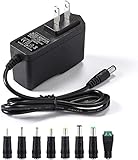
| 12V 2A Multi-Tip Adapter | Small single-color strips and peripherals | $11.99 |
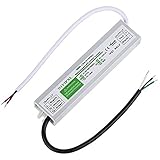
| LED Driver 60W IP67 | Outdoor or humid-area 12V lighting | $18.86 |
| Armacost Lighting 810120 | Clean indoor installs where aesthetics matter | $15.99 |
| 12V 5A 5.5×2.1mm Converter | Camera and drive setups needing common barrel | $9.99 |
| ALITOVE DC 12V 30A 360W | High-output strip runs and CCTV systems | $24.99 |
| inShareplus 24V 400W IP67 | North American 24V outdoor signage | $62.99 |
| Jesverty SPS-3010 Bench Supply | Prototyping and adjustable-voltage experiments | $42.74 |
How We Picked
We compared published output ratings, input ranges, connector sizes, ingress protection scores, and recurring patterns in owner reviews. Four criteria dominated the evaluation: wattage headroom over the intended load (units running near their ceiling die young), voltage and connector match to your actual strip or device, regulation quality indicated by whether the product is labeled “regulated” or “switching,” and physical design cues like potting compounds or aluminum heat sinks that signal durability.
The 8 Best Led Power Supply in 2026
ALITOVE DC 12V 5A 60W
This is the default choice for anyone running a standard 12V LED strip inside a PC case or along a desk edge. The 60W rating covers roughly five meters of dense 5050 tape with comfortable headroom. Owner feedback consistently praises the compact form factor and quiet operation at partial load.
- Pro: 5.5×2.5mm barrel plug fits the vast majority of 12V strip connectors without adapters.
- Pro: Wide 100-240V input works globally, useful for travelers or mixed-voltage regions.
- Con: No exposed terminal block, so you cannot hardwire it into a permanent fixture easily.
Skip it if your strip run exceeds about five meters at full brightness or if you need a sealed unit for outdoor use.
12V 2A Multi-Tip Adapter
Designed for small loads: a single-color accent strip, a webcam, a GPS puck, or a Bluetooth speaker. The eight included tips give it surprising versatility for a sub-$12 brick, and the 6-foot cord reaches outlets that a fixed-cable unit cannot.
- Pro: Tip variety means one purchase covers multiple devices, reducing clutter.
- Pro: Lowest price in the roundup for anyone who only needs a trickle of current.
- Con: 24W maximum output cannot sustain more than a short RGB strip at full brightness.
Skip it for any project with more than two or three meters of multicolor tape; the wattage ceiling is too low.
LED Driver 60W IP67
When your 12V strip goes outside the case—under eaves, along a patio, or in a bathroom—this sealed driver earns its place. The IP67 rating means dust-tight and temporary submersion resistant, which no open-brick competitor offers at this price tier.
- Pro: True waterproofing with exposed terminals for permanent wiring jobs.
- Pro: 100-260V input handles unstable grid regions without damage.
- Con: Larger housing than desktop bricks, making it awkward to hide in tight cable channels.
Skip it indoors if you value compact size; the extra bulk buys protection you will not use inside a climate-controlled room.
Armacost Lighting 810120
A brand known in the professional cove-lighting space, Armacost delivers a white, low-profile driver that blends into finished interiors. It targets installers and homeowners who want the power supply hidden above crown molding or behind a shelf rather than tucked in a PC chassis.
- Pro: Recessed mounting design keeps it invisible once installed.
- Pro: Backed by a brand with dedicated lighting-customer support rather than generic seller listings.
- Con: Priced above comparable 12V bricks with identical electrical ratings.
Skip it if you need raw wattage per dollar; you are paying partly for the form factor and brand ecosystem.
12V 5A 5.5×2.1mm Converter
The cheapest 60W option here, this unit shares the same power envelope as the ALITOVE but swaps to a 5.5×2.1mm barrel—the connector CCTV cameras and external HDD enclosures use. Its fixed 120V input means it is strictly a North American product.
- Pro: Best price-per-watt among the 12V models in this list.
- Pro: 5.5×2.1mm jack is the most common surveillance-camera connector, eliminating adapter headaches.
- Con: Single-voltage input limits use to 120V outlets only.
Skip it for international projects or 240V regions; the input range is too narrow.
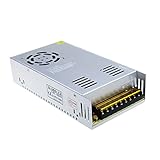
ALITOVE AC to DC 12V 30A 360W
This switching supply targets heavy installations: a full-room perimeter of 5050 strips, a multi-camera CCTV system, or an amateur-radio rig. The 360W rating provides roughly five times the headroom of the smaller bricks, and the exposed screw terminals let you wire directly to distribution blocks.
- Pro: Enormous output headroom prevents thermal throttling on long runs.
- Pro: Dual 110V/220V switch handles worldwide mains without a separate transformer.
- Con: Bare terminals and no enclosure mean it must be mounted inside a protective box.
Skip it for short accent strips; a 60W unit will outlast it simply because you never push the larger transformer hard.
inShareplus 24V 400W IP67
The only 24V option here, this driver suits commercial signage, long strip runs above five meters, and any fixture designed for the higher voltage. The IP67 rating and rainproof claim make it appropriate for exposed outdoor installations where condensation or splashing is inevitable.
- Pro: 400W output handles multiple strip branches from a single transformer.
- Pro: Sealed and rated for direct outdoor weather exposure.
- Con: 90-140V input locks it to North American mains; unusable in 220V regions.
Skip it if your strips are 12V; applying 24V will destroy them instantly.
Jesverty SPS-3010 Bench Supply
A variable 0-30V, 0-10A regulated bench supply with a 4-digit LED display and a 5V/2A USB port, this is not a strip transformer but a development tool. Its value in a roundup is for the hobbyist who designs custom lighting controllers, tests strip tolerance, or needs precise voltage during prototyping.
- Pro: Adjustable output and coarse/fine dials let you dial in exact voltage for any project.
- Pro: High-precision display shows real-time current draw, useful for debugging faulty strips.
- Con: Bulky tabletop unit that has no place inside a PC build or hidden channel.
Skip it if you simply want to light a strip; the fixed-voltage bricks are cheaper and smaller for that task.
Buying Guide
Calculate Wattage Headroom Correctly
Multiply your strip length by its rated watts-per-meter, then add at least twenty percent. A five-meter run of 14.4W/m tape draws 72W, which exceeds the 60W ceiling of most small bricks. Owners who skip this step report early failure from sustained thermal stress. The 360W ALITOVE exists precisely because builders underestimate how fast dense strips consume power.
Match the Connector Before the Cable
The two common barrel sizes—5.5×2.5mm and 5.5×2.1mm—look identical but will not seat reliably in each other, causing intermittent contact and flicker. LED strips typically use 2.5mm; cameras and drives typically use 2.1mm. Verify your strip’s plug diameter against the listed output connector before purchasing, or budget for an adapter.
Regulation Type Determines Flicker and Longevity
“Regulated” or “switching” power supplies maintain stable voltage under varying load, preventing visible ripple that cheap unregulated bricks allow. For any setup viewed directly—cove lighting, under-cabinet strips, or case lighting visible through a tempered panel—choose a labeled regulated unit. Unregulated transformers drift with load changes and accelerate LED degradation over months.
Our Verdict
The ALITOVE DC 12V 5A is the top pick for most readers: correct wattage for typical PC-case runs, a universally compatible barrel plug, global input range, and strong owner satisfaction at twelve dollars. The budget pick is the 12V 5A 5.5×2.1mm converter at $9.99, ideal for North American camera or short-strip setups where the connector matches. If your project is outdoors or in a humid environment, the IP67-sealed LED Driver at $18.86 is the only sensible choice under twenty dollars.
FAQ
Can I use a 24V power supply on a 12V LED strip?
No. Applying double the rated voltage will overcurrent the strip and burn out diodes within seconds, often visibly. Always match supply output to the strip’s rated input exactly.
Why does my LED strip flicker even with the correct power supply?
Flicker usually indicates poor regulation, insufficient wattage headroom causing the transformer to cycle, or a loose barrel connection. Switching to a unit labeled “regulated” with extra capacity eliminates the problem in most owner-reported cases.
How long do these power supplies last?
Owners of quality regulated bricks commonly report five or more years of continuous use at moderate load, while unregulated or overtaxed units fail within months. Running a supply well below its rated output is the single biggest factor in lifespan.
Do I need a dimmer, or does the power supply handle that?
A standard constant-voltage LED power supply does not dim on its own; you need a separate PWM or trailing-edge dimmer between the supply and the strip. Some units in this list are compatible with inline controllers, but none include dimming functionality built in.