An HP OMEN desktop makes the most sense when you plan to keep it broadly as configured, because the chassis, motherboard and power supply are HP-specific in ways that quietly narrow your options later. Within that constraint the range is strong, and the standout is the OMEN 45L with the Core Ultra 7 265K and RTX 5070 Ti at $2,447.49, which is the configuration where the case volume, the cooling and the graphics card are properly matched. The eight builds here span $869.99 to $2,949.99 and split across two very different chassis: the large 45L tower with room for liquid cooling, and the compact 16L that trades airflow for desk footprint. One listing in this group is not even a factory HP configuration, which is worth knowing before you order. This review works through each build, states what the parts list suggests about real performance, and is specific about which upgrades the proprietary hardware will and will not allow.
Top 3 picks at a glance
Configurations at a glance
As an Amazon Associate we earn from qualifying purchases at no extra cost to you. Product prices and availability are accurate as of the date shown and are subject to change.

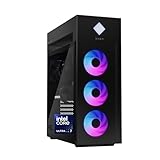


| Configuration | Key specs | Price | Best for |
|---|---|---|---|
| OMEN 45L (ARC A750, Ryzen 7 7700) | Intel ARC A750, 16GB DDR5, 1TB NVMe, 1200W Platinum, liquid-cooled | $869.99 | Cheapest way into a 45L chassis |
| OMEN 16L (Ryzen 5, RX 7600) | RX 7600, 16GB RAM, 1TB SSD, Windows 11 Home | $959.99 | Compact 1080p starter |
| OMEN 45L (i7-12700KF, GTX 1660 Super) | GTX 1660 Super, 16GB RAM, 512GB SSD | $1,199.99 | Buyers who want the shell and will swap the GPU |
| OMEN 16L (i5-14400F, RTX 3050) | RTX 3050, compact 16L tower | $1,199.99 | Esports and older titles at 1080p |
| OMEN 45L (Core i7, 32GB) | Intel Core i7, 32GB RAM, 1TB SSD | $1,499 | Multitaskers who want the big chassis |
| OMEN 16L (Ryzen 7 8700F, RTX 5060) | RTX 5060, 32GB RAM, 1TB SSD, Windows 11 Pro | $1,749.99 | Small-tower 1080p and 1440p play |
| OMEN 45L (Core Ultra 7 265K, RTX 5070 Ti) | RTX 5070 Ti, 32GB RAM, 1TB SSD, Win 11 Pro, GT22-3060 | $2,447.49 | Best overall balance in the lineup |
| OMEN 45L GT22 (Core Ultra 9 285K, RTX 5070) | 64GB DDR5, 2TB NVMe, liquid cooling, RGB, Win 11 Pro | $2,949.99 | Creators who need cores and storage |
The eight configurations in detail
HP OMEN 45L Gaming Desktop, Intel ARC A750, AMD Ryzen 7 7700, 16GB DDR5, 1TB NVMe, 1200W Platinum PSU
At $869.99 this is the cheapest entry here and also the odd one out: the listing is sold under the Empowered PC brand rather than HP, which means it is a third-party configuration built into an OMEN 45L chassis rather than a factory HP build. That explains the parts combination, which no HP configurator would produce: an AMD Ryzen 7 7700 with an Intel ARC A750 graphics card and a 1200W 80 Plus Platinum supply that is wildly oversized for the load.
Taken on its own merits the parts are decent. The Ryzen 7 7700 is an eight-core AM5 chip with a modest 65W nominal rating, and the ARC A750 with 8GB of VRAM is a competent 1080p card. Estimated from the configuration rather than measured, this pairing should handle 1080p high settings in most current titles, with more variance between games than an NVIDIA or Radeon card of similar class because ARC driver maturity differs by title. Total system draw under load should sit near 320W to 380W, meaning that 1200W supply runs at roughly a quarter of capacity.
Pros
- Enormous power supply headroom for any future graphics card
- AM5 socket gives a genuine CPU upgrade path
- Liquid cooling and a full 45L chassis for under $900
Cons
- Not a factory HP configuration, so support and coverage differ from a standard OMEN
- ARC A750 performance varies more by title than comparable NVIDIA cards
- Only 16GB of RAM and 1TB of storage at this price
Who it is for: a bargain hunter comfortable buying a reseller-configured system who values chassis and supply headroom over out-of-the-box graphics performance.
HP OMEN 16L Gaming Desktop PC, AMD Ryzen 5, 16GB RAM, 1TB SSD, RX 7600, Windows 11 Home
The $959.99 16L is the compact entry point into the OMEN line. A Radeon RX 7600 with 8GB of VRAM, an unspecified Ryzen 5, 16GB of memory and a 1TB drive make a coherent 1080p machine, and the 16L tower is small enough to sit on a desk without dominating it. Windows 11 Home rather than Pro is the only software difference from the pricier configurations.
Estimated from the parts list, an RX 7600 should deliver high settings at 1080p in most current titles and is best treated as a 1080p card rather than a 1440p one. The real constraint in this build is not the GPU but the chassis. A 16-litre case has limited fan mounting area, so a card and CPU both working hard share a small volume of air. Expect the fans to become audible sooner than they would in a 45L, and expect the case to be the reason you cannot fit a larger card later. Anyone shopping specifically for a small tower should read our guide to the best small form factor gaming PCs first.
Pros
- Genuinely compact tower that fits under or on a desk
- 1TB of storage rather than 512GB at a sub-$1,000 price
- RX 7600 is well matched to 1080p high settings
Cons
- Ryzen 5 model is not specified on the listing
- 16GB of RAM with limited slots in a small board layout
- 16L chassis restricts both card length and future cooling upgrades
Who it is for: a 1080p player with limited desk space who accepts that the case, not the card, sets the ceiling.
HP OMEN 45L Gaming PC, Intel i7-12700KF, GTX 1660 Super, 16GB RAM, 512GB SSD
This $1,199.99 configuration is the hardest to recommend at face value. The Core i7-12700KF is still a capable twelve-core chip with eight performance and four efficiency cores, but the GTX 1660 Super is several generations behind, has 6GB of VRAM and no hardware support for the current upscaling and ray tracing features that newer titles increasingly assume. Pairing it with a 45L chassis and only a 512GB drive makes the value proposition strange.
Estimated from the configuration, this system will play esports titles at high frame rates at 1080p and will run modern single-player releases only at medium or low presets. The CPU will not be the limit in any of that; the graphics card will, by a wide margin. What you are really buying is a 45L shell, a decent i7 and a power supply, with the intention of installing a modern card yourself. That is a defensible plan, but it makes this a project rather than a finished machine, and you should confirm the supply’s wattage and connector layout before committing to it.
Pros
- Twelve-core i7-12700KF has real multitasking and streaming capability
- Full-size 45L chassis with room for a much larger card
- Lowest price of entry into a factory HP 45L configuration
Cons
- GTX 1660 Super is badly outclassed and lacks modern upscaling support
- 512GB of storage is the smallest in this lineup
- LGA1700 platform limits future CPU options to existing parts
Who it is for: a buyer who specifically wants the 45L chassis and i7 and has already budgeted for a graphics card replacement.
HP OMEN 16L Gaming Desktop, Intel Core i5-14400F, NVIDIA GeForce RTX 3050
Also $1,199.99, this 16L pairs a Core i5-14400F with an RTX 3050. The i5 is a sensible six performance core and four efficiency core chip with no integrated graphics, and it is comfortably faster than the graphics card requires. The RTX 3050 is an entry-level card with 8GB of VRAM in its more common configuration, which puts it below the RX 7600 in the $959.99 16L that costs $240 less.
Estimated from the parts, this is a 1080p machine for esports and older or less demanding titles at high settings, and a medium-preset machine in recent releases. The RTX 3050 does bring NVIDIA’s upscaling and encoding features, which the RX 7600 answers with its own equivalents, so the choice between the two comes down to feature preference more than raw output. What is harder to justify is the price gap. Unless you specifically need NVIDIA’s encoder for streaming, the cheaper 16L is the better buy. Our roundup of gaming PCs for esports covers where an entry card like this genuinely suffices.
Pros
- i5-14400F is a strong CPU for the price bracket
- NVIDIA encoder is useful for streaming and recording
- Compact chassis with a tidy factory cable layout
Cons
- RTX 3050 is slower than the RX 7600 in a cheaper 16L here
- RAM and storage capacity are not stated on the listing
- 16L airflow limits sustained performance under long loads
Who it is for: a streamer on a budget who wants NVIDIA encoding in a small tower and does not need high settings in demanding new titles.
HP OMEN 45L Gaming Desktop Tower PC, 32GB RAM, 1TB SSD, Intel Core i7
At $1,499 this 45L brings 32GB of memory and a 1TB drive alongside an unspecified Intel Core i7. The memory capacity is the headline: 32GB removes the most common friction point in a mid-priced prebuilt and means you can run a game, a capture tool and a browser without paging. The 45L chassis has the intake area and the internal volume that the 16L lacks, so sustained loads do not push the fans as hard.
The listing does not name the graphics card, the i7 generation or the power supply, which is a significant gap at $1,499. Those three items determine almost everything about how the machine performs and how long it stays useful. Without them, any performance estimate would be guesswork, so we will not offer one. What we can say from the chassis alone is that a 45L gives you more physical room for a card upgrade than any other case in this lineup, and that HP’s larger tower configurations typically pair with supplies sized for a mid to upper-range card. Confirm the exact GPU and PSU with the seller before ordering.
Pros
- 32GB of RAM at a mid-range price
- 45L chassis with the best airflow and clearance in the lineup
- 1TB of NVMe storage as standard
Cons
- Graphics card is not named, which is the most important omission possible
- Core i7 generation unstated, so platform age is unknown
- No power supply wattage or efficiency rating listed
Who it is for: a buyer who wants the 45L chassis and 32GB of memory and is willing to confirm the graphics card before paying.
HP OMEN 16L Gaming Desktop PC, AMD Ryzen 7 8700F, 32GB RAM, 1TB SSD, RTX 5060, Windows 11 Pro
The $1,749.99 16L is the best-specified small tower here. A Ryzen 7 8700F is an eight-core AM5 chip without integrated graphics, 32GB of memory removes the multitasking ceiling, storage is 1TB of NVMe, and the operating system is Windows 11 Pro rather than Home. The Panda Metal finish is a cosmetic touch that distinguishes it from the plain black shells.
Estimated from the parts list, an RTX 5060 with a Ryzen 7 8700F should be comfortable at 1080p high settings across current titles and workable at 1440p with upscaling enabled and presets dialled back. The 8GB frame buffer is the ceiling rather than the CPU. The chassis is the other constraint worth naming: a 16-litre case with an RTX 5060 and an eight-core chip has a smaller thermal budget than the same parts in a 45L, and the fan curve will reflect that during long sessions. Combined system draw under gaming load should sit around 300W to 360W, an estimate based on the component classes involved.
Pros
- 32GB of RAM and an eight-core AM5 CPU in a compact tower
- Windows 11 Pro rather than Home
- RTX 5060 is well matched to the chassis thermal limits
Cons
- $1,749.99 is high for RTX 5060 performance
- 8GB of VRAM constrains texture settings at 1440p
- 16L case leaves little room for a larger card or a bigger cooler later
Who it is for: someone who wants a well-specified small desktop and values the footprint enough to pay a premium for it.
HP OMEN 45L Gaming Desktop, Intel Core Ultra 7 265K, 32GB RAM, 1TB SSD, RTX 5070 Ti, Windows 11 Pro, GT22-3060
This $2,447.49 GT22 configuration is the one we would pick from the range. The Core Ultra 7 265K is a current-generation Intel chip with a strong core mix, the RTX 5070 Ti brings 16GB of VRAM, memory is 32GB and the operating system is Windows 11 Pro. Crucially, all of that sits in the 45L chassis, which has the internal volume to actually cool an RTX 5070 Ti during a long session rather than merely accommodate it.
Estimated from the configuration, this pairing should hold high frame rates at 1440p in most current titles at high settings and manage 4K at high settings with upscaling enabled. The 16GB frame buffer is the reason it will age better than the RTX 5060 configurations: texture memory, not raw shader throughput, is what forces settings compromises first. System draw under a combined load should sit in the 480W to 550W range based on the part classes, which is why the 45L’s cooling arrangement matters more here than anywhere else in the lineup.
Pros
- 16GB of VRAM on the RTX 5070 Ti removes the texture ceiling
- 45L chassis has the airflow to sustain this thermal load
- Windows 11 Pro and a modern Intel platform
Cons
- 1TB of storage is thin for a $2,447.49 system
- Power supply wattage is not stated on the listing
- Proprietary board and front panel wiring limit reuse of the parts elsewhere
Who it is for: a 1440p or entry 4K player who wants a finished high-end machine and does not intend to rebuild it into a different case.
HP OMEN 45L GT22 Gaming Desktop, Intel Core Ultra 9 285K, 64GB DDR5, 2TB NVMe, RTX 5070, Liquid Cooling
The $2,949.99 GT22 is the most expensive configuration here, and its money goes into the CPU, memory and storage rather than the graphics card. A Core Ultra 9 285K boosting to 5.7GHz, 64GB of DDR5 and a 2TB NVMe drive make an unusually strong workstation, and the listing explicitly confirms liquid cooling, which the flagship chip needs. The graphics card is an RTX 5070 rather than the 5070 Ti in the $500 cheaper configuration above.
That trade is worth understanding before you pay the premium. Estimated from the parts, the RTX 5070 is a strong 1440p card but has less headroom than the 5070 Ti, so for pure gaming the cheaper GT22 is the faster machine. Where this configuration wins is anything that scales with cores, memory or storage capacity: video editing timelines, compilation, virtual machines and large project files. If you game and also work on the same box, the 64GB and 2TB matter more than the difference between the two graphics cards. Our comparison of high-end gaming PCs puts this kind of trade-off in wider context.
Pros
- 64GB of DDR5 and 2TB of NVMe storage, both rare at any price
- Liquid cooling explicitly listed, which the Core Ultra 9 285K requires
- Strongest CPU in the lineup for creative and compilation workloads
Cons
- RTX 5070 is slower for gaming than the 5070 Ti in a cheaper configuration
- Core Ultra 9 285K is overkill for gaming alone
- Proprietary cooling layout complicates any later cooler replacement
Who it is for: someone who edits, compiles or renders on the same machine they game on and needs the memory and storage more than the extra graphics performance.
How we evaluate prebuilts
Marcus Reilly runs reviews on this site with nine years of building and servicing systems behind him, working from a two-bench test lab with calibrated power meters and thermal probes. Those two instruments shape the questions we ask about a prebuilt. A wall meter shows whether a supply is being asked to run near its rating continuously, which is the condition that ages capacitors fastest. Thermal probes at the case intake and exhaust show whether a chassis is genuinely moving air or simply recirculating it, which is the difference between the 45L and the 16L in practice.
For a single-brand review we start with what the listing discloses and treat omissions as information. A configuration that names its supply wattage, its cooling method and its exact CPU model is a different proposition from one that lists only a memory capacity and a drive size, even at the same price. Two builds in this group name neither the graphics card nor the supply, and we have said so rather than filling the gap with assumptions.
Every performance figure in this article is an estimate derived from the published parts list, not a measurement from these specific machines. We do not publish frame rates we have not recorded ourselves. What we do publish is which component sets the ceiling in each configuration, because that determines how the machine ages and what upgrade will actually help. If you want the wider field, our guide on choosing a prebuilt gaming PC covers the same reasoning applied across brands.
OMEN and Victus, 45L and 16L: how HP positions the range
HP runs two gaming lines. Victus is the entry brand, aimed at buyers stepping up from a general-purpose desktop, with simpler chassis, air cooling and lower-wattage supplies. OMEN sits above it and is where the larger cases, liquid cooling options and higher-end graphics configurations live. The distinction is real but it is not a guarantee: an OMEN badge on a compact tower with an entry card is still an entry machine, as the $1,199.99 RTX 3050 16L in this group demonstrates.
The more useful split within OMEN is chassis volume. The 45L is a full-size tower with substantial intake area, room for a 240mm or larger radiator depending on model year, and the clearance to fit a long triple-fan graphics card without fighting the drive cages. It is the chassis you want if you intend to install a bigger card later. The 16L is a compact tower designed around a specific class of hardware. It fits an RTX 5060 or RX 7600 comfortably and does not pretend to accommodate more.
Pricing overlaps between the two, which is where buyers go wrong. The 16L with the Ryzen 7 8700F and RTX 5060 costs $1,749.99, while the 45L with a Core i7 and 32GB costs $1,499. Paying more for the smaller chassis is defensible if desk space is genuinely tight, but it is a footprint decision, not a performance one. Decide which case you need before you compare specifications.
Proprietary parts, thermals and the upgrades you will not be able to make
The OMEN’s real limitation is that HP builds these machines as integrated products, not as standard ATX systems in branded shells. The motherboard is an HP-specific board designed for that chassis, with a front panel header wired to HP’s own connector rather than the individual pin arrangement a retail board uses. If you ever want to move the parts into a different case, or put a retail board into the OMEN shell, that wiring is the first thing that stops you. The front panel cable will not simply plug into a third-party board, and the power and reset switches, USB ports and audio jacks are all on that harness.
Power supplies are the second proprietary trap and the more expensive one. Depending on model year, HP has used both standard ATX units and units with non-standard connector layouts in the OMEN desktops. That matters because the most common reason to replace a supply is a graphics card upgrade, and a supply that does not use standard 24-pin and CPU connectors cannot be swapped for an off-the-shelf replacement without adapters. Before you plan any card upgrade, open the side panel and photograph the supply label and its cable ends. If the wattage is not listed on the product page, ask the seller.
Cooling is where the two chassis diverge most. The 45L configurations listed with liquid cooling have both the radiator area and the case volume to hold a Core Ultra 9 285K or an RTX 5070 Ti at steady clocks through a long session. The 16L has neither, and physics decides the outcome: less air volume and fewer fan mounts mean the same heat requires higher fan speeds. That is not a defect, it is the trade you make for a smaller box, but it means the 16L will be the louder machine under identical loads. The cooler in these systems is also matched to the chassis, so replacing it with a retail tower or a 360mm radiator is often not possible.
RAM and storage skimping shows up at specific price points rather than across the range. Three configurations here ship 16GB, one ships only 512GB of storage at $1,199.99, and even the $2,447.49 flagship ships a single 1TB drive. Memory and drives are the two upgrades HP does not make difficult, so price those in rather than treating them as deal-breakers. On support, a manufacturer like HP handles the system as a whole rather than routing you to individual component makers, which is generally the more convenient arrangement when something fails early. Terms and durations change by region and model, so confirm the current coverage on the listing itself and compare it against what other builders offer in our overview of gaming PC warranty and support.
Who should buy an OMEN, and who should build instead
Buy an OMEN if you want a machine that arrives configured, tested and running, you value HP’s single-vendor support, and you are broadly happy with the specification as sold. The 45L configurations in particular are well-built machines with tidy internal layouts and cooling that has been designed for the specific parts inside them. If your upgrade plans stop at more memory and another drive, none of the proprietary constraints will ever affect you.
Build instead if you know you will be swapping the graphics card, the cooler or the power supply within the machine’s life. At $2,447.49 or $2,949.99 you are spending enough that a self-build lets you choose a named supply with standard connectors, a cooler you can replace, and a motherboard with a conventional front panel header. You will spend an evening assembling and handle component warranties individually, but nothing about the machine will be locked to one vendor’s design decisions.
The other argument for building is specification mismatch. The $2,949.99 GT22 pairs a flagship CPU with a mid-upper graphics card, and the $1,199.99 45L pairs a decent i7 with a card several generations old. Neither combination is one a self-builder would choose, and correcting a factory pairing after purchase costs more than choosing correctly at the outset.
Verdict
The best overall configuration is the OMEN 45L with the Core Ultra 7 265K and RTX 5070 Ti at $2,447.49. It is the build where the graphics card, the 16GB frame buffer, the 32GB of memory and the 45L chassis all match each other, and it is the only one in the range we would expect to stay comfortable at 1440p for several years without a component swap. The value pick is the 16L with the Ryzen 5 and RX 7600 at $959.99, which delivers honest 1080p performance in a genuinely compact tower and costs $240 less than the RTX 3050 16L that performs no better. The high-end pick is the GT22 with the Core Ultra 9 285K, 64GB of DDR5 and 2TB of storage at $2,949.99, but only for someone who works on the machine as well as gaming on it, since its RTX 5070 is the slower gaming card of the two flagships. Avoid the $1,199.99 GTX 1660 Super 45L unless you are buying it as a chassis to rebuild.
Frequently asked questions
What is the difference between HP OMEN and HP Victus?
Victus is HP’s entry gaming line and OMEN is the enthusiast line above it. In desktops that difference shows up in the chassis, the cooling and the power delivery rather than the badge. OMEN 45L systems get larger cases, liquid cooling on most higher configurations and higher-wattage supplies, while Victus and the smaller OMEN 16L use compact towers with tighter airflow. If you plan to run a card above the RTX 5060 class, the larger OMEN chassis is the one that has room for it.
Can you upgrade the graphics card in an HP OMEN 45L?
Usually yes, and the 45L has more physical clearance than most prebuilt towers, but two things constrain you. The power supply may use a proprietary connector layout depending on the model year, so a retail replacement unit does not always drop in. And the motherboard is an HP-specific board with its own front panel header wiring, which matters if you ever move the parts to a different case. Check the supply’s connector type and wattage before you buy a larger card.
Is the HP OMEN 16L too small for a serious gaming build?
The 16L is fine for cards in the RTX 5060 and RX 7600 class that it ships with, and it is a genuinely compact tower that fits on a desk. It is not the chassis to buy if you intend to install a large triple-fan card or a 360mm radiator later. Airflow is the limiting factor, not the card slot: a smaller volume with fewer fan mounts means sustained loads push component temperatures higher and the fans spin faster to compensate.
Are HP OMEN desktops loud under load?
Noise scales with the chassis and the cooling method rather than the brand. The 45L configurations listed with liquid cooling move heat out of the case more effectively and generally hold a steadier, lower fan curve during long sessions. The compact 16L has less radiator and fan area for the same heat, so it ramps sooner. The OMEN Gaming Hub software lets you change fan profiles, which is the fastest way to trade a few degrees for a quieter room.
What software comes with an HP OMEN gaming PC?
OMEN desktops ship with the OMEN Gaming Hub, which handles fan curves, lighting, performance modes, network prioritization and undervolting on supported configurations. Several listings here also include Microsoft Copilot and Windows 11 Pro rather than Home. The Hub is genuinely useful for fan tuning, which is the setting most owners want to change first. As with any prebuilt, a clean look through preinstalled applications on first boot is worth ten minutes.