A bench power supply is the one piece of gear that separates a hobbyist who burns components every weekend from someone who actually finishes projects. The wrong unit delivers voltage spikes that kill a microcontroller in milliseconds, or it lacks the current headroom to run a loaded circuit without sagging. The right one gives you clean, adjustable output with enough protection features that a mistake at the workbench costs you nothing more than a moment of embarrassment.
When comparing a bk precision power supply against alternatives, the meaningful differences come down to output range, regulation quality, and whether the front panel gives you coarse and fine controls instead of a single knob that jumps you past your target. Price matters, but a $150 unit that clips at 3 amps will frustrate you faster than a $400 unit that holds steady at 10. This roundup in 2026 covers eight supplies spanning entry-level USB-charging benches to multi-range digital units, so you can match capacity to your actual workload without overspending.
As an Amazon Associate we earn from qualifying purchases at no extra cost to you. Product prices and availability are accurate as of the date shown and are subject to change.





Top 3 picks at a glance
Quick Picks
| Product | Best for | Price |
|---|---|---|
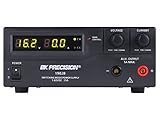
| B&K Precision 1550 | Beginners and small electronics | $149.98 |
| B&K Precision 1687B | High-current 36V projects | $408 |
| 15A Bench Supply (0-15A, 1-60V) | Power-hungry 60V circuits | $780 |
| B&K Precision 9110 | Multi-range flexibility on a budget | $474.15 |
| Jesverty SPS-3010 | Extreme low-cost entry | $42.74 |
| B&K Precision 1688B | Low-voltage, very high current | $440.59 |
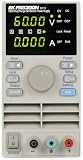
| B&K Precision Digital 60V/8A | Compact digital control | $602.34 |
| B&K Precision 1685B | Standard 60V/5A bench work | $436.23 |
How We Picked
We narrowed the field on four criteria. First, output range: voltage and current must cover the circuits you actually build, because an under-rated supply is useless regardless of brand. Second, regulation and protection: owner feedback consistently flags units with poor transient response or weak overcurrent safeguards as unreliable for sensitive loads. Third, usability of the front-panel controls—coarse/fine adjustment, readable displays, and preset recall reduce setup friction measurably. Fourth, value relative to published price: we weighted build quality and feature depth against what a buyer pays, not absolute cost.
The 8 Best Bk Precision Power Supply in 2026
B&K Precision 1550 Switching DC Power Supply with USB Charger Output
The 1550 is the sensible first supply for anyone prototyping Arduino boards, sensors, or small DC motors. Its 1-36V, 0-3A range covers most low-power projects, and the integrated USB charger output eliminates a second brick cluttering your desk. Owners praise its compact footprint and stable regulation within its rated range. The switching design keeps heat low and efficiency high compared to older linear units at this price. The limitation is current: 3A will not drive a loaded motor or a full GPU test rig. Skip this one if your projects regularly draw more than three amps or require voltages above 36.
B&K Precision 1687B Switching Bench DC Power Supply
The 1687B targets builders who need serious amperage at moderate voltage. Ten amps at up to 36V means you can stress-test power converters, charge lead-acid packs, or run multiple subsystems simultaneously without current-starving any single load. Users note the robust case and clear display as everyday strengths. Coarse and fine adjustment knobs let you dial in precise setpoints without overshooting. The trade-off is the $408 price and larger footprint than entry-level units. Skip it if your circuits rarely exceed a few amps—the 1550 or Jesverty covers those cases at a fraction of the cost.
DC Power Supply 0-15A, 1-60V
This unit occupies the top of the voltage range in the lineup, delivering 60V at 15A—enough for LED arrays, motor drivers, or battery-pack charging that demands both headroom and punch. The wide envelope makes it a genuine one-box solution for mixed-voltage labs. Owners highlight the digital readout clarity and the sense of reserve capacity even under sustained loads. At $780 it is the most expensive supply here, and its size demands permanent bench real estate. Skip it unless you regularly push past 36V or need the full 15A; otherwise you are paying for range you will never use.
B&K Precision 9110 Multi Range DC Power Supply
The 9110 earns attention for its multi-range architecture, letting a single 100W supply switch between voltage and current combinations rather than locking you to one output profile. At 60V and 5A it covers most medium-power tasks, and the multi-range design means efficiency stays high across a wider operating area than fixed-range competitors. Owners appreciate the quiet fan and the front-panel presets. The 100W ceiling is the constraint: sustained 60V at 5A hits that limit exactly, leaving no margin. Skip it if you need continuous operation near the maximum rating; step up to the 1687B or 15A unit for headroom.
Jesverty SPS-3010 Variable DC Power Supply
At under $43 the Jesverty is the cheapest option here, and it surprises by including a 4-digit LED display and a 5V/2A USB port. The 0-30V, 0-10A range is adequate for most electronics experiments, and coarse/fine adjustment mirrors more expensive B&K models. Owner reviews call the build plasticky but functional, with acceptable regulation for the price. The concern is long-term reliability and protection quality—expect less robust transient suppression than B&K units. Skip it if you are powering components sensitive to voltage spikes or if you need verified safety certifications for a professional workflow.
B&K Precision 1688B Switching Bench DC Power Supply
The 1688B flips the usual trade-off: its ceiling is only 18V, but it delivers a massive 20A. That combination is ideal for driving brushed DC motors, testing high-current solenoids, or simulating automotive 12V loads. Owners note the unit stays cool under sustained draw thanks to the switching topology. The narrow voltage band is both its specialty and its limitation. Skip it for any project requiring more than 18V—it simply will not reach there. For low-voltage, high-current work, however, few units in this price range match its amperage.
B&K Precision DC Power Supply Digital 60V 8A
This digital unit compresses 60V and 8A into a seven-inch-tall package, making it a strong fit for crowded benches where the wider 1687B or 15A supplies would not fit. Digital setpoint entry removes the guessing game of analog knobs, and owners report stable output across the full range. The $602 price positions it between the mid-range B&K models and the top-end 15A supply. The shorter display text and fewer front-panel buttons compared to the 9110 can feel spartan. Skip it if budget is the priority; the 1685B delivers nearly the same voltage at $436.
B&K Precision 1685B Switching Bench DC Power Supply
The 1685B is the conventional choice: 1-60V, 0-5A, with B&K’s proven switching platform and a straightforward front panel. It handles the broad middle ground of electronics work—op-amps, stepper drivers, digital logic, and moderate loads—without fuss. Owner feedback praises reliability and the predictable behavior of the coarse/fine knobs over time. At $436 it sits in the sweet spot between the budget Jesverty and the higher-capacity B&K models. The 5A ceiling means it cannot drive a full motor test or multi-rail server load. Skip it if you regularly need more than five amps at any voltage.
Buying Guide
Match Voltage and Current to Your Load
Never size a supply to the average draw of your circuit; size it to the peak. A stepper motor might idle at 1A but surge to 4A on a rapid direction change, and a bench supply rated at exactly 4A will clip or shut down. Choose a unit where your worst-case demand lands below roughly 80 percent of the rated current. Similarly, confirm your maximum operating voltage sits well inside the supply’s range so that transient spikes from inductive loads stay within regulation.
Demand Coarse and Fine Adjustment
Single-knob supplies are a frustration multiplier. The moment you need to set 5.00V rather than “about 5V,” a coarse/fine pair saves minutes every session. For digital units, verify that the numeric keypad or rotary encoder allows entry to at least two decimal places. Owner complaints across every price tier consistently trace back to imprecise voltage setting as the primary daily annoyance.
Protection Features Decide Long-Term Cost
Overvoltage clamp, overcurrent foldback, and short-circuit protection are not luxuries. A supply without foldback can push destructive current into a shorted trace while you fumble for the output button. Foldback cuts output automatically and safely. Check that the unit lists a foldback mode specifically—not just a “current limit” setting—because that distinction determines whether your next wiring mistake costs a resistor or a board.
Our Verdict
Top pick: The B&K Precision 1685B at $436.23 offers the best balance of voltage range, current capacity, and proven reliability for the widest set of tasks without forcing a premium for capability you may not use.
Budget pick: The Jesverty SPS-3010 at $42.74 is the clear value if you are learning and accept that protection quality trails the B&K line. It will not replace a professional-grade unit, but it removes the “I need a supply today” barrier.
Specialist pick: If your work lives in the 12V-to-18V band and demands brutal current, the B&K 1688B at $440.59 outperforms every other unit here on amperage-per-dollar.
FAQ
Is a switching supply safe for sensitive analog circuits?
Modern switching units like the B&K 1685B include adequate output filtering for most analog prototyping. If you are building low-noise instrumentation or RF front-ends, a dedicated linear supply remains preferable, but for general electronics work the ripple from these units is within acceptable bounds.
Can I parallel two supplies for higher current?
Only if both units explicitly support master-slave or parallel operation modes. Free parallel connection of independent supplies risks one unit back-feeding the other. The 1688B’s 20A rating is a simpler solution than attempting to stack two 5A supplies.
What does “multi-range” mean on the 9110?
A multi-range supply divides its total wattage into several predefined voltage-current combinations rather than a single fixed pair. The 9110 can deliver near full current at lower voltages, preserving efficiency across the range instead of wasting power as heat the way a fixed-range unit does at partial load.
Do I need a USB port on the supply itself?
It is convenient rather than essential. The 1550 and Jesverty both include a 5V USB output, saving a separate charger cable. If you already have a powered USB hub at the bench, this feature adds little beyond desk tidiness.