A gaming rig that loses power mid-session doesn’t just kill your save file—it can corrupt your operating system, damage your SSD controller, and shorten the lifespan of your GPU. A battery backup power supply solves a different problem than a surge strip: it buys you minutes of runtime to shut down cleanly or ride through a brief brownout without losing anything. The market splits into two camps. Standby units pass power through and switch to battery when voltage drops, offering basic protection at low cost. Line-interactive models actively correct voltage swings before touching battery, which matters if your local grid is unreliable. Picking wrong means either overpaying for runtime you don’t need or underbuying protection for hardware that does.
We compared the eight units below on published specifications—VA and wattage ratings, outlet counts, topology, LCD or AVR availability—and cross-referenced those against long-term owner feedback on reliability and switchover behavior. Price tiers span from under $60 to just under $240, and the gap is meaningful. Here is what separates the worthwhile options from the ones that collect dust in a closet.
As an Amazon Associate we earn from qualifying purchases at no extra cost to you. Product prices and availability are accurate as of the date shown and are subject to change.


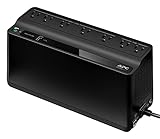


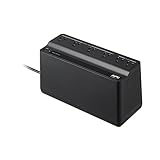


Top 3 picks at a glance
Quick Picks
| Product | Best for | Price |
|---|---|---|
| CyberPower ST425 | Router or modem on a tight budget | $59.95 |
| CyberPower CP1500PFCLCD | Full gaming workstation with monitor | $239.95 |
| APC BE600M1 | NAS or mid-range PC needing line-interactive AVR | $83.99 |
| CyberPower EC850LCD | Office PC with energy monitoring | $119.95 |
| CyberPower ST625U | Desktop plus one monitor, standby topologies fine | $79.95 |
| APC BE425M | Smart hub, router, or single small electronic | $62.5 |
| APC BX1500M | Gaming PC under heavy load needing runtime | $189.99 |
| CyberPower CP1500AVRLCD3 | Dual-monitor setup with software integration | $199.95 |
How We Picked
Four criteria drove our shortlist. First, wattage headroom relative to the target load—a unit rated too low against your GPU and monitor will trip during a switchover event. Second, topology: line-interactive models with AVR protect against the frequent brownouts and over-voltages that standby units simply switch through, wasting battery cycles. Third, usable outlet count and battery-backed outlet count, since many budget units protect only one or two of their outlets. Fourth, owner-reported longevity and software compatibility, because a UPS that drops offline connections or whose monitoring software breaks after a Windows update creates its own headaches.
The 8 Best Battery Backup Power Supply in 2026
CyberPower ST425 Standby UPS Battery Backup and Surge Protector
This is the entry point for anyone who wants a battery backup power supply protecting a single router or cable modem without spending much. As a standby UPS, it switches to battery only when input voltage leaves a predefined window, so it does not correct minor sags—it simply jumps to battery. Owners appreciate the compact footprint that tucks behind a desk or sits on a shelf unobtrusively. The trade-off is limited capacity: it is not designed for anything beyond networking gear or a laptop charger.
- Pro: Lowest price in this roundup makes it an easy addition for one device.
- Pro: Surge-protected outlets still guard against spikes even on non-battery outlets.
- Con: Standby topology means no AVR, so every minor brownout consumes battery cycles and reduces long-term cell life.
Skip this if your PC draws meaningful wattage or if your neighborhood experiences frequent voltage fluctuation.
CyberPower CP1500PFCLCD PFC Sinewave UPS Battery Backup and Surge Protector
The strongest pick in this lineup for a full gaming setup. A pure sine wave output matters because modern active-PFC power supplies can misbehave or refuse to run on simulated sine wave output; this unit avoids that problem entirely. With 1500VA and 1000W rated capacity, it comfortably supports a mid-to-high-end rig plus one or two monitors during a shutdown window. Twelve outlets provide generous coverage, and the AVR corrects voltage before touching battery, preserving runtime. UL certification adds a layer of third-party safety validation that budget competitors skip.
- Pro: Pure sine wave output is compatible with active-PFC supplies without the buzz or shutdown issues simulated sine wave units cause.
- Pro: 1000W and 12 outlets mean a tower, monitor, and peripheral hub all get battery protection simultaneously.
- Con: Highest price in the group, and the mini-tower chassis demands real desk or floor space.
Skip if you are only protecting a router or a sub-400W system—this is overspec for light loads.
APC UPS 600VA/330W Battery Backup for Computer, Router, NAS, BE600M1
A solid line-interactive option in the mid-range price bracket. The 600VA and 330W rating suits a basic office desktop, a home NAS, or a router plus switch combination. AVR handles moderate voltage swings without draining battery, which owners report as a meaningful upgrade over the standby units they replaced. APC’s bundled PowerChute software is mature and handles graceful OS shutdowns reliably.
- Pro: Line-interactive AVR extends battery life by absorbing small voltage deviations electronically.
- Pro: Well-supported software with a long track record of compatibility across operating systems.
- Con: 330W cap means it cannot carry a gaming GPU under load without risking overload shutdown.
Skip for any system whose peak draw approaches or exceeds 300W.
CyberPower EC850LCD Ecologic UPS Battery Backup and Surge Protector
Marketed toward users who want visibility into power consumption and battery status without a premium price tag. The LCD panel displays real-time load, remaining runtime estimate, and input voltage—information that helps you confirm your setup is actually within safe margins. Line-interactive topology provides AVR protection. The “Ecologic” branding refers to a programmable outlet group that cuts standby power to connected peripherals, which appeals to anyone managing energy costs across multiple devices.
- Pro: LCD readout and programmable outlet groups offer control features rarely seen at this price.
- Pro: AVR reduces unnecessary battery discharge during routine voltage noise.
- Con: Owner feedback notes the simulated sine wave output occasionally causes audible coil whine from sensitive electronics.
Skip if your power supply is particularly picky about waveform quality.
CyberPower ST625U Standby UPS Battery Backup and Surge Protector
A step up from the ST425 with more VA headroom and additional battery-backed outlets, aimed at a desktop user who wants to protect the tower plus one monitor on a limited budget. Standby topology keeps the price accessible, but that also means no voltage correction. For a household with stable grid power, this is a low-risk choice. Owners report adequate runtime for a clean shutdown of a 300-400W system.
- Pro: Multiple battery-backed outlets let you protect PC and display together without jumping to the next price tier.
- Pro: Compact rack-friendly form factor fits tight under-desk spaces.
- Con: Standby switching can interrupt sensitive equipment mid-transfer, causing brief reboots on certain motherboards.
Skip if your hardware is known to reboot during switchover gaps.
APC UPS 425VA/225W UPS Battery Backup for Router, Small Electronics, BE425M
Designed explicitly for low-draw network gear: a router, a small switch, an IP camera recorder, or a portable SSD dock. At 425VA and 225W it has the least capacity here, but that is by design—it is not meant for PCs. Line-interactive with AVR gives it a meaningful edge over similarly priced standby competitors. The compact size and quiet fan make it suitable for a living-room entertainment shelf.
- Pro: AVR at this price point is uncommon; it handles voltage noise without consuming battery.
- Pro: Small enough to hide behind a TV stand or inside a media cabinet.
- Con: 225W ceiling rules out any system with a discrete GPU, even a power-efficient one under load.
Skip for any desktop or laptop dock exceeding 200W sustained draw.
APC UPS 1500VA/900W, LCD, AVR, UPS Battery Backup & Surge Protector BX1500M
The APC answer to the CyberPower CP1500PFCLCD: line-interactive topology, 900W of battery-backed output, LCD status display, and AVR in a tower chassis. It handles a high-end gaming rig plus monitor for a shutdown window without flinching. The simulated sine wave is the one compromise versus pure sine wave competitors, but most modern power supplies tolerate it without issue. PowerChute personal edition is included for automated graceful shutdowns.
- Pro: 900W and AVR give headroom for demanding systems while preserving battery through voltage correction.
- Pro: LCD panel provides at-a-glance status and runtime estimates without opening software.
- Con: Simulated sine wave output occasionally produces a buzz from certain active-PFC supplies and is incompatible with very sensitive audio equipment.
Skip if you need pure sine wave for active-PFC compatibility or if noise-sensitive audio gear is on the same outlets.
CyberPower CP1500AVRLCD3 Intelligent LCD UPS Battery Backup
A 1500VA line-interactive unit with an intelligent LCD that surfaces load percentage, battery health, and estimated runtime directly on the front panel. Software integration supports scheduled power events, outlet group control, and automatic shutdown. It competes directly with the APC BX1500M at a slightly lower price, and CyberPower’s bundled software tends to offer more granular outlet-group configuration out of the box. For dual-monitor gaming setups or a workstation with external storage, the headroom is comfortable.
- Pro: Intelligent LCD and software let you set per-outlet-group power thresholds, useful for cutting a monitor’s power before the PC.
- Pro: Competitive price relative to equivalent APC line-interactive units with similar capacity.
- Con: Simulated sine wave output carries the same compatibility caveats as the BX1500M.
Skip if you require pure sine wave output or if your power supply has documented issues with stepped approximations.
Buying Guide
Match Wattage to Your Actual Load
VA and wattage are not interchangeable. A 1000VA unit might deliver only 600W of real power depending on its power factor. For gaming PCs, measure your peak draw with a wall meter or check your PSU’s rated output and assume 70-80% real load under stress. Always buy a battery backup power supply rated at least 20% above your expected peak so it does not overload and cut output during a brownout when you need it most.
Line-Interactive vs. Standby Topology
Standby units cost less but offer no voltage correction. If your utility feed is stable—rarely dipping below 115V or climbing above 130V—standby is acceptable. Line-interactive models with AVR correct those swings electronically and save battery for true outages. For gaming rigs where a hard shutdown risks file corruption or for anyone in an area with frequent flickers, AVR is worth the price premium.
Battery-Backed Outlet Count
Many units advertise a total outlet count that includes surge-only outlets. Only the battery-backed outlets keep your equipment running during an outage. Confirm how many outlets provide real UPS protection before you assume a 12-outlet model will keep everything alive. For a single PC and monitor, you need at least two battery-backed outlets; for a rig plus external drives plus a router, three or four.
Our Verdict
Top pick: The CyberPower CP1500PFCLCD is the best battery backup power supply in this group for any serious gaming workstation. Pure sine wave output eliminates compatibility risk with modern active-PFC power supplies, 1000W covers demanding rigs, and 12 outlets with AVR make it the most future-proof choice. Budget pick: The CyberPower ST425 at $59.95 is the right call if you only need to keep a router alive during short outages. Conditional winner: The APC BX1500M makes sense over the CP1500PFCLCD if you prefer APC’s PowerChute ecosystem or want the LCD at a lower entry price, provided your hardware tolerates simulated sine wave output.
FAQ
Can a UPS damage my PC if the wave form is incompatible?
It will not physically damage a PC, but an active-PFC power supply may shut down or reboot when confronted with a simulated sine wave during a switchover. This defeats the purpose of having a battery backup power supply in the first place. Pure sine wave units avoid this entirely.
How long will a UPS battery last before needing replacement?
Sealed lead-acid cells inside consumer UPS units typically deliver three to five years of service, shorter if you live in a hot climate or if the AVR rarely engages and the battery cycles frequently instead. Replacement batteries are available from most manufacturers and cost a fraction of a new unit.
Is 600VA enough for a gaming PC?
For most modern gaming rigs with a discrete GPU, 600VA translates to roughly 330-360W of real output, which is not enough to handle peak load. A 1500VA / 900W+ unit is the safer floor for a mid-to-high-end system.
Do I need software connected to my UPS?
You do not strictly need it—the UPS will keep your system alive long enough for a manual shutdown. But software that monitors battery status and triggers an automatic OS shutdown when the remaining runtime hits a threshold removes the human-error factor during overnight or away-from-desk outages.