A sudden blackout or voltage sag can corrupt a saved game file, kill an overclock in progress, or damage a power supply mid-session. A backup power supply eliminates that risk by holding your system on long enough to shut down cleanly or ride through a brief outage while you finish what you are doing. The stakes are higher for gaming PCs than for laptops because desktops have no internal battery and often draw several hundred watts from the wall.
Not all units solve that problem equally well. The gap between a five-dollar entry point and a three-hundred-dollar tower comes down to waveform quality, wattage headroom, transfer speed, and outlet count. This roundup compares eight models on their published specs, listed prices, and consistent owner feedback so you can match the right backup power supply to your rig and your budget.
As an Amazon Associate we earn from qualifying purchases at no extra cost to you. Product prices and availability are accurate as of the date shown and are subject to change.

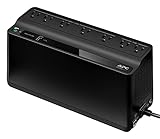


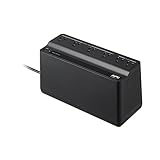

Top 3 picks at a glance
Quick Picks
| Product | Best for | Price |
|---|---|---|
| CyberPower ST425 | Minimal desktop protection | $59.95 |
| APC BE600M1 | PC plus router and NAS | $83.99 |
| CyberPower CP1500PFCLCD | High-end gaming rigs | $239.95 |
| CyberPower EC850LCD | Midrange tower setups | $119.95 |
| CyberPower ST625U | Budget standby backup | $79.95 |
| APC BX1500M | Large-capacity AVR protection | $189.99 |
| APC BE425M | Single small electronics | $62.50 |
| CyberPower CP1500AVRLCD3 | Monitoring-focused setups | $199.95 |
How We Picked
We weighed four criteria: continuous wattage headroom relative to a typical gaming PC draw, output waveform type (pure sine wave versus simulated), automatic voltage regulation presence, and the number of protected outlets versus surge-only outlets. Owner-reported reliability and software usability served as tiebreakers where specs overlapped.
The 8 Best Backup Power Supply in 2026
CyberPower ST425
A standby unit aimed at entry-level desktops that need just enough runtime for a graceful shutdown. Owners with basic iGPU machines call it simple and affordable.
- Pros: Under sixty dollars with no software complexity; compact enough to sit beside a monitor stand without blocking ports.
- Con: 425 VA capacity means a GTX-1660-class rig will drain the battery in roughly three minutes under load.
Skip it if your PC draws more than 250 watts at idle or if you want any meaningful runtime during a longer outage.
APC BE600M1
A middle-tier standby backup power supply that covers a midrange gaming PC plus peripherals. APC software is widely regarded as straightforward to configure.
- Pros: 330 watts of rated output handles many i5-class builds; includes a router and NAS outlet alongside battery-backed ones.
- Con: No AVR, so minor sags and surges pass through to connected gear until transfer kicks in.
Pass on it if you live in an area with frequent brownouts where voltage regulation matters more than raw runtime.
CyberPower CP1500PFCLCD
The highest-capacity option here at 1000 watts with a pure sine wave output, making it the natural pairing for high-end gaming PCs with large PSUs.
- Pros: Pure sine wave protects sensitive active-PFC power supplies; 12 outlets and built-in AVR cover a full desk setup.
- Con: Mini-tower form factor weighs enough that some owners report shelf-mounting awkwardness.
Skip if your rig idles below 200 watts and you only need a quick shutdown—this unit is overbuilt for modest needs.
CyberPower EC850LCD
A compact line-interactive unit with an LCD panel that shows load percentage and remaining runtime at a glance, useful for owners who want visibility without software.
- Pros: AVR handles voltage fluctuations before battery transfer; front LCD eliminates guesswork about remaining power.
- Con: 850 VA ceiling limits it to roughly a single midrange PC and monitor under load.
Not ideal if you also need to back up a router, NAS, and secondary display simultaneously.
CyberPower ST625U
A standby design sitting one step above the ST425, giving a few extra watts and slightly longer runtime for budget-conscious builders.
- Pros: Under eighty dollars with a rack-compatible footprint; no fans or noise during normal operation.
- Con: Simulated sine wave can cause buzzing or instability with some modern PSU designs.
Avoid it if your power supply is sensitive to waveform shape, which several owners of newer builds report.
APC BX1500M
A 900-watt line-interactive backup power supply with AVR and an LCD, positioned as a step down from the CyberPower CP1500PFCLCD in waveform quality but close in capacity.
- Pros: AVR plus nine outlets at under two hundred dollars; LCD gives real-time load and runtime readout.
- Con: Simulated sine wave rather than pure sine, which some high-end active-PFC PSUs reject or penalize.
Skip if your PSU specifically requires pure sine wave input or if you want to extend runtime with external battery packs.
APC BE425M
The smallest unit in this lineup, rated at 225 watts and sized for a router, a modem, or a single low-power device.
- Pros: Compact, silent, and priced under sixty-five dollars; useful as a dedicated network gear protector.
- Con: Cannot support any meaningful gaming PC load—it is strictly for light electronics.
Do not buy it expecting to back up a desktop during a session; it is a networking accessory here.
CyberPower CP1500AVRLCD3
A 1500 VA line-interactive unit with an intelligent LCD that exposes detailed status metrics through its software, appealing to data-driven owners.
- Pros: Rich monitoring software logs events and estimates runtime with granularity; 10 outlets cover a full workstation.
- Con: Simulated sine wave despite the high capacity, leaving it below the CP1500PFCLCD for PSU compatibility.
Skip if waveform type is a dealbreaker; upgrade to the pure sine model instead.
Buying Guide
Match Wattage to Your Actual Load
VA ratings oversell real capacity. Multiply VA by the power factor (typically 0.6 to 0.9) to get usable watts. A 1500 VA unit with a 0.67 factor gives roughly 1000 watts—enough headroom for a 750-watt PSU under gaming load plus a monitor. Under-spec units drain in seconds.
Pure Sine Wave Versus Simulated
Modern active-PFC power supplies prefer pure sine wave input. Simulated waveforms work with many units but can cause audible coil whine, unexpected shutdowns, or reduced PSU lifespan. If your rig uses a premium PSU, a backup power supply with a pure sine output removes that variable entirely.
AVR and Transfer Time
Automatic voltage regulation corrects minor sags and spikes without switching to battery, extending battery life and reducing transfer events. Standby units transfer in four to eight milliseconds, which most PSUs tolerate. Line-interactive designs with AVR minimize the number of transfers altogether.
Our Verdict
The CyberPower CP1500PFCLCD is the clear top pick for any gaming PC in 2026 that uses a modern active-PFC power supply, thanks to its pure sine wave output, 1000-watt capacity, and 12-outlet coverage. The best budget option is the CyberPower ST425 at $59.95 for anyone who only needs a few minutes to save and shut down. Choose the APC BX1500M instead if you want AVR plus an LCD at a lower price and your PSU is not waveform-sensitive.
FAQ
Can a backup power supply damage my PC?
Not when sized correctly. An undersized unit that transfers to battery during normal operation can cause rapid cycling and stress, but a properly matched model simply holds power during an outage.
How long will a UPS keep my gaming PC running?
Runtime scales inversely with load. A 1000-watt unit might give ten to fifteen minutes at half load but only two to three minutes at full gaming load. Check each manufacturer’s runtime curve for your specific wattage.
Do I need pure sine wave output?
If your power supply uses active PFC—which nearly all modern gaming PSUs do—pure sine wave is the safest choice. Simulated waveforms often work, but they introduce a compatibility variable you can avoid.
Should I back up my monitor too?
A monitor adds roughly twenty to fifty watts of load. If you want a visual confirmation of a clean shutdown, keep it on the battery side. Otherwise, plug it into a surge-only outlet to preserve runtime for the PC.