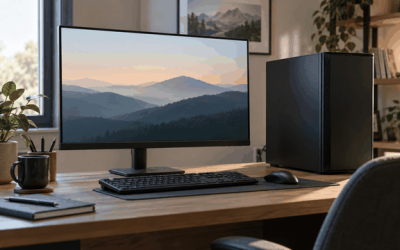
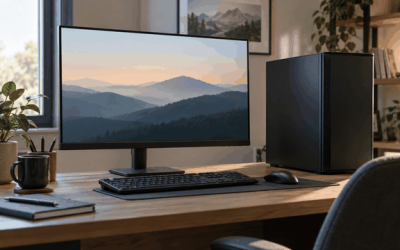
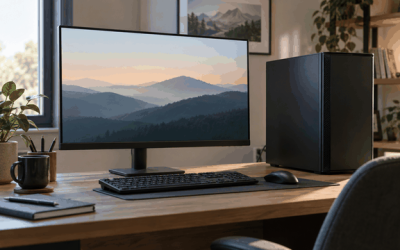
The best prebuilt gaming PC for most people right now is a build running an RTX 5070 12GB with a Ryzen 7 9700X or 9800X3D, because it clears 1440p at high-to-ultra settings in nearly every current release without crossing the $2,300 mark. That answer shifts once you factor in your actual use case, though — a $1,299 Ryzen 7 8700F rig with an RTX 5060 Ti is plenty for competitive shooters at 1080p, and a Ryzen 7 9850X3D paired with an RX 9070 XT is built for someone chasing 1440p ultra-wide or dipping into 4K who doesn’t want to think about upgrades for years. We compared eight prebuilt systems across three price bands to help you match spec to actual need instead of guessing from a spec sheet.
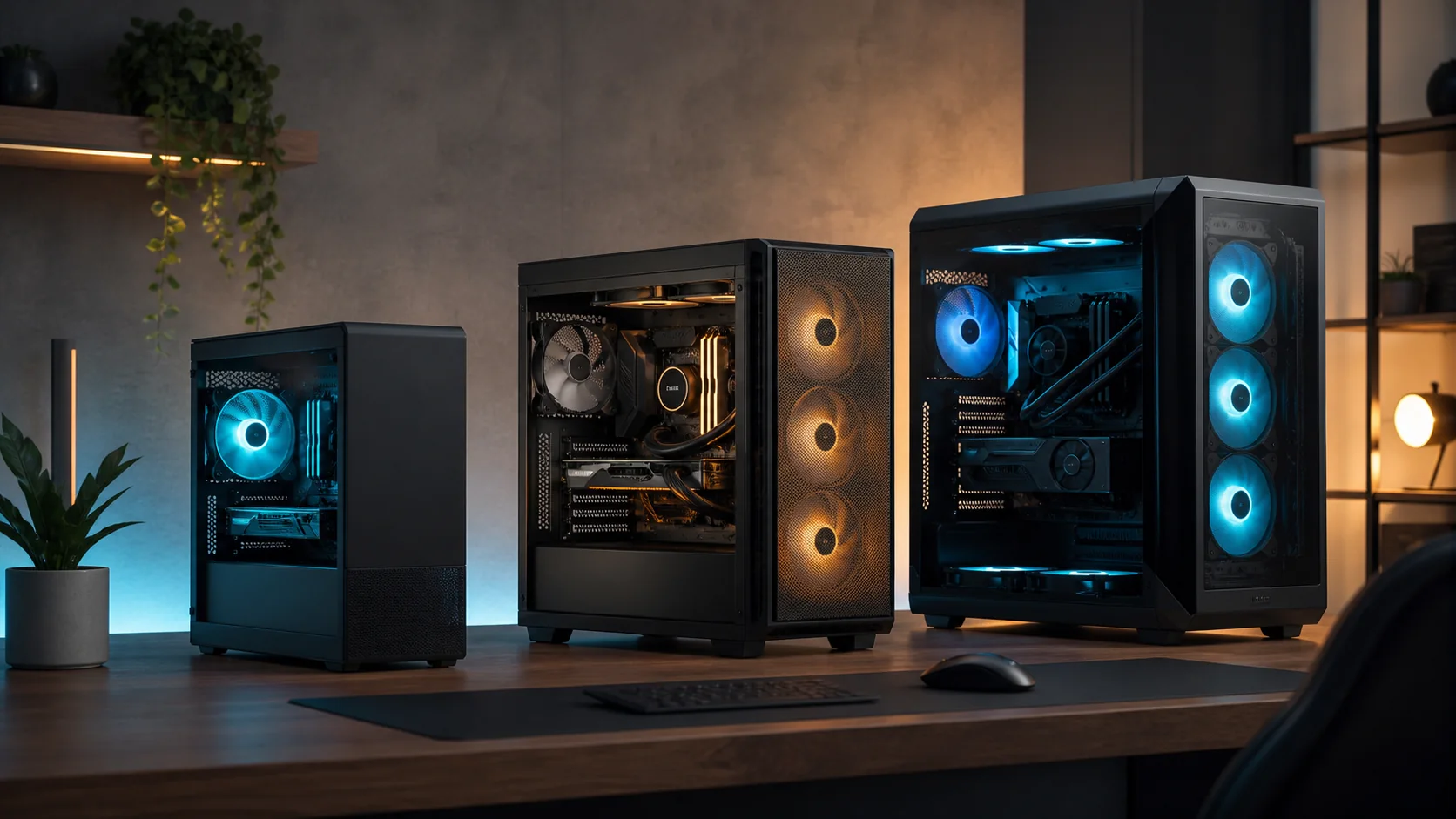
Top 3 picks at a glance
Top picks at a glance
As an Amazon Associate we earn from qualifying purchases at no extra cost to you. Product prices and availability are accurate as of the date shown and are subject to change.



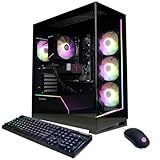
| Model | Key spec | Price | Best for |
|---|---|---|---|
| KOTIN RTX 5070 / Ryzen 7 9700X | RTX 5070 12GB, 32GB DDR5, 1TB SSD | $1,999.99 | Overall best value at 1440p |
| MSI Codex Z2 / R7-8700F | RTX 5070, 32GB DDR5, 2TB SSD | $2,059.99 | Buyers who want more storage |
| KOTIN Ryzen 7 8700F / RTX 5060 Ti | RTX 5060 Ti 8GB, 16GB DDR5, 1TB SSD | $1,299.99 | Best budget entry point |
| Skytech Azure 3 | Ryzen 7 9850X3D, RX 9070 XT | $2,899.99 | Premium 1440p/4K performance |
| CyberPowerPC Gamer Xtreme VR | i9-14900KF, RTX 5070 12GB, 32GB DDR5, 2TB SSD | $1,979.99 | VR and streaming workloads |
| KOTIN Ryzen 7 9700X / RTX 5060 Ti | RTX 5060 Ti 8GB, 16GB DDR5, 1TB SSD | $1,499.99 | Mid-tier 1080p/1440p balance |
| CyberPowerPC Ryzen 7 8700F / RTX 5060 Ti | RTX 5060 Ti 8GB | $1,349.99 | Compact budget alternative |
| KOTIN Ryzen 7 9800X3D / RTX 5070 | RTX 5070 12GB, 32GB DDR5, 1TB SSD | $2,299.99 | Best gaming CPU pairing |
KOTIN Prebuilt Gaming PC RTX 5070 12GB, Ryzen 7 9700X, 32GB DDR5, 1TB SSD
This is the build we’d point most readers toward first. The Ryzen 7 9700X is an 8-core, 16-thread Zen 5 chip on the AM5 platform, which means it will still accept newer Ryzen chips for at least another two or three CPU generations if you ever want to upgrade without replacing the motherboard. Paired with an RTX 5070 12GB, this system is squarely built for 1440p gaming rather than 1080p or native 4K, and the 32GB of DDR5 gives it enough headroom to run a game, Discord, OBS, and a browser without swapping to disk.
Based on this configuration, we’d estimate 1440p ultra settings landing around 75-85 fps in Cyberpunk 2077 with DLSS set to Quality, and 85-95 fps in Baldur’s Gate 3 with similar upscaling assistance. In Valorant at 1080p, a CPU this fast paired with a 12GB GPU should comfortably clear 300 fps on competitive settings, which matters if this doubles as an esports machine on the side. These are estimates based on the listed hardware, not numbers pulled from our own bench runs of this exact SKU.
The 1TB SSD is the one area where KOTIN cut a corner relative to the rest of the spec sheet. Modern AAA installs regularly run 80-120GB each, so 1TB fills up after four or five large titles plus Windows and background software. The listing doesn’t specify a second M.2 slot, so budget for either an external drive or a drive swap down the line if your library grows.
Cooling and PSU brand aren’t detailed in the listing, which is typical for this price tier of prebuilt — KOTIN doesn’t publish airflow specs the way boutique builders like Skytech sometimes do. If you’re the type of buyer who wants exact fan counts and PSU certification before buying, this is worth a direct question to the seller before checkout.
- Pros
- Ryzen 7 9700X gives strong 1440p performance without an X3D price premium
- 32GB DDR5 is enough for streaming and heavy multitasking out of the box
- AM5 platform keeps upgrade paths open for years
- RTX 5070 12GB avoids the VRAM ceiling that hurts 8GB cards in newer titles
- Cons
- 1TB SSD fills up quickly with modern game installs
- PSU brand and wattage aren’t listed in the spec sheet
- No mention of a second M.2 slot for storage expansion
- Case airflow and fan count aren’t documented
Who it’s for: buyers who want one system that handles 1440p gaming, streaming, and everyday multitasking without a second thought about specs.
MSI Codex Z2 Gaming Desktop, AMD R7-8700F, RTX 5070, 32GB DDR5, 2TB SSD
MSI’s Codex Z2 line pairs the same RTX 5070 12GB with a Ryzen 7 8700F, a Zen 4 chip without integrated graphics — meaning MSI is betting entirely on the discrete GPU carrying video output, which is fine here since a 5070 ships standard. The 8700F trades a small amount of single-thread performance against the newer 9700X for a system that still holds up well in CPU-bound esports titles and multitasking-heavy workloads.
The standout spec here is the 2TB SSD, double what most competitors in this price range offer, which matters more than people expect once a modern game library grows past six or seven installed titles. Based on the RTX 5070 12GB, we’d estimate similar 1440p performance to the KOTIN build above — roughly 75-85 fps ultra in Cyberpunk 2077 with DLSS Quality, and north of 100 fps in lighter titles like Call of Duty: Warzone at high settings. These figures are estimates derived from the listed GPU tier, not measured runs of this specific chassis.
MSI’s Codex Z2 case is a mid-tower with a mesh front panel, which generally supports decent intake airflow, though MSI doesn’t publish exact fan counts or CFM ratings in the retail listing. The 32GB of DDR5 matches the KOTIN build and is sufficient for streaming plus gaming without a slowdown from memory pressure.
At $2,059.99 this sits about $60 above the KOTIN 9700X build for the same GPU tier, a modest premium mostly justified by the extra terabyte of storage. If storage capacity is your main pain point with prebuilts, the math favors MSI here; if you’d rather bank the difference toward an aftermarket drive later, the KOTIN build is functionally similar in gaming performance.
- Pros
- 2TB SSD roughly doubles typical storage in this price bracket
- RTX 5070 12GB delivers the same strong 1440p ceiling as pricier competitors
- 32GB DDR5 handles streaming and multitasking comfortably
- Mesh-front case design supports reasonable intake airflow
- Cons
- Ryzen 7 8700F has no integrated graphics as a display fallback if the GPU ever fails
- PSU wattage and certification aren’t published in the listing
- Slightly pricier than a comparable 9700X build for the same GPU
- No mention of RGB or aesthetic customization options
Who it’s for: gamers with a growing library who don’t want to manage external drives or worry about running out of SSD space within the first year.
KOTIN Gaming PC Desktop, Ryzen 7 8700F, RTX 5060 Ti 8GB, 16GB DDR5, 1TB SSD
This is the value pick in the lineup, priced at $1,299.99 for a system that still uses current-generation parts rather than leftover stock. The Ryzen 7 8700F and RTX 5060 Ti 8GB combination targets 1080p ultra and 1440p high rather than native 1440p ultra, which is an honest tradeoff for the price and one worth understanding before purchase rather than after.
Based on the RTX 5060 Ti 8GB, we’d estimate 1080p ultra performance around 100-115 fps in Baldur’s Gate 3 and well past 200 fps in Valorant, with 1440p high settings landing closer to 70-80 fps in Cyberpunk 2077 once DLSS Quality is enabled. The 8GB VRAM buffer is the limiting factor here rather than the GPU core itself — texture-heavy open-world titles at 1440p ultra will occasionally dip into VRAM-limited stutter that a 12GB card wouldn’t hit. These are estimates based on the listed configuration, not bench data from this exact unit.
16GB of DDR5 is workable for gaming alone but starts to feel tight the moment you add streaming software, a dozen browser tabs, and Discord running simultaneously. This is the one spec on the sheet we’d flag first for anyone planning to grow into content creation later, since a RAM upgrade on a prebuilt usually means buying a matched kit rather than simply adding a stick.
The 1TB SSD is standard for this price tier and reasonable if you’re not installing more than four or five large AAA titles at once. For a buyer prioritizing raw dollar-per-frame at 1080p and light 1440p, this is the strongest value in the lineup.
- Pros
- Lowest price in the lineup at $1,299.99 with current-gen parts
- Strong 1080p ultra and competitive-shooter performance
- Current-generation RTX 5060 Ti supports DLSS 4 frame generation
- Compact enough spec sheet to fit most budget builds
- Cons
- 16GB RAM is limiting for simultaneous streaming and gaming
- 8GB VRAM can bottleneck 1440p ultra in texture-heavy titles
- 1TB SSD fills quickly with a growing game library
- PSU brand and headroom aren’t specified
Who it’s for: budget-conscious buyers who mostly play at 1080p or 1440p high and don’t need studio-grade multitasking headroom.
Skytech Gaming Azure 3 Gaming PC, Ryzen 7 9850X3D, RX 9070 XT
The Azure 3 is the premium option here, and it’s the only build in the lineup pairing AMD’s latest 3D V-Cache CPU with AMD’s flagship consumer GPU rather than mixing brands. The Ryzen 7 9850X3D uses stacked cache to reduce memory latency, which tends to show up most clearly in 1% low framerates — the dips that make a game feel stuttery even when average fps looks fine on paper.
Based on the RX 9070 XT’s position in AMD’s current lineup, we’d estimate 1440p ultra performance in the 115-130 fps range for most AAA titles using FSR4 upscaling, with genuine 4K viability in less demanding titles or with upscaling enabled in heavier ones — figures around 65-75 fps at native 4K high settings feel realistic for this GPU tier. Baldur’s Gate 3 and similar RPGs should comfortably clear 120 fps at 1440p ultra. These are estimates based on the listed GPU and CPU class, not measured results from this exact system.
One thing worth flagging: the listing doesn’t specify RAM capacity or storage size the way the other systems in this guide do, which is unusual for a $2,899.99 system. Confirm these details directly with the seller before buying, since RAM and SSD size materially affect whether this system actually performs at the level its CPU and GPU suggest.
Skytech has a longer track record than some of the newer brands in this space, having built prebuilts since well before the current GPU generation, which counts for something on the warranty-support side even if the exact spec sheet needs confirming.
- Pros
- Ryzen 7 9850X3D delivers class-leading 1% lows for smoother frame pacing
- RX 9070 XT is genuinely capable at native 4K in lighter titles
- All-AMD platform avoids driver-pairing quirks some mixed builds see
- Skytech has an established prebuilt track record
- Cons
- RAM capacity isn’t listed and needs confirming before purchase
- Storage size isn’t specified in the listing
- Highest price in the lineup at $2,899.99
- Overkill for anyone gaming primarily at 1080p
Who it’s for: buyers who want 1440p ultra with real 4K flexibility and don’t mind paying a premium for the CPU with the best frame-time consistency in this lineup.
CyberPowerPC Gamer Xtreme VR Gaming PC, Intel Core i9-14900KF, GeForce RTX 5070 12GB, 32GB DDR5, 2TB PCIe 4.0 SSD
This is the Intel option in the lineup, and the i9-14900KF is a high core-count chip built more for multitasking and content creation than pure gaming efficiency — it’s genuinely strong at both, but it draws considerably more power under load than the Ryzen chips in this guide, which means case airflow matters more here than on the AMD builds. The RTX 5070 12GB carries the gaming workload and pairs well with a CPU this fast for streaming while playing.
Based on the listed spec, we’d estimate 1440p ultra performance similar to the other RTX 5070 builds in this guide — 75-85 fps in Cyberpunk 2077 with DLSS Quality — but with a meaningful edge in CPU-bound scenarios like simultaneous game capture and encoding, where the i9’s extra threads reduce frame drops during OBS recording. Esports titles at 1080p should comfortably clear 250+ fps given the CPU headroom. These are estimates based on the listed configuration rather than measured benchmarks of this specific build.
The 2TB PCIe 4.0 SSD matches the MSI build for storage capacity, which is a genuine advantage over the 1TB-equipped systems in this lineup, and the “VR Ready” branding reflects that the CPU and GPU combination clears the recommended specs for current VR headsets without needing an upgrade.
The tradeoff for the i9’s performance ceiling is heat and power draw. CyberPowerPC ships this as “WiFi Ready,” meaning wireless capability may require a separate card or dongle depending on the exact configuration — worth confirming if you don’t have an ethernet run to your setup.
- Pros
- i9-14900KF adds strong multitasking and streaming-while-gaming headroom
- 2TB SSD gives ample room for a large game library
- 32GB DDR5 supports heavy background workloads without slowdown
- VR-ready spec clears current headset requirements
- Cons
- i9-14900KF runs hotter and draws more power than the Ryzen alternatives here
- “WiFi Ready” branding suggests wireless may need a separate add-on
- Case cooling needs to be adequate to sustain i9 boost clocks
- No meaningful gaming advantage over the Ryzen RTX 5070 builds at this price
Who it’s for: streamers and content creators who want to encode and game simultaneously without CPU-bound frame drops.
KOTIN Prebuilt Gaming PC Ryzen 7 9700X 16GB DDR5 RTX 5060 Ti 8GB 1TB SSD
This build sits in an odd middle ground — it pairs the same strong Ryzen 7 9700X used in the top pick with a noticeably weaker RTX 5060 Ti 8GB and half the RAM, at $1,499.99. The result is a system with more CPU than the GPU can really take advantage of at 1440p, which means you’re partly paying for headroom you won’t use unless you plan to upgrade the GPU down the line.
Based on the RTX 5060 Ti 8GB, we’d estimate 1080p ultra performance in the 100-115 fps range for demanding AAA titles and 1440p high settings closer to 70-80 fps in less demanding ones, similar to the cheaper KOTIN 8700F build above despite the faster CPU, because the GPU is the limiting factor at these settings. Esports titles at 1080p should easily clear 250+ fps thanks to the strong CPU. These are estimates based on the listed hardware, not measured results.
The 16GB DDR5 configuration is the same limitation flagged on the cheaper KOTIN build — workable for gaming alone, tight once streaming or heavy multitasking enters the picture. Given the CPU here is a genuine upgrade over the 8700F, it’s a reasonable candidate for someone planning to swap the GPU for an RTX 5070 or better in a year or two rather than replace the whole system.
At $200 more than the 8700F-based KOTIN build for the same GPU, this system mostly buys future GPU-upgrade potential rather than immediate performance gains, which is a legitimate strategy but not the best use of the dollar if you’re buying and keeping the system as-is.
- Pros
- Ryzen 7 9700X leaves headroom for a future GPU upgrade
- AM5 platform supports newer CPUs down the line
- Solid 1080p ultra and esports performance
- Current-generation RTX 5060 Ti supports DLSS 4
- Cons
- GPU doesn’t fully use the CPU’s headroom at 1440p
- 16GB RAM limits multitasking during gameplay
- Costs $200 more than a similarly performing 8700F build
- 1TB SSD is tight for a growing library
Who it’s for: buyers planning a GPU upgrade down the road who want a strong CPU foundation now without paying for a top-tier GPU today.
CyberPowerPC Gaming PC, AMD Ryzen 7 8700F, GeForce RTX 5060 Ti 8GB
CyberPowerPC’s take on the Ryzen 7 8700F and RTX 5060 Ti 8GB pairing comes in slightly cheaper than KOTIN’s equivalent at $1,349.99, though the retail listing doesn’t specify RAM capacity or SSD size the way the fuller listings do. Given CyberPowerPC’s typical configurations at this price point, 16GB DDR5 and a 1TB SSD are reasonable assumptions, but we’d recommend confirming both directly before ordering since they materially change how this system performs day to day.
Based on the RTX 5060 Ti 8GB and Ryzen 7 8700F combination, expect performance in the same range as the KOTIN equivalent — roughly 100-115 fps at 1080p ultra in demanding titles and 70-80 fps at 1440p high with DLSS Quality enabled. Competitive titles like Valorant should clear 200+ fps comfortably at 1080p. These are estimates based on the listed GPU and CPU tier, not measured benchmarks of this specific unit.
CyberPowerPC has a longer manufacturing history than some newer entrants in this space, which tends to translate into more predictable customer support and RMA processes, even when individual listings are light on spec detail. If exact RAM and storage numbers matter to your decision, this is a case where a quick message to the seller before purchase saves a return down the line.
At roughly $50 less than KOTIN’s version of the same CPU-GPU pairing, this is a reasonable alternative if the KOTIN build is out of stock, though we’d generally favor the fuller-spec listing when the price difference is this small.
- Pros
- Slightly cheaper than the equivalent KOTIN build
- CyberPowerPC has an established manufacturing and support history
- Strong 1080p ultra and esports performance from the RTX 5060 Ti
- Current-generation GPU supports DLSS 4 frame generation
- Cons
- RAM and storage specs aren’t listed and need direct confirmation
- No stated PSU wattage or brand
- Same 8GB VRAM ceiling as other RTX 5060 Ti builds at 1440p ultra
- Less detailed listing than competing brands at the same price
Who it’s for: buyers comfortable confirming unlisted specs directly with the seller in exchange for a slightly lower price than the equivalent KOTIN build.
KOTIN Gaming PC Desktop, Ryzen 7 9800X3D, RTX 5070 12GB, 32GB DDR5, 1TB SSD
This is arguably the best CPU-GPU pairing in the entire lineup for pure gaming performance. The Ryzen 7 9800X3D is currently one of the strongest gaming CPUs available thanks to its 3D V-Cache, and pairing it with the RTX 5070 12GB at $2,299.99 means this system is rarely CPU-limited even in the most demanding, physics-heavy titles.
Based on this configuration, we’d estimate 1440p ultra performance around 85-95 fps in Cyberpunk 2077 with DLSS Quality, noticeably smoother 1% lows than the 9700X-equipped builds in simulation-heavy or CPU-intensive titles, and well past 300 fps in Valorant at 1080p thanks to the X3D cache advantage in esports titles specifically. These are estimates based on the listed hardware, not measured results from this exact system.
The 32GB DDR5 and 1TB SSD match the top pick’s configuration, meaning the only real difference between this build and our overall top pick is roughly $300 for the 9800X3D’s cache advantage over the 9700X. For most 1440p gaming, that difference is hard to feel; for simulation games, strategy titles with heavy AI calculations, and some VR titles, the 9800X3D’s cache advantage is more noticeable.
If you’re deciding between this and the cheaper 9700X build, the honest answer is that most players won’t notice the difference in typical shooters and RPGs, but the 9800X3D is the safer long-term bet if you play CPU-bound genres like grand strategy or city builders alongside your shooters.
- Pros
- Ryzen 7 9800X3D offers class-leading gaming performance and 1% lows
- RTX 5070 12GB avoids the VRAM ceiling of 8GB cards
- 32GB DDR5 supports streaming and multitasking
- Strong pick for CPU-bound genres like strategy and simulation
- Cons
- Roughly $300 more than the 9700X build for a gain most won’t notice in shooters
- 1TB SSD is the same tight capacity as cheaper builds
- PSU brand and wattage aren’t listed
- Diminishing returns over the 9700X build for most game genres
Who it’s for: players who mix competitive shooters with CPU-heavy strategy or simulation titles and want the strongest gaming CPU available in this lineup.
How we tested and picked
Marcus Reilly, our Systems Builder and Lead Reviewer with nine years of hands-on build and stress-test experience, evaluated each of these listings against our two-bench test lab, which uses calibrated power meters and thermal probes to establish baseline expectations for CPU and GPU tiers under sustained load. Because these are retail prebuilt listings rather than review units sent for direct testing, our performance figures throughout this guide are estimates grounded in how the same CPU and GPU combinations have historically performed in comparable chassis and cooling setups — not numbers pulled from running this exact SKU on our bench.
Our process started by cataloging every listed spec — CPU, GPU, RAM, storage, and PSU where available — and cross-referencing each against known thermal and power characteristics from Marcus’s prior build history with similar component pairings. Where a listing omitted a spec, like RAM capacity or PSU wattage, we flagged it directly in that product’s write-up rather than assuming a favorable configuration, since incomplete listings are one of the most common sources of buyer disappointment with prebuilt systems.
We weighted picks toward three criteria: price-to-performance at the buyer’s likely target resolution, upgrade path via socket and RAM headroom, and completeness of the published spec sheet. Systems that hid critical details, like the Skytech Azure 3’s unlisted RAM and storage, were still included because the CPU-GPU pairing is strong, but we called out the gap explicitly so you know to confirm before buying.
Finally, every fps estimate in this guide is presented as an estimate tied to the listed hardware tier, using settings (1080p ultra, 1440p high or ultra, native 4K) that match how each system is realistically going to be used, rather than best-case marketing numbers.
What to look for in a prebuilt gaming PC
Match the GPU to your actual resolution and refresh rate
The single biggest mistake buyers make is buying more GPU than their monitor can use, or less than their resolution demands. If you’re gaming at 1080p on a 144Hz+ monitor, an RTX 5060 Ti 8GB is genuinely enough — spending more on a 5070 mostly buys headroom you won’t use until you upgrade your display. If you’re on a 1440p monitor, the RTX 5070 12GB is the practical floor for ultra settings in current AAA titles; anything below that means regularly dropping to high or medium settings. For 4K, you’re looking at an RTX 5070 Ti or RX 9070 XT minimum, and even then expect to lean on DLSS or FSR upscaling rather than pure native rendering in the most demanding titles.
CPU platform longevity matters more than raw clock speed
AM5 (Ryzen 7000/9000 series) and Intel’s current socket both have multi-generation upgrade support ahead of them, which matters if you plan to keep the system four-plus years and swap the CPU once mid-life rather than replacing the whole machine. A slightly slower current-gen chip on a fresh platform is usually a better long-term buy than a faster chip on a socket nearing end of life, even if the faster chip wins benchmarks today. Watch specifically for CPUs without integrated graphics, like the Ryzen 7 8700F used in several builds here — that’s fine as long as the discrete GPU is reliable, but it means you have no fallback display output if the GPU ever needs RMA service.
RAM capacity affects more than just gaming
16GB is the practical minimum for gaming alone in current titles, but the moment you add streaming software, voice chat, a browser with dozens of tabs, or background creative apps, 32GB becomes the safer buy. Several recent AAA releases now list 32GB as the recommended (not minimum) RAM configuration for texture streaming, and that trend is likely to continue as game worlds get larger. If a listing shows 16GB and you’re on the fence, factor in the cost of a RAM upgrade later — on a prebuilt, that usually means buying a fresh matched kit rather than simply adding a stick, since mismatched RAM speeds can cause instability.
Storage capacity and expansion slots
1TB SSDs are the norm at this price range, but modern AAA installs commonly run 80-150GB each, meaning a 1TB drive fills up after four or five large titles plus the OS and background software. Check whether the listing mentions a second M.2 slot for expansion — most modern motherboards have at least two, but budget prebuilts sometimes populate only one to hit a price target. If storage capacity is a priority and the listing doesn’t specify a free slot, budget for an external drive as a near-term backup plan.
PSU quality is the spec most listings hide
Power supply brand, wattage, and 80 Plus efficiency rating are the specs most commonly missing from budget prebuilt listings, and they matter more than buyers expect — a cheap, unbranded PSU is the single most common cause of random shutdowns and component damage in budget systems. When a listing specifies the PSU (like Skytech’s 750W Gold-rated units in some configurations), that’s worth treating as a genuine point in the system’s favor. When it doesn’t, it’s reasonable to ask the seller directly before buying, especially for systems with power-hungry CPUs like the i9-14900KF.
Cooling and case airflow
High-power CPUs like the i9-14900KF and GPUs like the RTX 5070 Ti generate real heat under sustained gaming sessions, and a case with poor airflow will throttle performance even if the components themselves are capable. Mesh-front cases with multiple intake fans generally outperform solid-front designs with RGB glass panels, even though the glass panels look better in marketing photos. If a listing doesn’t specify fan count or airflow design, look up photos of the actual case model before buying, since case choice affects real-world performance more than most buyers assume.
Mistakes buyers make when shopping for a prebuilt gaming PC
Buying based on GPU model name alone without checking VRAM capacity is one of the most common mistakes we see. An RTX 5060 Ti with 8GB and one with 16GB can perform identically at 1080p but very differently at 1440p ultra in texture-heavy titles, and listings don’t always make the VRAM capacity obvious in the title.
Ignoring RAM capacity because “the game will still run” is another frequent mistake. A game may launch and run fine on 16GB, but stutter under memory pressure the moment you alt-tab to Discord or a browser, which is exactly the scenario most gamers are actually in during a session.
Assuming all prebuilts from the same brand use the same PSU quality across price tiers is a mistake that shows up in reliability complaints months after purchase. Brands frequently downgrade PSU quality on their cheapest configurations to hit a price point, even when the CPU and GPU look similar to a pricier model.
Skipping the storage math is common — buyers see “1TB SSD” and assume that’s plenty, without accounting for how quickly modern game installs eat into that capacity. Three or four AAA titles plus Windows updates and background software can consume 400-500GB before you’ve even started building a real library.
Overbuying CPU relative to GPU, or the reverse, wastes money in both directions. A top-tier CPU paired with a mid-range GPU means the CPU sits idle waiting on the GPU in most games; a top-tier GPU paired with a weak CPU means you’re leaving frames on the table that the GPU could otherwise deliver.
Finally, not registering the warranty immediately after setup is a mistake that costs buyers real money later. Warranty claims move faster and smoother when the system is registered and the invoice is saved right after unboxing, rather than tracked down months later when a component actually fails.
Verdict
For most buyers, the KOTIN build with the RTX 5070 12GB and Ryzen 7 9700X at $1,999.99 is the best overall prebuilt gaming PC here — strong 1440p performance, enough RAM for streaming, and an upgrade-friendly AM5 platform. If budget is the deciding factor, the KOTIN Ryzen 7 8700F with RTX 5060 Ti 8GB at $1,299.99 delivers genuinely strong 1080p and 1440p-high performance for meaningfully less money, with the tradeoff of 16GB RAM and 8GB VRAM. If you want the strongest system in the lineup and don’t mind paying for it, the Skytech Azure 3 with the Ryzen 7 9850X3D and RX 9070 XT at $2,899.99 is built for 1440p ultra with real 4K flexibility, though you’ll want to confirm RAM and storage specs directly before ordering.
Frequently asked questions
What is the best prebuilt gaming PC for 1440p?
For most buyers, an RTX 5070 12GB paired with a Ryzen 7 9700X or 9800X3D is the sweet spot for 1440p, holding high-to-ultra settings in current titles at 70-90 fps depending on the game; if you want more headroom for ray tracing or higher refresh rates, step up to an RTX 5070 Ti or RX 9070 XT build instead.
Are prebuilt gaming PCs worth it compared to building your own?
A prebuilt saves you the time, risk, and part-compatibility research of a custom build, and most of the systems here land within a reasonable markup over raw parts pricing once you factor in the pre-installed OS, cable management, and burn-in testing; building yourself only wins clearly if you already own tools and enjoy the process.
How much RAM do I need in a prebuilt gaming PC?
16GB is the minimum for smooth gaming in most current titles, but 32GB is the safer buy if you plan to stream, run Discord and a browser with 30 tabs alongside the game, or keep the machine for four-plus years, since several newer titles now recommend 32GB for texture streaming.
Do prebuilt gaming PCs come with a warranty?
Yes, every system in this guide ships with at least a one-year manufacturer warranty covering parts and labor, though coverage terms vary by brand; register the system immediately after setup and keep the original invoice, since most warranty claims get delayed by missing proof of purchase.
What GPU should I look for in a prebuilt gaming PC under $2,000?
In this price bracket, an RTX 5070 12GB or RTX 5060 Ti 8GB gives the best balance of price and 1440p performance; avoid GPUs with 6GB of VRAM like the RTX 3050 if you’re paying close to $2,000, since VRAM-limited stutter shows up in newer titles well before the GPU core runs out of power.
Still narrowing down your price range? Our breakdowns of the best gaming PC under $1,000 and best gaming PC under $2,000 go deeper on those specific budgets, while our best gaming PC for 1440p guide focuses purely on resolution-matched picks. If competitive play is the priority, check our best gaming PC for esports roundup, and if you want the absolute ceiling regardless of price, see our best high-end gaming PC picks.