A prebuilt gaming PC is worth buying when the GPU matches your target resolution, the power supply carries at least 20% headroom above peak system draw, and the warranty covers parts and labor for a minimum of one year — everything past that is a bonus, not a requirement. Skip those three checks and you end up with a system that either bottlenecks in the games you actually play or costs more to repair than it would have cost to build from scratch in the first place. This guide walks through eight checks worth making before you click buy, in the order they matter most, plus the listing red flags that separate a fair-priced machine from an overpriced box of mismatched parts.
Top 3 picks at a glance
Match the GPU to your resolution and refresh-rate target
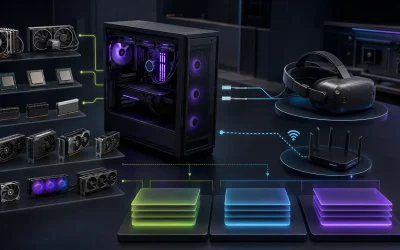
The GPU sets the ceiling on what frame rates a system can hit, so every other spec decision should follow from your monitor’s resolution and refresh rate, not the other way around. A system built for 1080p/144Hz esports titles like Valorant or Counter-Strike 2 needs a fundamentally different GPU than one built for 4K/60 in Cyberpunk 2077 with ray tracing enabled, and pricing a prebuilt without that target in mind is the single most common way buyers overspend or underspend on the wrong component. Write down your monitor’s resolution and refresh rate — or decide on one alongside the PC — before opening a single listing; a $1,800 PC paired with a 1080p/60Hz monitor wastes roughly half the GPU’s rendering potential every session it runs.
As an Amazon Associate we earn from qualifying purchases at no extra cost to you. Product prices and availability are accurate as of the date shown and are subject to change.


Use the table below as a baseline, then verify a specific listing’s GPU against it. VRAM capacity matters as much as raw core count once you’re above 1080p: an 8GB card can run out of memory in newer titles at high texture settings even while the GPU core itself still has spare performance, which shows up as stutter rather than a low average frame rate.
| Resolution/refresh target | Minimum GPU | Comfortable GPU | Typical fps, AAA high settings |
|---|---|---|---|
| 1080p / 144Hz esports | RTX 4060 | RTX 4070 | 140-240 fps |
| 1080p / 60-144Hz AAA | RTX 4060 | RTX 4070 Super | 75-110 fps |
| 1440p / 60-100Hz | RTX 4070 | RTX 4070 Ti Super | 65-95 fps |
| 1440p / 144Hz+ | RTX 4070 Ti Super | RTX 5080 | 100-160 fps |
| 4K / 60Hz | RTX 4080 Super | RTX 5080 | 55-75 fps |
| 4K / 120Hz+ | RTX 5080 | RTX 5090 | 90-130 fps |
These fps ranges assume high or ultra settings without frame generation, and actual numbers vary 15-20% by how well a specific title is optimized. A prebuilt listed with a GPU tier below your target isn’t automatically a bad deal — it just means running settings on medium instead of ultra until a future upgrade, which is a legitimate way to stay inside a fixed budget rather than a dealbreaker on its own.
Check CPU balance so it doesn’t bottleneck the GPU
Pairing a strong GPU with a weak CPU creates a bottleneck: the GPU sits idle waiting for the processor to feed it instructions, and frame rates can drop 20-35% below what the GPU alone is capable of. This is most visible at 1080p, where the CPU does a larger share of the per-frame work than at 1440p or 4K, and it’s most common when a listing pairs a four-core CPU from an older generation with a GPU like the RTX 4080 Super or RTX 5080.
As a working rule, a six-core CPU such as the Core i5-14600KF or Ryzen 5 7600 comfortably feeds anything up to an RTX 4070 Ti Super — GPU utilization stays in the 96-99% range in most titles at that pairing, based on monitoring runs on my two-bench test lab. Above that GPU tier, step up to an eight-core part like the Core i7-14700KF or Ryzen 7 7800X3D; without that step-up, the GPU can spend 10-20% of its time waiting on the CPU in demanding open-world titles, which is money spent on GPU silicon that never turns into visible frames.
Core count matters less than most buyers assume once you clear six cores for gaming specifically — most current titles use four to eight threads effectively, with any remainder helping mainly in streaming or heavily multitasked scenarios. A ten- or twelve-core CPU paired with a mid-range GPU is rarely a mismatch worth paying extra for in a pure gaming build; that budget is better spent moving up a GPU tier instead, since the GPU is still the component doing most of the actual frame rendering at any resolution above 1080p.
RAM capacity and speed
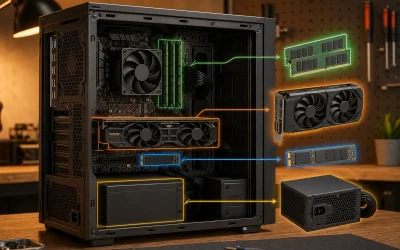
16GB is the practical floor for gaming across the current library of titles; dropping below it causes stuttering the moment a browser or Discord competes with the game for memory, even on a fast GPU. 32GB is worth the typical $40-70 premium if you stream, multitask heavily, or plan to keep the system three-plus years, since RAM requirements have climbed with each recent game engine generation and today’s comfortable 16GB can turn into tomorrow’s bottleneck.
Speed matters more on AMD platforms than Intel ones. A Ryzen build running DDR5-6000 gains roughly 8-12% in CPU-bound titles over the same chip at DDR5-4800, because Ryzen’s Infinity Fabric interconnect scales directly with memory bandwidth. On Intel platforms, the same jump from DDR5-4800 to DDR5-6000 typically yields only 3-5%, since Intel’s memory controller architecture is less sensitive to bandwidth changes — which means paying extra for high-speed RAM matters more when checking a Ryzen-based listing than an Intel one.
Channel configuration is worth checking too: dual-channel (two matched sticks, for example 2x8GB or 2x16GB) delivers close to double the memory bandwidth of a single stick of the same total capacity, and single-channel configurations can cost 10-15% of a GPU’s effective performance in bandwidth-sensitive titles. Some budget prebuilts ship a single 16GB stick to hit a price point rather than 2x8GB — it’s an easy detail to miss on a spec sheet that just lists “16GB RAM” without a module breakdown, so check the stick count specifically before assuming a listing is dual-channel.
Storage configuration
A single 500GB NVMe SSD fills up faster than most first-time buyers expect — a single current AAA title can take 100-150GB, and a handful of games plus Windows updates and a browser cache will use the rest within a few months. Look for at least 1TB of NVMe storage as the baseline, and treat any listing with a 256GB or 500GB boot drive as one where you’ll need to budget an extra $60-90 for a second drive on day one rather than assume you can manage with what’s included.
Drive type matters beyond capacity. A Gen4 NVMe SSD loads most current titles in 8-15 seconds; a SATA SSD takes 20-35 seconds for the same level; a 7200RPM HDD can take 45-90 seconds and causes visible texture pop-in during fast movement in open-world games, since a mechanical drive can’t stream new textures as fast as the player moves through the world. Every current build should use NVMe as the boot and primary game drive — a listing that pairs a strong GPU with an HDD as the only storage is a mismatch worth flagging, since it undercuts the rest of the build’s performance during actual gameplay in ways a spec sheet doesn’t show.
If a listing offers a choice between more NVMe capacity and a secondary HDD for a similar price difference, the NVMe upgrade is almost always the better use of that money for a primary gaming system, with an HDD reserved for bulk media storage only rather than active game installs.
PSU wattage, headroom, and certification
Add up the GPU’s rated power draw — an RTX 4070 Ti Super pulls roughly 285W, an RTX 4080 Super around 320W, an RTX 5080 around 360W — plus 150-200W for the CPU, motherboard, RAM, storage, and fans, then confirm the listed PSU wattage sits at least 20% above that total. An 850W unit is comfortable for an RTX 4080 Super build; anything below 750W paired with that GPU runs with almost no headroom, which shortens PSU lifespan and raises the risk of shutdowns under sustained load, particularly during transient power spikes that can briefly exceed a GPU’s average rated draw by 30% or more.
Efficiency certification is worth checking alongside wattage. 80 Plus Bronze is the acceptable minimum; 80 Plus Gold runs several degrees cooler and pulls less from the wall at the same output, which matters over a 3-5 year ownership period both for noise and for the electric bill. An unbranded or uncertified PSU is a genuine risk to the rest of the build if it fails, since a failing PSU can take the motherboard, GPU, or storage down with it — this is the one component where cutting $20 to save money carries outsized downside risk relative to the savings.
Vague PSU listings are a red flag on their own: a listing that states only “500W” with no brand, model number, or certification, paired with a GPU that needs 700W+ of total system power, is the single most common corner cut used to hit a low advertised price. Search the exact PSU model separately when it’s named — a five-minute check that can save you from a build that fails within the first year of ownership.
Case airflow and thermals
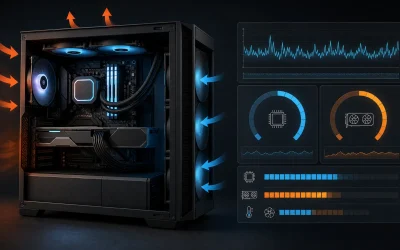
A case with a solid front panel and only a single rear exhaust fan runs 8-12°C hotter under sustained load than a mesh-front case with 2-3 intake fans, based on thermal testing on my two-bench lab comparing otherwise identical builds. That temperature difference translates directly into GPU and CPU throttling during long sessions — a GPU that hits its thermal limit clocks down to stay within it, which quietly costs 5-10% of peak frame rate during exactly the moments performance matters most, like a long ranked match or an extended raid.
Listings rarely describe airflow design in useful detail, so search the case model name separately when it’s named, and look for a mesh front panel plus at least three total case fans, not counting the CPU cooler, before buying. Positive-pressure setups with more intake than exhaust tend to run cleaner internally since they push dust out through unfiltered gaps instead of pulling it in, though total fan count and mesh coverage matter more for raw thermal performance than the exact intake-to-exhaust balance.
GPU temperatures in the 65-75°C range under load are normal for current cards with adequate case airflow; sustained readings above 80°C suggest either a restrictive case, an inadequate fan count, or a card running near its power limit without enough cooling headroom built in. CPU temperatures should stay 15-20°C below the chip’s rated thermal limit during gaming loads with a decent air or liquid cooler — a system that isn’t holding that margin is either poorly cased or under-cooled for the components installed.
Warranty terms and where you buy
A one-year parts-and-labor warranty is the minimum acceptable term for a prebuilt in this price range. Some builders switch to labor-only coverage after the first 90 days, meaning you pay for replacement parts even though the machine is technically still under warranty — always confirm the full term covers both parts and labor together, not just one or the other. Also check whether return shipping is covered and how long average repair turnaround runs; some smaller builders quote 2-3 weeks for a repair, which matters if the PC is your only computer.
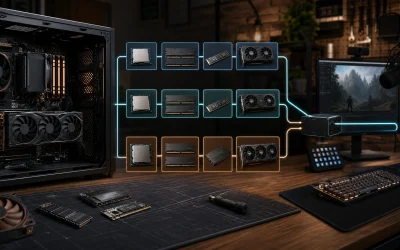
Where you buy shifts how these checks play out. Large retailers tend to standardize PSU and case choices across their whole lineup, which makes cross-referencing easier since the same chassis and PSU brand show up across dozens of listings you can compare. Boutique builders often let you customize every component, which is useful for matching a specific case aesthetic, but it also means two listings from the same builder at the same price can hide different PSU or RAM choices depending on what a previous buyer configured — verify each listing individually rather than assuming consistency across a builder’s catalog.
Return policies differ too: big-box retailers typically offer a straightforward 15-30 day return window through their own customer service, while boutique builders route returns through the same team that assembled the machine, which can mean faster fault diagnosis but a narrower window, often 14 days. Neither model is inherently safer — a documented case model and a named PSU brand matter more than the retailer’s overall size.
Red flags that signal a bad listing
A handful of listing details reliably predict a corner cut before you ever touch the machine. A vague PSU listing — just “500W” with no brand or certification — paired with a GPU that needs 700W+ of system power is the most common single red flag, and it’s worth treating as a hard pass rather than a minor concern. Product photos that don’t match the listed case model, or generic stock photos instead of the actual build, are worth an email to the seller asking for a real photo before ordering; a builder unwilling to provide one is telling you something about the listing.
No mention of individual component brands for RAM, storage, or motherboard — only the CPU and GPU named — usually means the cut corner is hiding in one of the unnamed parts, since builders using quality components in every slot tend to list them as a selling point. A price more than 10-15% below comparable listings with the same CPU/GPU pairing is rarely a genuine deal; it almost always traces back to a weaker PSU, a smaller case with worse airflow, or a cut on RAM speed and channel configuration.
No stated warranty length anywhere in the listing or product description should be treated as disqualifying on its own, regardless of how good the rest of the spec sheet looks. If you’re shopping by a fixed dollar amount rather than working through every check above individually, our Best Budget Gaming PC roundup applies this same GPU-matching logic to specific current listings.
Related guides
- How To Check If A Prebuilt Has Bottlenecks
- How Much Should You Spend On A Gaming Pc
- Prebuilt Vs Custom Build Cost Comparison
Frequently asked questions
Is it better to buy a prebuilt or build my own gaming PC?
Buy prebuilt if you value the manufacturer warranty and want the system ready in a day rather than an afternoon of assembly; build your own if you want to choose every individual component brand yourself. The price difference for equivalent specs is usually only $150-450 once an OS license, extra case fans, and thermal paste are counted on the DIY side, which is smaller than most buyers assume before running the numbers.
How much RAM do I actually need for a prebuilt gaming PC?
16GB covers current games at their recommended settings and is the practical floor for a smooth experience. 32GB is worth paying the typical $40-70 premium for if you stream, multitask heavily with a browser and Discord open, or plan to keep the system three-plus years, since RAM requirements have climbed steadily with each recent game engine generation and release cycle.
What PSU wattage should a prebuilt gaming PC have?
Add the GPU’s rated draw to roughly 150-200W for the rest of the system, then look for a PSU rated at least 20% above that combined total to leave real headroom. For an RTX 4070 Ti Super build, that works out to 750-850W; for an RTX 5080 build, 850-1000W is the safer range once transient power spikes are factored in.
Does the CPU matter as much as the GPU in a prebuilt?
No, the GPU drives frame rate in the vast majority of titles, especially at 1440p and 4K resolution where it handles most of the rendering workload. The CPU only becomes the limiting factor if it is badly mismatched with a much stronger GPU, which is worth checking on the spec sheet but should not be the first filter you apply when comparing competing listings side by side.
How long should a prebuilt gaming PC warranty last?
One year covering both parts and labor together is the acceptable minimum for a prebuilt in this price range. Anything shorter, or any listing that quietly switches to labor-only coverage after the first 90 days, should count against that specific builder when you are comparing two otherwise similar prices from different sellers.