Story-driven blockbusters like Cyberpunk 2077 are the opposite of competitive shooters: you want maximum visual fidelity, ray tracing, and a locked, cinematic frame rate rather than raw FPS. That changes what your PC needs and reshapes the prebuilt-versus-custom decision. Here is how to spec a machine for heavy single-player games and which buying path makes more sense.
As an Amazon Associate we earn from qualifying purchases at no extra cost to you.


Our Top Picks
 ASUS Dual GeForce RTX 5060 Ti 16GB GDDR7RTX5060Ti|OC|16GB9 x 4.7 x 2 inches1.4 PoundsCheck on Amazon
 MSI Gaming GeForce RTX 4070 12GB GDRR6X Extreme1.7" x 4.9" x 9.5"9.5 x 4.9 x 0.1 inches2.1 PoundsCheck on Amazon


Top 3 picks at a glance
What Heavy Single-Player Games Demand
Games like Cyberpunk 2077 lean hard on the GPU, especially with ray tracing and high-resolution textures. Unlike esports titles, they do not need 240 FPS; a smooth 60-90 FPS at 1440p or 4K with the eye-candy turned up is the goal. That makes the GPU and its VRAM the single most important purchase.
The parts that matter most
Prioritize a GPU with generous VRAM (12GB or more for 1440p, 16GB is safer for 4K and heavy texture packs), then a capable modern CPU, 32GB of RAM, and fast NVMe storage so massive open worlds stream in without hitches. Upscaling and frame-generation features are your friends here, turning demanding ray-traced scenes into playable ones.
Prebuilt vs Custom for a Cinematic Rig
| Factor | Prebuilt | Custom |
|---|---|---|
| Getting a top-tier GPU | Often marked up | Buy exactly the card you want |
| VRAM control | Depends on config | You pick 12GB / 16GB+ |
| Cooling for sustained loads | Sometimes minimal | You choose robust cooling |
| Price for equal GPU | +$150-300 typical | Lower for same GPU |
| Convenience | Plug and play | Assembly required |
Because these games live and die by the GPU, custom builds have a real edge: you can put nearly all your budget into the graphics card and ensure the cooling can sustain long, demanding sessions. Prebuilts often pair a strong GPU with a weaker PSU or thin cooling to hit a price, which hurts exactly the sustained heavy loads these games create.
When a prebuilt still makes sense
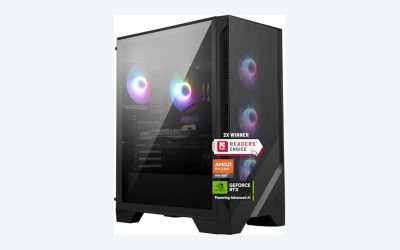
If you want a high-end 4K rig with zero assembly and a single warranty, a premium prebuilt from a reputable builder is a reasonable, if pricier, path. Just verify the PSU wattage (750W+ for high-end GPUs) and that the cooler can handle sustained load.
A Target Spec by Resolution
For 1440p with ray tracing, aim for a 12GB+ GPU, an 8-core CPU, 32GB RAM, a 2TB NVMe drive, and a 750W 80+ Gold PSU, landing around $1,300-1,600. For 4K, step up to a 16GB+ GPU and an 850W PSU, which pushes the total toward $1,800-2,200. In both cases, lean on upscaling to hold a smooth frame rate with the settings turned up.
Cooling for Long, Demanding Sessions
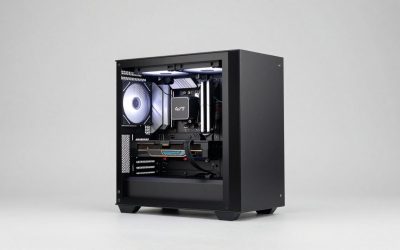
Single-player epics are played in multi-hour stretches, which is exactly when weak cooling shows its cracks. A GPU and CPU that stay cool hold their boost clocks; ones that overheat quietly throttle, costing you the smooth frame rate you paid for. Choose a case built for airflow over one built for looks, add intake and exhaust fans, and give a high-end CPU a substantial air cooler or an all-in-one liquid cooler. This is the single biggest reason a custom build often outperforms a same-priced prebuilt in these games: prebuilts frequently pair a strong GPU with just enough cooling to pass a short benchmark, not a three-hour play session.
Storage speed matters more than people expect here too. Sprawling open worlds stream textures constantly, and a fast NVMe drive prevents the texture pop-in and micro-stutter that a slow drive introduces. Pairing a generous, fast SSD with strong cooling is what makes a cinematic rig feel effortless rather than merely capable.
Frequently Asked Questions
How much VRAM do I need for Cyberpunk 2077 with ray tracing?
Plan for at least 12GB at 1440p and 16GB for 4K or heavy texture mods. Ray tracing and high-resolution textures are VRAM-hungry, and running short causes stutter that no amount of raw GPU power fixes.
Is 60 FPS enough for single-player games?
For cinematic, story-driven titles, a stable 60-90 FPS feels excellent and lets you crank visual settings. You do not need the 144+ FPS that competitive shooters chase, so spend that headroom on fidelity instead.
Bottom Line
Heavy single-player games are a GPU-first purchase, so build around the graphics card and its VRAM, back it with 32GB of RAM and fast storage, and make sure cooling and the PSU can handle long sessions. Custom builds win on value and sustained performance for this use case, while premium prebuilts are worth the markup only if plug-and-play convenience matters more than the extra $150-300.