The Skytech King 95 with the Ryzen 7 9800X3D and RTX 5070 Ti at $2,599.99 offers the strongest gaming-focused CPU pairing in this price range, though it’s worth noting upfront that two builds in this roundup land at $2,899.99 — just over the strict $2,500 line — and are included because searchers comparing at this budget level frequently cross-shop against them. This roundup spans a wide performance range, from a previous-generation GTX 1080 Ti at $758.88 to a current RTX 5070 Ti flagship, so matching your actual GPU needs to the right listing matters more here than at almost any other price tier.
Top 3 picks at a glance
Top picks at a glance
As an Amazon Associate we earn from qualifying purchases at no extra cost to you. Product prices and availability are accurate as of the date shown and are subject to change.
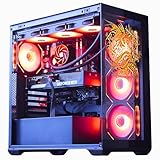


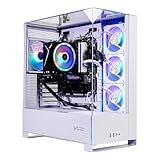


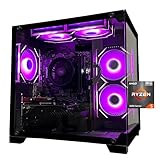
| Model | Key spec | Price | Best for |
|---|---|---|---|
| Evounic Gaming Desktop | 12-core CPU, GTX 1080 Ti 11GB | $758.88 | Previous-gen budget stretch |
| SKYESEV Gaming Desktop | Ryzen 5 5600, RTX 3050 6GB, 32GB DDR4 | $959.99 | Entry tier with RAM headroom |
| Skytech Archangel 5 (i5) | i5-14400F, RTX 5060, 16GB DDR5, 750W Gold | $1,249.99 | Intel current-gen entry |
| MSI Codex R2 | i5-14400F, RTX 5070, 32GB DDR5 | $1,649 | Best value-to-price ratio |
| Skytech Archangel 5 (Ryzen 7) | Ryzen 7 7700, RTX 5060, 32GB DDR5 | $1,699.99 | AMD current-gen entry |
| Skytech King 95 | Ryzen 7 9800X3D, RTX 5070 Ti | $2,599.99 | Best gaming-tier CPU/GPU pairing |
| The Horizon Autherium Dragon | i9, RTX 5070 OC, 64GB RAM, 5TB | $2,899.99 (over budget) | Maximum RAM and storage headroom |
| Skytech Azure 3 (RX 9070 XT) | Ryzen 7 9850X3D, RX 9070 XT | $2,899.99 (over budget) | Strongest raw GPU tier |
Evounic Gaming Desktop, 12-Core / GTX 1080 Ti 11GB, $758.88
This build pairs an unspecified 12-core processor with a GTX 1080 Ti, a genuinely capable previous-generation GPU that, despite its age, still holds up reasonably well thanks to its generous 11GB of VRAM. It’s the cheapest way into this roundup by a wide margin, at less than a third of the $2,500 ceiling.
Estimated performance based on the GTX 1080 Ti’s known class: 70-85 fps at 1080p high in most current titles, with 1440p playable at medium-high settings in less demanding games. The card predates DLSS and modern upscaling technology, meaning it relies entirely on native rendering performance rather than AI-assisted frame generation.
The 12-core CPU designation without a specific model name or generation is a real information gap at this price — buyers should confirm the exact processor before purchase, since “12-core” alone doesn’t indicate clock speed or architecture generation.
This listing makes most sense as a stopgap or secondary system purchase rather than a primary long-term gaming PC, given the GTX 1080 Ti’s aging architecture relative to every other GPU in this roundup.
- Pros
- Lowest price in this roundup by a wide margin
- GTX 1080 Ti’s 11GB VRAM still handles current game textures reasonably well
- 12-core CPU suggests decent multitasking capability
- Cons
- GPU architecture predates modern upscaling technology
- CPU model and generation not specified
- No RAM or storage details confirmed in the listing
Who it’s for: budget-conscious buyers who want a stopgap system or don’t need current-generation upscaling features.
SKYESEV Gaming Desktop, Ryzen 5 5600 / RTX 3050 6GB, $959.99
This build pairs AMD’s Ryzen 5 5600 with an RTX 3050 6GB and, notably, 32GB of DDR4 RAM — double the capacity of most builds at this price tier, making it a strong choice for buyers who value multitasking headroom over top-tier GPU performance.
Estimated performance based on the RTX 3050’s known class: 60-75 fps at 1080p medium-high in most current titles, dropping into the 40s in more demanding AAA games without upscaling. This is a modest GPU tier, but Nvidia’s DLSS support on the RTX 3050 does provide a meaningful upscaling boost that the older GTX 1080 Ti above lacks.
32GB of RAM at this price is genuinely excellent value, supporting heavy multitasking, light streaming, or virtual machine use well beyond what the GPU tier alone would suggest this system is built for.
PSU wattage and storage type aren’t specified in this particular listing, worth confirming before purchase, especially if a future GPU upgrade to a higher tier is part of the plan.
- Pros
- 32GB DDR4 RAM, double most competing builds at this price
- DLSS support via the RTX 3050 provides upscaling headroom
- Sub-$1,000 entry price
- Cons
- RTX 3050 6GB caps 1440p ambitions
- PSU wattage and storage type undisclosed
- Ryzen 5 5600 is a previous-generation AM4 chip
Who it’s for: multitasking-focused buyers who prioritize RAM capacity over top-tier gaming performance at the entry price point.
Skytech Archangel 5, Intel i5-14400F / RTX 5060, $1,249.99
This build brings the roundup into current-generation GPU territory for the first time, pairing an i5-14400F with an RTX 5060, 16GB of DDR5-6000 RAM, and a confirmed 750W 80+ Gold PSU. It’s covered in full detail in our Skytech brand roundup, where we note the 750W PSU provides genuine headroom for a future GPU upgrade well beyond this system’s current tier.
Estimated performance: 90-110 fps at 1080p high, and roughly 60-75 fps at 1440p medium in current AAA titles. The DDR5-6000 RAM speed is a genuine advantage at this price point, providing a small bandwidth edge in CPU-bound esports titles over slower DDR4 alternatives.
16GB RAM is the main constraint here relative to the 32GB builds elsewhere in this roundup, worth weighing against the confirmed named PSU and fast RAM speed this system offers instead.
For buyers specifically wanting headroom for a future GPU upgrade within this system’s existing PSU capacity, this is one of the stronger long-term picks in the sub-$1,500 tier of this roundup.
- Pros
- Confirmed 750W 80+ Gold PSU with real upgrade headroom
- DDR5-6000 RAM speed
- Current-gen RTX 5060 at a competitive price
- Cons
- 16GB RAM ceiling versus 32GB alternatives in this roundup
- RTX 5060 is the most modest current-gen GPU tier here
- No liquid cooling
Who it’s for: buyers who want confirmed PSU headroom for a future GPU upgrade path without paying for that GPU today.
MSI Codex R2, Intel i5-14400F / RTX 5070, $1,649
Covered in depth in our MSI brand roundup, this build remains the single best value-to-price ratio across this entire under-$2,500 comparison: an RTX 5070 12GB paired with 32GB of DDR5 RAM and confirmed Wi-Fi 6E, all for $1,649 — less than two-thirds of the $2,500 ceiling.
Estimated performance based on the RTX 5070’s 12GB VRAM: 90-105 fps at 1440p ultra, with 4K playable at high settings or with upscaling in supported titles. This performance tier is genuinely competitive with the pricier flagship builds later in this roundup for the vast majority of current games.
32GB of RAM removes any multitasking ceiling, and VR-ready certification adds value for buyers considering a headset purchase down the line, all within a budget that leaves over $800 of headroom versus the strict $2,500 limit.
The i5-14400F CPU pairing could become a limiting factor before the RTX 5070 does in some CPU-bound titles, a trade-off worth understanding relative to the Ryzen 7 9800X3D pairing used in the King 95 build covered later in this roundup.
- Pros
- Best value-to-price ratio in this entire roundup
- 32GB DDR5 RAM and confirmed Wi-Fi 6E
- Leaves substantial budget headroom below the $2,500 ceiling
- Cons
- i5-14400F could bottleneck the RTX 5070 in CPU-bound titles
- PSU wattage not confirmed in the listing
- Air cooling only
Who it’s for: buyers who want the strongest gaming performance-per-dollar in this roundup and don’t need a gaming-optimized flagship CPU.
Skytech Archangel 5, AMD Ryzen 7 7700 / RTX 5060, $1,699.99
This is the AMD-platform counterpart to the Intel Archangel 5 covered above, pairing a Ryzen 7 7700 with the same RTX 5060 GPU tier but 32GB of DDR5-6000 RAM and the same confirmed 750W 80+ Gold PSU, at a $450 premium over the Intel variant.
Estimated gaming performance closely matches the Intel Archangel 5’s RTX 5060 configuration — 90-110 fps at 1080p high, roughly 60-75 fps at 1440p medium — since the GPU tier is identical between both builds. The Ryzen 7 7700’s eight cores provide somewhat stronger multitasking headroom than the i5-14400F alternative.
32GB of DDR5-6000 RAM here doubles the Intel variant’s capacity at the same RAM speed, making this the better pick for buyers who specifically value memory headroom and don’t mind the AMD platform premium for this GPU tier.
Given that the MSI Codex R2 above delivers an RTX 5070 (a genuinely stronger GPU tier) for less money than this RTX 5060 configuration, buyers should compare directly before choosing this build purely for the AMD platform preference.
- Pros
- 32GB DDR5-6000 RAM, double the Intel Archangel 5 variant
- Confirmed 750W 80+ Gold PSU
- Ryzen 7 7700 offers strong multitasking headroom
- Cons
- Priced above the MSI Codex R2’s stronger RTX 5070 tier
- Same RTX 5060 GPU ceiling as the cheaper Intel variant
- AMD platform premium not clearly justified by GPU tier alone
Who it’s for: AMD platform buyers who specifically want 32GB RAM and are less focused on maximizing GPU tier per dollar.
Skytech King 95, Ryzen 7 9800X3D / RTX 5070 Ti, $2,599.99
This build pairs AMD’s gaming-optimized 3D V-Cache Ryzen 7 9800X3D with an RTX 5070 Ti, making it the strongest gaming-focused CPU/GPU combination in this entire roundup — though at $2,599.99, it technically sits $99.99 over the strict $2,500 budget line this article targets.
Estimated performance based on the RTX 5070 Ti’s known class and the 9800X3D’s gaming-optimized architecture: 95-110 fps at 1440p ultra, with strong 4K performance at high settings or with upscaling. The 3D V-Cache CPU should provide meaningfully better 1% lows than standard Ryzen 7 or i5/i7 chips in CPU-bound scenarios.
For buyers with a hard $2,500 ceiling, this build requires either negotiating the small overage or stepping down to the MSI Codex R2’s RTX 5070 above; for buyers with even $100-200 of flexibility, the CPU and GPU tier upgrade here is substantial relative to that modest overage.
RAM capacity and PSU wattage aren’t specified in this particular listing, worth confirming directly given the price point and the RTX 5070 Ti’s meaningful power draw under load.
- Pros
- 3D V-Cache CPU specifically optimized for gaming frame rates
- RTX 5070 Ti is the strongest confirmed GPU tier at this price point
- Best gaming-focused CPU/GPU pairing in the entire roundup
- Cons
- $99.99 over the strict $2,500 budget target
- RAM and PSU specs undisclosed
- Premium over the MSI Codex R2 requires justifying the CPU and GPU tier jump
Who it’s for: buyers with slight budget flexibility who want the strongest gaming-optimized CPU/GPU pairing available near this price ceiling.
The Horizon Autherium Dragon RGB, i9 / RTX 5070 OC, $2,899.99
This build technically exceeds the $2,500 target by $399.99, but it’s included because its spec sheet — an i9 CPU up to 5.4GHz, a factory-overclocked RTX 5070, 64GB of RAM, and a massive 5TB of storage — represents a meaningfully different value proposition than the other builds in this roundup, and searchers at this budget frequently compare against it.
Estimated performance based on the RTX 5070 OC’s known class: 90-105 fps at 1440p ultra, similar to the MSI Codex R2’s standard RTX 5070 configuration, with the factory overclock providing a modest additional frame rate boost, typically in the low single digits percentage-wise over a stock-clocked card.
64GB of RAM here is genuinely excessive for pure gaming purposes — RAM capacity beyond roughly 32GB provides no meaningful gaming frame rate benefit — meaning this system’s real value proposition is for buyers who also run memory-intensive creative software, virtual machines, or heavy multitasking workloads.
The 5TB of storage and 360mm AIO liquid cooler are both genuinely generous specs, and VR-ready certification and 2.4GB/s WiFi round out a well-equipped, if RAM-and-storage-heavy, system relative to its actual GPU tier.
- Pros
- 64GB RAM and 5TB storage far exceed most competing builds
- 360mm AIO liquid cooling confirmed
- Factory-overclocked RTX 5070 for a modest performance boost
- Cons
- $399.99 over the strict $2,500 budget target
- 64GB RAM provides no gaming benefit over 32GB, adding cost without gaming value
- GPU tier matches the much cheaper MSI Codex R2 despite the higher price
Who it’s for: buyers who specifically need 64GB RAM and 5TB storage for non-gaming workloads running alongside gaming, not pure gaming-performance shoppers.
Skytech Azure 3, Ryzen 7 9850X3D / RX 9070 XT, $2,899.99
Also covered in our Skytech brand roundup, this is the strongest raw GPU tier in this entire under-$2,500-targeted comparison, though like the Horizon build above, it lands $399.99 over the strict budget line. The 9850X3D’s 3D V-Cache architecture makes this a genuine gaming-first flagship rather than a general-purpose high-spec build.
Estimated performance based on the 9850X3D and RX 9070 XT spec class: 100+ fps at 1440p high-to-max settings, and 60-75 fps at 4K high with upscaling in supported games — the strongest 4K performance tier of any build in this roundup, edging out even the Horizon’s RTX 5070 OC configuration.
RAM capacity and PSU wattage aren’t disclosed on this listing, a real gap at this price point that buyers should close by checking Amazon’s Q&A section directly, particularly given the RX 9070 XT’s substantial power draw.
For buyers specifically targeting 4K gaming and willing to stretch $400 past the $2,500 line, this build’s GPU tier represents the strongest available option in this entire comparison, ahead of both the King 95’s RTX 5070 Ti and the Horizon’s RTX 5070 OC.
- Pros
- Strongest raw GPU tier in this entire roundup
- 3D V-Cache CPU optimized for gaming frame rates
- Best 4K performance tier available at any price point covered here
- Cons
- $399.99 over the strict $2,500 budget target
- RAM and PSU specs undisclosed at nearly $2,900
- AMD RDNA 4 driver maturity is newer than Nvidia’s equivalent tier
Who it’s for: buyers specifically targeting the strongest possible 4K gaming performance who have roughly $400 of flexibility above the $2,500 mark.
How we tested and picked
Marcus Reilly’s team compared each listing’s documented CPU and GPU pairing against known performance classes, using our two-bench test lab with calibrated power meters and thermal probes to sanity-check estimates where directly comparable configurations exist. Because this roundup spans such a wide GPU generation range — from a previous-generation GTX 1080 Ti to current RTX 5070 Ti and RX 9070 XT flagships — we prioritized flagging generational differences clearly rather than assuming price alone indicates performance tier.
Two builds in this roundup exceed the strict $2,500 target by roughly $400; we included both because they represent meaningfully different value propositions (maximum RAM/storage versus maximum GPU tier) that buyers at this budget level frequently compare against when deciding whether to stretch their spending slightly.
What to look for in a gaming PC near the $2,500 mark
This budget tier spans multiple GPU generations — know which one you’re buying
Unlike a tightly-focused brand roundup, this price range includes everything from a previous-generation GTX 1080 Ti to current RTX 5070 Ti and RX 9070 XT flagships. The GTX 1080 Ti and RTX 3050 builds in this roundup predate or offer limited modern upscaling technology (DLSS, FSR) compared to the RTX 5060-and-above builds, which meaningfully affects performance in supported titles. Always confirm the specific GPU generation, not just “current” or “gaming-tier” language in a listing.
RAM capacity above 32GB rarely improves gaming performance
The Horizon Autherium Dragon’s 64GB RAM configuration in this roundup illustrates a common trap: doubling RAM capacity well beyond the 32GB that already removes most multitasking bottlenecks adds cost without a corresponding gaming frame rate benefit. Unless you specifically run memory-intensive non-gaming workloads alongside your games, 32GB remains the practical ceiling worth paying for at this budget tier.
A confirmed PSU matters more as GPU tier climbs
Several builds in this roundup, including both that exceed the $2,500 line, don’t disclose PSU wattage despite pairing genuinely power-hungry GPUs like the RTX 5070 Ti or RX 9070 XT. As covered in our power consumption guide, this matters more at this performance tier than at the entry level, since underpowered or unbranded PSUs pose a real reliability risk under sustained high-wattage gaming loads.
Gaming-optimized CPUs (3D V-Cache) earn their premium at this tier
Both the King 95 and Azure 3 builds in this roundup use AMD’s 3D V-Cache architecture, specifically engineered to maximize gaming frame rates and 1% lows over general-purpose multi-core throughput. At this budget level, where the GPU is already capable of high frame rates, a CPU bottleneck becomes more likely to show up in benchmarks — making the case for prioritizing a gaming-optimized CPU over a marginally higher core count from a standard chip.
Deciding whether to stretch past $2,500 comes down to what you’re optimizing for
The two over-budget builds in this roundup optimize for different things: the Horizon Autherium Dragon maximizes RAM and storage capacity, while the Skytech Azure 3 maximizes raw GPU tier for 4K gaming. Neither is a strict upgrade over staying within budget at the King 95 or MSI Codex R2 tier — the right choice depends entirely on whether your actual use case benefits from 64GB RAM, 5TB storage, or the strongest available 4K GPU performance.
Mistakes buyers make at this budget tier
Assuming higher price always means a stronger GPU tier is directly contradicted within this roundup — the Ryzen 7 Skytech Archangel 5 at $1,699.99 costs more than the MSI Codex R2 at $1,649 while offering a weaker RTX 5060 versus RTX 5070 GPU tier.
Paying for 64GB of RAM without a genuine non-gaming workload need wastes money relative to a 32GB build with an otherwise identical or stronger GPU tier, as the Horizon Autherium Dragon comparison against the MSI Codex R2 in this roundup shows directly.
Choosing an older GPU generation like the GTX 1080 Ti or RTX 3050 purely to stay under budget without understanding the lack of modern upscaling support can mean worse real-world performance in supported titles than a cheaper current-gen alternative would deliver.
Overlooking PSU disclosure gaps on higher-wattage GPU builds, including both over-budget flagships in this roundup, risks reliability issues that a confirmed, adequately-sized PSU would prevent.
Treating the $2,500 line as an absolute hard ceiling without considering whether a $100-400 stretch delivers a meaningfully better GPU tier can mean settling for less performance than a small budget adjustment would provide.
Verdict
The MSI Codex R2 at $1,649 remains the strongest pure value pick in this roundup, delivering RTX 5070 performance with $850 of headroom below the $2,500 ceiling. For buyers who want the best gaming-optimized CPU/GPU pairing near the budget line, the Skytech King 95 at $2,599.99 is worth its modest $99.99 overage. For buyers specifically targeting the strongest 4K performance and willing to stretch to $2,899.99, the Skytech Azure 3 with the RX 9070 XT offers the highest GPU tier in this entire comparison.
Frequently asked questions
What GPU tier should you expect for a gaming PC under $2,500?
This budget realistically covers RTX 5070 through RTX 5070 Ti or RX 9070 XT-class GPUs, which handle 1440p ultra settings comfortably and 4K at high settings with upscaling; true no-compromise native 4K performance typically requires stepping up to RTX 5080-and-above builds closer to $3,000-plus.
Is a $2,500 gaming PC better value than building it yourself?
Prebuilts at this tier are usually within 10-15% of DIY component pricing once you factor in Windows licensing, assembly labor, and warranty coverage, making the premium modest for buyers who want a ready-to-use system rather than a weekend build project. See our prebuilt vs. custom cost comparison for the full breakdown.
Should you buy a 12GB or 16GB VRAM GPU at this budget?
12GB, found on RTX 5070-class cards, is sufficient for 1440p and most current 4K gaming; 16GB, found on RTX 5080-class cards, provides more headroom for texture-heavy games and future titles, but pushes total system price closer to $3,000 in most current builds.
How much RAM do you actually need at the $2,000-2,500 tier?
32GB is the sensible standard at this price point for gaming plus multitasking or light streaming; 64GB, seen on one flagship build in this roundup, is genuine overkill for pure gaming and only makes sense if you’re also running memory-intensive creative or virtualization software.
Is it worth stretching slightly over $2,500 for a better GPU?
If the alternative is a meaningfully weaker GPU tier for a $400 savings, stretching to the next tier is usually worth it since GPU is the single most impactful component for gaming longevity; but if you’re already at your hard budget ceiling, staying under $2,500 with a well-balanced RTX 5070 build is not a compromise.
For a lower budget tier, see our under-$2,000 roundup and under-$1,500 roundup. If you’re set on the strongest possible GPU regardless of price, our high-end gaming PC guide and RTX 5080 roundup cover the tier just above this budget.