A 750-watt power supply sits in the sweet spot for most single-GPU gaming builds, and finding the right one in 2026 means navigating a crowded field of units that look similar on a spec sheet but diverge sharply in build quality, cable management, and long-term reliability. The core problem a buyer faces is straightforward: matching enough clean power to a modern GPU (which now draws sustained loads well above what older PSUs handled gracefully) while avoiding the noise, sag, and premature failure that cheap units introduce.
What separates the good from the bad in this wattage bracket comes down to a handful of factors. ATX 3.1 compliance and a native 12V-2×6 connector eliminate the unreliable adapter dongles that plagued early PCIe 5.0 builds. Full modular cabling keeps airflow clear and aesthetics tidy in compact cases. Warranty length tells you how much confidence the manufacturer places in their own capacitors and fan bearings. And efficiency certification, while not always visible in daily use, translates directly into lower heat and electricity bills over years of gaming sessions. The eight units below span entry-level to premium, and the spread in price between them is almost entirely explained by these distinctions.
As an Amazon Associate we earn from qualifying purchases at no extra cost to you. Product prices and availability are accurate as of the date shown and are subject to change.



Top 3 picks at a glance
Quick Picks
| Product | Best for | Price |
|---|---|---|
| ASRock PRO 750G | Value-conscious builders wanting modern connectors | $54.99 |
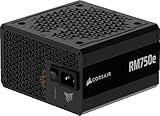
| CORSAIR RM750e (Black) | Reliable performance in a traditional black build | $89.99 |
| MSI MAG A750GL | Compact cases and long-term warranty peace of mind | $94.99 |
| CORSAIR RM750e (White) | White-themed builds without sacrificing performance | $89.99 |
| be quiet! Pure Power 13 M | Silent operation in a fully modular form factor | $89.90 |
| Rosewill VMG 750W | Japanese capacitors and solid protection at mid-range pricing | $79.99 |
| ARESGAME AGV 750W | Tight budgets that still need 750 watts and semi-modularity | $61.99 |
| Thermaltake Smart 700W | Basic builds that cannot spend much on power delivery | $54.99 |
How We Picked
We narrowed this list by weighting four criteria most heavily: ATX 3.1 and PCIe 5.1 readiness (which determines whether a native 12V-2×6 cable is included or you need a risky adapter), modular design (full versus semi versus none, affecting cable clutter and airflow), warranty length (a proxy for component quality and manufacturer confidence), and price-to-feature ratio. Efficiency certification served as a tiebreaker, with Gold-rated units preferred over Bronze and White when wattage and pricing were comparable.
The 8 Best Pc Power Supply 750W in 2026
ASRock PRO 750G
This unit is for the builder who wants all the modern platform features without paying a brand premium. ATX 3.1 and PCIe 5.1 support with a native 12V-2×6 connector means you can plug in a current-generation GPU directly, and the 80 Plus Gold rating keeps heat and waste reasonable. The 120mm fan is tuned for low noise under typical gaming loads. The main drawback is the three-year warranty, which trails competitors at this price point and signals less long-term component investment. Skip it if you value warranty coverage above connector convenience, or if you plan to run the system in a 24/7 workload where thermal stress matters more than initial purchase price.
- Pro: Native 12V-2×6 connector eliminates adapter risks for PCIe 5.1 GPUs
- Pro: 80 Plus Gold efficiency at a price well below competing Gold-rated units
- Con: Only a three-year warranty, half of what MSI offers at a higher price
CORSAIR RM750e (Black)
Corsair’s RM750e targets builders who prioritize quiet operation and platform compatibility in a standard black aesthetic. ATX 3.1 and PCIe 5.1 readiness are confirmed in the product name, ensuring the 12V-2×6 cable ships included. Owner feedback consistently highlights the unit’s electrical stability and minimal fan noise during moderate gaming loads. The tradeoff is the lack of a stated efficiency certification in the listing, which makes direct comparison against Gold-rated rivals harder. Skip this if you want an explicitly documented 80 Plus rating for tax or energy-rebate reasons, or if white components are required for your case theme.
- Pro: ATX 3.1 and PCIe 5.1 support with Corsair’s reputation for stable voltage regulation
- Pro: Quiet operation favored by owner reviews at typical mid-range loads
- Con: No efficiency certification listed, leaving a question mark against Gold-rated competitors
MSI MAG A750GL
The MSI MAG A750GL suits compact-case builders who need full modularity, modern connectors, and exceptional warranty coverage in one package. Its ten-year warranty is the longest in this roundup, reflecting confidence in internal components. The dual-color 12V-2×6 cable provides visual confirmation of proper seating, reducing a common build anxiety. Full modular cabling and a compact form factor make it ideal for SFF or mATX chassis where every millimeter matters. The 80 Plus Gold rating confirms efficiency expectations. The only downside is the price, which sits at the top of this list. Skip it if budget constraints outweigh the value of a decade-long warranty.
- Pro: Ten-year warranty, the longest coverage in this comparison
- Pro: Compact fully modular design with dual-color connector for easy visual verification
- Con: Highest price among the seven true 750-watt units reviewed here
CORSAIR RM750e (White)
Identical in internal specifications to the black variant, the white RM750e serves builders assembling light-colored or themed systems who refuse to compromise on platform features for aesthetics. ATX 3.1 and PCIe 5.1 support remain intact, and owner feedback mirrors the black model’s praise for quiet electrical delivery. The limitation is purely practical: white units may show dust and grime more visibly over time, and availability can lag behind the black SKU in some regions. Skip it if you dislike the maintenance concern or if your case interior is dark, where the color choice adds cost without visible benefit.
- Pro: Full ATX 3.1 and PCIe 5.1 readiness in a white colorway for themed builds
- Pro: Same quiet, stable performance as the better-reviewed black sibling
- Con: White exterior shows dust more readily and may have limited regional availability
be quiet! Pure Power 13 M
be quiet!’s Pure Power 13 M is engineered for the noise-sensitive user who still demands 80 Plus Gold efficiency and full modularity. The brand’s focus on acoustic optimization is reflected in owner feedback describing a near-silent unit at loads well below rated capacity. ATX 3.1 compliance ensures current platform compatibility. The listed price places it in direct competition with Corsair and MSI options that carry brand recognition advantages. The main concern is the shorter warranty period typically associated with the Pure Power line versus premium series. Skip it if you need maximum warranty length or if you already own Corsair peripherals and prefer single-ecosystem cable compatibility.
- Pro: Excellent acoustic performance backed by the brand’s quiet-first engineering philosophy
- Pro: 80 Plus Gold with ATX 3.1 and full modular cabling in one unit
- Con: Warranty coverage shorter than MSI’s ten-year offering at a similar price tier
Rosewill VMG 750W
The Rosewill VMG is for builders who want Japanese electrolytic capacitors and a five-year warranty without paying premium-brand pricing. Full modular design, ATX 3.0 and 3.1 compatibility, and a PCIe 5.1 12V-2×6 connector are all listed, alongside a 120mm fluid-dynamic bearing fan rated for silent operation. The five-year warranty and Japanese capacitors together suggest solid long-term reliability at under eighty dollars. The con is brand trust: Rosewill does not carry the same name recognition or documented community review depth as Corsair or MSI. Skip it if you prefer a PSU from a manufacturer with extensive third-party teardown documentation.
- Pro: 100% Japanese electrolytic capacitors with a five-year warranty at mid-range pricing
- Pro: 120mm FDB fan delivers silent operation while maintaining adequate cooling airflow
- Con: Lower brand recognition and fewer independent reviews available for verification
ARESGAME AGV 750W
The ARESGAME AGV fills a niche for buyers who need 750 watts of semi-modular power and a five-year warranty at a price barely above entry-level. The 80 Plus Bronze certification places it below Gold units in efficiency, which means slightly more waste heat and energy consumption over time. Semi-modular design covers the essentials but leaves some fixed cables that can clutter smaller cases. The five-year warranty is a genuine positive at this price, exceeding what the ASRock offers. Skip it if your system runs 24/7 or if efficiency matters for utility cost reasons, since the Bronze rating and semi-modular format signal a lower-tier internal build.
- Pro: Five-year warranty paired with 80 Plus Bronze at an aggressive price point
- Pro: Semi-modular design keeps essential cables fixed while allowing optional ones to be removed
- Con: Bronze efficiency and semi-modular layout trail every Gold-rated option above
Thermaltake Smart 700W
This unit appears on the list because it is the cheapest option at $54.99, but it is not a 750-watt supply. At 700 watts, it provides less headroom for GPU transient spikes, and the 80 Plus White rating (formerly Standard) is the lowest efficiency tier present. ATX 12V V2.3 compliance predates the 3.0 and 3.1 standards, meaning no native 12V-2×6 connector. The 120mm fan is described as ultra-quiet, which is reasonable at low loads. Skip it unless your system genuinely needs under 700 watts and budget constraints are absolute, because a modern GPU can transiently exceed what a 700W White-rated unit handles without stress.
- Pro: Lowest price in the roundup, undercutting even the semi-modular ARESGAME
- Pro: 120mm fan remains quiet at the modest loads this unit handles comfortably
- Con: Only 700W at 80 Plus White efficiency, with no ATX 3.x or PCIe 5.1 support
Buying Guide
ATX 3.1 and the 12V-2×6 Connector
Modern GPUs can produce instantaneous power spikes that exceed their rated TDP by multiples. ATX 3.1 defines how a power supply absorbs these transients without shutting down. The 12V-2×6 connector is the revised plug replacing the original 12VHPWR, which had reports of melting due to incomplete seating. Buy a unit that includes the native cable rather than an adapter. Adapters add resistance points, require more clearance in tight cases, and are a known failure vector. In this roundup, seven of eight units provide this native connector directly.
Modularity and Cable Management
Full modular units let you connect only the cables you need, which reduces clutter, improves airflow, and makes building in compact cases feasible. Semi-modular keeps essentials like motherboard and CPU power fixed, saving a few dollars while sacrificing tidiness. Non-modular units force you to manage excess cable length with zip ties and empty drive bays. For any build where the case has a windowed side panel or restricted airflow, full modularity is worth the premium. The MSI and be quiet! options here are fully modular at competitive prices.
Warranty Length as a Reliability Signal
A manufacturer that offers ten years of coverage is committing to components that will last a decade under thermal stress. Three-year warranties, while acceptable, suggest cheaper capacitors or less conservative derating. When comparing two units at similar prices, the longer warranty is almost always the safer choice. The MSI MAG A750GL’s ten-year backing is the benchmark here, and anything under five years should prompt scrutiny of independent review coverage before purchase.
Our Verdict
Top pick: the MSI MAG A750GL earns the recommendation for builders who want the best combination of warranty length, full modularity, compact size, and modern connector support. It is the most future-proof option in this list. Budget pick: the ASRock PRO 750G delivers 80 Plus Gold, ATX 3.1, and a native 12V-2×6 connector for under $55, making it the strongest value by a clear margin. Conditional alternative: if noise is your top priority and you run your system in a quiet room, the be quiet! Pure Power 13 M’s acoustic engineering makes it the better choice over Corsair at nearly identical pricing.
FAQ
Is 750W enough for a modern gaming PC?
For most single-GPU systems pairing a current mid-to-high-tier graphics card with a standard desktop processor, 750W provides adequate headroom for both sustained and transient loads. Builds with enthusiast-tier GPUs or multiple drives may benefit from 850W or higher.
What is the difference between 12V-2×6 and 12VHPWR?
The 12V-2×6 is the revised connector that removed the separate sense pins from the original 12VHPWR design, eliminating the partial-seating detection that caused confusion and reported failures. It carries the same power delivery capability with a simpler, more robust mechanical design.
Do I need ATX 3.1, or is ATX 3.0 sufficient?
ATX 3.0 already defines transient response requirements for PCIe 5.0 GPUs, so a 3.0-compliant unit meets the baseline. ATX 3.1 refines connector specifications and adds minor voltage tolerances, but the practical difference is negligible for most users. Either standard is a significant improvement over older 2.x implementations.
Why do two identical Corsair RM750e models appear separately?
They are the same unit in black and white colorways at identical specifications and price. The listing separates them because some builders purchase based on aesthetic matching, and availability or regional pricing can differ between color variants.