The best electric fence chargers are the ones that match your fence’s actual length, vegetation load, grounding system, and target animal—not simply the model with the highest advertised joule number.
As an Amazon Associate we earn from qualifying purchases at no extra cost to you.

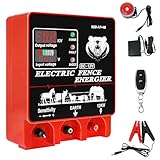
Our Top Picks
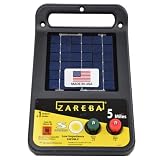
 Zareba 10 Mile AC Powered Low Impedance Fence(Pack of 1)4.8 x 9.4 x 11.7 Inches0.6 PoundsCheck on Amazon
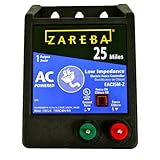
 Zareba 25 Mile AC Powered Low Impedance ElectricPack of 14.8 x 9.4 x 11.7 Inches3.1 poundsCheck on Amazon
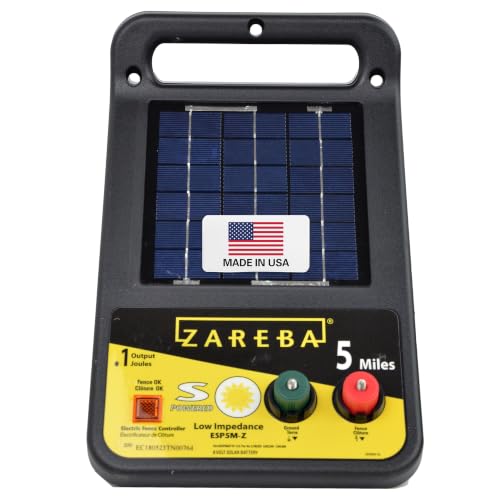
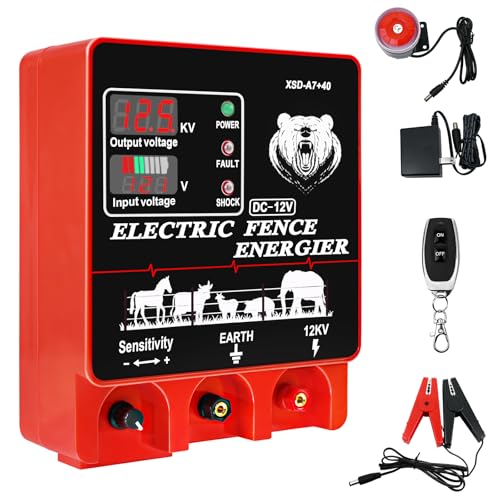
Top 3 picks at a glance
Quick picks by fence situation
| Fence situation | Recommended charger class | Useful output | Best power source |
|---|---|---|---|
| Short garden fence for pets or small livestock | Compact low-impedance unit | 0.1–0.5 joule | AC or small battery |
| One to three acres with light vegetation | Mid-range low-impedance charger | 0.5–2 joules | AC, battery, or solar |
| Several miles of permanent livestock fence | High-output low-impedance charger | 2–6 joules | AC or large solar system |
| Heavy weeds, brush, or difficult dry soil | High-output charger with strong grounding | 3–10 joules, depending on fence size | AC or properly sized solar |
For many residential and small-farm installations, a reliable 0.5–2-joule low-impedance charger is the sensible middle ground. It has enough reserve to tolerate some grass contact without wasting power or creating unnecessary safety and maintenance concerns.
What joule output really tells you
Joules measure the energy delivered in each pulse. A higher joule rating generally gives a charger more ability to overcome vegetation, long conductors, poor soil conditions, and multiple strands. It does not automatically mean the fence will perform better.
Look for a low-impedance design. Older or poorly designed high-impedance chargers can lose much of their energy when grass touches the wire. Low-impedance models deliver a short, forceful pulse and recover quickly, making them more suitable for modern livestock fencing.
Do not size a charger by fence acreage alone. A narrow, rectangular field may contain far more wire than a compact square enclosure. Calculate the total conductor length:
Total fence wire = perimeter × number of electrified strands.
For example, a 400-foot-by-300-foot enclosure has a 1,400-foot perimeter. With four hot strands, the system contains 5,600 feet of electrified wire. Add a 20% reserve for gates, lead-out cable, vegetation, and future extensions:
5,600 × 1.2 = 6,720 feet of effective fence load.
If the charger’s practical rating is only 5,000 feet under moderate vegetation, it is undersized even though the enclosure covers fewer than 10 acres. Choose a model whose real-world fence rating exceeds the calculated length, preferably by 25–50% when weeds or dry soil are expected.
Head-to-head: AC, battery, and solar chargers
AC-powered chargers
AC units are usually the best choice when a weather-protected outlet is available near the fence. They provide consistent energy, avoid battery replacement, and are generally economical for permanent installations. They are particularly suitable for long fences, heavy vegetation, and areas where winter sunlight is limited.
The drawback is location. The charger must be protected from rain while still allowing a properly rated fence lead-out cable to reach the fence. Never run an indoor extension cord through wet grass as a permanent installation. Use outdoor-rated electrical equipment and follow local electrical and fence-lightning requirements.
Battery-powered chargers
Battery units are useful for remote paddocks, temporary netting, and locations without mains electricity. Their performance depends on battery capacity, pulse output, temperature, and how often the battery is recharged.
A rough runtime calculation helps prevent disappointment. Suppose a charger draws an average of 0.08 amp at 12 volts. A 40-amp-hour battery contains approximately:
12 volts × 40 amp-hours = 480 watt-hours.
Using only 50% of that capacity to avoid damaging a lead-acid battery gives 240 usable watt-hours. The charger consumes:
12 volts × 0.08 amp = 0.96 watts.
Ideal runtime is therefore 240 ÷ 0.96, or about 250 hours—roughly 10 days. Cold weather, battery age, fence leakage, and inverter losses can reduce that substantially. A 12-volt deep-cycle battery is normally a better choice than a small automotive starting battery for repeated cycling.
Solar chargers
Solar chargers combine a fence energizer with a solar panel, charge controller, and battery. They are convenient for remote fences, but the panel must replace the charger’s daily energy use while also recovering from cloudy periods.
For example, a system drawing 1 watt continuously uses about 24 watt-hours per day. With four effective sun-hours and an estimated 70% total charging efficiency, the panel should provide at least:
24 ÷ (4 × 0.7) = 8.6 watts.
A 20–30-watt panel gives a more practical margin for cloudy weather, dirty panels, shorter winter days, and battery recovery. High-output chargers may require substantially larger panels and batteries than compact all-in-one solar units. Check the manufacturer’s solar sizing guidance rather than assuming every panel-and-battery combination is compatible.
Grounding is the performance multiplier
A powerful charger cannot compensate for a poor ground system. The pulse travels from the charger along the hot wire, through the animal, into the soil, and back through ground rods to the charger. If the ground return is weak, the animal receives a weak shock even when the fence voltage appears acceptable with no load.
For a typical small installation, use at least two or three galvanized ground rods spaced about 10 feet apart and driven deeply into moist soil. Connect them with adequately sized galvanized ground wire and corrosion-resistant clamps. Larger or higher-output systems may need additional rods.
Dry, sandy, rocky, or frozen soil conducts poorly. In those conditions, add ground rods, increase spacing, use a longer ground system, or install a ground-return wire arrangement where appropriate. Keep fence grounding separate from household electrical grounding unless local codes and the charger manufacturer specifically permit a connection.
Animal suitability and fence design
- Dogs and pets: Use a charger designed for short, clearly visible boundary fencing. The wire height and training method matter as much as joule output. Avoid improvising with exposed wire in areas where people may contact it.
- Horses: Use highly visible tape or polywire and a moderate-output charger. Visibility helps prevent running into the fence, while a clean, well-grounded pulse discourages testing.
- Cattle: A low-impedance charger in the 1–3-joule class is often suitable for medium permanent fences, with more output needed for long or weedy systems.
- Goats and sheep: Dense wool and persistent behavior can require more effective voltage at the fence. Use multiple strands and maintain vegetation control rather than relying only on a larger charger.
- Predator control: Small mesh or multiple offset strands can be more important than extreme joule output. Design the fence for the animal’s height and likely approach route.
Animal-specific requirements vary by fence construction and local regulations. A charger should not be selected as a substitute for secure physical fencing, especially for animals that may panic or become entangled.
Weather resistance and installation details
Choose an outdoor-rated enclosure intended for permanent exposure, with sealed cable entries and a mounting design that keeps the unit above standing water. A weather-resistant charger is not necessarily waterproof when its cover is left open or its cable glands are poorly fitted.
Place the energizer where it is easy to inspect but away from flammable materials. Use a lightning diverter and grounding arrangement recommended for the charger. Disconnect or protect the system during severe lightning where the manufacturer advises it. Solar panels should face the strongest available sun, remain clear of shade, and be cleaned periodically.
Decision matrix: which charger should you buy?
| Your priority | Choose | Avoid |
|---|---|---|
| Reliable power at a barn or house | AC low-impedance charger with reserve capacity | A small solar unit sized exactly to the fence length |
| Remote temporary enclosure | Battery or integrated solar charger | AC equipment requiring improvised extension wiring |
| Long fence with regular weed contact | Higher-output low-impedance model rated above the calculated load | Low-joule compact energizer |
| Dry or rocky ground | Charger plus an expanded ground-rod system | Judging performance from charger output alone |
| Horse or pet enclosure | Visible tape or wire with moderate output and careful training | High-output fence with poor visibility |
Models and product families worth comparing
Established product families such as Gallagher’s MBS range, Parmak’s DF-SP-LI and related low-impedance chargers, Zareba’s low-impedance energizers, and Premier1’s Power Wizard line cover many of the AC, battery, and solar configurations described above. Specifications vary by version and region, so compare the rated stored and delivered joules, practical fence-length rating, included battery or panel, grounding recommendations, and enclosure rating for the exact model.
For a small fence, prioritize dependable voltage under a modest load and easy maintenance. For a large agricultural fence, prioritize delivered joules, reserve capacity, grounding hardware, and serviceable power components. The best electric fence chargers are rarely the biggest ones; they are the units correctly matched to the calculated wire length and the conditions that will exist after installation.
Frequently asked questions
How do I calculate the fence length a charger must handle?
Calculate the perimeter, multiply it by the number of electrified strands, and then add a reserve for gates, lead-out cable, vegetation, and future extensions. For example, a 400-foot-by-300-foot enclosure with four hot strands contains 5,600 feet of electrified wire. Adding a 20% reserve produces an effective fence load of 6,720 feet.
Can a higher-joule charger fix weak fence performance?
Not by itself. Weak performance can result from poor grounding, dry or rocky soil, vegetation contact, or an undersized fence system. A powerful charger cannot compensate for a poor ground return. Improve the ground-rod system, maintain vegetation, and select a low-impedance charger whose practical rating exceeds the calculated fence load.
How many ground rods does a small electric fence need?
A typical small installation should use at least two or three galvanized ground rods, spaced about 10 feet apart and driven deeply into moist soil. Connect them with adequately sized galvanized ground wire and corrosion-resistant clamps. Larger or higher-output systems may need additional rods, especially in dry, sandy, rocky, or frozen soil.
How can I estimate runtime for a battery-powered charger?
Multiply battery voltage by amp-hours to estimate watt-hours, then use only 50% of a lead-acid battery’s capacity to reduce damage. A 12-volt, 40-amp-hour battery provides about 240 usable watt-hours under that assumption. If the charger consumes 0.96 watts, ideal runtime is about 250 hours, or roughly 10 days.
What should I check before installing a solar fence charger?
Check that the panel can replace the charger’s daily energy use and recover the battery after cloudy periods. A system using 1 watt continuously consumes about 24 watt-hours per day. With four effective sun-hours and 70% charging efficiency, at least 8.6 watts is required; a 20–30-watt panel provides more practical margin.