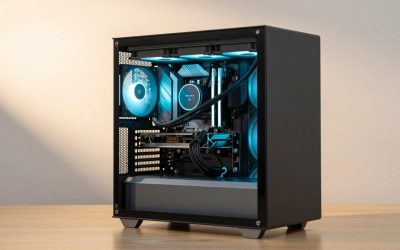
The AMD Ryzen 5 1600X is a 6-core, 12-thread Socket AM4 processor from April 2017, and in 2026 it is a legacy chip: fine to keep if you already own it, not worth hunting down for a new build. It can still run esports and older titles at 1080p with a decent graphics card, but the Ryzen 5 5500 or Ryzen 5 5600 on the same socket are far faster and cost little more.
Our Top Picks
 GIGABYTE B550M K AMD AM4 Micro-ATX MotherboardmATX10.43 x 10.43 x 2.12 inches1.7 poundsCheck on Amazon



Top 3 picks at a glance

Verdict: who the Ryzen 5 1600X suits and who should skip it
Keep it if you already have a working AM4 board with a 1600X and play at 1080p with a mid-range graphics card, or you are building a very cheap secondary PC from used parts. Skip it if you are buying parts today for a main gaming rig, play modern CPU-heavy games, or want to stream while gaming. In those cases a newer AM4 chip is the better use of a small budget, and the upgrade is simple because your board almost certainly keeps working.
| Situation | Recommendation |
|---|---|
| You own a 1600X and games run fine | Keep it, upgrade the GPU only if needed |
| You see stutter or low minimum frame rates | Swap to a Ryzen 5 5600 on the same board after a BIOS update |
| You are building new in 2026 | Choose a Ryzen 5 5500, 5600 or newer, not a 1600X |
| You find a 1600X listed at a high price | Walk away, a newer chip costs less and is much faster |
Ryzen 5 1600X specifications
Specifications below follow AMD’s published listing for the processor, as summarised in the public Ryzen processor reference tables.
| Spec | Ryzen 5 1600X |
|---|---|
| Release date | April 11, 2017 |
| Cores / threads | 6 / 12 |
| Base / boost clock | 3.6 GHz / 4.0 GHz |
| L3 cache | 16 MB |
| TDP | 95W |
| Socket | AM4 |
| Memory support | DDR4-2666, dual channel |
| Architecture | Zen (first generation) |
| Integrated graphics | None, needs a graphics card |
| Unlocked multiplier | Yes (X-series) |
| Bundled cooler | Varies by listing, plan to buy your own |
Two points matter for buyers. First, there is no integrated graphics, so a GPU is mandatory. Second, the 95W rating is higher than newer 65W parts that outperform it, which means the 1600X is less efficient too.
Gaming performance by use
We did not run benchmarks, so there are no frame-rate charts here. What follows is how first-generation Zen 6-core chips generally behave in published reviews, described in ranges and labelled as approximate. Frame rates vary with game, patch, resolution and graphics card.
1080p with a mid-range graphics card
Paired with a card in the GTX 1660 or RTX 3050 class, the 1600X typically holds playable frame rates in most games, usually in the 60 to 100 fps range for popular titles at medium to high settings. The graphics card is the limit in those cases, which is why the chip is acceptable for entry-level play.
1080p with a fast graphics card
With a card like an RTX 4060 or RX 7600 class, the CPU becomes the bottleneck in many games. First-generation Zen has lower per-core speed than modern chips, so minimum frame rates drop and some games stutter when many threads compete. A newer 6-core processor can unlock substantial extra performance from the same GPU.
1440p
At 1440p the graphics card carries more of the load, so the gap narrows. It is still wasteful to pair a modern GPU with this chip; the CPU can hold back high-refresh play even at the higher resolution.
Esports and older games
Counter-Strike 2, Valorant, League of Legends, Fortnite at performance settings and similar titles run without trouble, but high-refresh targets such as 240 fps are difficult. CPU-heavy simulation and strategy titles, large open-world games and recent releases with heavy background threads expose the age of the architecture first.
| Use case | 1600X fit (approximate) |
|---|---|
| Esports at 1080p, 60 to 144 Hz | Usually fine |
| AAA single-player at 1080p, 60 fps | Fine with a modest GPU |
| High-refresh 1080p (165 Hz and above) | Often CPU-limited |
| Gaming with streaming or capture | Tight, expect dropped frames |
| Heavy simulation and open-world titles | Weak spot |
Productivity and multitasking
Six cores and twelve threads were strong in 2017 for rendering, compiling and virtual machines, and they still handle light creative work, office tasks and several browser tabs next to a game. Single-core speed is the weakness: modern editing software and games benefit from newer cores, so tasks that mix both feel slower than on a current Ryzen. As a home server, a media box or an emulator machine it remains usable.
Platform: socket, chipsets, memory and BIOS
The 1600X uses Socket AM4 and works on A320, B350, X370, B450, X470, B550 and X570 boards with an appropriate BIOS. Memory support is DDR4-2666 officially, though many kits run faster with XMP or a manual profile; first-generation Zen is known for liking fast memory because it helps the internal fabric. Unlike current AM5 platforms, it needs DDR4, and that keeps a used or reused build cheap.
The AM4 socket is the main reason the chip is not a dead end. A board bought for a 1600X will usually run a Ryzen 5000 processor after a BIOS update, but the details differ by board. Boards with a BIOS flashback button make the update easy even without a compatible CPU, while some older boards need a Ryzen 1000 or 2000 chip to perform the flash. Check the board maker’s CPU support list before buying a newer processor.
Power, temperatures and cooling
With a 95W rating and an unlocked multiplier, the 1600X can run warm under all-core loads. AM4 chips are generally allowed to draw about 1.35 times the rated TDP in sustained boost (a package power limit), which is roughly 128W of heat at full load for this chip. That figure is a planning number from the rating, not a measurement. A tower cooler rated for 150W or more keeps it quiet. Boxed coolers differ by listing, so assume you will need to buy one.
Idle and light-load power is higher than newer chips, which matters little for a gaming desktop but adds up for a machine that runs all day. Newer Ryzen processors deliver more work per watt.
Alternatives to the Ryzen 5 1600X in 2026
| Chip | Cores / threads | Why consider it | Trade-off |
|---|---|---|---|
| Ryzen 5 5500 | 6 / 12 | Budget AM4 upgrade, bundled cooler per the listing | Smaller L3 cache than the 5600 |
| Ryzen 5 5600 | 6 / 12 | Best-value AM4 gaming chip, bundled cooler per the listing | PCIe 3.0 or 4.0 depends on the board |
| Ryzen 7 5700X | 8 / 16 | More cores for gaming plus streaming | Needs a cooler of its own |
| Ryzen 5 7600X (AM5) | 6 / 12 | New platform with DDR5 and a long upgrade path | Requires a new board and memory |
| Ryzen 5 9600X (AM5) | 6 / 12 | Current-generation 6-core for a fresh build | Higher platform cost |
AMD’s generational improvements in instructions per clock compound to roughly 40 percent between first-generation Zen and the Zen 3 core in the 5000 series (approximate, from AMD’s per-generation claims), before counting higher clocks and a larger shared cache. That is the main reason the 5600 feels like a different class of processor.
The most sensible upgrade path from a 1600X
If you already own a 1600X, check whether your motherboard supports Ryzen 5000 and update the BIOS before swapping the chip. Drop in a Ryzen 5 5600 for a straightforward gaming improvement or a Ryzen 7 5700X if you also stream or edit. A modest new cooler is a sensible accompaniment since the 5700X has no bundled cooler.
Ryzen 5 5600 for a straight upgrade
The Ryzen 5 5600 is a 6-core, 12-thread AM4 processor listed with a Wraith Stealth cooler, which makes it the simplest drop-in replacement. It keeps the same core count as the 1600X but brings Zen 3 cores, which is where the large per-core gain comes from.
As an Amazon Associate we earn from qualifying purchases at no extra cost to you.

Ryzen 7 5700X for streaming and creative work
The 5700X is an 8-core, 16-thread unlocked AM4 part. Choose it if you capture, stream or edit while gaming. It is sold without a cooler, so budget for one.
Gigabyte B550M K motherboard
If your old board lacks Ryzen 5000 support, a new micro-ATX B550 board is a low-cost reset. The B550M K supports Ryzen 5000, 4000 and 3000 series processors and DDR4 per the listing, and it avoids BIOS-update guesswork on older boards.

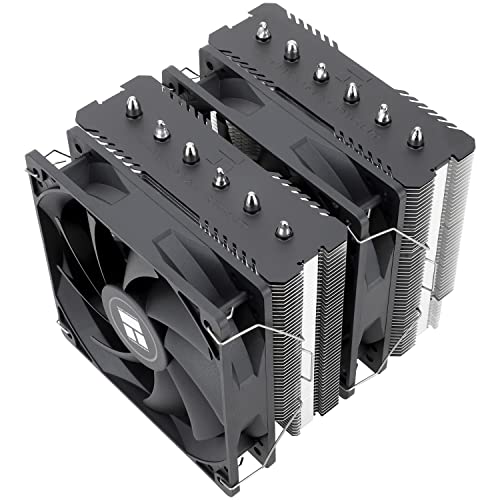
Thermalright Peerless Assassin 120 SE cooler
A six-heat-pipe, dual-fan air cooler gives the 5700X or an overclocked older chip plenty of headroom. It supports AM4 and keeps fan noise low at 65W loads.
G.SKILL Ripjaws V 16GB DDR4 kit
A 2x8GB 3200MT/s kit is a sensible target for any AM4 build, and first-generation and later Zen chips both benefit from faster memory. Check your board’s memory support list for the speed you buy.

Is the Ryzen 5 1600X still worth buying in 2026?
For a new purchase, no. It is mostly a used or legacy part now, and available listings can be priced oddly because the chip is discontinued. A Ryzen 5 5500 or 5600 delivers noticeably better gaming at similar or lower cost, and keeps your options open for later upgrades. For an existing owner the answer is different: it still plays plenty of games, and the AM4 socket gives you a cheap upgrade path.
Buying options: new, used and OEM
- New: uncommon and often overpriced. If a listing looks far above the cost of a newer, faster chip, skip it.
- Used: the main source today. Ask for photos of the pins and heat spreader, and check that the seller shows the CPU running in a system.
- OEM or tray: may ship without a cooler or warranty; confirm what is included.
- Counterfeit risk: relabelled or remarked chips exist for older processors; buy from sellers with return protection.
Frequently Asked Questions
Is the Ryzen 5 1600X good for gaming in 2026?
It is acceptable for 1080p esports and older games with a mid-range GPU. For modern titles or fast graphics cards, it limits performance, and a Ryzen 5 5600 is a much better choice.
What is the Ryzen 5 1600X compatible with?
It fits Socket AM4 motherboards from A320 to X570 with a suitable BIOS and uses DDR4 memory. It has no integrated graphics, so you need a discrete graphics card.
Does the Ryzen 5 1600X come with a cooler?
It varies by listing, so check before you buy and assume you will need your own. A tower cooler rated for 150W or more suits it well.
Can I upgrade from a Ryzen 5 1600X to a 5600 without a new board?
Often yes, after a BIOS update on a B350, X370, B450 or X470 board. Check your motherboard maker’s CPU support list first, since some boards need a compatible CPU or flashback feature to update.
How much RAM speed does the 1600X support?
AMD lists DDR4-2666 in dual channel. Many boards run faster kits with XMP, and faster memory usually helps first-generation Zen.
Is the 1600X better than the Ryzen 5 1600?
It runs at higher clocks (3.6 GHz base and 4.0 GHz boost) with a higher 95W TDP, but both have six cores and twelve threads. The practical difference in games is small, and overclocking closes much of the gap.
Should I buy a 1600X or save for a Ryzen 5 5500?
Save for the 5500 or 5600. It is faster, more efficient and available new with a cooler included per the listing, which makes it the better value for a fresh build.
Sources
AMD Ryzen 5 1600X processor specifications; public Ryzen processor specification tables; TechPowerUp CPU database and Tom’s Hardware Ryzen coverage for generational context; motherboard maker CPU support lists.
Last updated: October 2026