The best high capacity lithium ion tool batteries are the Milwaukee M18 High Output 12.0Ah, DeWalt 20V MAX XR 12.0Ah, DeWalt FLEXVOLT 15.0Ah, Makita 40Vmax XGT 8.0Ah, and Bosch ProCORE18V 12.0Ah—but the right choice depends on watt-hours, platform compatibility, weight, and how much handling fatigue you can tolerate.
As an Amazon Associate we earn from qualifying purchases at no extra cost to you.


Our Top Picks
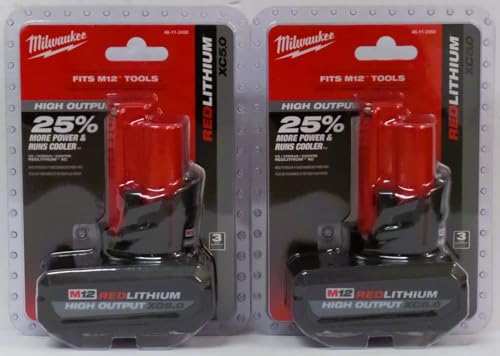 Milwaukee 48-11-2450 12V Lithium-Ion High Output 5Ah Battery0 x 0 x 0 Inches2.09 poundsCheck on Amazon
 Milwaukee M18 REDLITHIUM Forge HD12.0 Battery Pack7.76 x 7.28 x 3.5 Inches0.19 PoundsCheck on Amazon

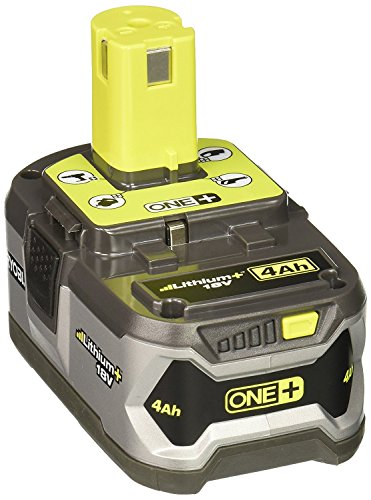
Top 3 picks at a glance
Quick comparison
Amp-hours alone do not tell you how much energy a battery stores. Watt-hours are the useful comparison: nominal voltage multiplied by amp-hour capacity. Because tool platforms use different nominal voltages, an 8Ah battery on a 40V platform can store more energy than a 12Ah battery on an 18V platform.
| Battery | Nominal platform | Capacity | Approx. stored energy | Best fit |
|---|---|---|---|---|
| Milwaukee M18 High Output 12.0 | 18V | 12Ah | 216Wh | Long-runtime M18 saws, grinders, and outdoor tools |
| DeWalt 20V MAX XR 12.0 | 18V nominal | 12Ah | 216Wh | High-capacity 20V MAX tools |
| DeWalt FLEXVOLT 15.0 | 18V or 54V, depending on tool | 15Ah at 18V / 5Ah at 54V | 270Wh | Users sharing batteries between 20V MAX and FLEXVOLT tools |
| Makita XGT 8.0 | 40Vmax, approximately 36V nominal | 8Ah | 288Wh | High-power XGT tools and sustained cutting |
| Bosch ProCORE18V 12.0 | 18V | 12Ah | 216Wh | Bosch 18V users needing maximum runtime |
These are nominal energy calculations rather than guaranteed usable output. Electronics, heat, cell age, tool load, and the battery management system reduce the energy delivered at the tool.
Which high-capacity battery should you choose?
Choose Milwaukee M18 High Output 12.0Ah for an established M18 workshop
The M18 High Output 12.0Ah is a strong choice when you already own several M18 tools and want the largest practical M18 pack. It provides roughly 216Wh and is designed for high-demand tools such as circular saws, reciprocating saws, grinders, and outdoor equipment.
Its main drawback is handling. A 12Ah pack adds substantial bulk compared with a compact 3Ah or 5Ah battery, so it is better on a saw sitting on a workpiece than on a drill used overhead. It also makes more sense when you can rotate multiple batteries rather than waiting for one pack to recharge.
Choose DeWalt FLEXVOLT 15.0Ah for maximum cross-platform flexibility
The DeWalt FLEXVOLT 15.0Ah is unusual because its cells are electronically configured for different tool voltages. On compatible 20V MAX tools, it operates as a high-capacity 15Ah-class pack; on 60V MAX tools, it operates as a 5Ah pack. Its energy is approximately 270Wh either way.
This is the most attractive option for someone moving between cordless drills, 20V MAX tools, and high-power 60V MAX equipment. Compatibility still requires checking the tool: not every 20V MAX accessory or charger supports every FLEXVOLT feature, and the battery cannot turn an ordinary 20V tool into a 60V tool.
Choose Makita XGT 8.0Ah when power density matters more than Ah numbers
Makita’s XGT 8.0Ah battery stores approximately 288Wh, making it one of the highest-energy packs in this comparison despite its lower amp-hour figure. XGT is a separate platform from Makita 18V LXT, so an XGT battery is not a universal upgrade for an LXT tool.
The higher-voltage platform is especially useful for demanding saws, grinders, blowers, and other tools that benefit from sustained power. The trade-off is platform cost and weight. If your existing collection is LXT, changing platforms just for one large battery may be less economical than buying another LXT pack.
Choose Bosch ProCORE18V 12.0Ah for Bosch 18V compatibility
The Bosch ProCORE18V 12.0Ah is the logical maximum-runtime choice for Bosch Professional 18V users. It provides approximately 216Wh while supporting the Bosch 18V tool ecosystem and compatible high-output equipment.
As with all high-capacity packs, balance matters. The battery may be excellent for a jobsite vacuum or saw but unnecessarily tiring on a compact drill. A smaller ProCORE pack can be the better everyday option if the tool is used continuously at shoulder height or above.
Runtime: a useful calculation before you buy
Estimate runtime with this formula:
Approximate runtime in hours = battery watt-hours × efficiency ÷ average tool draw in watts.
Suppose a cordless tool averages 600W during demanding operation and the battery-to-tool system delivers 85% of its nominal energy. A 216Wh battery would provide:
216Wh × 0.85 ÷ 600W = 0.306 hours, or approximately 18 minutes of continuous equivalent full-load runtime.
That does not mean the tool runs for only 18 minutes during a normal cutting session. Motors cycle between load and no load, and many tasks involve repositioning, measuring, and releasing the trigger. If the same tool averages 250W over the complete job, the estimate becomes about 44 minutes. Use average draw, not the motor’s maximum rating, for a more realistic result.
Decision matrix: match the battery to the job
| Your situation | Prioritize | Recommended direction | Why |
|---|---|---|---|
| You already own many tools on one platform | Compatibility and charger availability | Buy the largest pack in that platform | Shared batteries reduce the cost of adding runtime |
| Frequent overhead drilling or fastening | Weight and balance | Use a 3Ah–6Ah pack | Less fatigue usually outweighs maximum runtime |
| Long cuts with a circular or reciprocating saw | Energy and high-current output | 12Ah 18V-class, FLEXVOLT, or XGT 8Ah | Large packs reduce swaps during sustained load |
| One battery system for light and heavy tools | Voltage flexibility | DeWalt FLEXVOLT, if your tools support it | The same battery can serve two voltage classes |
| Maximum blower or mower runtime | Watt-hours and spare packs | 40V-class 8Ah or larger system batteries | Higher system voltage delivers more energy per pack |
Weight versus runtime: when the biggest battery is a bad choice
A high-capacity battery is not automatically the best battery for every tool. A 216Wh pack can be roughly twice the energy of a typical 5Ah 18V pack, but it is also considerably larger and heavier. That added mass changes the tool’s center of gravity and increases wrist and shoulder effort.
Use the high-capacity pack when the tool is supported by the workpiece, such as a circular saw on sheet material, a jobsite vacuum on the floor, or an outdoor tool held below waist height. Use a medium-capacity pack for drills, impact drivers, oscillating tools, and lights. For a long fastening session, two medium packs can be more comfortable than one oversized pack, even if their combined price is higher.
Charging considerations that affect real-world runtime
- Check charger compatibility first. High-capacity packs may charge on the platform’s standard charger, but charging times can be long. A rapid charger can reduce downtime, provided the battery manufacturer lists the pack as compatible.
- Plan around heat. A battery used heavily may pause charging until it cools. Do not place a hot pack directly on a charger expecting an immediate full-speed charge.
- Calculate your daily energy need. If a job consumes two 216Wh batteries and your charger replenishes about 100Wh per hour in practical conditions, one charger cannot restore a full day’s use during a short lunch break.
- Rotate packs instead of draining one repeatedly. Two or three batteries let one cool while another works, which is useful with saws, grinders, blowers, and vacuums.
- Store batteries partially charged in moderate temperatures. Avoid leaving lithium-ion packs in a hot vehicle or storing them completely empty for long periods.
Compatibility checks before purchase
Confirm the exact platform name, not just the brand. Milwaukee M18 is separate from M12; Makita XGT is separate from LXT; Bosch Professional 18V batteries are not the same as Bosch 12V packs; and DeWalt 20V MAX and 60V MAX tools have different requirements even though FLEXVOLT can bridge supported tools.
Also check whether the tool has a battery-size restriction. Some compact tools have a battery foot that interferes with a large pack, while some older tools may not take advantage of the latest high-output electronics. A battery that physically slides into a tool is not necessarily the best electrical or ergonomic match.
Frequently asked questions
How do I compare batteries with different voltage and amp-hour ratings?
Compare watt-hours rather than amp-hours alone. Multiply nominal voltage by amp-hour capacity to estimate stored energy: for example, the article lists the Makita XGT 8.0Ah at approximately 288Wh and several 12Ah 18V-class batteries at approximately 216Wh. These are nominal estimates, not guaranteed usable output, because heat, cell age, tool load, and battery management can reduce delivered energy.
Does a larger battery make a cordless tool more powerful?
A larger battery does not turn a lower-voltage tool into a higher-voltage tool. The article says a FLEXVOLT battery cannot turn an ordinary 20V MAX tool into a 60V MAX tool. High-capacity packs are intended to provide more stored energy and longer runtime, while tools must still be compatible with the battery’s platform and voltage.
Why might my battery take longer to recharge after heavy use?
A heavily used battery may need to cool before charging, which can pause or slow the process. The article advises checking charger compatibility and avoiding placing a hot pack directly on a charger expecting immediate full-speed charging. High-capacity batteries can also take a long time to recharge, so rotating packs can help reduce downtime.
Can I use a high-capacity battery in every tool from the same brand?
No—check the exact platform and the individual tool before buying. The article distinguishes Milwaukee M18 from M12, Makita XGT from LXT, and Bosch Professional 18V from Bosch 12V. It also notes that some compact tools may have battery-foot restrictions, and a pack that physically fits may not be the best electrical or ergonomic match.
What battery setup works best for a full day of heavy tool use?
Several packs to rotate are more practical than relying on one battery. The article recommends rotating batteries so one can cool while another works, especially with saws, grinders, blowers, and vacuums. It also gives an example in which a job consumes two 216Wh batteries, while a charger replenishing about 100Wh per hour in practical conditions cannot restore a full day’s use during a short lunch break.
Bottom line
For an 18V-class ecosystem, Milwaukee M18 High Output 12.0Ah, DeWalt 20V MAX XR 12.0Ah, and Bosch ProCORE18V 12.0Ah deliver roughly the same nominal energy: about 216Wh. DeWalt FLEXVOLT 15.0Ah offers greater stored energy plus 20V/60V compatibility, while Makita XGT 8.0Ah offers the highest approximate energy in this group at about 288Wh. Choose by platform first, watt-hours second, and handling weight third—then keep smaller batteries available for tools where balance matters more than maximum runtime.