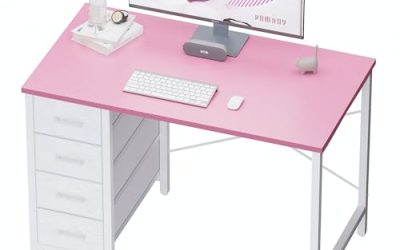
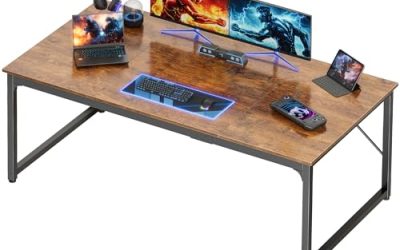
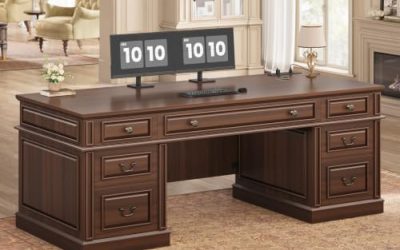
A closet office lives or dies on a few inches. The door still has to swing or slide, the shelf above the rod has to clear your monitor, and the wall behind you is probably shallower than any standard desk expects. That is why “best computer desks for a closet” is really a question about compact footprints: a work surface narrow enough to slot between the walls, a depth that leaves room for a chair, and a design that does not fight you every time you open the door.
This guide is for people turning a reach-in or small walk-in closet into a gaming nook, a study corner, or a quiet remote-work cubby in 2026. It narrows the field to six desks whose listed widths run from about 24 inches up to 47 inches, and it leaves out the L-shaped and 60-inch models because they will not fit most closets. Keep a tape measure handy: the right pick depends on your closet, not on a spec sheet alone.
Our Top Picks
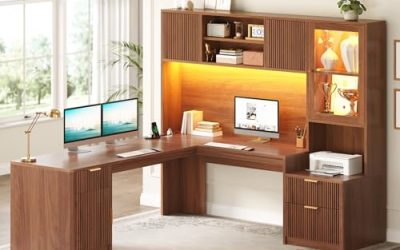
 Lufeiya White L Shaped Computer Desk with Drawers47.2"26.7 x 47.2 x 29.5 inches35.5 poundsCheck on Amazon

Top 3 picks at a glance
Quick Picks
As an Amazon Associate we earn from qualifying purchases at no extra cost to you.


| Product | Best for | Key spec from the title |
|---|---|---|
| Lufeiya 47-inch file drawer desk | Wide walk-in closets that need paperwork storage | 47 inch, reversible, file drawers with filing cabinet |
| HOOBRO 31.5-inch desk | Standard reach-in closets with no nearby outlet | 31.5 inch, power outlet, USB charging ports, 3 hooks |
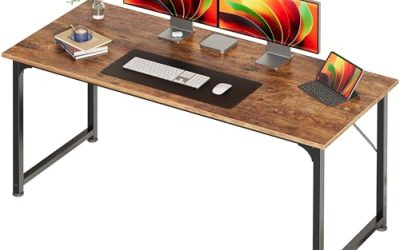
| Furinno Econ Desk | Single-monitor setups that need keyboard room | 40 inch wide, keyboard tray, side shelves, storage bin |
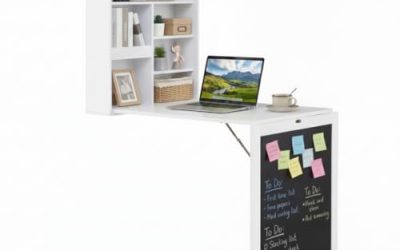
| Huuger folding desk | Closets that must double as a storage space | 23.6 inch, foldable, easy assembly |
| HOOBRO 28.3-inch desk | Tight alcoves where height matters | 28.3 inch, power outlet, adjustable monitor stand, storage |
| TEMI folding desk | Renters who want zero assembly | 35.8 inch, foldable, no assembly |
How to Choose
Measure Width, Depth, and Door Swing
Start with the narrowest point of the closet, which is often the door frame rather than the back wall. A desk in the 24 to 32 inch range suits most reach-in closets, while 36 to 47 inches generally needs a walk-in or a wide sliding-door opening. Leave at least 30 inches of clear floor for a chair, or pick a stool that tucks fully under the surface. Bifold and hinged doors need extra swing room, so a desk that fits the back wall may still block the door. Mark the footprint on the floor with painter’s tape before ordering and sit in the taped area for a minute.
Plan for Power and Heat
Many closets have no outlet, which makes built-in power a real convenience. Look for listings that mention a power outlet or USB ports, and still run a surge-protected strip to a wall socket safely. A closed closet traps heat, so a desktop tower or a gaming laptop under load needs airflow. Keep the door open or add a small fan rather than burying hot hardware beside coats. If you game for hours, a laptop on a stand with a cooling pad is kinder to a cramped space than a full tower.
Match Storage to Footprint
File drawers, side shelves, and storage bins are handy, but each one eats floor space or width. In a small closet, vertical storage is the smarter trade: shelves above the monitor and hooks for headphones keep the surface clear. Ignore headline drawer counts on very narrow desks, because the drawers will be shallow. Budget models also tend to cut corners on drawer slides and tabletop thickness, so expect lighter-duty hardware and avoid loading a drawer with heavy binders or a printer.
Decide Between Fixed and Folding
A fixed desk is sturdier for a tower, two monitors, and daily gaming. A folding desk lets you reclaim the closet for storage in seconds and often skips assembly, but it usually wobbles more and offers less surface. If the closet is a permanent office, favor fixed; if the space does double duty, folding earns its keep. Ignore marketing about being “perfect” for any room and compare the stated width instead, then ask whether the top can hold a monitor and a keyboard at the same time.
The 6 Best Options
Lufeiya 47-Inch File Drawer Desk
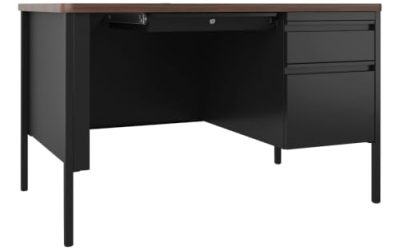
This is the widest desk in the guide, built for walk-in closets where paperwork and a printer would otherwise end up on the floor. The listing describes a reversible layout with file drawers and a filing cabinet, aimed at small spaces and gaming or study use. It suits a buyer who treats the closet as a proper home office and wants documents, chargers, and supplies stored within arm’s reach.
- Strength: the reversible design lets you put the cabinet on whichever side suits the closet wall.
- Strength: built-in file storage keeps documents off the work surface.
- Trade-off: at 47 inches it will not fit a typical reach-in closet.
Skip it if your opening is under about 48 inches or if you want the floor mostly clear. Anyone who stores little paper and prefers open legroom will be happier with one of the slimmer desks below, which leave more space for a chair, a floor lamp, or a small fan.
HOOBRO 31.5-Inch Desk with Outlet and USB
A good match for a standard reach-in closet that has no convenient wall socket. The listing highlights a power outlet, USB charging ports, and three hooks for a headset, bag, or cable bundle. It fits someone who works on a laptop, a single monitor, and a phone, and wants every charger plugged in without a tangle behind the chair.
- Strength: built-in power and USB charging reduce cord clutter in a cramped space.
- Strength: the hooks free up desk surface for a keyboard and mouse.
- Trade-off: a 31.5-inch top is enough for one monitor, but not for a second screen and a full-size keyboard.
Skip it if you run a tower plus two monitors and need real elbow room.
Furinno Econ Desk with Keyboard Tray
This 40-inch model pairs a plain white finish with a keyboard tray, side shelves, and a storage bin, which suits a bright, minimal closet office. It is a sensible choice when you want everything within reach of a seated position and prefer a lighter look over black gaming furniture that can make a small closet feel even tighter.
- Strength: the keyboard tray frees surface space for a monitor and notes.
- Strength: side shelves and a bin handle small gear without needing a separate cabinet.
- Trade-off: 40 inches is wide for many closets, so measure the door opening first.
Skip it if your closet is under 42 inches wide or if you prefer a darker, gaming-style look.
Huuger 23.6-Inch Folding Desk
The smallest option here, and the one to pick when the closet still has to hold storage. The title lists it as foldable, easy to assemble, and meant for small writing or office work. Think of it as a laptop shelf that appears when you need it and disappears when you do not, which is ideal for a part-time work-from-home routine or a student with a shared closet.
- Strength: folding means the closet floor is usable again after work.
- Strength: the 23.6-inch width fits almost any reach-in closet.
- Trade-off: the compact top suits a laptop, not a desktop tower plus monitor.
Skip it if you game on a full-size keyboard and mouse or need to run multiple screens.
HOOBRO 28.3-Inch Desk with Monitor Stand
A narrow, storage-minded desk for tight alcoves. The listing mentions a power outlet, an adjustable monitor stand, and compact storage, so a single screen can sit at a better eye level without a separate riser. It is a practical fit for a laptop-plus-external-display routine in a closet that is barely wider than the chair.
- Strength: the adjustable monitor stand raises the screen and opens room underneath.
- Strength: power outlet and storage are combined in a 28.3-inch width.
- Trade-off: the small top leaves little room for speakers, a mic, and accessories at once.
Skip it if you want a spacious surface or plan to use a large keyboard tray.
TEMI 35.8-Inch Folding Desk
The no-assembly pick for renters and dorm-style setups. The title describes a 35.8-inch foldable office desk that arrives ready to use, which is helpful when the closet is too cramped to build furniture in. The mid-size top gives a laptop and a small external monitor some breathing room without committing the closet to a permanent layout.
- Strength: no assembly means you can set it up in minutes inside a cramped space.
- Strength: it folds away, so the closet can return to its original job.
- Trade-off: folding desks generally offer less stability than fixed frames, so heavy gear is a risk.
Skip it if you plan to mount a heavy monitor arm or keep a tower on the surface. A fixed desk is the safer foundation for that kind of equipment, and a folding top is better kept for a laptop, a notebook, and a lamp.
Which One Fits Your Situation
A Narrow Reach-In Closet
Go with the HOOBRO 28.3-inch desk. Its width, adjustable monitor stand, and outlet suit a tight alcove where every inch counts, and the stand lifts the screen so you are not hunched over a laptop. If the opening is slightly wider, the 31.5-inch version adds a few inches of work surface.
A Closet You Still Use for Storage
Pick the Huuger folding desk, or the TEMI if you want slightly more surface. Both fold away when work is done, so seasonal bins and shoe racks can reclaim the floor. The TEMI is the easier choice if you dislike assembly.
A Walk-In Closet with Paperwork
The Lufeiya 47-inch file drawer desk gives you the room and the filing storage, provided the closet is wide enough. It works well when taxes, receipts, and gear manuals need a home next to the computer.
A Bright Single-Monitor Study Nook
The Furinno Econ Desk, with its keyboard tray and side shelves, keeps a white, minimal space neat and organized. Choose the HOOBRO 31.5-inch if you need the built-in outlet and USB charging instead of extra shelving.
Common Mistakes
- Measuring the back wall but forgetting the door frame, which is often the tightest point.
- Buying a wide desk with drawers and leaving no clearance for the chair to pull out.
- Assuming a closet has a nearby outlet and discovering later that cords must cross the floor.
- Stacking a hot tower inside a closed closet with no airflow.
- Choosing a folding desk for a heavy monitor and desktop setup that needs a rigid frame.
Related guides
- How To Check Gpu Compatibility With Your Motherboard And Cpu
- High-Performance Gaming Desktop Specifications
- Desktop Computer For Working From Home
Frequently Asked Questions
How wide should a closet desk be?
For most reach-in closets, aim for 24 to 32 inches, and confirm with a tape measure. Walk-in closets can often handle 36 to 47 inches if the door swing is clear and the chair has space to roll back.
Can I run a gaming PC in a closet?
You can, but heat builds fast in a closed space. Keep the door open, leave space around vents, and avoid placing a tower against clothing or walls. A laptop or compact system is usually the safer choice here.
Are folding desks sturdy enough for work?
They are fine for a laptop and light peripherals. For a tower, two monitors, or heavy gear, a fixed desk is more stable and less likely to wobble during long typing sessions.
Do I need a built-in outlet?
It is not required, but it is useful in a closet where wall sockets are scarce. Always plug the desk strip into a surge-protected wall socket rather than daisy-chaining extensions, and keep cords off the floor where the door swings.