Top 3 picks at a glance
Best Bee Suits for Backyard Beekeepers
The best bee suit for a backyard beekeeper is a ventilated, correctly sized suit with a clear-view fencing veil, secure zippers, and gloves that seal at the wrists; for hot-weather inspections, choose ventilation before extra fabric thickness, then make sure the veil and closures leave no gaps.
There is no single best style for every apiary. A calm colony on a mild day may call for a lighter suit, while defensive bees, frequent inspections, or a beekeeper who is still learning may justify more layers and coverage. The right choice balances visibility, cooling, fit, and protection—not just the thickness listed on a product page.
As an Amazon Associate we earn from qualifying purchases at no extra cost to you.
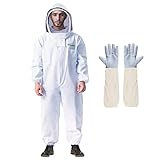
Choose by inspection conditions, not by label
“Ventilated,” “lightweight,” and “professional” are not consistent protection standards. Compare the construction itself: how many fabric layers sit between you and the bees, whether air can move through those layers, how the veil attaches, and whether cuffs and zippers close securely. No suit guarantees protection from stings, particularly where fabric presses against skin or a closure is left partly open.
| Backyard situation | Best starting choice | What to prioritize | Trade-off to accept |
|---|---|---|---|
| Short inspections in warm weather, calm colony | Ventilated suit with a fencing veil | Airflow, clear downward view, easy-to-open front | Bulkier fabric than a single-layer suit |
| Defensive colony or frequent hive work | Multi-layer ventilated suit or thicker cotton suit | Coverage, reinforced seams, secure veil and cuffs | More heat and restricted movement |
| Cool weather or occasional use | Single-layer cotton or poly-cotton suit | Proper fit and easy layering underneath | Less sting buffer if fabric is pressed against skin |
| Glasses wearer or close-up queen checks | Fencing veil with a roomy face area | Lens clearance and an unobstructed view below | Veil can feel larger and catch more wind |
What to compare before buying
Veil visibility: fencing versus round styles
A fencing veil holds mesh away from the face and usually gives a broad forward and downward view. That space helps reduce contact between the mesh and your nose, glasses, or eyelashes, and makes it easier to watch bees on a frame. Check that the veil sits clear of your face when you turn your head and bend over a hive.
A round veil can provide a roomy field of view too, but the exact shape and support vary. Either style can work if the mesh is dark enough to see through comfortably in daylight, the face area remains clear, and the attachment is secure. Try the veil with your glasses on; a design that looks spacious without them may press against the frames.
Fabric thickness and ventilation
Single-layer cotton and poly-cotton suits are lighter and easier to move in, but offer less separation if fabric is pulled tight against your body. Thicker or multi-layer suits provide more buffering, though they can become uncomfortable quickly in heat. Ventilated suits use mesh or layered construction to create an air gap while retaining coverage. That can improve comfort, but ventilation is not a promise of sting-proof protection.
For warm-weather inspections, consider the whole setup: suit, gloves, veil, and clothing underneath. A thick shirt beneath a ventilated suit can reduce airflow; tight sleeves can press fabric against your arms. Choose loose, breathable base layers and avoid leaning bare skin against frames or the hive. If temperatures are high, shorten the inspection and take breaks rather than relying on suit ventilation alone.
Zippers, seams, and closure paths
Look for a veil that zips or otherwise fastens fully to the suit, plus closures that can be checked without contorting your arms. A double zipper or a protective flap can help shield the main closure, but the important test is whether the path stays closed as you bend, reach, and lift frames. Inspect zipper stops, stitching, and elastic at the ankles and wrists before each use.
Some suits zip gloves directly to the sleeves; others use elastic or hook-and-loop cuffs. Integrated closures reduce the number of gaps to manage, but replacement gloves may be harder to source. With separate gloves, confirm that the glove cuff overlaps the sleeve and stays there when you raise your arms.
Sizing and gloves matter as much as the suit
Use the maker’s measurements rather than your usual clothing size. Measure over the clothes you expect to wear, then check chest, torso length, sleeve length, and inseam against the size chart. You need room to squat, reach overhead, and lift a frame without pulling the suit taut. Excess fabric can snag on equipment, so “size up” is not automatically the safer answer.
Gloves should cover the forearm-to-sleeve junction without restricting grip. Leather gloves are durable but can be warm and reduce fingertip feel; washable synthetic or fabric gloves may offer more dexterity but need frequent inspection for thin spots and holes. Whichever type you choose, keep a spare pair available and replace gloves with damaged seams.
A practical fit-and-seal check before the first hive
- Put on your full inspection layers. Include the clothes and gloves you will actually wear. This reveals tight sleeves or a veil that crowds your glasses.
- Move through inspection motions. Reach overhead, crouch, turn your head, and hold a frame at chest height. The suit should not pull tight across the back, knees, or elbows.
- Check the veil connection. Run your fingers around its full attachment and make sure the mesh stays away from your face when you look down.
- Close and test every opening. Check the front zipper, wrist and ankle closures, and glove overlap. Ask someone to look at the back of the veil if you cannot see its fastening clearly.
- Recheck after a few minutes of movement. Closures can shift when you work. If an edge rides up or a glove separates from the sleeve, fix the fit before opening the hive.
This check catches a common mismatch: a suit that fits while standing still but exposes a gap when reaching for a frame. It also lets you spot visibility problems before you are working around open brood frames and active bees.
Match your choice to the way you keep bees
- One or two hives, mostly warm-weather inspections: Start with a ventilated suit and fencing veil. Prioritize airflow and a fit that lets you move freely.
- New beekeeper who wants extra coverage: Choose a well-constructed multi-layer or thicker suit, but keep inspection sessions short in hot weather and make sure you can still handle frames steadily.
- Experienced keeper working in cooler conditions: A single-layer suit may be practical if the colony is manageable and the fit, veil, and closures are sound.
- Frequent inspections or multiple colonies: Favor sturdy seams, replaceable or serviceable veil parts, washable materials, and gloves that are easy to inspect and replace.
- Anyone who struggles with fogging or close mesh: Try the veil with glasses and under bright outdoor light. Choose the style that preserves a clear view when looking down, not just straight ahead.
Frequently asked questions
Can I wear a bee suit over my normal clothes?
Yes, but choose loose, breathable base layers and measure for the suit over the clothes you expect to wear. Thick clothing underneath can reduce airflow in a ventilated suit, while tight sleeves may press fabric against your arms. Put on your complete inspection layers before checking the fit, including the clothing and gloves you will actually use.
How can I prevent the veil from pressing against my glasses?
Try the veil while wearing your glasses and check that the face area remains clear when you turn your head and look down. A fencing veil usually holds mesh away from the face and can provide lens clearance, but the exact space varies. Also confirm that the veil stays away from your nose, frames, and eyelashes during inspection movements.
How often should I inspect my bee suit before using it?
Inspect the suit before each use, especially the zipper stops, stitching, elastic at the wrists and ankles, and all closure paths. Check the veil attachment, glove overlap, and front zipper as well. After moving through inspection motions, recheck the closures because an edge can ride up or a glove can separate from the sleeve when you reach for a frame.
What should I do if my suit becomes too hot during an inspection?
Shorten the inspection and take breaks rather than relying on suit ventilation alone. Ventilated construction can improve comfort, but heat is affected by the entire setup, including the suit, gloves, veil, and clothing underneath. Loose, breathable base layers can help preserve airflow, and avoiding a thick shirt beneath the suit may reduce unnecessary warmth.
How do I know whether separate gloves will stay secure?
Separate gloves should overlap the sleeves and remain in place when you raise your arms. Test the overlap while reaching overhead, crouching, turning, and holding a frame at chest height. Gloves must cover the forearm-to-sleeve junction without restricting grip. Keep a spare pair available, and replace gloves when their seams are damaged or they develop thin spots or holes.
Final buying checklist
Before choosing among the best bee suits for backyard beekeepers, verify the veil’s usable viewing area, ventilation across the torso and limbs, the number and placement of closures, the size chart, glove compatibility, and how the suit can be cleaned and repaired. If possible, try it on with your usual layers. The best choice is the one that stays comfortably cool enough for a careful inspection while keeping every opening secure and your view of the bees unobstructed.