This review analyzes published product information. We have not performed detailed research of this unit.
As an Amazon Associate, we earn from qualifying purchases.
The ASUS ROG GM700 GM700TZ-PS787 presents a compelling configuration on paper: a Ryzen 7 9800X3D processor, GeForce RTX 5080 graphics, 32GB of DDR5 memory and a 2TB SSD. For a prebuilt buyer, however, those headline parts answer only half the question. The other half is whether the supporting hardware and enclosure make this a sensible system to own and eventually upgrade.
This review analyzes the supplied retailer specifications rather than detailed research. The configuration is materially different from the previously covered ROG G700 G700TF-DS774 with Core Ultra 7 265F, RTX 5070, 16GB memory and 1TB storage. Its processor, graphics, memory and storage changes warrant separate buying guidance, not merely a different listing title.
The exact GM700 configuration
| Model | ASUS ROG GM700 (2026), GM700TZ-PS787 |
|---|---|
| Processor | AMD Ryzen 7 9800X3D |
| Graphics | NVIDIA GeForce RTX 5080 |
| Memory | 32GB DDR5; speed and module arrangement unspecified |
| Storage | 2TB M.2 NVMe PCIe 4.0 SSD |
| Operating system | Windows 11 Home |
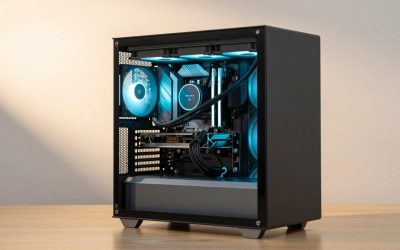
| Cooling | Listed quad-fan system, 240mm liquid cooler and dust filters |
| Chassis | 58L, dual glass, tool-less access, advertised triple-slot GPU support |
| Dimensions | 9.45 × 20.05 × 18.88 inches; axis order not identified |
| Networking | 2.5Gbps Ethernet and Wi-Fi 6 |
| Included peripherals | RGB keyboard and mouse |
A more substantial starting point than the covered G700
The practical distinction from the earlier G700 is not the shared ROG styling. This GM700 doubles the listed system memory and storage, while changing both the CPU platform and GPU model. That gives buyers a different starting point when deciding whether to leave a prebuilt untouched or plan immediate component replacements.
For someone combining games with background applications, 32GB offers more capacity headroom than the earlier system’s 16GB. It does not establish memory performance: the listing omits transfer speed, timings and whether the capacity is divided across multiple modules. Buyers concerned with memory tuning should verify those details rather than treating the DDR5 label as a complete specification.
The 2TB SSD similarly provides more nominal storage space than the covered 1TB configuration. That is useful for buyers who want room for a larger installed library before considering another drive. However, PCIe 4.0 identifies the interface generation, not the drive’s measured speed or endurance. The SSD manufacturer, controller and expansion-slot availability are not supplied.
The Ryzen 7 9800X3D and RTX 5080 are the main reasons to consider this exact variant. Their presence alone does not establish a particular resolution, quality preset or frame-rate result. No game testing, graphics power settings or sustained CPU behavior is documented here. Choose around your actual game and display requirements, then seek configuration-specific testing if a particular performance target is essential.
Cooling hardware is specified; its behavior is not
ASUS advertises a quad-fan arrangement and a 240mm liquid cooler. Those are more informative details than an unspecified cooling claim, but they do not prove quiet operation or sustained thermal performance. The evidence does not explain fan placement, radiator location, cooler model or control settings.
The 58L dual-glass enclosure also deserves a space check before purchase. Use the listed dimensions to assess your intended location, while confirming which measurement corresponds to each axis. Leave room for connections and ventilation rather than assuming a close-fitting desk compartment is suitable.
Dust filters are a useful listed provision for maintenance planning, although their locations and removal method are unknown. Aura Sync RGB lighting and the glass panels serve the visual presentation; neither should be treated as evidence of cooling quality. Buyers prioritizing acoustics should look for measured noise information before committing.
Tool-less entry does not settle upgrade compatibility
The advertised tool-less access should make opening the enclosure less cumbersome. Likewise, triple-slot GPU support describes a relevant chassis capability. Neither statement guarantees that a future graphics card will fit or that the installed power supply can support it.
The missing power-supply specification is particularly important for an upgrade-minded buyer. Wattage, model and available connectors are not listed. GPU length and height clearance are also absent, so slot width alone is insufficient for planning a replacement.
Motherboard model, memory-slot occupancy, spare M.2 sockets and drive-mounting provisions remain unspecified. These omissions are not evidence that expansion is impossible; they mean the listing cannot establish how straightforward it will be. Request those details before purchasing if an additional SSD or later GPU replacement is part of your ownership plan.
Connectivity and setup details to confirm
The listed 2.5Gbps Ethernet and Wi-Fi 6 provide wired and wireless networking options. Actual connection behavior depends on the surrounding network, so the seller’s latency-oriented language should not be read as a guarantee. A complete USB and display-output inventory is missing, leaving monitor and accessory compatibility checks unfinished.
Windows 11 Home and an RGB keyboard and mouse are included according to the listing. Peripheral models are unspecified, so treat the input devices as bundled equipment rather than a demonstrated reason to prefer this desktop. Dolby Atmos and AI noise cancellation are also advertised, without enough implementation detail to judge their practical value.
For broader shopping context, consult our gaming desktop buying guide, while keeping this exact configuration’s requirements separate from general recommendations.
Frequently asked questions
What processor and graphics card does the ASUS ROG GM700 GM700TZ-PS787 include?
It includes an AMD Ryzen 7 9800X3D processor and NVIDIA GeForce RTX 5080 graphics. These are the main reasons to consider this exact variant, according to the article. Their presence does not establish a particular resolution, quality preset, or frame-rate result, because the published listing information does not document game testing, graphics power settings, or sustained CPU behavior.
How does this GM700 configuration differ from the previously covered G700?
The GM700 changes the processor platform and graphics model while listing twice the earlier system’s memory and storage: 32GB of DDR5 and a 2TB SSD versus 16GB of memory and 1TB of storage. The earlier G700 used a Core Ultra 7 265F and RTX 5070. These differences make the GM700 a separate buying case.
What storage and memory specifications are confirmed?
The system is listed with 32GB of DDR5 memory and a 2TB M.2 NVMe PCIe 4.0 SSD. The listing does not identify the memory speed, timings, or module arrangement, and it also omits the SSD manufacturer, controller, and endurance. PCIe 4.0 identifies the interface generation, not the drive’s measured speed.
How large is the GM700, and what should I check before placing it?
The chassis is listed as 9.45 × 20.05 × 18.88 inches with a 58L capacity, but the axis order is not identified. Before placing it, assess the listed dimensions against the intended location and allow room for connections and ventilation. A close-fitting desk compartment should not be assumed suitable without considering airflow and access.
What information should an upgrade-minded buyer request before purchasing?
Request the power-supply wattage, model, and available connectors, along with GPU length and height clearance. Also ask about the motherboard model, memory-slot occupancy, spare M.2 sockets, and drive-mounting provisions. The listing confirms tool-less access and advertised triple-slot GPU support, but those details alone do not establish future graphics-card or storage compatibility.
Verdict: attractive core parts, incomplete supporting detail
The GM700TZ-PS787 deserves consideration for its specified processor, graphics card and more generous memory and storage allocation. Its main reservation is documentation rather than a demonstrated defect: power delivery, motherboard expansion, port selection and acoustic behavior remain unresolved. It is a stronger candidate for buyers satisfied with the supplied configuration than for those whose decision depends on a verified future upgrade path.
Sources: ASUS ROG GM700 GM700TZ-PS787 retailer listing. Specifications and advertised capabilities above are listing claims, not independently measured results.
Check the exact product and current offer on Amazon