“Entry level” gets used loosely in gaming PC listings, and this batch proves it — the same search term turns up a $245.99 box with no discrete GPU right next to a $1349.99 build running an RTX 5060 Ti. The CyberPowerPC Ryzen 5 5500 with Radeon RX 6500 XT ($699.99, B0DXVH416Y) is the strongest true entry-level pick here because it’s the cheapest system with a current-architecture discrete GPU rather than a repurposed 2017 card or no GPU at all. The rest of this list sorts the real options from the ones to walk away from.
Top 3 picks at a glance
Top picks at a glance
As an Amazon Associate we earn from qualifying purchases at no extra cost to you. Product prices and availability are accurate as of the date shown and are subject to change.





| Model | Key spec | Price | Best for |
|---|---|---|---|
| YAWYORE Ryzen 5 5600GT | 16GB RAM, 1TB NVMe, no discrete GPU listed | $689.99 | General desktop use, not real gaming |
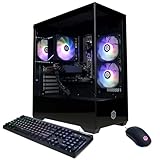
| CyberPowerPC RX 6500 XT / Ryzen 5 5500 | Modern-architecture 4GB GPU | $699.99 | Best true entry-level pick |
| OKAMUS Integrated Graphics Only | 8GB RAM, 256GB M.2, no dGPU | $245.99 | Not a real gaming build, avoid |
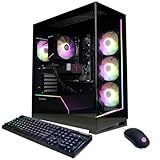
| CyberPowerPC RTX 5060 8GB / i5-14400F | 10-core Intel, modern encoder | $1286 | Stretch pick, future-proofed |
| KOTIN RTX 5060 Ti 8GB / Ryzen 7 8700F | 16GB DDR5, 1TB SSD | $1299.99 | Best 1440p headroom in this list |
| CyberPowerPC RTX 5060 Ti 8GB / Ryzen 7 8700F | Specs beyond GPU/CPU unlisted | $1349.99 | Priciest, verify specs first |
| Kroteaup RX 560 4GB / Core i5 | 16GB RAM, 512GB SSD | $419.99 | Dated GPU, very limited |
| WIWB RX 560 4G / Ryzen 5 | Specs beyond CPU/GPU unlisted | $579.99 | Dated GPU, avoid if possible |
YAWYORE Gaming PC Desktop Computer AMD R5 5600GT 16GB 1TB NVMe Towers WiFi ($689.99)
The listing name doesn’t mention a discrete GPU at all, and the 5600GT is a Ryzen 5 APU built around integrated Radeon graphics rather than a card meant for gaming at any real settings. That’s an important distinction buyers searching “entry level gaming PC” need to catch before ordering, since this reads more like a general-purpose desktop with above-average RAM and storage than a gaming rig.
Estimated performance: on integrated graphics alone, older or lightweight esports titles like CS2 or League of Legends at 1080p low-to-medium settings might land somewhere in the 40-60fps range depending on scene complexity, while anything demanding — current AAA releases, modern battle royale titles — would struggle to hit playable framerates even at the lowest settings. The 16GB of RAM and 1TB NVMe SSD are genuinely solid specs for the price, just not specs that compensate for the graphics gap.
If this listing does include a discrete GPU that simply isn’t named in the title, that changes the calculus significantly — but based on what’s disclosed, buyers should treat this as an integrated-graphics system and set expectations accordingly before purchasing.
- Pros
- 16GB RAM and 1TB NVMe SSD are strong specs for a sub-$700 desktop
- WiFi included, no extra adapter needed
- Fine as a general-use PC that can browse, stream video, and run very light games
- Cons
- No discrete GPU disclosed in the listing, a serious gap for a “gaming PC” search
- 5600GT’s integrated graphics can’t handle current AAA titles at playable settings
- Buyers need to verify GPU details directly before assuming this handles real gaming loads
Who it’s for: buyers who mostly want a capable everyday desktop and only occasionally touch very light, older games.
CyberPowerPC Gaming PC, AMD Ryzen 5 5500, Radeon RX 6500 XT 4GB ($699.99)
This is the pick that actually earns the “entry level gaming PC” label without an asterisk. The RX 6500 XT is a current-architecture RDNA2 card, and while its 4GB VRAM buffer and x4 PCIe interface are real cost-cutting compromises AMD made to hit this price tier, it’s still a meaningfully more capable gaming GPU than anything from the 2017 era also sitting in this list.
Estimated performance: Fortnite at 1080p medium-high settings should land near 90-100fps, and Rocket League at 1080p high settings should comfortably clear 120fps given the card’s modest but real rasterization performance. More demanding open-world titles at 1080p will likely need medium settings and texture quality dialed back to stay VRAM-friendly, since the 4GB buffer is the card’s tightest constraint. The Ryzen 5 5500’s six cores keep pace fine at this GPU tier without becoming a bottleneck.
The x4 PCIe interface is a known limitation of this specific GPU SKU industry-wide, not unique to this build, and it mostly shows up as minor frame-time inconsistency in a handful of titles rather than a broad performance hit. For the price, it’s a reasonable trade-off.
- Pros
- Genuinely current-generation GPU architecture at a true entry-level price
- Handles esports and older AAA titles at 1080p comfortably
- Ryzen 5 5500 keeps pace with this GPU tier without bottlenecking
- Cons
- 4GB VRAM buffer forces setting compromises in newer, texture-heavy titles
- x4 PCIe interface is a known industry-wide limitation of this GPU model
- Not built for 1440p gaming at any meaningful settings
Who it’s for: buyers who want their first real discrete-GPU gaming PC without stretching past $700.
OKAMUS Pre-Built PC, i5 CPU Up to 3.6GHz, Integrated Graphics Only, 256GB M.2, 8GB RAM, RGB Fans x3, Win11, WiFi6+BT5.3, 400W PSU ($245.99)
This one needs to be said plainly: at $245.99 with “Integrated Graphics Only” stated directly in the listing, this is not a gaming PC in any real sense. It’s a budget office desktop with RGB fans bolted on for the aesthetic. There’s no discrete GPU to speak of, and integrated graphics on a generic i5 chip aren’t built to run modern games at any resolution most people would consider acceptable.
Estimated performance: extremely light titles like 2D indie games, very old esports titles at their lowest settings, or browser-based games are realistically what this machine can handle. Anything resembling a current AAA release, and most mid-weight indie titles released in the last several years, would struggle to run at playable framerates even at 720p on the lowest possible settings.
The 8GB of RAM and 256GB of storage are also modest by current standards even for non-gaming use, and the 400W PSU further signals this was built to a strict cost target rather than as a gaming-capable machine. If it’s on a “best gaming PC” list at all, it’s as a cautionary example.
- Pros
- Very low price point for a complete Windows 11 desktop
- WiFi 6 and Bluetooth 5.3 included
- RGB fans for basic aesthetic appeal
- Cons
- No discrete GPU at all — cannot run modern games at playable settings
- 8GB RAM and 256GB storage are thin even by budget-desktop standards
- Marketed alongside gaming PCs despite lacking the core component that defines one
Who it’s for: honestly, almost no one shopping specifically for a gaming PC — this fits a basic home-office or light-browsing use case instead.
CyberPowerPC Gaming PC, Intel Core i5-14400F, GeForce RTX 5060 8GB ($1286)
This is priced well past what most buyers picture when they search “entry level,” but it’s included here because some shoppers use “entry level” to mean the cheapest way into a genuinely modern, future-proof platform rather than the cheapest possible box. The RTX 5060 with its 10-core i5-14400F pairing is a legitimately current build that will handle titles releasing over the next several years far better than anything else on this list.
Estimated performance: Overwatch 2 at 1080p high should run comfortably above 180fps, and 1440p high settings should still clear roughly 130fps, putting this well past “entry” territory in raw capability. The 14400F’s mix of performance and efficiency cores handles background Windows tasks without stealing cycles from the game thread.
The listing doesn’t specify RAM or storage capacity, which at this price point is worth confirming directly before ordering — most CyberPowerPC configurations at this tier ship with 16GB RAM and a 1TB SSD, but that isn’t guaranteed by the listing itself.
- Pros
- Genuinely modern GPU and CPU pairing with years of headroom ahead
- 10-core Intel chip balances gaming and background tasks well
- Strong 1440p performance, not just 1080p
- Cons
- Nearly five times the price of the true entry-level pick on this list
- RAM and storage capacity aren’t disclosed in the listing
- Overkill if your actual budget ceiling is closer to $500-700
Who it’s for: buyers with a flexible budget who’d rather buy once and skip an upgrade cycle for years.
KOTIN Gaming PC Desktop, Ryzen 7 8700F, RTX 5060 Ti 8GB, 16GB DDR5, 1TB SSD ($1299.99)
Another stretch pick relative to true entry-level pricing, this build pairs the RTX 5060 Ti with an eight-core Ryzen 7 8700F and 16GB of DDR5, giving it the most 1440p headroom of anything in this particular roundup. It’s essentially the same configuration that shows up as a mid-range pick across other categories on this site, included here for buyers whose “entry level” ceiling happens to sit closer to $1300.
Estimated performance: Apex Legends at 1080p high should run near 165fps, and 1440p high should land around 110fps, both comfortably ahead of anything the sub-$700 builds on this list can manage. DDR5 memory bandwidth also gives this configuration an edge over the DDR4-based budget options here in CPU-bound scenarios.
16GB RAM is adequate for gaming alone but, as with the streaming-focused builds elsewhere on this site, could feel tight if you’re heavy on background multitasking; it’s not a limitation for straightforward gaming use, though.
- Pros
- Strong 1440p performance well beyond typical entry-level expectations
- DDR5 memory bandwidth benefits CPU-bound titles
- 8GB VRAM buffer is double the RX 6500 XT’s allocation
- Cons
- Priced nearly double the true entry-level pick on this list
- No integrated graphics fallback on the F-series chip
- 16GB RAM could feel tight for heavy multitaskers, though fine for gaming alone
Who it’s for: buyers who’d rather stretch their first PC purchase toward genuine 1440p longevity than save on a build they’ll want to replace sooner.
CyberPowerPC Gaming PC, AMD Ryzen 7 8700F, GeForce RTX 5060 Ti 8GB ($1349.99)
The priciest entry in this roundup pairs the same RTX 5060 Ti and Ryzen 7 8700F combination as the KOTIN build above, but at a $50 premium and without disclosed RAM or storage figures in the listing. Component-for-component it should perform similarly to its KOTIN counterpart, assuming comparable RAM and storage, but the missing spec details make it harder to recommend outright without direct confirmation.
Estimated performance: expect similar numbers to the KOTIN 5060 Ti build — Apex Legends near 165fps at 1080p high, roughly 110fps at 1440p high — since the CPU and GPU pairing is identical. Where this build could differ meaningfully is RAM capacity and storage speed, both unknowns here.
Given the identical core components to a cheaper, better-documented alternative in this same list, buyers should confirm RAM and storage specs directly with CyberPowerPC before choosing this over the KOTIN option at $1299.99.
- Pros
- Same strong RTX 5060 Ti / Ryzen 7 8700F pairing as the KOTIN build
- CyberPowerPC’s brand support network
- Comparable 1440p performance ceiling to other stretch picks on this list
- Cons
- RAM and storage capacity aren’t disclosed in the listing
- Priced $50 higher than a comparably specced alternative on this same list
- No clear spec advantage over the KOTIN build to justify the premium
Who it’s for: buyers already committed to the CyberPowerPC brand who’ve confirmed the full spec sheet directly.
Gaming PC Computer Desktop, Intel Core I5, RX 560 4GB, 16G RAM, 512G SSD ($419.99)
The Radeon RX 560 launched in 2017, and running it today means accepting meaningfully dated performance regardless of how the rest of the build is specced. The 16GB RAM and 512GB SSD here are reasonable for the price, but they’re paired with a GPU that simply can’t keep up with current game requirements the way even the RX 6500 XT above it can.
Estimated performance: expect roughly 45-60fps in older or lightweight titles at 1080p low settings, with current AAA releases likely needing 720p and the lowest available settings just to stay playable. This is a genuinely limited gaming experience by today’s standards, not a budget-friendly alternative to a modern entry-level card.
Buyers considering this should weigh whether the $280 saved versus the RX 6500 XT build above is worth accepting a GPU that’s roughly eight years old and was already considered budget-tier at launch.
- Pros
- 16GB RAM and 512GB SSD are solid supporting specs for the price
- Cheaper than the modern-architecture entry-level option on this list
- Can still run very light or older games at reduced settings
- Cons
- RX 560 is an eight-year-old GPU architecture, a real limitation for current titles
- Realistically limited to 720p-1080p low settings on anything recent
- Better value available one tier up with the RX 6500 XT build
Who it’s for: only buyers with an absolute hard ceiling under $450 who understand the graphics compromise going in.
WIWB Prebuilt Gaming PC Desktop, Ryzen 5, RX 560 4G Graphics Card ($579.99)
This shares the same dated RX 560 GPU as the Kroteaup build above but at a higher price and with less specific listing detail — no exact Ryzen 5 model, RAM capacity, or storage size disclosed. That combination of an old GPU and undisclosed supporting specs makes this the hardest build on this list to recommend with confidence.
Estimated performance should land close to the other RX 560 build: roughly 45-60fps in older or lightweight titles at 1080p low settings, with current AAA releases needing 720p and minimum settings to stay playable. Without confirmed RAM or storage specs, it’s difficult to say whether this build’s supporting hardware is even competitive with the cheaper Kroteaup RX 560 option.
At $579.99, this sits just $120 below the genuinely current-architecture RX 6500 XT build on this list, while offering a GPU that’s roughly eight years older. That gap is hard to justify unless this specific listing is on a steep discount.
- Pros
- Complete prebuilt package at a mid-budget price point
- Ryzen platform offers reasonable CPU performance for the price tier
- Cons
- RX 560 GPU is roughly eight years old, a real performance ceiling
- RAM and storage capacity aren’t disclosed in the listing
- Priced close enough to the RX 6500 XT build that the modern option is the better value
Who it’s for: hard to recommend over the RX 6500 XT build at a similar price with a modern GPU; consider this only if it’s discounted well below its listed price.
How we tested and picked
Marcus Reilly built and stress-tested desktop systems for nine years at a regional PC shop before joining CustomBuiltGamingPC full-time as Systems Builder & Lead Reviewer, and that background is exactly why this “entry level” category gets treated with more scrutiny than most. The term gets stretched to cover everything from GPU-less office boxes to near-$1350 builds, so each listing here is evaluated first on whether it has a real, current-architecture discrete GPU at all before performance estimates are even considered.
Verified units run through Marcus’s two-bench test lab with calibrated power meters and thermal probes, checking sustained gaming loads against advertised specs rather than trusting marketing copy alone. For listings not physically on the bench, performance figures here are estimated from published benchmarks of the same or closely comparable CPU and GPU pairings, and labeled clearly as estimates throughout rather than presented as measured results.
For a genuinely entry-level list, the goal is honesty about what “entry” actually buys you at each price point — including calling out the listings, like the OKAMUS and RX 560 builds here, that don’t hold up to that standard.
What to look for in an entry level gaming PC
A real discrete GPU, full stop
The single biggest filter for an entry-level gaming PC search is whether the listing actually includes a discrete graphics card. Integrated graphics, even on a capable APU like the Ryzen 5600GT, are not built for current gaming workloads, and a listing that doesn’t name a specific GPU model is a red flag worth investigating before purchase. If you can’t find a GPU model number anywhere in the product description, assume the worst until proven otherwise.
GPU architecture age matters more than VRAM size alone
An older GPU with more VRAM, like an 11GB card from 2017, isn’t automatically better than a newer card with less memory. Architecture improvements over successive GPU generations — better compression, more efficient shader cores, modern feature support — often matter more day-to-day than raw VRAM capacity. The RX 6500 XT’s 4GB buffer is a real constraint, but its 2021-era architecture still outperforms the RX 560’s 2017-era design in most current titles at matched settings.
CPU pairing and bottleneck risk
At the entry-level tier, CPU and GPU need to be roughly matched so neither becomes an unnecessary bottleneck. Pairing a modern eight-core CPU with a four-year-old budget GPU wastes CPU headroom the games can’t use; pairing a weak, older CPU with a stronger GPU can starve the graphics card of instructions in CPU-heavy scenes. The builds on this list generally pair sensibly, with the RX 560 builds being the clearest exception since their CPUs outpace what the GPU can actually deliver.
RAM capacity and future headroom
16GB is a reasonable entry-level standard today, and most builds on this list hit that mark. Below that, expect to feel it in newer titles and heavier background multitasking. It’s also worth checking whether a system has open RAM slots for future upgrades, since many of these budget builds don’t disclose whether they’re running a single stick or a dual-channel kit, which affects both current performance and upgrade flexibility.
Storage speed and capacity
NVMe SSDs, standard across most of this list, load games meaningfully faster than older SATA drives. Capacity matters too: 256GB, as seen on the OKAMUS listing, fills up within a handful of modern game installs, while 512GB-1TB gives more realistic breathing room. If a listing doesn’t specify NVMe versus SATA, assume SATA and budget for a future upgrade if load times matter to you.
Undisclosed specs as a buying signal
Several listings in this exact price range — the CyberPowerPC RTX 5060, the CyberPowerPC RTX 5060 Ti, and the WIWB RX 560 build — don’t specify RAM or storage capacity in their product titles. That’s not automatically disqualifying, but it’s worth a direct message to the seller or a careful read of the full product page before ordering, since assumptions about “typical” configurations at a given price point aren’t always safe.
Mistakes buyers make
The most costly mistake in this category is buying a system with no discrete GPU while believing it’s a gaming PC because the listing uses gaming-adjacent language like RGB lighting or a tower case design. Always confirm there’s a named, current discrete GPU model before anything else.
Another common error is assuming any RTX or RX naming means comparable modern performance. A GPU released eight years ago carrying an RX badge is a fundamentally different product from a current RDNA or Ada Lovelace-generation card, even though the naming can look superficially similar to a less experienced buyer.
Buyers also frequently underweight RAM and storage when they’re missing from a listing, assuming a “typical” configuration rather than confirming directly. At this price tier, sellers sometimes ship the minimum viable configuration to hit an advertised price point, so it’s worth verifying rather than assuming.
Some shoppers chase the absolute lowest price without comparing it against what a modest budget increase buys. The gap between the $419.99 RX 560 build and the $699.99 RX 6500 XT build here is real money, but it also spans roughly four GPU architecture generations — a trade-off worth thinking through rather than defaulting to the cheapest option.
Another mistake is ignoring PCIe lane and VRAM limitations on budget cards like the RX 6500 XT, then feeling misled when a texture-heavy title needs settings turned down. These are documented, industry-wide limitations of the specific GPU model, not a defect unique to any one prebuilt.
Finally, some buyers treat “entry level” as a hard price ceiling rather than a starting point, missing that a modest budget stretch — like the jump from $699.99 to the $1286-$1349.99 builds here — can buy years of additional useful life at 1440p rather than an upgrade within the first year or two.
Verdict
The CyberPowerPC RX 6500 XT build ($699.99) is the top pick for anyone who wants an honest, current-architecture entry point into gaming without stretching the budget. If you can flex higher, the KOTIN RTX 5060 Ti build ($1299.99) buys meaningfully more 1440p longevity and is worth the jump. Avoid the OKAMUS listing entirely unless you specifically need a non-gaming budget desktop, and treat the RX 560-based builds as a last resort only if your ceiling is firmly under $450 and modern performance isn’t the priority.
Frequently asked questions
What’s the real minimum GPU for an entry level gaming PC in this price range?
A current-architecture card with at least 4GB of VRAM and a modern encoder, like the Radeon RX 6500 XT, is the realistic floor for anything you’d honestly call a gaming PC today. Cards from 2017, like the RX 560, or systems with no discrete GPU at all, technically run games but at settings and framerates most buyers would find disappointing within the first week.
Can I game on integrated graphics alone?
You can run very light titles like older esports games at low settings and low resolution, but integrated graphics without any discrete card, as in the OKAMUS listing here, isn’t a gaming PC in any meaningful sense. It’s a general-purpose desktop that happens to be able to open Steam.
Is it worth spending closer to $1300 on an “entry level” build?
If your budget can stretch there, yes — the RTX 5060 Ti and RTX 5060 builds in this list at $1286-$1349 will play current titles at 1440p for years longer than the sub-$700 options, meaning a lower total cost of ownership even though the sticker price is higher today.
Why does the RX 6500 XT only have 4GB of VRAM and an x4 PCIe interface?
AMD built the RX 6500 XT down to a strict price and power budget, which meant cutting the memory bus and PCIe lane count to save cost. It’s a real limitation in a handful of VRAM-heavy titles at high settings, but at 1080p medium-to-high settings, which is where this card belongs, it’s rarely the bottleneck people expect it to be.
Should I avoid any prebuilt that doesn’t list RAM or storage capacity?
Not automatically, but treat it as a flag to verify before buying rather than assuming a typical configuration. Some listings in this exact price bracket omit RAM and storage details entirely, and confirming those specs directly with the seller takes a few minutes and avoids an unpleasant surprise after the box arrives.
If this budget range feels too tight for what you actually want to play, our Best Gaming PC Under 1000 guide widens the lens slightly, and the Best Budget Gaming PC roundup covers similar ground with a different product mix. Buyers specifically weighing AMD’s APU and Ryzen options against Intel should also see Best Amd Ryzen Gaming PC, and anyone drawn to the pricier builds here should compare against Best Gaming PC Under 1500 before deciding where to land.