Our Top Picks
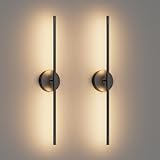
 Aipsun Black Modern LED Wall Sconce Indoor Wall1 Pack8.03 x 5.04 x 3.54 inches1.21 poundsCheck on Amazon


Top 3 picks at a glance

Best Modern Wall Sconces for Stylish Lighting
The best modern wall sconces for most rooms are dimmable LED fixtures with a 2700–3000K color temperature, a clear light-direction strategy, and dimensions that leave at least 6–12 inches of visual clearance around nearby furniture or doors. Choose plug-in sconces for easy upgrades, hardwired models for a cleaner permanent installation, and larger two-light fixtures when a single small shade cannot provide enough usable brightness.
Quick comparison: which modern wall sconce fits your room?
| Room or use | Recommended fixture size | Light direction | Target brightness | Best installation |
|---|---|---|---|---|
| Small bedroom or reading corner | 5–8 inches wide, 8–14 inches tall | Adjustable or downward | 450–800 lumens per fixture | Plug-in or hardwired |
| Desk or gaming room accent lighting | 6–10 inches wide, 10–18 inches tall | Upward, outward, or indirect | 300–700 lumens per fixture | Plug-in for flexibility |
| Bathroom mirror lighting | 4–8 inches wide, 18–30 inches tall | Diffuse front-facing light | 800–1,500 lumens per fixture | Hardwired |
| Living-room pair | 8–14 inches wide, 12–24 inches tall | Upward or up-and-down | 500–1,000 lumens per fixture | Hardwired or cord-covered plug-in |
| Hallway or stair landing | 5–10 inches wide, 8–16 inches tall | Up-and-down or shielded | 300–600 lumens per fixture | Hardwired |
How to choose the right sconce dimensions
Measure the wall area rather than choosing by appearance alone. A sconce beside a bed or desk generally looks balanced when its width is about one-third to one-half of the furniture’s width. For example, beside a 30-inch-wide nightstand, a 6–10-inch fixture usually looks proportional without dominating the wall.
As an Amazon Associate we earn from qualifying purchases at no extra cost to you.


Depth matters just as much as width. A fixed sconce projecting 6 inches from the wall may be comfortable beside a sofa, but it can obstruct a narrow hallway. Near a door, allow the door swing and handle to clear the fixture. Adjustable-arm designs should be measured at their maximum extension, not only in their folded position.
For a pair of sconces, center each fixture approximately 6–12 inches outside the furniture or mirror edge. In a bedroom, the mounting center is often 50–65 inches above the floor, adjusted so the shade or beam does not shine directly into the reader’s eyes.
Compact fixtures: best for tight spaces
Small cylindrical, globe, and disc sconces work well in hallways, compact bedrooms, and gaming rooms with limited wall space. Their limitation is usually lower light output and less control over glare. Look for a frosted diffuser, a 90-degree adjustable head, or an indirect up-lighting design if the fixture will be close to eye level.
Larger fixtures: best for visual balance
Large linen shades, architectural bars, and two-light sconces suit wide beds, large mirrors, and living-room walls. They spread light over more of the wall and can become a design feature, but oversized shades may make a small room feel crowded. As a practical check, tape the proposed width and height onto the wall before buying.
Light direction: task, ambient, or accent?
- Downward light: useful for reading, dressing, and illuminating a desk or console. It is more functional but can produce noticeable shadows.
- Upward light: reflects from the ceiling and creates softer ambient illumination. It is comfortable for movie watching and gaming, but it is not sufficient by itself for detailed tasks.
- Up-and-down light: produces an architectural wall-wash effect and works well in hallways, living rooms, and behind a monitor. Choose a shielded design if visible hotspots would be distracting.
- Forward-facing diffused light: the strongest option for mirrors and grooming areas because it lights the face more evenly.
- Adjustable light: the most flexible choice for a bedroom, office, or gaming setup. Aim the beam at a wall or shelf when you want atmosphere, and toward the work surface when you need task light.
For a gaming room, avoid placing an exposed clear bulb directly behind the monitor at eye level. The bulb can create glare on the screen and force your eyes to adapt between a bright source and a dark display. An opaque shade or indirect wall-wash fixture is usually more comfortable.
Bulb type, color temperature, and brightness
Integrated LED sconces are slim, efficient, and often dimmable, but the light source may be difficult to replace when it eventually fails. Replaceable-bulb fixtures are easier to maintain and let you change brightness or color temperature later. E26 and E12 sockets are common in North America; always check the fixture’s maximum wattage and bulb dimensions.
For bedrooms and living rooms, 2700K produces a warm residential appearance. A 3000K bulb looks cleaner while remaining comfortable for general use. Use 3500–4000K only when you specifically want a more neutral workroom or bathroom appearance. A color-rendering index of 90 or higher is preferable near mirrors, artwork, wood finishes, and skin tones.
Worked brightness calculation
Suppose a 120-square-foot gaming room needs roughly 10–20 lumens per square foot for comfortable general illumination. That gives a target of 1,200–2,400 lumens for the room:
120 square feet × 10–20 lumens = 1,200–2,400 lumens.
If the ceiling light already supplies about 1,000 lumens, two wall sconces producing 400 lumens each add 800 lumens. The combined 1,800 lumens lands inside the target range, while still allowing the sconces to be dimmed during gameplay. This is a more useful approach than selecting the brightest fixture available.
Remember that lumens are not the same as visible brightness at the seating position. A fully shaded upward sconce may deliver less usable light to a desk than a lower-lumen adjustable fixture aimed directly at the work surface.
Hardwired versus plug-in sconces
Choose hardwired when permanence matters
Hardwired sconces provide the cleanest appearance because the cable enters the wall and the switch can be positioned conveniently. They are usually the better choice for bathroom mirrors, symmetrical bedroom pairs, and new construction. Installation may require an electrical box, cable routing, and a licensed electrician depending on local rules and the existing wiring.
Hardwired does not automatically mean dimmable. Confirm that the fixture, bulb, and wall dimmer are compatible. Integrated LED models may require a compatible LED-rated dimmer rather than a traditional incandescent dimmer.
Choose plug-in when flexibility matters
Plug-in sconces are useful for renters, finished walls, and rooms where you want to change the layout later. They can be installed without opening the wall, and many include an inline switch or a cord-mounted control. Use adhesive or screw-mounted cable channels to route the cord neatly; do not leave a loose cable where it can snag on a chair or gaming chair.
Plug-in models are also practical behind a desk because you can connect them to a smart plug or switched power strip. Keep lighting on a separate control from the PC and monitor when possible, so turning off the computer does not also remove your room lighting.
Modern sconce styles worth considering
- Minimal cylinder: compact, architectural, and easy to pair on either side of a mirror or bed.
- Opal globe: soft, diffuse light with a mid-century influence; choose frosted glass to reduce glare.
- Adjustable arm: best for reading and desks because the beam can be repositioned.
- Linear LED bar: useful beside wide mirrors and contemporary furniture, especially when even illumination matters.
- Decorative shade: adds texture and warmth but generally produces less direct task light.
- Up-and-down architectural fixture: ideal for accent walls, hallways, and gaming-room background lighting.
Recognizable modern designs include the Artemide Tolomeo wall light for adjustable task lighting, the Flos IC wall light for a sculptural globe form, and the Astro Tacoma wall light for a compact contemporary profile. Availability, electrical versions, and pricing vary by region, so verify the exact specification before ordering.
Decision guide for common buying situations
| Your priority | Choose | Avoid |
|---|---|---|
| Reading in bed | Adjustable arm, 450–800 lumens, warm LED | Unshielded bulb aimed at your face |
| Screen-friendly gaming ambience | Indirect or up-and-down light, dimmable, 2700–3000K | Bright clear bulb behind or beside the monitor |
| Rental installation | Plug-in model with a concealed cord channel | Heavy fixture requiring uncertain wall anchors |
| Bathroom mirror | Hardwired, high-CRI, diffused, moisture-rated fixture | Decorative fixture without an appropriate damp-location rating |
| Small hallway | Shallow 5–10-inch fixture with shielded light | Deep swing-arm fixture near traffic paths |
Frequently asked questions
Can I use a modern wall sconce as the only light in a room?
Usually, a wall sconce works best as part of a layered lighting plan rather than as the only light source. Upward fixtures create softer ambient illumination, while downward or adjustable fixtures provide more useful task lighting. In a gaming room, for example, two sconces producing 400 lumens each can supplement a ceiling light instead of replacing it.
How can I prevent a wall sconce from creating glare on a monitor?
Choose an opaque shade or an indirect wall-wash fixture, and avoid placing an exposed clear bulb directly behind the monitor at eye level. Upward, outward, or shielded light can create atmosphere without forcing your eyes to adapt between a bright bulb and a darker display. Adjustable sconces can also aim the beam toward a wall or shelf.
What should I check before installing a plug-in wall sconce?
Check that the cord can reach an outlet and route it with adhesive or screw-mounted cable channels so it cannot snag on a chair or gaming chair. Confirm whether the sconce includes an inline switch or cord-mounted control. Behind a desk, a smart plug or switched power strip can provide convenient control, preferably separate from the computer and monitor.
Are replaceable-bulb sconces better than integrated LED sconces?
Neither is universally better; the choice depends on whether slim construction or future flexibility matters more. Integrated LED sconces are slim, efficient, and often dimmable, but their light source can be difficult to replace when it fails. Replaceable-bulb fixtures are easier to maintain and let you change brightness or color temperature later, provided the bulb fits the socket and wattage limits.
How do I preview whether a sconce will look too large on my wall?
Tape the proposed width and height onto the wall before buying. Also compare the fixture with nearby furniture, mirrors, doors, and walking paths. A sconce beside a bed or desk generally looks balanced when its width is about one-third to one-half of the furniture’s width. Check depth as well, especially near doors and in narrow hallways.
Bottom line
The best modern wall sconces balance proportion, usable brightness, beam direction, and installation constraints. For a flexible bedroom or gaming room, prioritize a dimmable 2700–3000K LED fixture with adjustable or indirect light. For a permanent, polished upgrade, use hardwired sconces sized to the wall and furniture. For mirrors and detailed tasks, choose high-CRI diffused light rather than relying on decorative appearance alone.