Our Top Picks
 National Geographic Starter Metal Detector Kit for KidsOne Size14.69 x 4.6 x 12.2 Inches2.8 poundsCheck on Amazon

Top 3 picks at a glance


Best Metal Detectors for Beginners
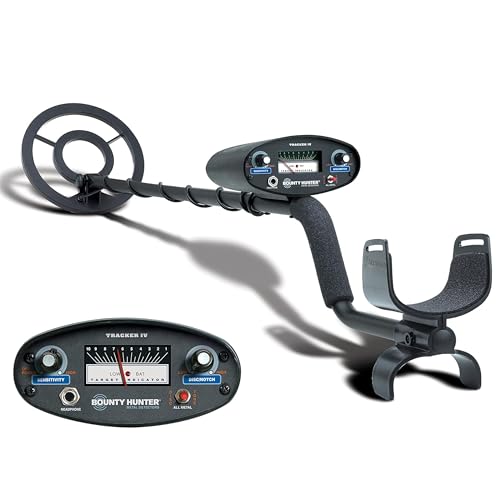
The best metal detector for beginners is the Nokta Simplex Ultra for all-around capability, while the Minelab Vanquish 340 is the easiest choice for parks and general coin hunting, and the Garrett ACE 300 remains a simple, widely supported entry-level option.
Your choice should depend less on the highest advertised depth and more on target identification, waterproofing, weight, controls, and how quickly you can set up a productive search. A detector that is easy to understand and comfortable to swing will usually find more useful targets than a technically advanced model that stays at home.
As an Amazon Associate we earn from qualifying purchases at no extra cost to you.
Best Beginner Metal Detectors Compared
| Model | Best for | Detection characteristics | Target identification | Waterproofing | Approx. weight | Setup difficulty |
|---|---|---|---|---|---|---|
| Nokta Simplex Ultra | Best overall beginner choice | Strong general-purpose performance; adjustable sensitivity and frequency | Digital target ID and clear visual display | Control box and coil waterproof to about 5 m | About 1.3 kg | Easy |
| Minelab Vanquish 340 | Coins in parks and yards | Multi-IQ technology handles varied ground well | Simple numeric ID with preset modes | Waterproof search coil; control box is not designed for submersion | About 1.3 kg | Very easy |
| Garrett ACE 300 | First-time users wanting simple controls | Good shallow-to-moderate coin and relic detection | Target ID segments and tone categories | Search coil is weather-resistant; control box should stay dry | About 1.3 kg | Very easy |
| Minelab X-Terra Pro | Beginners who want room to progress | Selectable operating frequencies and more advanced adjustment | Detailed digital ID and multiple search modes | Control box and coil waterproof to about 5 m | About 1.3 kg | Moderate |
| Garrett AT Pro | Serious relic and water users | Higher capability for difficult ground and shallow water | Digital ID, iron discrimination, and proportional audio | Submersible to about 3 m | About 1.4 kg | Moderate |
Our Beginner Recommendations
Nokta Simplex Ultra: best overall
The Simplex Ultra is the strongest all-round recommendation for a new detectorist who wants a machine that will not feel obsolete after a few weekends. It has a straightforward interface, a backlit display, adjustable sensitivity, ground balance, discrimination controls, and several search modes. Its waterproof construction also makes it suitable for wet grass, streams, and shallow beach or lake searches.
Its main advantage over simpler detectors is control. You can begin with a preset mode, then gradually learn what sensitivity, recovery speed, and discrimination do. At roughly 1.3 kg, it is light enough for long sessions. It typically sits in the midrange beginner market, usually around $250–$350 depending on the package and accessories.
Minelab Vanquish 340: easiest for coins and parks
The Vanquish 340 uses Minelab’s Multi-IQ simultaneous multi-frequency technology. In practical terms, this helps it remain more stable than many basic single-frequency detectors when the soil is mineralized or when you move between ordinary ground and damp sand.
It has fewer controls than the Simplex Ultra, which is an advantage for someone who wants to turn the detector on and search immediately. The trade-off is limited customization. The search coil can be used in wet conditions, but the control box should not be submerged. Expect a typical market range of about $200–$300.
Garrett ACE 300: best simple traditional design
The ACE 300 is easy to understand because its display and control layout are uncomplicated. Target categories, sensitivity segments, search modes, and a pinpoint function give beginners the essential information without requiring extensive menu navigation.
It is a good choice for dry-land coin hunting, school fields, lawns, and casual relic searching. It is not the best option for underwater use, and its single-frequency design can be less comfortable in salty or highly mineralized ground. It normally costs about $200–$300.
Minelab X-Terra Pro: best upgrade path
The X-Terra Pro suits a beginner who already expects to explore beaches, iron-heavy sites, or more challenging soil. Its selectable frequencies let you adapt the detector to different targets and conditions, while its waterproof design supports shallow-water use.
It has more settings to learn than the Vanquish 340 or ACE 300, but the learning curve is reasonable. Choose it if you would rather buy one detector with more adjustment than replace a basic model later. Typical pricing is around $300–$450.
How the Important Specifications Affect Beginners
Detection depth
No detector has one guaranteed maximum depth. A large, high-conductivity coin in mild soil may be detected much deeper than a tiny low-conductivity item in mineralized ground. Coil size, target orientation, soil moisture, electromagnetic interference, and sensitivity settings all matter.
For a useful expectation, most beginner detectors identify ordinary coins reliably at roughly 15–25 cm in favorable soil. Larger objects may register deeper, while small jewelry can be substantially shallower. Treat depth claims as comparisons between models rather than promises for every target.
Target identification
Target ID is a probability aid, not an X-ray. A detector estimates how a target responds and assigns it a number or category. Rust, bottle caps, oddly shaped metal, and multiple objects close together can produce misleading readings.
For beginners, a numeric display is useful because you can record the readings of known coins and common trash. Avoid rejecting every signal that appears in an unwanted range: valuable rings and thin gold jewelry can overlap with foil and pull-tabs. Use discrimination to reduce fatigue, not to guarantee that every remaining signal is valuable.
Waterproofing
Check whether “waterproof” applies to the entire detector or only the coil. The Vanquish 340 and ACE 300 are suitable for damp grass and wet coil use, but their control boxes should be kept above water. The Simplex Ultra, X-Terra Pro, and AT Pro are designed for submersion within their stated depth limits.
Waterproofing also helps in rain and muddy conditions, but rinse saltwater equipment with fresh water afterward. Never assume a waterproof detector can be used beyond its depth rating or with an accessory that is not sealed.
Controls and weight
Every extra setting creates potential performance advantages and a little more learning. A detector with sensitivity, discrimination, ground balance, and recovery controls can be better in difficult sites, but a beginner may initially get better results from a simpler preset mode.
Weight is listed for the detector, not always the complete hunting setup. Add a larger coil, wireless headphones, and a digging tool, and arm fatigue increases. A balanced detector weighing about 1.3 kg can feel easier to use than a nominally lighter detector with poor balance. Keep the shaft adjusted so the coil glides just above the ground without forcing your wrist downward.
Choose by Your Situation
| Your situation | Recommended choice | Reason |
|---|---|---|
| You want the fewest settings | Minelab Vanquish 340 | Preset modes and Multi-IQ reduce setup decisions |
| You will search wet ground or shallow water | Nokta Simplex Ultra | Fully waterproof construction and beginner-friendly controls |
| You mainly search dry parks and yards | Garrett ACE 300 | Simple operation and useful target categories |
| You expect to learn advanced techniques | Minelab X-Terra Pro | More adjustable behavior and a longer upgrade path |
| You want serious shallow-water relic hunting | Garrett AT Pro | Submersible housing and more detailed audio control |
A Practical First-Session Setup
- Assemble the shaft and tighten the coil. Remove wobble without overtightening the coil bolt.
- Start in the factory coin or park mode. This gives you a stable baseline before changing settings.
- Set sensitivity one or two steps below maximum. Maximum sensitivity is useful only when the detector remains quiet. If it chatters constantly, lowering it produces clearer target responses and saves time.
- Use little or no discrimination for the first 30 minutes. Digging a variety of targets teaches you how your detector’s numbers and tones behave. Increase discrimination later if excessive iron becomes tiring.
- Keep the coil level and close to the ground. Sweep at a steady pace, overlapping each pass by about one-third of the coil width.
- Cross-check promising signals. Turn 90 degrees and sweep again. A repeatable signal from two directions is more worth investigating than a one-way chirp.
- Pinpoint before digging. Move the coil slowly over the target and mark the loudest response. Dig a neat plug and recover the target carefully.
What Accessories Matter First?
Buy a quality digging tool, a small finds pouch, and headphones before paying extra for decorative accessories. A handheld pinpointer is particularly useful: it reduces plug size, speeds recovery, and helps prevent damage to coins. Bring spare batteries or a charged power bank only when the detector supports charging from one.
Do not immediately buy the largest available coil. Larger coils can cover more ground and sometimes detect deeper targets, but they are heavier and less precise around trash. The standard coil is usually the best learning tool; consider a smaller coil later for iron-filled sites.
Frequently asked questions
Can beginners use a metal detector without changing many settings?
Yes, beginners can start with a factory coin or park mode and make only small adjustments. Set sensitivity one or two steps below maximum, then lower it further if the detector chatters constantly. Use little or no discrimination during the first 30 minutes so you can learn how different targets sound and how their readings behave.
How can I tell whether a detector is suitable for shallow-water searching?
Check whether the entire detector is waterproof, rather than assuming the search coil’s water resistance applies to the control box. The Nokta Simplex Ultra, Minelab X-Terra Pro, and Garrett AT Pro are designed for submersion within their stated depth limits. The Vanquish 340 and ACE 300 can handle wet coil use, but their control boxes should stay above water.
Should I dig targets with unwanted target-identification readings?
Yes, you should investigate some unwanted readings because target identification is only a probability aid. Rust, bottle caps, oddly shaped metal, and nearby objects can produce misleading readings. Valuable rings and thin gold jewelry can overlap with foil and pull-tabs, so use discrimination to reduce fatigue rather than assuming every rejected signal is worthless.
How should I sweep the detector to improve the chance of finding a target?
Sweep the coil at a steady pace, keep it level and close to the ground, and overlap each pass by about one-third of the coil width. Cross-check promising signals by turning 90 degrees and sweeping again. A repeatable response from two directions is more worth investigating than a one-way chirp, after which you can pinpoint before digging.
What should I buy before adding optional detector accessories?
Buy a quality digging tool, a small finds pouch, and headphones first. A handheld pinpointer is particularly useful because it reduces plug size, speeds recovery, and helps prevent damage to coins. Spare batteries or a charged power bank are useful only when the detector supports charging from one. Decorative accessories are less important at the beginning.
Final Verdict
Choose the Nokta Simplex Ultra if you want the best balance of depth potential, waterproofing, controls, and future learning. Choose the Minelab Vanquish 340 if simple operation and stable coin hunting matter most. The Garrett ACE 300 is a sensible dry-land starter, while the Minelab X-Terra Pro is worth the extra complexity for beginners who already know they want more control.