This review analyzes published product information. We have not performed detailed research of this unit.
As an Amazon Associate, we earn from qualifying purchases.
A clearly named configuration, but not a complete parts list
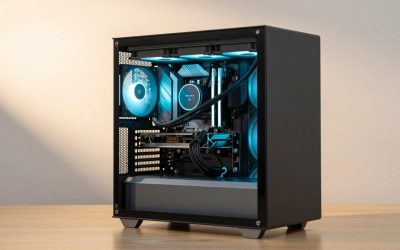
This Corsair Vengeance i7500 configuration pairs an Intel Core i9-14900KF with an NVIDIA GeForce RTX 5080, 32GB of Vengeance RGB DDR5 memory and a 2TB M.2 SSD. Those exact components define this review; conclusions should not automatically carry over to other i7500 configurations. The supplied listing identifies the black version housed in a Corsair 3500X ARGB mid-tower.
This is a specification-based assessment of the retailer listing, not a hands-on test. Its strongest feature as a shopping proposition is the specificity of the CPU, GPU, memory capacity and storage capacity. Its main weakness is the incomplete supporting-component disclosure: the motherboard, power supply and several cooling details remain unspecified. For a buyer who treats a prebuilt as the starting point for future upgrades, those omissions matter alongside the headline components.
The exact advertised hardware
| Component or detail | Supplied specification |
|---|---|
| Desktop family | Corsair Vengeance i7500 |
| Processor | Intel Core i9-14900KF |
| Graphics | NVIDIA GeForce RTX 5080; board manufacturer and exact card unspecified |
| CPU cooling | Corsair Nautilus RS ARGB liquid CPU cooler; radiator size unspecified |
| Memory | 32GB Corsair Vengeance RGB DDR5; speed and module arrangement unspecified |
| Storage | 2TB M.2 SSD; feature text identifies NVMe storage |
| Case | Corsair 3500X ARGB mid-tower with wraparound tempered-glass panels |
| Listed dimensions | 18.1 × 9.4 × 19.9 inches; a separate size field reverses the first two values |
| Listed weight | 30.78 pounds |
| Unspecified supporting parts | Motherboard model, power supply, SSD model and exact graphics-card variant |
Component balance: judge the workload, not just the badges
The named processor and graphics card make it possible to evaluate this as a particular build rather than an anonymous gaming tower. However, the listing provides no application results, game tests or information about the system’s operating limits. It therefore does not establish a particular gaming resolution, frame rate or sustained productivity result. The sensible buying question is whether your actual games and non-gaming workloads justify this CPU-and-GPU pairing, rather than assuming both components will be equally useful in every task.
The graphics feature text promotes NVIDIA Blackwell, DLSS 4 and NVIDIA Studio as RTX 50-series capabilities. Those are manufacturer platform claims, not evidence of measured results from this desktop. They should not be treated as universal improvements across every game or creative application. Buyers choosing the machine for a specific software feature should verify support in the applications they use.
Memory and storage are more straightforward at the capacity level: the listing specifies 32GB and 2TB respectively. Neither figure tells the whole component story. Corsair names its Vengeance RGB DDR5 memory but does not give its data rate, timings or number of installed modules. Likewise, the storage description identifies M.2 NVMe, but not the drive model or interface generation. The listing’s loading-speed language is promotional, so it cannot support a concrete comparison with another desktop’s SSD.
Cooling and enclosure: useful identifiers, missing operating detail
The CPU cooler is identified as a Corsair Nautilus RS ARGB liquid unit, which is more informative than an unspecified liquid-cooling label. Still, the radiator size and installed location are absent. That prevents a confident assessment of cooling headroom or the space remaining for other components. Liquid cooling alone does not establish quiet operation or sustained processor performance, and neither is demonstrated by the supplied evidence.
The 3500X ARGB case uses wraparound tempered-glass panels, making the visible internals and RGB memory part of the configuration’s appeal. The feature text also describes side, rear and roof fans, but does not provide a fan count or exact fan models. Treat the enclosure description as a layout overview, not a complete airflow specification.
Placement needs a little care. The listing supplies three dimensions but switches the first two between its size and dimensions fields, without labeling the axes. Confirm the orientation before planning a tight desk or cabinet fit. At a listed 30.78 pounds, this is also worth positioning with future access in mind: a location that displays the glass yet makes the system difficult to move could complicate later inspection or upgrades.
Upgrade planning depends on information not supplied
The biggest pre-purchase question is the motherboard. Without its model, the evidence cannot establish spare memory slots, additional M.2 positions, expansion-slot access or internal headers. A 32GB starting capacity does not reveal whether a memory upgrade would involve adding modules or replacing the installed set. Similarly, the 2TB drive does not prove that a second SSD can be fitted without removing anything.
The power supply is another important unknown. Its wattage, model and connectors are not provided, so future graphics-card compatibility cannot be inferred from the presence of an RTX 5080 today. The exact installed graphics card is also unspecified beyond its GPU identity. Buyers should request the complete component list before planning a replacement card, extra storage or cooling changes.
External connectivity deserves the same check. The supplied facts do not enumerate USB ports, network hardware or display outputs. That matters if the desktop must connect to a particular monitor arrangement, wired network or collection of peripherals. For a separate GPU-class comparison, our RTX 5070 desktop guide offers another shopping route, but it does not resolve this configuration’s missing specifications.
Frequently asked questions
Is this a gaming-focused desktop or can it handle creative work too?
It can be considered for gaming and non-gaming workloads, but the article does not establish particular performance results for either. The configuration includes an Intel Core i9-14900KF, an NVIDIA GeForce RTX 5080, 32GB of Corsair Vengeance RGB DDR5 memory and a 2TB M.2 NVMe SSD. Buyers should judge whether those components suit their own games and applications.
What exact graphics card is installed in this Vengeance i7500?
The listing identifies the installed graphics processor as an NVIDIA GeForce RTX 5080, but it does not identify the board manufacturer or exact graphics-card variant. That missing information could matter when planning replacement cards, checking physical clearance or reviewing connectors. The article therefore recommends requesting a complete component list before making graphics-related upgrade plans.
Can the included memory be upgraded without replacing it?
The article cannot determine that from the published listing information. The system has 32GB of Corsair Vengeance RGB DDR5 memory, but the listing does not specify its speed, timings, number of modules or motherboard model. Without those details, it is unknown whether a future capacity increase would use spare memory slots or require replacing the installed memory set.
Does the desktop include Wi-Fi, and which external connections are available?
The supplied facts do not enumerate the desktop’s network hardware, USB ports or display outputs. Consequently, the article cannot confirm whether the system includes Wi-Fi or whether its connections suit a particular monitor arrangement, wired network or group of peripherals. Buyers with specific connectivity requirements should request those details before choosing this configuration.
How much space should I allow for the desktop?
The listing gives dimensions of 18.1 × 9.4 × 19.9 inches, but a separate size field reverses the first two values without labeling the axes. It also lists a weight of 30.78 pounds. Because the orientation is unclear, buyers should confirm which measurement corresponds to each dimension before planning a desk or cabinet location.
Verdict: a defined core build that needs supporting-part verification
The Vengeance i7500 is worth considering if you specifically want the advertised i9-14900KF and RTX 5080 combination with 32GB of RGB DDR5, 2TB of storage and a glass-sided Corsair enclosure. Its named case and cooler add useful detail. Before committing, obtain the motherboard, power-supply, memory-layout and radiator specifications. The listing establishes the central configuration, but not enough to promise effortless upgrades, quiet operation or particular gaming results.
Sources: Supplied retailer listing for this Corsair Vengeance i7500 configuration.
Check the exact product and current offer on Amazon