Building your first custom computer is an exciting milestone, but it quickly introduces you to a world of physical logistics. Beyond choosing the right processor or graphics card, you have to decide where this machine will actually live in your home. This is where the classic debate of mid tower vs full tower case for beginners comes into play. It is not just a technical choice; it is an interior design and lifestyle decision.
For a beginner, a PC case is the physical frame that dictates how difficult your assembly process will be, how much noise the system will make in your living space, and how much desk real estate you must sacrifice. Do you want a compact, subtle piece of hardware that blends into a Scandinavian-style home office, or are you looking for a massive, high-performance command station that serves as a visual centerpiece? Balancing your technical ambitions with your physical living space is the key to making the right choice.
As an Amazon Associate we earn from qualifying purchases at no extra cost to you.


Our Top Picks
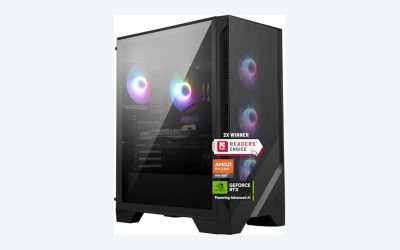
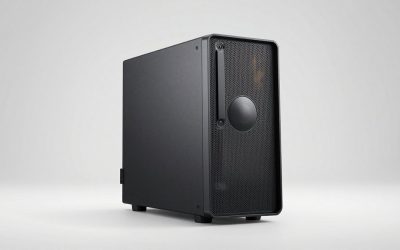
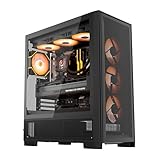
 MUSETEX Y6 PC Case16.73"D x 10.83"W x 15.67"H16.73 x 10.83 x 15.67 inches13.09 PoundsCheck on Amazon


Top 3 picks at a glance
Quick Verdict
For 90% of beginners, a mid tower case is the best starting point. It offers the ideal balance of interior space for modern components while maintaining a footprint that comfortably fits on standard 48-inch to 60-inch desks. However, if you have unlimited floor space, plan to install an oversized liquid cooling system, or want the absolute easiest, most frustration-free cable management experience during your very first build, a full tower case is well worth the extra physical space and higher initial investment.
Side by Side
To help you visualize how these two chassis sizes compare in a domestic setting, here is a breakdown of their primary differences in physical presence, usability, and long-term placement.
| Feature | Mid Tower Case | Full Tower Case |
|---|---|---|
| Average Height | 17 to 20 inches | 21 to 26+ inches |
| Physical Footprint | Compact; fits easily on most standard home office desks. | Massive; often requires floor placement or a dedicated wide desk. |
| Building Comfort | Moderate; requires some planning for cable routing. | Excellent; massive interior allows hands to move freely. |
| Durability & Weight | Lighter (12-20 lbs empty); easier to lift and relocate. | Heavy (25-40 lbs empty); highly stable but difficult to move. |
| Price Range | $50 to $110 for high-quality starter models. | $120 to $250+ for premium spacious models. |
| Maintenance & Cleaning | Requires regular dusting due to tighter interior spaces. | Easier to wipe down internally; collects dust slower if elevated. |
| Aesthetic Look | Understated, clean, and easily integrated into modern decor. | Dominant, industrial, and highly visible. |
| Resale & Reusability | High demand; easy to ship or sell locally. | Niche demand; heavy weight makes shipping expensive. |
| Best For | Standard home offices, gaming setups, and apartments. | Dedicated gaming rooms, workstations, and enthusiast builders. |
Where Mid Tower Wins
The mid tower is the undisputed king of the modern home office for several reasons, starting with its spatial efficiency. A standard mid tower case takes up roughly 1.2 to 1.5 square feet of desk space. This compact footprint allows you to place the PC next to your monitor without losing room for your keyboard, mouse, notepad, or a warm cup of coffee.
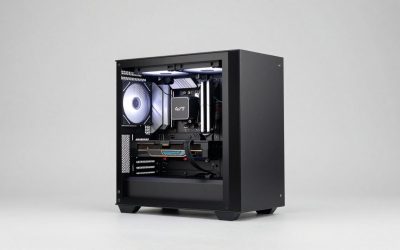
For beginners on a budget, mid towers are exceptionally friendly to your wallet. You can easily find highly rated options that offer modern features without breaking the bank. For instance, the popular NZXT H5 Flow – Compact ATX Mid-Tower PC Case – Black retails for around $69, offering excellent ventilation in a clean, minimalist design. If you want a more striking, panoramic look for your desk, the MUSETEX Y6 PC Case, Pre-Installed 4 Non-LED Fans, ATX Mid Tower Case, Computer Case with Type-C, 270° Full View Tempered Glass, Black is available for around $59, proving you do not need to spend a fortune to get a premium aesthetic. Even highly structured options like the Lian Li V100-ATX Mid-Tower PC Case-Black-V100RX at around $74 offer a solid, durable frame that fits seamlessly into contemporary workspaces.
Additionally, mid towers are much easier to move. If you like to rearrange your furniture, clean behind your desk, or if you live in a rental where you move every couple of years, a fully built mid tower weighing around 20 to 25 pounds is simple to pick up and pack away. It does not dominate the room visually, making it easier to maintain a cohesive, clutter-free home aesthetic.
Where Full Tower Case for Beginners Wins
While the mid tower is practical, the full tower is an absolute dream to build in, especially for someone handling delicate computer components for the first time. The primary struggle for any beginner builder is cable management—shoving thick, stiff power cables into tight corners behind the motherboard tray. A full tower case completely eliminates this frustration by providing massive routing channels, deep grommets, and ample physical space behind the side panels.
Consider a heavy-duty chassis like the darkFlash AIR NOVA Full Tower E-ATX PC Case, Six-Sided Ventilated Gaming Case, Up to 420mm Radiator, Vertical GPU Mount, Back Connect, Type C, High Airflow, 7 x PWM ARGB Fans Included (Black), which sits at around $140. A case of this caliber provides massive physical clearance. You do not have to worry about whether a giant modern graphics card will scrape against the front intake fans, or if a liquid CPU cooler radiator will block your motherboard’s RAM slots. Everything simply fits with inches of clearance to spare.
Furthermore, full towers excel in thermal dynamics and noise control. Because there is a larger volume of open air inside the chassis, heat buildup happens much slower. You can install larger, 140mm fans that spin at lower speeds to move the same amount of air as smaller, louder fans. In a quiet home environment, a full tower running slowly and silently is often much more pleasant than a compact mid tower with fans spinning at maximum speed to keep temperatures down.
Cost Over 5 Years
When investing in a computer case, it is wise to look at it as a long-term piece of furniture. While graphics cards and processors are swapped out every few years, a good PC chassis can easily last a decade. Let’s look at how the costs shake out over a five-year period.
With a mid tower case, your initial investment is low (typically $60 to $80). Over five years, the case will easily survive multiple hardware upgrades. However, you may run into compatibility limits if graphics cards continue to grow in size. By year four or five, you might find yourself forced to buy a new case simply because a new generation of hardware physically cannot fit inside your compact chassis. There is also a slightly higher maintenance cost in terms of time; smaller cases trap dust more quickly, requiring more frequent purchases of compressed air canisters to keep the filters clear.
With a full tower case, the initial cost is higher ($130 to $200+). However, its long-term cost-efficiency is remarkable. Because full towers are designed to support Extended-ATX (E-ATX) motherboards and massive cooling configurations, there is virtually zero chance you will outgrow the case within five years. It is a one-time purchase that can easily house three generations of complete system rebuilds. The larger internal space also makes it easier to blow out dust, extending the lifespan of your expensive internal components by keeping them running cooler over the years.
Which One for Your Home
To make the final decision, look around your living space. Your home’s layout, furniture, and daily routines are the ultimate deciding factors.
Small Apartment or Studio
If you are living in a cozy apartment where every square foot counts, a mid tower is the clear choice. It can sit quietly on top of a compact desk or even on a sturdy shelf. A full tower in a small studio can feel like an uninvited roommate, commanding too much visual attention and taking up valuable floor space where a trash can, storage basket, or plant could otherwise sit.
Family with Kids or Pets
In a busy household filled with toddlers or shedding pets, physical placement is safety-critical. Placing a heavy, 40-pound full tower on the floor invites pet dander, dust, and stray toys into your intake vents. However, putting that same giant machine on top of a desk can be a hazard if a child pulls on a cable. A mid tower is light enough to sit safely in the center of a sturdy desk, far out of reach of curious hands and wagging tails, while keeping its air intake filters free of floor-level pet hair.
Rental Home or Frequent Mover
If you are renting and anticipate moving within the next few years, think about the packing process. Moving a mid tower is simple; it fits back into its original shipping box easily and can be carried under one arm. A full tower case is incredibly bulky, heavy, and fragile—especially if it features tempered glass panels. Transporting a massive full tower down apartment stairs and packing it into a moving truck is a chore you will want to avoid.
Long-Term Home with a Dedicated Office
If you have a permanent home with a dedicated office, gaming room, or workshop, a full tower is a fantastic investment. As we look ahead to interior design trends in 2026, clean, integrated workspaces with dedicated tech zones are highly favored. A full tower can sit majestically on a wide, solid-wood standing desk or on a dedicated low filing cabinet next to your workstation, giving you a powerful, expandable, and quiet machine that you will never need to replace.
FAQ
Does a full tower case keep components cooler than a mid tower?
Generally, yes. Because a full tower has a much larger internal volume, it takes longer for the ambient air inside the case to heat up. It also allows for larger fans and thicker radiators, which can move hot air out of the system more efficiently and quietly than the cramped interior of a mid tower.
Will a mid tower fit modern, large graphics cards?
Most modern mid towers are designed to fit standard three-fan graphics cards, but space can get tight. You must check the maximum GPU clearance length listed by the case manufacturer (usually measured in millimeters) and compare it to the physical length of the graphics card you plan to buy.
Is a full tower too heavy for a standard glass or standing desk?
Yes, it can be. A fully built full tower PC can easily weigh 40 to 50 pounds. Many tempered glass desks have weight limits of 50 to 80 pounds, meaning the PC alone could push the desk to its safety limit. If you use a standing desk, the motor may struggle with a heavy full tower, making a lighter mid tower the safer choice for motorized furniture.
Which is easier to clean and dust in a busy home?
Full towers are easier to clean internally because you can easily reach your hands around the components to wipe down fan blades and dust filters. However, because they are heavy, moving them to get to the rear cables or bottom dust filters can be physically demanding. Mid towers are easier to pick up, carry to a garage or balcony, and blow out with compressed air.