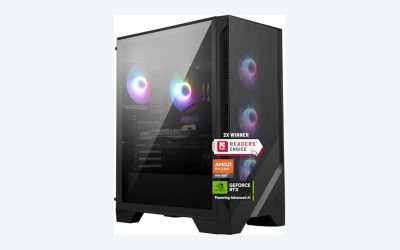
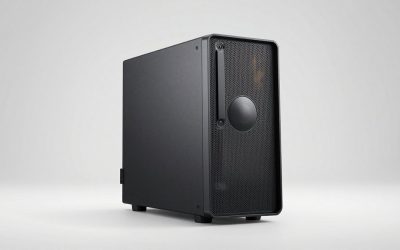
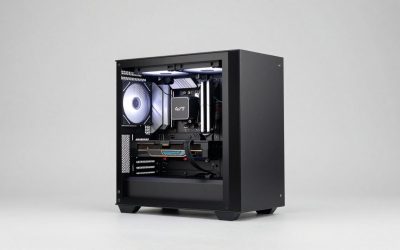
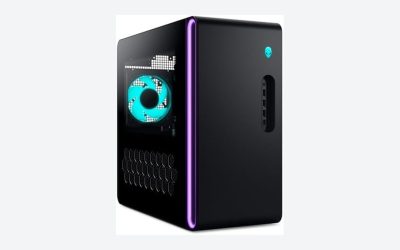
Integrating a desktop computer into a living environment is as much an interior design decision as an engineering one. Beyond processing speeds and frame rates, a computer dictates how much physical desk real estate you surrender, how much fan noise ripples through your living room, and how easily your workspace adapts to changing decor. When weighing a micro ATX prebuilt vs full tower custom build, the fundamental trade-off lies between spatial efficiency and expandable thermal headroom.
A micro ATX prebuilt offers a compact footprint and out-of-the-box simplicity, ideal for minimalist desks and multifunctional living rooms. Conversely, a full tower custom build grants unrestricted component clearance, whisper-quiet thermal performance under heavy loads, and infinite upgradeability—at the cost of substantial physical dominance. Finding the right fit for your home in 2026 requires looking past surface-level specifications to evaluate room dimensions, maintenance routines, and long-term functional goals.
As an Amazon Associate we earn from qualifying purchases at no extra cost to you.

Our Top Picks
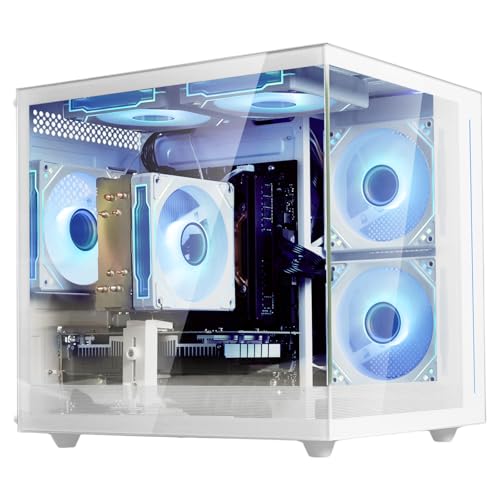
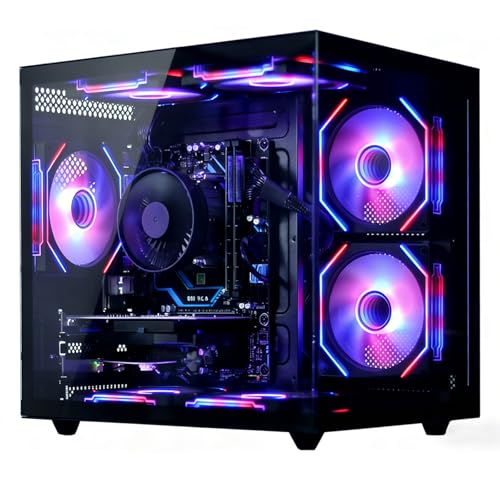 suevery Gaming PC Desktop Computer Ryzen 5RX 560 4G+16G-512G13.3 x 10.8 x 12.9 Inches17.6 PoundsCheck on Amazon

Top 3 picks at a glance
Quick Verdict
Choose a micro ATX prebuilt if you live in a smaller apartment, prefer a clean, plug-and-play aesthetic, and want a system that sits discreetly on a standard 24-inch deep desk without requiring manual assembly. It delivers great performance-per-square-inch with minimal setup friction.
Opt for a full tower custom build if you have a dedicated home office, demand whisper-quiet acoustics during heavy rendering or gaming, and plan to upgrade individual components over a 5 to 10-year lifespan. It demands floor or large-desk space, but repays you with superior cooling and complete structural freedom.
Side by Side
| Feature | Micro ATX Prebuilt | Full Tower Custom Build |
|---|---|---|
| Desk & Floor Space Needed | Minimal (12–18″ height, 14–25L volume) | Substantial (20–26″ height, 50–80L volume) |
| Physical Weight | Lightweight (12–18 lbs) | Heavy (30–50+ lbs) |
| Thermal & Acoustic Profile | Moderate fan noise; higher component density | Ultra-quiet; massive airflow and radiator capacity |
| Aesthetic Integration | Subtle, compact, easy to blend with modern decor | Dominant room presence; bold showcase potential |
| Setup Time & Friction | Immediate plug-and-play (under 15 minutes) | Requires 3–6 hours of assembly and wiring |
| Maintenance & Upgradability | Tighter working spaces; moderate upgrade paths | Spacious layout; effortless cleaning and part swaps |
| Initial Price Range | $550 – $1,200 (complete pre-assembled system) | $900 – $2,500+ (individual components + case) |
| 5-Year Value Retention | Moderate; limited by fixed chassis/motherboard specs | High; modular chassis, power supply, and cooling endure |
| Ideal For | Apartment dwellers, shared spaces, quick setups | Dedicated offices, power users, DIY enthusiasts |
Where Micro Atx Prebuilt Wins
The primary triumph of a micro ATX prebuilt lies in its footprint efficiency and visual restraint. Measuring roughly 14 to 16 inches high and 14 to 20 liters in total volume, these chassis fit neatly onto shallow writing desks or floating shelves. They leave ample room for mouse pads, warm lighting, and home decor without overpowering the room’s visual balance. For homes where the office doubles as a guest bedroom or living room corner, keeping hardware visually unobtrusive is critical.
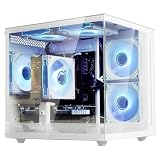
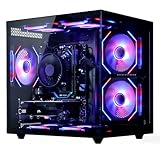
Factory integration also eliminates the labor of cable routing and component verification. Systems like the suevery Gaming PC Desktop Computer Ryzen 5,16GB DDR4 512G SSD, RX 560 4G (priced around $600) demonstrate how compact prebuilts provide immediate utility at accessible price points. Similarly, options like the suevery Prebuilt Gaming PC Desktop Computer R5 White Tower (priced around $740) utilize clean white enclosures that match modern Scandinavian or contemporary home furnishings far better than industrial black monoliths.
Additionally, micro ATX systems typically draw lower baseline wattage (300W to 500W operating ranges), meaning they discharge less ambient heat into smaller, enclosed rooms during extended summer use. They are easily repositioned, weighing around 12 to 18 pounds, making room reconfigurations or under-desk dusting simple for a single person.
Where Full Tower Custom Build Wins
Where compact systems compromise on air volume, full tower custom builds excel in physical thermal capacity and acoustic control. A full tower case offers between 50 to 80 liters of internal capacity. This vast interior permits larger 140mm or 200mm intake fans that spin at lower RPMs, pushing substantial cubic feet per minute (CFM) of air while generating barely audible acoustics. If quiet operation in a silent home office is your top priority, a spacious custom chassis provides the necessary radiator surface area to achieve it.
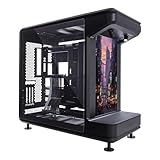
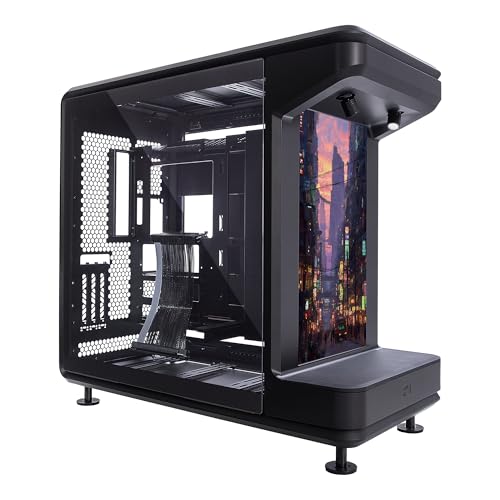
Building custom allows total architectural freedom. DIYers can choose modular enclosures tailored to high-airflow setups—such as the CORSAIR 4000D RS ARGB Frame Modular Mid-Tower ATX PC Case (priced around $89)—or create open-air display stations using specialized frames like the Cooler Master MasterFrame 360 Stage LCD ATX PC Case (priced around $280). This spatial versatility accommodates multi-GPU configurations, elaborate custom liquid loops, and dozens of storage drives that smaller cases physically cannot hold.
Maintenance is also significantly easier in a full tower. Generous 25mm-to-35mm cable management channels behind the motherboard tray keep wires tucked away, preventing dust traps. Deep clearance around the CPU socket and expansion slots allows you to swap graphics cards, add RAM, or blow dust out of heat sinks with compressed air without dismantling half the computer.
Cost Over 5 Years
Evaluating the true cost of a micro ATX prebuilt versus a full tower custom build requires looking past the initial transaction at five-year total cost of ownership:
- Initial Expenditure: Prebuilt micro ATX setups carry lower entry costs ($600 to $1,200 complete), making them approachable upfront. Full tower builds usually start around $900 for middle-tier specs and can climb above $2,500 due to premium modular cases, heavy-duty power supplies, and high-end cooling hardware.
- Upgrade Viability: A full tower chassis, high-wattage power supply (850W–1000W), and cooling infrastructure routinely survive 7 to 10 years across multiple motherboard generations. You only replace core silicon (CPU, GPU, RAM) as performance needs shift. Micro ATX prebuilts often rely on tightly fitted custom power supplies or motherboards with limited PCIe expansion, meaning you may need to replace the entire system after 3 to 5 years.
- Maintenance & Power Draw: Full towers draw more power under peak load due to additional fans and higher-tier components (costing an estimated $15–$30 more per year in electricity), but their longevity yields higher salvage and trade-in value for individual components. Over five years, the full tower’s higher initial cost amortizes effectively if you take advantage of incremental upgrades.
Which One for Your Home
Small Apartment or Studio Workspace
In high-density living spaces where your desk serves as a work hub, dining area, and creative zone, space conservation is paramount. A micro ATX prebuilt tucked into a corner or mounted on an elevated shelf preserves your physical work surface. Its lower acoustic footprint at idle ensures your living space remains tranquil during light browsing or paperwork.
Family Home with Kids or Pets
Busy households present unique hazards: pet hair, accidental foot bumps, and curiosity from young children. A full tower placed directly on the floor easily captures dust and pet dander at ground level unless regularly cleaned. Conversely, a lightweight micro ATX prebuilt can sit safely elevated on top of a heavy desk, out of reach of pets and toddler spill zones.
Rental Property or Frequent Movers
If you relocate every few years, heavy hardware becomes a liability. Full tower builds weighing over 35 pounds—especially those featuring heavy tempered glass panels—are cumbersome to pack and vulnerable to structural stress during transit. A micro ATX prebuilt easily packs into a standard moving box or car trunk without requiring internal bracing for oversized components.
Dedicated Home Office or Long-Term Residence
If you own your home or have a dedicated office room with a sturdy 30-inch deep desk or solid floor platform, a full tower custom build reigns supreme. The spacious layout allows for ultra-quiet fan curves that will not interrupt phone calls or focus periods, while providing a permanent, upgradeable anchor for your productivity setup for years to come.
FAQ
Does a micro ATX prebuilt overheat more easily than a full tower?
Micro ATX prebuilts run warmer under heavy loads than full towers due to smaller internal air volumes and limited radiator clearance. However, factory-configured prebuilts are engineered to run within safe thermal thresholds for their stock components under standard home ambient temperatures (68°F–75°F).
Can I upgrade the components in a micro ATX prebuilt later?
Yes, but with spatial limits. You can typically upgrade RAM, storage drives, and low-to-mid-profile graphics cards. However, massive triple-slot graphics cards or large liquid cooling radiators often will not fit inside a compact micro ATX chassis.
How much desk space do I actually save with a micro ATX chassis?
A standard micro ATX case saves roughly 6 to 10 inches in height and 4 to 8 inches in depth compared to a full tower. This reclaims approximately 0.5 to 1 square foot of direct desk surface, which significantly frees up shallow 20-to-24-inch desks.
Is a full tower custom build noticeably quieter in a quiet room?
Yes. Because full tower cases fit larger fans (140mm vs 120mm) and thicker heatsinks, those fans can spin at much lower speeds while moving the same amount of heat. This results in a low-frequency hum rather than the higher-pitched whine common in smaller, cramped cases under full load.