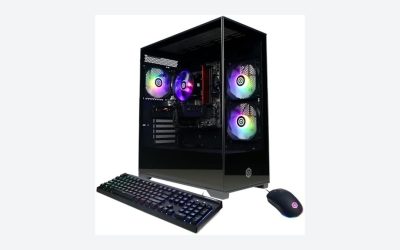
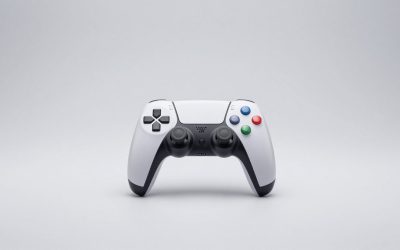
Our Top Picks
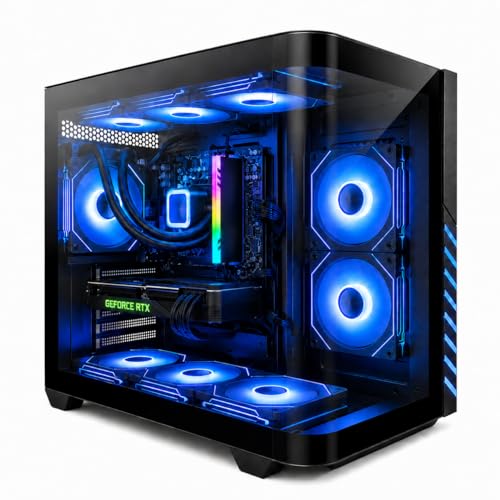

The Short Answer
Yes, a $1,000 gaming PC is worth it for most people — provided you’re playing at 1080p or 1440p and you keep your expectations realistic. At this price point in 2026, you can get a machine that handles competitive and AAA games at high settings with smooth frame rates. The one condition: it stops being worth it if you’re chasing 4K ultra settings. That territory still belongs to $1,600+ builds with higher-tier GPUs. If 4K is your goal, save longer or buy used. If 1080p/1440p is your goal, a $1,000 system is arguably the sweet spot of the entire market.
What You Actually Get
Here’s what a typical $1,000–$1,300 prebuilt gaming PC includes right now:
As an Amazon Associate we earn from qualifying purchases at no extra cost to you.

Processor: A modern 8-core CPU like the AMD Ryzen 7 5700X or Ryzen 7 8700F. These chips have a 65–105W TDP, ship with capable stock coolers, and won’t bottleneck midrange graphics cards in games.
Graphics card: The single biggest chunk of your budget goes here. Expect something in the RTX 4060 Ti (16GB VRAM) or RTX 5060 class. These cards draw roughly 120–180W, fit in compact mid-tower cases, and are built for 1080p high/ultra and 1440p high gaming. The 16GB of VRAM on cards like the 4060 Ti is a genuine bonus for texture-heavy titles and futureproofing.
Memory and storage: 16GB of DDR5 (or fast DDR4 on AM4 platforms) and a 1TB NVMe SSD are standard. That’s enough for modern games, though heavy libraries will fill 1TB faster than you’d like — budget for a second drive eventually.
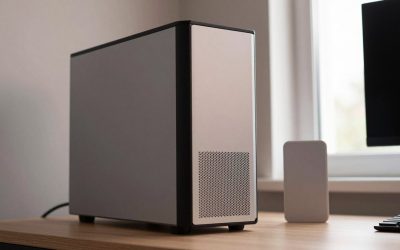
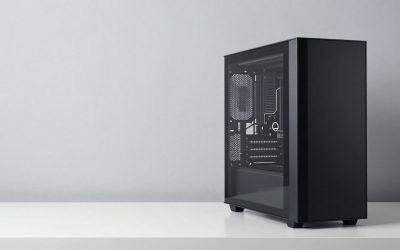
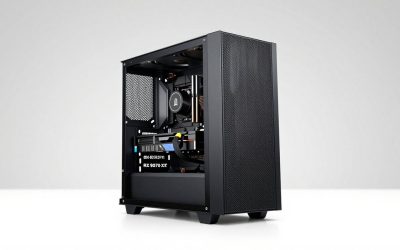
Case, PSU, and cooling: Most prebuilts at this price use mid-tower cases (roughly 18–20 inches tall, 25–35 lbs shipping weight) with 500–650W bronze-rated power supplies. Better listings include a 240mm liquid cooler; budget units use air cooling, which is perfectly adequate for 65–105W CPUs.
As a real-world anchor: listings like a liquid-cooled Ryzen 7 8700F + RTX 4060 Ti 16GB DDR5 system sit around $1,150, while a Ryzen 7 5700X + RTX 5060 configuration runs closer to $1,300. That’s the current band — $1,000 to $1,300 buys you a genuinely capable 1440p machine.
Pros
- Excellent 1080p performance: High or ultra settings at 60–144+ fps in the vast majority of titles, including demanding new releases.
- Very capable 1440p: High settings at 60+ fps in most games; competitive esports titles push well past 144 fps.
- Upscaling support: DLSS and FSR let these GPUs punch above their weight, often adding 30–50% more frames with minimal quality loss.
- 16GB VRAM options exist: Cards like the RTX 4060 Ti 16GB handle high-resolution texture packs and are better positioned for future titles than 8GB cards.
- Turnkey convenience: Prebuilts arrive assembled, wired, stress-tested, and covered by a single warranty. No build errors, no DOA part roulette.
- Modern platform features: DDR5, NVMe SSDs, Wi-Fi, and USB-C front panels are standard at this price now.
- Upgrade path: A quality 550–650W PSU and standard ATX/micro-ATX layouts mean you can drop in a bigger GPU in three or four years.
Cons
- Not a 4K machine: These GPUs will run 4K, but you’ll be dropping settings to medium and leaning heavily on upscaling.
- Prebuilt component corners: Some builders use proprietary motherboards, minimal PSUs, or single-channel RAM. Check reviews and spec sheets before buying.
- 1TB fills fast: Modern AAA games routinely hit 100–150GB. You’ll likely add a second SSD within a year.
- Premium over DIY: Building the same parts list yourself often saves $100–$200, though sale pricing sometimes closes that gap.
- Stock RAM and storage are baseline: 16GB is fine today, but 32GB is becoming the comfort zone for multitaskers and heavy modders.
- Case airflow varies: Some prebuilt cases prioritize looks over thermals, costing you a few degrees and some fan noise.
Who Should Buy It
A $1,000 gaming PC is worth it if you:
- Play on a 1080p or 1440p monitor (including high-refresh 144Hz/165Hz panels)
- Want a machine that’s plug-and-play on day one with a single warranty behind it
- Don’t want to research compatibility, assemble parts, or troubleshoot a first build
- Play a mix of AAA and competitive games and want high settings without tweaking
- Plan to keep the machine for 4–5 years with one GPU upgrade late in its life
This is also the right price band for students, first-time buyers, and anyone replacing an aging console-adjacent setup who wants better visuals and a general-purpose computer in one box.
Who Should Skip It
Skip the $1,000 tier if you:
- Own or plan to buy a 4K 60Hz+ monitor — you’ll want a $1,600–$2,000 rig instead
- Already have a capable PC and only need a sidegrade; the uplift won’t justify the cost
- Are a hardcore content creator who needs 32GB+ RAM and GPU compute for rendering — budget higher
- Play exclusively older or lightweight games (indies, esports titles from years back) — a $600–$700 build covers you
- Genuinely enjoy building — DIY gets you more performance per dollar if you have the time
Cheaper Alternatives
| Option | Cost | Trade-off |
|---|
FAQ
How long will a $1,000 gaming PC last?
Plan on 4–5 years of comfortable 1080p/1440p gaming, with the GPU being the first component to feel dated. Because most prebuilts in this range use standard parts and adequately sized power supplies, a GPU swap around year three or four extends the machine’s life well beyond that window.
Is it better to build my own PC for $1,000?
Building your own typically gets you 10–15% more performance for the same money, plus full control over PSU and motherboard quality. The trade-off is time, research, and handling warranty claims individually if a part fails. If you’ve never built before, a reputable prebuilt at $1,000–$1,300 is a completely defensible choice.
Can a $1,000 PC handle 1440p gaming?
Yes — this is where the price tier shines. A GPU in the RTX 4060 Ti or RTX 5060 class delivers 60+ fps at 1440p high settings in most AAA games, and esports titles run at 144+ fps. Pair it with a 1440p 144Hz or 165Hz monitor and you’ll get the most out of the hardware.
Should I buy now or wait for prices to drop?
Waiting rarely pays off at this tier. Entry-to-midrange GPU and CPU pricing moves slowly, and the performance available around $1,000 today already covers the resolution most people actually play at. If your current machine struggles with the games you want to play, buying now costs you less in missed gaming time than the $50–$100 you might save by waiting six months.
Related guides
- Best Gaming PC for Fortnite: Eight Prebuilt Desktops Sorted by Refresh Rate Goal (2026)
- Best RX 9070 XT Prebuilt Gaming PCs: Seven Desktops and Three Cards Compared: 10 Compared (2026)
- CyberPowerPC vs iBUYPOWER Gaming PC: How the Two Brands Compare
- Best RX 9070 XT Prebuilt Gaming PC (2026): 5 Picks Compared