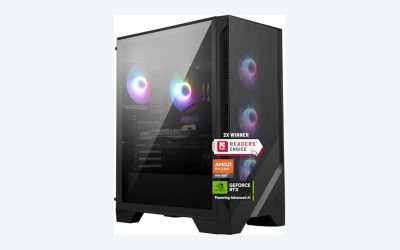
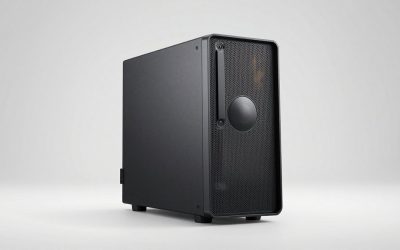
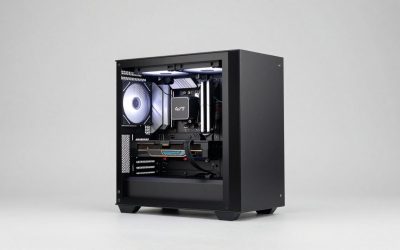
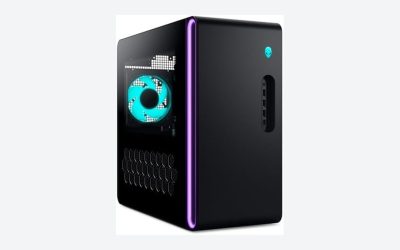
Walk into any PC hardware forum and the mid tower vs full tower gaming case debate will be running before you finish your coffee. But strip away the tribal arguments and the decision you actually face is simpler: how much physical space, airflow headroom, and upgrade flexibility do you need inside your home — and how much of your desk or floor are you willing to give up to get it? A case is the one component you’ll move, clean, and look at every single day, so the “right” answer depends less on specs and more on the room it lives in.
Our Top Picks


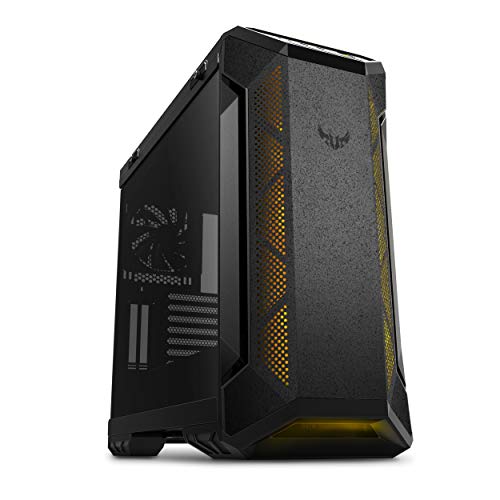

Top 3 picks at a glance


Quick Verdict
For roughly 80% of gamers, a mid tower is the smarter buy. Cases like the NZXT H5 Flow (around $69) or Lian Li V100-ATX (around $74) handle full-size ATX motherboards, triple-fan GPUs, and 240mm or even 280mm radiators while occupying a footprint you can still fit on or under a desk. Choose a full tower — like the ASUS TUF Gaming GT501 (around $170) or Antec Flux Pro (around $150, six PWM fans included) — only if you’re running an E-ATX motherboard, planning exotic custom water cooling, or stacking multiple GPUs and storage drives. Paying $150–$170 for case real estate you never use is money better spent on the GPU.
As an Amazon Associate we earn from qualifying purchases at no extra cost to you.

Side by Side
| Factor | Mid Tower | Full Tower |
|---|---|---|
| Typical height | 17–19 inches | 21–24 inches |
| Weight (empty) | 12–18 lbs | 20–30+ lbs |
| Motherboard support | Mini-ITX up to ATX | Mini-ITX up to E-ATX and SSI-EEB |
| Comfort of building | Snug but manageable; cable routing is tighter | Generous hand clearance; easy routing and future swaps |
| Price range | $60–$120 | $130–$250+ |
| Maintenance | More frequent dust filter cleaning; cramped for deep cleans | Easier to vacuum and wipe; more surface area collects dust |
| Space needed | Fits under most desks; ~1.5 sq ft footprint | Often needs floor space; ~2.5+ sq ft footprint |
| Look | Compact, blends into a home office | Statement piece; showcase builds with visible tubing |
| Resale | Higher demand, sells fast used | Smaller buyer pool; niche appeal |
| Best for | Standard ATX builds, smaller homes, first-time builders | E-ATX boards, custom loops, multi-radiator setups |
Where Mid Tower Wins
Space efficiency. A mid tower like the Lian Li V100-ATX measures roughly 17–18 inches tall and 16–17 inches deep, sliding under a standard 29-inch desk with clearance to spare. If you game in a shared room, that matters more than any airflow chart.
Price-to-feature ratio. The NZXT H5 Flow at around $69 includes a mesh front panel, a 120mm fan, and support for a 240mm radiator up top. Two decades ago that airflow budget bought you a steel box with sharp edges. Today’s mid towers deliver thermals within a few degrees of larger cases for half the money.
Portability. LAN parties, moving apartments, hauling the PC to another room to hook up to a TV — a 14-pound case with a mid-range build inside is something one person can carry. A loaded full tower approaching 50 pounds is a two-person job and a strained lower back.
Modern GPU compatibility. The “full tower for big graphics cards” argument has aged out. Most current mid towers support GPUs up to 12–14 inches long, which covers virtually every consumer card on the market, including chunky 350W+ triple-fan models.
Where Full Tower Gaming Case Wins
Genuine E-ATX support. Enthusiast boards — say, an X870E workstation-gaming hybrid with a 13-inch-wide PCB — simply don’t fit most mid towers, or they block cable channels and SATA ports when they do. A full tower gives the board room to breathe.
Airflow headroom. The Antec Flux Pro ships with six PWM fans because a full tower can mount them all without fighting radiator or GPU clearance. More intake and exhaust means components can run quieter at the same temperatures, since fans spin slower to move the same air.
Custom water cooling. If your roadmap includes a 360mm radiator up top, another 360mm up front, a distro plate, and a reservoir, a full tower is where those plans actually fit without compromises.
Upgrade runway. Big cases tolerate change. Swapping a GPU five years from now, adding a second radiator, or dropping in an 1800W-class PSU for a future build are all trivial when there’s air to spare. A mid tower can lock you into “this GPU, but only if it’s under 320mm” decisions.
Cost Over 5 Years
Upfront, the gap is roughly $70–$100: a quality mid tower runs $60–$120, while full towers like the GT501 or Flux Pro sit at $150–$170. But the lifetime picture is more interesting.
Fan and accessory spending: A mid tower often needs two or three extra fans ($8–$15 each) to reach good airflow. The Antec Flux Pro includes six PWM fans, which can erase $40–$60 of that advantage — worth checking before you assume the mid tower is cheaper.
Dust and maintenance: Larger cases move more total air and collect more dust. Expect to clean filters every 1–2 months either way; full towers are easier to service but have more surface to wipe down. Budget a can of compressed air or an electric duster ($30–$50, amortized across years) for either.
Replacement risk: Mid towers resell better. A $70 case typically fetches $30–$40 used in good condition; a full tower might sit unsold at $60 because the buyer pool is thin. If you swap cases every few years, the mid tower recovers more of its cost.
Rebuy risk: If you buy a mid tower and later migrate to E-ATX or a custom loop, you’ll buy a second case — turning the “savings” negative. Be honest about your five-year plan before choosing small.
Which One for Your Home
Small Apartment or Shared Space
Mid tower, no contest. Footprint is the scarce resource, and the NZXT H5 Flow or Lian Li V100-ATX gives up almost nothing in performance to reclaim a cubic foot of desk space. Aim for a case under 18 inches tall so it fits under standard desks or beside a media console.
Family with Kids or Pets
This one’s closer than you’d think. A heavier full tower is harder for a toddler to tip over, and larger tempered glass panels sit farther from grabbing hands. But a mid tower tucked on a high shelf or under a desk with a dust cover also works. Either way, prioritize positive-pressure airflow (more intake than exhaust) and washable dust filters — pet hair is the number one killer of home gaming PCs.
Rental or Frequent Mover
Mid tower. Every lease ending means boxing and carrying your rig, and 15 pounds versus 30 matters when you’re also hauling monitors. Look for sturdy foam inserts from the original packaging and a case with reinforced tempered glass edges. The resale point helps too: mid towers sell quickly when you’d rather ship than move.
Long-Term Home Build
If you’ve bought the house, have a dedicated desk, and genuinely plan to upgrade around an E-ATX board or water cooling loop, the full tower earns its spot. The ASUS TUF GT501 or Antec Flux Pro at $150–$170 amortized over a decade of annual component upgrades is cheap insurance against clearance regrets. By the time 2026 rolls around with whatever GPU and PSU standards come next, the extra room will already have paid for itself.
FAQ
Do full towers actually run cooler than mid towers?
Not automatically. Temperature depends on fan count, airflow design, and filter restriction, not just volume. A well-designed mid tower with three good fans can match a poorly configured full tower. The full tower’s advantage is headroom — the ability to add more fans or radiators if you need them.
Can a mid tower fit an E-ATX motherboard?
Sometimes, barely. Many modern mid towers accept boards up to about 10.5–11 inches wide, but wide E-ATX boards (12–13 inches) will cover cable cutouts or SATA ports. Check the case’s maximum motherboard width in the spec sheet, not just the “ATX” label.
Is a full tower worth it for air cooling only?
Usually not. Unless you’re running a 350W+ CPU and a flagship GPU in a hot room, a good mid tower with two or three fans keeps air-cooled components in the same thermal range. Full towers reward air cooling mainly in silence-focused builds with slow-spinning large fans.
How heavy is a gaming PC to move, realistically?
Mid tower builds typically land at 25–35 pounds fully assembled; full tower builds commonly hit 45–60 pounds with radiators and liquid cooling installed. If you move more than once a year, treat weight as a spec you actually care about.