Anyone shopping for removable hard drives in 2026 is solving one of two problems: running out of local storage on a laptop that cannot be upgraded, or needing a portable drive that survives being tossed into a backpack between work, a gaming session, and a weekend trip. The category looks simple on the surface — a spinning platter, a USB port, a plastic shell — but the spread between options is enormous. A $36 drive with 500GB and no security features is not the same product as a $220 five-terabyte unit with an active rescue plan, even though both connect over USB.
What separates a good removable hard drive from a mediocre one comes down to three things: whether the included software actually protects your data or just looks busy, whether the drive’s real-world compatibility matches your setup (game consoles, Macs, older Windows machines), and whether the price-per-terabyte makes sense at the capacity you need. This roundup compares published specs, listed prices, and aggregated owner feedback across eight drives to help you sort the worthwhile picks from the overhyped.
As an Amazon Associate we earn from qualifying purchases at no extra cost to you. Product prices and availability are accurate as of the date shown and are subject to change.



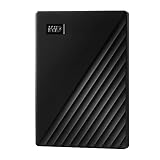

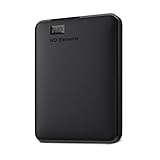
Top 3 picks at a glance
Quick Picks
| Product | Best for | Price |
|---|---|---|
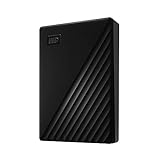
| WD 4TB My Passport | Secure backup with ransomware defense | $180.10 |
| Seagate Portable 5TB | Cross-platform and console use | $219.96 |
| UnionSine 500GB | Tight-budget portable storage | $37.46 |
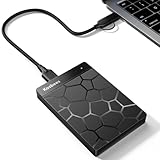
| Kosbees 500GB | Plug-and-play with no setup fuss | $35.99 |
| WD 2TB Elements | Straightforward Windows and Mac backup | $135.50 |
| WD 2TB My Passport | Password-protected mid-range backup | $133.90 |
| Aiolo Innovation 500GB | Slim multi-platform compatibility | $37.60 |
| WD 5TB Elements | Max capacity at the lowest WD price | $214.10 |
How We Picked
We narrowed this list using four criteria: storage capacity per dollar (because 500GB drives and 5TB drives serve fundamentally different buyers), built-in software and security features (password protection and ransomware defense add real value when you carry sensitive files), platform compatibility (a drive that locks you out of your console or Mac is a dealbreaker), and brand-level support infrastructure such as rescue services or backup suites that justify a price premium over generic equivalents.
The 8 Best Removable Hard Drives in 2026
WD 4TB My Passport
This drive targets people who already trust Western Digital’s backup ecosystem and need a meaningful step up in capacity without jumping to the five-terabyte price tier. The My Passport line bundles software that actively guards against ransomware and locks the drive with a password, which matters if it leaves your desk.
- Pro: Ransomware defense and password protection are included at no extra cost, unlike bare-bones competitors.
- Pro: Four terabytes is enough for years of game libraries or project files on a single drive.
- Con: USB 3.1 backward compatibility is fine, but the drive offers no native Thunderbolt option for recent Mac users who want a single-cable workflow.
Skip this if you do not use Western Digital’s Acronis-based software and want to format the drive for a game console; the bundled encryption can complicate that path.
Seagate Portable 5TB
The Seagate Portable is the broadest-compatibility option in this roundup. Seagate explicitly lists PC, Mac, PS4, and Xbox support, which removes guesswork for anyone bouncing a drive between platforms. The one-year Rescue Service is the standout: if the drive fails, Seagate replaces it with a unit that already has the new drive’s software installed.
- Pro: Five terabytes of space for under $220 is among the best capacity-per-dollar ratios here.
- Pro: The Rescue Service is a tangible safety net that generic drives simply cannot match.
- Con: USB 3.0 is the ceiling — no USB 3.2 Gen 2 or higher speeds, and the drive is physically larger than the ultra-slim 500GB options.
Skip it if you need password protection out of the box or if size and weight are your top priorities for daily carry.
UnionSine 500GB Ultra Slim
This is a no-frills budget drive for someone who just needs to offload files temporarily or store a modest game library on a PS4 or Xbox. At under $38 it is the cheapest entry in this list, and the “ultra slim” form factor means it fits anywhere.
- Pro: Lowest price among the 500GB drives here, making it an easy impulse buy.
- Pro: USB 3.0 connectivity keeps it compatible with virtually every machine sold in the last decade.
- Con: No included backup software, no encryption, no rescue service — you are on your own if the drive fails.
Skip this if you store irreplaceable files; the lack of any protection or support layer makes it unsuitable as a sole backup destination.
Kosbees 500GB
The Kosbees drive leans hard on its plug-and-play claim, listing compatibility with Windows, Mac, PS4, Xbox One, and Xbox 360. For buyers who want zero setup steps and a drive that simply appears in File Explorer or Finder, this is a reasonable bet at $36.
- Pro: Broad console and computer compatibility explicitly stated by the manufacturer, reducing return anxiety.
- Pro: Ultra-slim design and the lowest sticker price in this roundup.
- Con: A lesser-known brand with no published support warranty or rescue option, which means a failure is a total data loss.
Skip this if your files are sensitive or if you want any recourse when the drive dies; stick with established brands for anything critical.
WD 2TB Elements
The Elements line is WD’s no-software, no-frills family, and this 2TB model sits in the sweet spot between the tiny 500GB drives and the larger My Passport units. USB 3.2 Gen 1 support gives it a theoretical edge over the USB 3.0 drives here, though real-world differences on mechanical drives are marginal.
- Pro: Two terabytes at $135 is a solid middle-ground capacity for a single user’s documents, photos, and a handful of games.
- Pro: No bundled software means nothing to uninstall, nothing conflicting with console formatting.
- Con: No password protection or encryption — anyone who picks up the drive can read it.
Skip this if security features matter; the $2 difference between this and the My Passport 2TB buys you encryption and backup software.
WD 2TB My Passport
The My Passport 2TB offers nearly identical security features to the 4TB model — ransomware defense, password protection, backup software — at roughly the same per-terabyte cost as the Elements. If you want WD’s software suite without paying double for capacity, this is the sensible pick.
- Pro: Full My Passport security stack at a mid-range price, making it one of the best value propositions for privacy-conscious users.
- Pro: Compact and lighter than the Elements or Seagate 5TB drives, so it is easier to pocket.
- Con: Only 2TB; if you are storing large game libraries or video projects, you will run out of space sooner than with the Elements or My Passport 4TB.
Skip this if you need more than two terabytes; the 4TB My Passport is only $46 more and doubles your capacity.
Aiolo Innovation 500GB Ultra Slim
At $37.60, the Aiolo sits a few cents above the Kosbees and UnionSine drives but differentiates itself by explicitly calling out laptop, PS4, Xbox One, and Xbox 360 compatibility. Its ultra-slim profile makes it a pocketable option for quick file transfers or console storage expansion.
- Pro: Very low price with USB 3.0 speed and multi-platform support in a slim shell.
- Pro: No software bloat or setup steps — it is plug and play as advertised.
- Con: No warranty rescue plan, no encryption, and limited brand recognition, which makes long-term reliability a gamble.
Skip this if you need anything beyond temporary file transfer; for permanent storage, spend the difference on a WD or Seagate.
WD 5TB Elements
The Elements 5TB is the most cost-effective way to get five terabytes of WD-branded storage in this list, undercutting the Seagate Portable by a small margin while offering USB 3.2 Gen 1 compatibility. It is for users who want maximum space and do not care about software extras.
- Pro: Largest WD capacity here at a lower price than the equivalent Seagate, with broad PC and Mac support.
- Pro: No bundled software to remove, making console reformatting straightforward.
- Con: No password protection, no backup software, and no rescue service — you are buying a raw drive and nothing else.
Skip this if you travel with the drive and want encryption or a safety net; the Seagate’s Rescue Service is worth the small upcharge for frequent movers.
Buying Guide
Capacity-to-Price Ratio
Divide the listed price by the capacity to find the true cost per terabyte. In this roundup, the 500GB drives cluster around $72-$75 per terabyte, while the 4TB and 5TB drives drop that to roughly $43-$45 per terabyte. The rule is straightforward: the larger the drive you need, the more you save by buying one big unit rather than two small ones. However, do not buy capacity you will never fill — a 5TB drive sitting half-empty is worse value than a 2TB drive at 90% usage.
Bundled Software and Security Features
WD’s My Passport line ships with backup software and ransomware defense, while the Elements line ships with nothing. Seagate includes a Rescue Service that provides a replacement drive if yours fails. These bundled features are not marketing fluff: password protection prevents casual snooping, and backup software can automate what you would otherwise do manually. If you are a Mac user, note that some Windows-oriented backup suites will not run on macOS, so verify before purchasing.
Interface Generation and Real-World Throughput
USB 3.2 Gen 1 is functionally identical to USB 3.0 and USB 3.1 Gen 1 — three names for the same 5Gbps link. Mechanical hard drives rarely saturate that interface, so the naming differences between these products are marketing, not performance. What matters more is cable quality and whether your host port is USB-A or USB-C; a USB-A cable into a USB-C laptop requires an adapter that can throttle speed if it is poorly made. Buy a drive with a short cable that matches your computer’s port, or budget for a quality adapter.
Our Verdict
The top pick is the WD 4TB My Passport: it offers the best combination of meaningful capacity, included security features, and backup software that actually does something for most users. The budget pick is the Kosbees 500GB, which at $35.99 is the cheapest way to get a portable drive that works on Windows, Mac, PS4, and Xbox consoles without any setup. One condition under which another product wins: if you need five terabytes and a failure-safety-net, the Seagate Portable’s Rescue Service makes it the better buy over the WD 5TB Elements despite costing slightly more.
FAQ
Do removable hard drives still make sense now that SSDs are cheaper?
For bulk archival storage at low cost per terabyte, yes — mechanical removable drives still undercut portable SSDs on price by a wide margin. If you need speed for active video editing or running games directly from the drive, an SSD is worth the premium.
Can I use any drive in this list with a PS4 or Xbox?
The Seagate, Kosbees, and Aiolo drives all explicitly list console compatibility. The WD Elements drives work after reformatting but may require deleting any preloaded WD software first. The My Passport drives can work on consoles, but their hardware encryption sometimes prevents the console from recognizing them without a full format.
What does USB 3.2 Gen 1 mean compared to USB 3.0?
They are the same interface. USB 3.2 Gen 1 is the newer marketing name for USB 3.0 / USB 3.1 Gen 1, all delivering up to 5Gbps. You do not lose speed by buying a drive labeled USB 3.0, and a USB 3.2 Gen 1 drive will not outperform one in mechanical use.
How long should a removable hard drive last?
Mechanical drives are rated by workload, not lifespan in years, and most owners see three to five years of regular use before failure risk climbs noticeably. Keeping the drive in a padded sleeve, avoiding power interruptions during writes, and not running it continuously as an active project drive will all extend that window regardless of brand.