Our Top Picks

The Short Answer
Yes, a custom prebuilt gaming PC is significantly better than a standard mass-market retail PC, provided you intend to upgrade, customize, or heavily tax your system over its lifespan. While big-box retail computers offer immediate convenience and lower upfront costs, they lock you into proprietary ecosystems with poor airflow, limited power supplies, and non-standard parts. A custom prebuilt gives you the premium, hand-assembled quality of a DIY build without the assembly headache, making it the superior choice for serious gamers and home office power users alike.
What You Actually Get
When you shop for a computer, the terminology can get confusing. A “retail” PC typically refers to mass-produced machines from corporate giants. These are built for high-volume sales and are sold at major electronics stores. A “custom prebuilt,” on the other hand, is assembled by boutique system integrators who use standard, off-the-shelf retail components. Understanding the physical and structural differences between these two categories is essential before placing a machine on your desk.
As an Amazon Associate we earn from qualifying purchases at no extra cost to you.


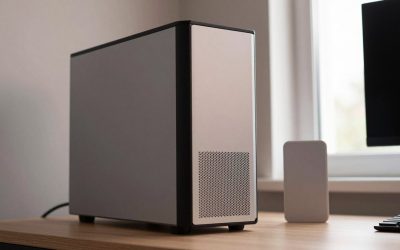
In a standard retail tower, manufacturers often cut corners to maximize profit margins. You will frequently find proprietary motherboards with non-standard power connectors, green circuit boards lacking heatsinks, and basic, noisy cooling fans. The power supply units (PSUs) in these systems are often strictly rated for the exact wattage the machine pulls out of the box—typically between 250W and 400W—leaving zero headroom for a future graphics card upgrade. Furthermore, retail cases are often compact, measuring around 13 x 6 x 11 inches, which restricts airflow and limits your ability to install larger, modern GPUs.
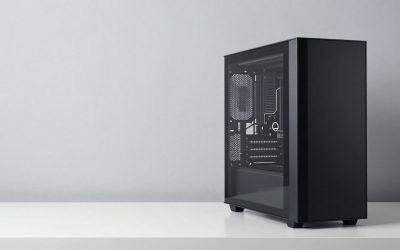
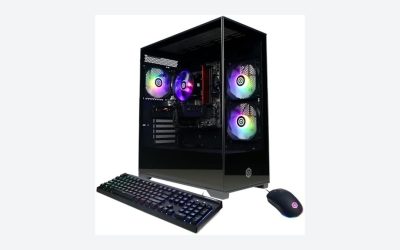
Conversely, a custom prebuilt utilizes standard ATX or Micro-ATX form factors. The chassis is usually a mid-tower design, averaging 18 x 8.5 x 18 inches and weighing between 22 and 30 pounds. Because they use standard components, these systems feature robust power supplies (ranging from 650W to 850W Gold-certified units) and spacious interiors designed for optimal thermal management. This layout allows cool air to flow freely across the components, keeping your workspace quieter and extending the lifespan of your hardware.
To illustrate this divide, consider two distinct options currently on the market:
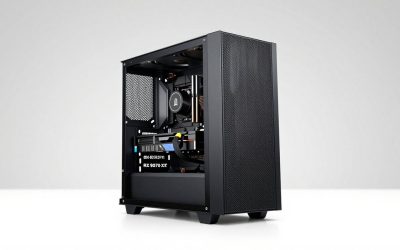
The first is a high-performance custom prebuilt like the KOTIN Prebuilt Gaming PC, priced at $1399.99. This machine features an AMD Ryzen 5 9600X processor, 16GB of DDR5 RAM, an NVIDIA RTX 5060 8GB graphics card, and a 1TB SSD. Because it is assembled using standard, high-caliber parts, it offers an incredible thermal profile and a clear path for future upgrades. This level of hardware ensures your setup remains highly capable and relevant well into 2026 and beyond, easily handling next-generation game releases and intensive creative workflows.
The second option represents the entry-level retail hybrid space, such as the abytespark Prebuilt Gaming PC Desktop, priced at around $480. Configured as a Core i7 business and home tower, this machine is highly affordable and excels at daily productivity, web browsing, and light, casual gaming. However, because it is housed in a compact, budget-friendly retail chassis with a basic power supply, upgrading it to a high-end gaming machine later on is incredibly difficult. It serves its purpose beautifully as a budget-conscious workstation, but it lacks the thermal headroom and modularity of a true custom prebuilt system.
Pros
- Standardized Parts: Every component—from the motherboard to the power supply—uses industry-standard form factors. You can swap out any single part years down the road without replacing the entire system.
- Superior Thermal Management: Custom prebuilts utilize high-airflow mesh cases, multiple 120mm or 140mm fans, and aftermarket CPU coolers to keep temperatures low and performance high.
- No Bloatware: Unlike mass-market retail brands that pack their systems with trial antivirus software and proprietary helper apps, custom builders generally install a clean, unburdened version of Windows.
- Higher-Quality Power Supplies: These systems feature reliable, high-wattage power supplies (often 650W to 850W) with 80 Plus ratings, protecting your components from power surges and allowing for future hardware upgrades.
- Aesthetic Appeal: With tempered glass side panels, clean cable management, and customizable RGB lighting, custom prebuilts serve as visual centerpieces for your home office or gaming desk.
Cons
- Higher Initial Price: You will pay a premium for the assembly labor, testing, and component selection, which typically adds $100 to $200 to the raw cost of the parts.
- Larger Physical Footprint: Because they rely on standard mid-tower cases for airflow, these machines take up significantly more desk or floor space than ultra-compact retail office PCs.
- Longer Delivery Times: While you can walk out of a local store with a retail PC today, a custom prebuilt is often built to order, which can result in shipping lead times of one to two weeks.
- Fragmented Component Warranties: While the system builder usually offers a one-year overall warranty, individual parts may carry separate manufacturer warranties, making troubleshooting slightly more complex once the builder’s warranty expires.
Who Should Buy It
You should opt for a custom prebuilt gaming PC if you view your computer as a long-term investment. If you want the peak performance, quiet operation, and gorgeous aesthetics of a hand-built system, but you do not have the time, tools, or desire to assemble delicate PC components yourself, this is the ideal route. It is also the perfect choice for anyone who plans to upgrade their graphics card or processor in a few years to keep up with evolving software demands without buying a completely new computer.
Who Should Skip It
You should skip the custom prebuilt route if you are on a strict budget under $500 and only need a machine for basic daily tasks like word processing, web browsing, and organizing household files. In this scenario, a budget-friendly retail tower like the abytespark system is much more practical. You should also skip custom prebuilts if you have a highly cramped workspace where a standard mid-tower chassis simply will not fit, or if you prefer the convenience of walking into a local retail store for immediate, same-day support and exchanges.
Cheaper Alternatives
If a premium custom prebuilt feels out of reach, there are several alternative pathways to consider. Each option balances cost against specific performance and convenience trade-offs:
| Option | Cost Range | Trade-off |
|---|---|---|
| Building It Yourself (DIY) | $600 – $2,000 | Saves assembly fees, but requires hours of research, manual labor, and personal troubleshooting if a part arrives defective. |
| Budget Retail Hybrid (e.g., abytespark) | $350 – $600 | Very affordable upfront, but offers extremely limited upgrade potential and lower graphics performance. |
| Refurbished Office Workstation + Low-Profile GPU | $250 – $450 | Excellent budget entry point, but relies on older CPU architectures and lacks modern aesthetics or high-end cooling. |
FAQ
Can I upgrade a custom prebuilt PC myself?
Yes, this is one of the primary advantages of a custom prebuilt. Because these systems are constructed using industry-standard parts, you can easily open the chassis and upgrade the RAM, storage drives, graphics card, or power supply as your needs evolve over time.
Why are retail PCs cheaper than custom prebuilts?
Mass-market retail manufacturers buy proprietary components in massive bulk quantities, which lowers their manufacturing costs. They also save money by using cheaper materials, such as plastic cases, basic power supplies, and proprietary motherboards that cannot be easily repurposed or upgraded.
Do custom prebuilt PCs come plug-and-play ready?
Yes. Just like a retail computer, a custom prebuilt arrives fully assembled with the operating system pre-installed. You simply need to plug in your monitor, keyboard, mouse, and power cable to begin using the machine.
How long does a custom prebuilt gaming PC last?
On average, a high-quality custom prebuilt will last five to seven years before its performance begins to lag behind modern software demands. However, because you can easily swap out individual parts, you can extend the machine’s lifespan indefinitely by upgrading components as needed.
Related guides
- Best Gaming PC for Fortnite: Eight Prebuilt Desktops Sorted by Refresh Rate Goal (2026)
- Best RX 9070 XT Prebuilt Gaming PCs: Seven Desktops and Three Cards Compared: 10 Compared (2026)
- CyberPowerPC vs iBUYPOWER Gaming PC: How the Two Brands Compare
- Best RX 9070 XT Prebuilt Gaming PC (2026): 5 Picks Compared