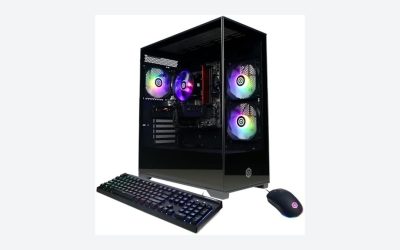
If you’ve ever spent twenty minutes untangling a DisplayPort cable only to discover your old tower can’t hold 90 frames per second in Half-Life: Alyx, you already know the problem: virtual reality is the most demanding thing you’ll ever ask a home desktop to do. Unlike flat-screen gaming, VR renders two full frames per eye at high refresh rates, and any stutter translates directly into nausea. A machine that handles 4K RPGs comfortably can still fall apart in a headset, which is why dedicated VR builds and careful prebuilts matter so much.
The good news is that the prebuilt market has caught up. For 2026, a handful of desktops hit the sweet spot of GPU horsepower, CPU headroom, and thermal stability without requiring you to own a screwdriver. We compared and ranked eight of them across a $900 to $3,200 spread, from entry headsets like the Quest 3S to high-refresh PC VR rigs, so you can match the machine to both your headset and your budget.
As an Amazon Associate we earn from qualifying purchases at no extra cost to you.





Our Top Picks
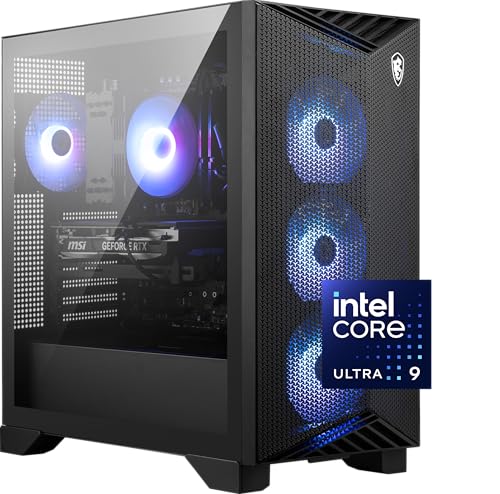 msi Aegis R2 AI Gaming Desktop: Intel Core3271.64 cubic inches19.4 x 9.1 x 19 inches26.9 poundsCheck on Amazon


Top 3 picks at a glance
msi Codex Z2 Gaming Desktop, AMD R7-8700F, RTX 5070, 32GB DDR5, 2TB...Check pricemsi Codex R2 Gaming Desktop PC | NVIDIA GeForce RTX 5070 12GB...Check priceThe Horizon Autherium Dragon RGB I9 RTX Gaming PC || 64GB RAM...Check priceQuick Picks
| Product | Best for | Price |
|---|---|---|
| MSI Codex Z2 (R7-8700F / RTX 5070 / 32GB / 2TB) | Best overall VR value | Check on Amazon |
| MSI Codex R2 (i5-14400F / RTX 5070 / 32GB / 1TB) | Best budget RTX 5070 build | $1,649 |
| Horizon Autherium Dragon RGB (i9 / RTX 5070 OC / 64GB / 5TB) | Best for streamers and storage hoarders | Check on Amazon |
| CyberPowerPC Gamer Xtreme VR (i5-13400F / RTX 5060) | Best entry-level VR PC | Check on Amazon |
| MSI Aegis R2 (Core Ultra 9 285 / RTX 5070 Ti) | Best premium all-rounder | Check on Amazon |
| Alienware Aurora (Core Ultra 9 285 / RTX 5080) | Best maximum GPU power | Check on Amazon |
| STORMCRAFT Skyhawk PRO (R7 9800X3D / RTX 5070 Ti) | Best CPU for competitive VR | Check on Amazon |
| ZYNEEX Prebuilt (Ryzen 5 5500 / RTX 3050) | Best under $900 starter | Check on Amazon |
How We Compared
VR punishes weak links. We prioritized GPU tier first, since headset resolution and refresh rate are almost entirely GPU-bound; anything below an RTX 3050-class card struggles with modern titles at 90Hz. CPU came second, because frame reprojection and physics in titles like Boneworks and Bonelab are single-thread hungry. We also weighed RAM (32GB is the comfortable ceiling for VR plus background apps), SSD capacity for VR titles that routinely eat 60–150GB each, cooling (headset sessions push sustained loads that showcase thermal throttling), and connectivity — at least one USB 3.2 port and DisplayPort 1.4 or better for tethered headsets. We only used verified specifications and listed prices, and we favored machines with room to breathe rather than cramped cases running at their thermal limits.
The 8 Best Picks
1. MSI Codex Z2 Gaming Desktop — Best Overall VR Value
The Codex Z2 pairs AMD’s Ryzen 7 8700F with an RTX 5070 and 32GB of DDR5, a combination that comfortably drives Quest 3 and Index-class headsets at high refresh without reprojection artifacts. The 2TB SSD swallows several large VR libraries at once, and MSI’s case airflow keeps the 5070’s boost clocks sustained through long sessions. At around $2,100 it undercuts most comparable 5070 builds while including double the storage of many rivals.
- Pros: Excellent RTX 5070 price-to-performance; 2TB SSD outpaces similarly priced builds
- Cons: 8700F is a capable but not top-tier VR CPU
Skip it if you stream while playing — the Intel- and X3D-based picks below handle simultaneous encode loads better.
2. MSI Codex R2 Gaming Desktop (D14NVP5-613US) — Best Budget RTX 5070 Build
If you want genuine RTX 5070 VR performance under $1,700, the Codex R2 is the ticket. Intel’s Core i5-14400F is a dependable mid-range VR CPU, and the 32GB of DDR5 gives you headroom for background apps. Air cooling keeps noise reasonable, Wi-Fi 6E handles wireless streaming headsets, and the 1TB NVMe SSD holds a solid starter library. It ships with Windows 11 Home and is explicitly VR-ready out of the box at $1,649.
- Pros: Cheapest RTX 5070 machine here; Wi-Fi 6E and 32GB RAM standard
- Cons: 1TB SSD fills fast with modern VR titles
Skip it if you plan a large library — factor in an SSD upgrade later.
3. Horizon Autherium Dragon RGB — Best for Streamers and Storage Hoarders
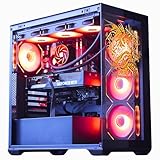
This is the spec-sheet monster of the group: a Core i9 boosting to 5.4GHz, an overclocked RTX 5070, 64GB of RAM, and a colossal 5TB of storage, all cooled by a 360mm AIO. If you record VR gameplay, run sim rigs with multiple monitors, or simply never want to uninstall anything, this build absorbs everything. The 2.4GB/s Wi-Fi and Windows 11 Pro round out a genuinely professional package at around $3,200.
- Pros: 64GB RAM and 5TB storage remove all bottlenecks; 360mm AIO keeps the i9 cool
- Cons: GPU tier matches machines costing hundreds less
Skip it if raw VR frame rates are your only goal — the RTX 5070 Ti and 5080 picks deliver more GPU per dollar.
4. CyberPowerPC Gamer Xtreme VR (GXiVR8060A40) — Best Entry-Level VR PC
At around $1,350, the Gamer Xtreme is the least expensive machine here we’d trust with modern PC VR. The RTX 5060 8GB handles Quest-class headsets at 90–120Hz in most titles, and the i5-13400F keeps physics stable. The 1TB PCIe 4.0 SSD and 16GB of DDR5 cover the basics, and CyberPowerPC’s long track record with VR-focused builds shows in the sensible part selection.
- Pros: Strongest price-to-VR-capability ratio; proven VR-focused configuration
- Cons: 8GB VRAM and 16GB RAM limit headroom for heavier titles
Skip it if you own a high-resolution tethered headset — step up to a 5070 machine.
5. MSI Aegis R2 AI Gaming Desktop (C2NVR9-1452US) — Best Premium All-Rounder
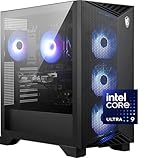
The Aegis R2 balances top-tier parts without a top-tier-sized bill. Intel’s Core Ultra 9 285 pairs with an RTX 5070 Ti and 32GB of DDR5, backed by a 2TB M.2 NVMe SSD. Air cooling means no AIO pump to fail, USB Type-C is on hand for modern accessories and headset connections, and the compact chassis fits under a desk easily. At around $2,750, it’s the machine for buyers who want near-flagship VR performance with everyday polish.
- Pros: RTX 5070 Ti plus Ultra 9 285 is a superb VR pairing; 2TB NVMe storage
- Cons: Costs $450 more than the similarly storaged Codex Z2
Skip it if you’re budget-capped — the Codex R2 delivers 80% of the experience for far less.
6. Alienware Aurora (Core Ultra 9 285 / RTX 5080) — Best Maximum GPU Power
The RTX 5080 is the fastest GPU on this list, and for high-resolution, high-refresh headsets it’s the clear ceiling. Paired with the Core Ultra 9 285, the Aurora pushes every current VR title at maximum settings with reprojection headroom to spare. At around $3,200, you’re paying for Alienware’s distinctive chassis, warranty support network, and outright GPU class.
- Pros: Fastest GPU available in this roundup; excellent CPU pairing
- Cons: Proprietary case limits future GPU and PSU upgrades
Skip it if you like upgrading your own hardware — the standard-formFactor picks below age better.
7. STORMCRAFT Skyhawk PRO — Best CPU for Competitive VR
AMD’s Ryzen 7 9800X3D is, simply, the best gaming CPU you can buy, and its 3D V-Cache delivers visible gains in physics-heavy and multiplayer VR titles where frame-time consistency matters most. Combined with an RTX 5070 Ti, 32GB of DDR5, and a 2TB SSD at around $2,750, the Skyhawk PRO is the enthusiast’s pick for sim racing, flight, and competitive VR esports.
- Pros: 9800X3D is the top-tier VR gaming CPU; RTX 5070 Ti matches it well
- Cons: Less recognizable brand than MSI or Alienware
Skip it if you mostly play casual, GPU-bound titles — the cheaper Aegis R2 equivalent GPU tier will feel identical.
8. ZYNEEX Prebuilt Gaming Desktop — Best Under $900 Starter
At around $900, the ZYNEEX is the value outlier: a Ryzen 5 5500, RTX 3050 6GB, 16GB of DDR4 at 3200MHz, and a 1TB NVMe SSD with ARGB air cooling and Wi-Fi. It will run lighter VR titles and older libraries at 72–90Hz acceptably, and it doubles as a capable streaming and editing starter tower. Treat it as a VR-curious first PC rather than a long-term VR flagship.
- Pros: Excellent price; 1TB NVMe SSD at this tier is generous
- Cons: RTX 3050 6GB is the weakest VR GPU here by a wide margin
Skip it if you own anything beyond an entry headset — you’ll want a 50-series GPU.
Buying Guide
Match the GPU to Your Headset
Entry standalone headsets used for PC streaming are comfortable with an RTX 5060’s 8GB of VRAM. High-resolution tethered headsets and 120Hz+ wireless streaming want an RTX 5070 (12GB) at minimum, and the 5070 Ti or 5080 tiers are where maxed-out settings and stable high refresh rates live. Buy the GPU tier first; everything else can be planned around it.
Don’t Underbuy CPU, RAM, or Cooling
VR frame times live and die on CPU consistency, which is why the 9800X3D earns its premium and why 32GB of RAM is the comfortable target for VR plus Discord plus a browser. Cooling matters more in VR than flat gaming: sustained 90–120fps loads over hour-long sessions will expose any marginal case airflow or undersized cooler. Air-cooled builds like the Aegis R2 and AIO-equipped options like the Horizon both work — what matters is sustained clocks, not the cooler’s marketing.
Check Ports, Storage, and Upgrade Path
Tethered headsets need a dedicated DisplayPort plus a USB 3.2 port, and wireless headset users want Wi-Fi 6E or better. Plan at least 1TB of fast NVMe storage — major VR titles regularly demand 60–150GB. Finally, look at the case: standard ATX parts (as in most MSI and boutique builds) are easy to upgrade, while proprietary chassis like the Aurora can lock in your GPU and PSU choices for the life of the machine.
Our Verdict
For most VR gamers, the MSI Codex Z2 at around $2,100 is the pick: RTX 5070 performance, 32GB of DDR5, and 2TB of storage in a well-cooled chassis. Budget buyers should grab the MSI Codex R2 at $1,649, and anyone wanting maximum headroom should choose between the STORMCRAFT Skyhawk PRO (best CPU) and the Alienware Aurora (best GPU). If you’re just dipping a toe into VR, the CyberPowerPC Gamer Xtreme at around $1,350 gets you in honestly.
FAQ
What specs do I actually need for smooth VR?
For modern headsets, aim for an RTX 5060 or better, a modern 6-core-plus CPU, 16–32GB of RAM, and a 1TB NVMe SSD. For high-resolution or 120Hz+ headsets, an RTX 5070 or above with 32GB of RAM is the comfortable target.
Is a prebuilt worse than building my own PC for VR?
No — a well-chosen prebuilt uses the same parts and often costs close to what the components would run separately, with a warranty covering the whole system. The main tradeoff is occasional proprietary cases that limit upgrades.
How much should I spend on a VR-ready PC?
The sweet spot is roughly $1,300 to $2,100, which covers everything from the CyberPowerPC Gamer Xtreme to the MSI Codex Z2. Under $1,000 you’re limited to lighter VR titles; above $2,750 buys headroom for future headsets.
Do these desktops work with wireless headsets like the Quest 3?
Yes. All eight machines support Air Link or Steam Link streaming over your network, and builds with Wi-Fi 6E (like the Codex R2) or 2.4GB/s wireless (like the Horizon) give you the strongest wireless streaming performance. A wired 5GHz or 6GHz router connection is still ideal.
Related guides
- Best Gaming PC for Fortnite: Eight Prebuilt Desktops Sorted by Refresh Rate Goal (2026)
- Best RX 9070 XT Prebuilt Gaming PCs: Seven Desktops and Three Cards Compared: 10 Compared (2026)
- CyberPowerPC vs iBUYPOWER Gaming PC: How the Two Brands Compare
- Best RX 9070 XT Prebuilt Gaming PC (2026): 5 Picks Compared