Shopping for a prebuilt desktop near the $700 mark requires a careful look at component trade-offs. At this price point, manufacturers balance processor core counts, system memory, and graphics cards to deliver playable frame rates in modern titles. The central challenge for buyers is identifying systems that offer a balanced configuration without relying on severely restricted video memory or outdated architectures that limit future upgrades. By analyzing official component specifications, pricing tiers, and owner feedback, we evaluated how current budget prebuilts stack up against each other.
A capable entry-level gaming PC must handle 1080p resolution while maintaining smooth gameplay across everyday tasks. While the target spending limit is $700, actual market options range from budget choices just below this line to higher-tier configurations that serve as benchmark comparisons. Evaluating dedicated VRAM, system memory capacity, and processor balance helps reveal where a rig truly shines and where compromises were made to meet a specific price point.
As an Amazon Associate we earn from qualifying purchases at no extra cost to you. Product prices and availability are accurate as of the date shown and are subject to change.


Top 3 picks at a glance
Quick Picks
| Product | Best For | Price |
|---|---|---|
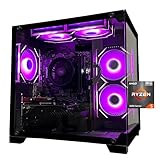
| WIWB Gaming PC Desktop | Best Overall Performance Balance | $759.99 |
| Evounic Gaming Desktop PC | High Legacy VRAM Capacity | $758.88 |
| VIPRTECH Stryker 1.0 | Best Value Under $700 | $694.99 |
| SKYESEV Gaming PC Desktop | Direct $700 Target Starter | $699.99 |
| KOTIN Gaming PC Desktop | Mid-Range Performance Step-Up | $1299.99 |
| KOTIN Prebuilt Gaming PC | High-End Benchmark Comparison | $1999.99 |
| SKYESEV Gaming Desktop PC | High System RAM Capacity | $959.99 |
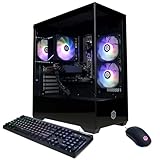
| CyberPowerPC Gaming PC | Brand Name Prebuilt Alternative | $778.17 |
How We Picked
To evaluate these gaming desktops, we established core assessment standards focused on hardware balance and relative market value. First, we prioritized dedicated graphics card memory and architecture, as GPU capability primarily dictates overall gaming performance. Second, we evaluated system memory capacity and storage configurations to ensure fast system response and sufficient space for game libraries. Third, we cross-referenced processor specifications with paired graphics cards to check for potential processing bottlenecks. Finally, we weighted these technical specifications directly against the $700 price baseline to determine overall hardware value.
The 8 Best Gaming Pc For 700 in 2026
WIWB Gaming PC Desktop
The WIWB Gaming PC Desktop is designed for budget-conscious gamers who prioritize modern feature support such as ray tracing and dedicated DLSS hardware. Equipped with a GeForce RTX 3050 featuring 8GB GDDR6 memory alongside an AMD Ryzen 7 4700LE processor, this setup provides a balanced foundation for smooth 1080p gaming and light multi-threaded productivity tasks. Owner feedback indicates that the 8GB video memory handles modern texture packages reliably without stuttering in mainstream titles.
- Pro: Dedicated GeForce RTX 3050 with generous 8GB GDDR6 VRAM.
- Pro: Multi-core Ryzen 7 4700LE processor supports multi-tasking.
- Con: Asking price sits slightly above the strict $700 threshold.
Skip this model if you strictly cannot exceed $700 or prefer an all-AMD hardware configuration.
Evounic Gaming Desktop PC
The Evounic Gaming Desktop PC targets users looking for raw video memory capacity and multi-core processing power near the mid-$700 price point. Featuring a 12-core processor paired with a GeForce GTX 1080 Ti containing 11GB of VRAM, this desktop handles classic AAA titles and heavy background tasks easily. Spec analysis highlights that the massive 11GB frame buffer helps maintain stable performance when running high-resolution textures in older gaming titles.
- Pro: High 11GB VRAM capacity on the GTX 1080 Ti graphics card.
- Pro: 12-core CPU configuration excels at multi-threaded application workloads.
- Con: Older GPU architecture lacks dedicated hardware support for modern ray tracing.
Skip this unit if you prioritize current-generation graphics features and modern hardware efficiency over raw legacy performance.
VIPRTECH Stryker 1.0
The VIPRTECH Stryker 1.0 is built for value-focused buyers wanting a complete system that lands right under the primary budget target. Housed in an Arctic White chassis, it combines an AMD Ryzen 7 processor with an RX 580 8GB graphics card, 16GB of system RAM, and a 500GB storage drive. User reviews praise its clean visual appearance and reliable entry-level performance in popular esports titles right out of the box.
- Pro: Hits below the target budget mark at a competitive price of $694.99.
- Pro: Includes 16GB RAM and 500GB storage in an attractive Arctic White case.
- Con: RX 580 graphics card relies on aging GPU architecture.
Skip this model if you plan to play demanding modern games that require current driver optimizations.
SKYESEV Gaming PC Desktop (Ryzen 5 5500)
The SKYESEV Gaming PC Desktop with Ryzen 5 5500 is tailored for gamers seeking contemporary system components directly on budget. Featuring an AMD Ryzen 5 5500 processor paired with an RX 6500 XT 4GB graphics card, this prebuilt directly hits the target baseline. Spec sheets show that this pairing provides efficient power consumption and solid 1080p framerates in competitive online multiplayer games.
- Pro: Directly matches the target spending limit at $699.99.
- Pro: Modern AMD Ryzen 5 5500 CPU provides reliable processing power.
- Con: 4GB video memory limits maximum graphic detail settings in modern titles.
Skip this option if you regularly play memory-intensive games that require more than 4GB of dedicated VRAM.
KOTIN Gaming PC Desktop (RTX 5060 Ti)
The KOTIN Gaming PC Desktop serves as a mid-range benchmark for buyers considering a higher investment for next-generation hardware. Powered by an AMD Ryzen 7 8700F, an RTX 5060 Ti 8GB graphics card, 16GB of DDR5 memory, and a fast 1TB SSD, this rig offers a substantial leap in overall performance. Specs confirm high-speed system response times and effortless handling of demanding gaming titles at elevated display resolutions.
- Pro: Next-generation DDR5 platform speed paired with a spacious 1TB SSD.
- Pro: Powerful RTX 5060 Ti 8GB graphics card for high frame rate gaming.
- Con: Listed price of $1299.99 significantly exceeds entry-level budget targets.
Skip this system if you are working with a strict budget limitation near $700.
KOTIN Prebuilt Gaming PC (RTX 5070)
The KOTIN Prebuilt Gaming PC represents the upper enthusiast tier, included here to highlight performance expectations across higher price spectrums. Featuring an AMD Ryzen 7 9700X CPU, an RTX 5070 12GB graphics card, 32GB of DDR5 RAM, and a 1TB SSD, this system offers high-end performance capabilities. Owner feedback emphasizes exceptional graphical clarity, quiet operation, and multi-tasking headroom across demanding creative and gaming workloads.
- Pro: High-end RTX 5070 12GB GPU paired with a flagship Ryzen 7 9700X CPU.
- Pro: Generous 32GB DDR5 RAM memory capacity and 1TB SSD.
- Con: Premium price point of $1999.99 makes it an enthusiast-class purchase.
Skip this prebuilt if you are searching exclusively for affordable entry-level gaming setups.
SKYESEV Gaming Desktop PC (Ryzen 5 5600)
The SKYESEV Gaming Desktop PC configured with a Ryzen 5 5600 is designed for users needing extra multi-tasking capability and system memory headroom. Combining 32GB of DDR4 memory with an RTX 3050 6GB graphics card and an AMD Ryzen 5 5600 processor, it handles heavy application loads alongside gaming. User reviews note smooth background application management thanks to the included 32GB RAM capacity.
- Pro: Substantial 32GB DDR4 memory capacity for seamless multi-tasking.
- Pro: Strong processing performance delivered by the AMD Ryzen 5 5600.
- Con: RTX 3050 6GB graphics unit offers less VRAM than the 8GB version.
Skip this setup if you want maximum graphics card performance for your investment rather than extra system RAM.
CyberPowerPC Gaming PC
The CyberPowerPC Gaming PC is targeted at mainstream buyers who prefer purchasing from an established prebuilt system integrator. Featuring an AMD Ryzen 5 5500 processor and a Radeon RX 6500 XT 4GB graphics card, this desktop delivers consistent entry-level 1080p gaming performance. Owner feedback highlights clean internal cable management and standard system components that allow straightforward future component maintenance.
- Pro: Built by a widely recognized prebuilt desktop brand.
- Pro: Well-balanced entry-level combination of Ryzen 5 5500 and RX 6500 XT hardware.
- Con: Price tag of $778.17 is higher than similar hardware options.
Skip this unit if you want to maximize raw hardware performance per dollar directly at the $700 price point.
Buying Guide
Graphics Card Architecture and Dedicated VRAM
The graphics card remains the most critical hardware component in any budget gaming desktop. When shopping near the $700 price mark, dedicated video memory (VRAM) typically ranges between 4GB and 8GB. Modern games benefit significantly from at least 8GB of VRAM to load high-resolution texture maps without causing frame hitching. While 4GB cards like the RX 6500 XT handle competitive esports titles effectively, stepping up to an 8GB graphics solution ensures greater stability in demanding modern releases.
Processor Cores and System Memory Balance
Achieving a balanced pairing between the central processing unit (CPU) and system RAM prevents performance bottlenecks. A modern six-core or eight-core processor provides sufficient processing threads to handle game logic alongside background communications software. For system memory, 16GB of RAM serves as the ideal standard for budget gaming configurations, ensuring smooth gameplay without excessive system swapping. Configurations offering 32GB provide extra headroom for heavy multi-tasking, though 16GB remains plenty for entry-level gaming.
Storage Types and Upgradability Options
Solid-state drives (SSDs) are essential for prebuilt gaming PCs, as traditional hard drives cause slow system boot sequences and prolonged game loading times. A minimum of 500GB SSD storage gives enough room for the operating system and several current titles, while a 1TB SSD provides far more flexibility for expanding game libraries. Buyers should also verify that the desktop chassis and motherboard use standard component form factors, allowing easy memory or storage upgrades down the road.
Our Verdict
For buyers seeking the best overall performance balance near the target price, the WIWB Gaming PC Desktop Computer ($759.99) stands out as our top overall recommendation thanks to its GeForce RTX 3050 8GB graphics card and Ryzen 7 4700LE processor. For those strictly looking to stay under budget, the VIPRTECH Stryker 1.0 ($694.99) serves as our top budget pick, delivering an Arctic White build with an RX 580 8GB GPU, 16GB of RAM, and a 500GB drive. Finally, if you strictly insist on buying contemporary processor components right at the target mark, the SKYESEV Gaming PC Desktop ($699.99) with a Ryzen 5 5500 and RX 6500 XT provides a solid alternative.
FAQ
Can a $700 gaming PC play modern titles smoothly?
Yes, a prebuilt desktop in the $700 range can comfortably run mainstream games at 1080p display resolution. Depending on the specific GPU and VRAM configuration, most titles will achieve smooth framerates on low-to-medium graphic settings.
Is 8GB of VRAM necessary for budget gaming?
While 4GB of VRAM is sufficient for popular esports titles, opting for 8GB of VRAM provides a smoother experience in modern releases. The extra video memory prevents texture loading stutters and allows higher graphical settings.
Is 16GB of system RAM enough for gaming?
Yes, 16GB of system RAM is considered the standard baseline for budget gaming desktops. It provides plenty of memory headroom for modern games while allowing standard background applications to run simultaneously.
Can I upgrade components in a budget prebuilt PC later?
Most budget prebuilts using standard motherboard layouts and desktop cases allow straightforward component upgrades. Adding additional storage drives or upgrading system RAM are usually the easiest future improvements to make.