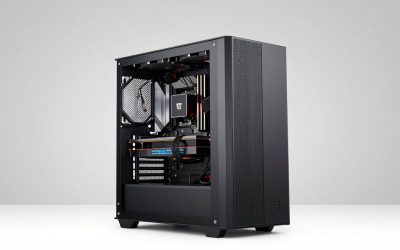
Valorant is deliberately lightweight so it can run on almost anything, but competitive players want the opposite of just running it: they want hundreds of frames per second, feeding a 240Hz or 360Hz monitor with rock-steady frametimes. That makes this an unusual build where the CPU and memory matter more than a big graphics card.
As an Amazon Associate we earn from qualifying purchases at no extra cost to you.


Our Top Picks
 CORSAIR 7000D Airflow Full-Tower ATX PC Case7000 Series21.65 x 9.76 x 23.62 inches41.23 poundsCheck on Amazon


Top 3 picks at a glance
Why Valorant is a CPU and refresh game
Because the graphics are simple, frame rate at competitive settings is almost entirely determined by the CPU. To reliably push 300fps and beyond you want a modern high-clock processor and fast, low-latency RAM rather than an expensive graphics card that would sit half-idle.
A modest 60-class GPU is more than enough even at 1080p 360Hz. The real spend goes on a fast CPU, DDR5 at rated speed, and a genuinely high-refresh monitor, which is the part that actually turns high frame rates into a competitive advantage.
Recommended build tiers
Invest in the CPU, memory and monitor. A mid-range GPU is all Valorant needs, so do not overpay there.
| Budget band | CPU | GPU | RAM | Target performance |
|---|---|---|---|---|
| $800-1,000 | Modern 6-core | Current 60-class, 8GB | 16GB DDR5-6000 | 1080p 240fps+ competitive settings |
| $1,150-1,400 | Modern 8-core | Current 60/70-class | 32GB DDR5-6000 | 1080p 360fps or 1440p 240fps |
| $1,700+ | High-end 8-core | Current 70-class | 32GB DDR5-6400 | 1440p 360fps for top-tier esports |
1080p 240Hz rig
A modern 6-core, 16GB of DDR5 and a 60-class card easily clear 240fps at competitive settings. At $800 to $1,000 this is the classic esports value machine, best paired with a 240Hz monitor.
360Hz chaser rig
Step up to a modern 8-core and 32GB of fast DDR5 to hold 360fps in busy rounds with smoke and abilities on screen. The GPU can stay mid-range because the CPU sets the ceiling.
1440p high-refresh rig
A high-end 8-core with a 70-class GPU pushes 1440p at very high frame rates if you want more detail without giving up refresh. Pair with a 240Hz+ 1440p panel for the best of both.
Where to spend and where to save
Spend on the CPU, fast low-latency RAM and a genuine high-refresh monitor, because those three parts are what actually produce and display the hundreds of frames competitive Valorant thrives on. The monitor in particular is the upgrade that converts raw frame rate into a visible, playable advantage.
Save heavily on the GPU, since a current 60-class card already clears 240 to 360fps at competitive settings. Buying a bigger graphics card for Valorant wastes money on power the game never uses, so redirect it to a faster processor, rated-speed DDR5 and the best high-refresh panel your budget allows.
Squeezing out every frame
Run competitive settings low, disable frame-rate caps and enable a low-latency mode in your GPU driver. In an esport, stable frametimes and low input lag matter more than raw peak numbers.
Keep RAM at rated speed for a real CPU-limited frame-rate boost, close background apps, and match your in-game frame cap to just under your monitor’s refresh if you use one. The monitor itself is the upgrade that makes all those frames count.
Frequently asked questions
Do I need a good GPU for Valorant?
No. A current 60-class card handles even 1080p 360fps. Valorant is CPU-limited at competitive settings, so put your money into the processor, fast RAM and a high-refresh monitor instead.
What CPU is best for high-FPS Valorant?
A modern high-clock 6 or 8 core CPU with strong single-thread performance, paired with rated-speed DDR5. That combination is what lets you sustain 240 to 360fps during ability-heavy rounds.
What frame rate does a 240Hz or 360Hz monitor need?
Aim for frames matching the panel: around 240fps for 240Hz and 360fps for 360Hz. Valorant is CPU-limited, so a fast processor and rated-speed RAM, not a big GPU, are what reach and hold those numbers.
Bottom line
For high-FPS Valorant, flip the usual priorities: spend on a fast modern CPU, rated-speed DDR5 and a true high-refresh monitor, and keep the GPU mid-range. That machine pushes the hundreds of stable frames competitive play demands without wasting money on graphics power the game never uses.