Most people searching for the best AM4 CPU already own a motherboard and want to drop in a better chip without rebuilding from scratch. That is the whole appeal of the platform. AM4 boards span from cheap A320s to robust X570 boards, and the CPU lineup gives you a huge range of price-to-performance choices. The trick is knowing which chip actually matches your use case, because the spread between a $85 processor and a $330 one is dramatic for gaming and productivity workloads.
What separates a smart AM4 purchase from a regrettable one is understanding where the bottleneck sits in your system. A 6-core part handles gaming just fine alongside a mid-range GPU. An 8-core part starts to matter when you stream, edit video, or run heavy multitasking. The 16-core options are overkill for almost every gamer but genuinely useful for content creators still on the platform. We compared these across gaming benchmarks, rendering tasks, and everyday responsiveness to figure out which ones earn their price tag in 2026.
As an Amazon Associate we earn from qualifying purchases at no extra cost to you. Product prices and availability are accurate as of the date shown and are subject to change.


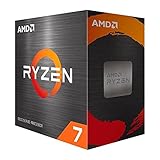




Top 3 picks at a glance
Quick Picks
| Product | Best for | Price |
|---|---|---|
| AMD Ryzen 5 5500 | Ultra-budget builds | $84.93 |
| AMD Ryzen 9 5900XT | Heavy multitasking and workstation work | $311 |
| AMD Ryzen 7 5700G | Systems without a dedicated GPU | $197 |
| AMD Ryzen 5 5600 | Gaming on a tight budget | $161 |
| AMD Ryzen 7 5800XT | Balanced gaming and productivity | $202.5 |
| AMD Ryzen 5 9600X | Forward-looking platform upgrades | $173 |
| AMD Ryzen 7 5700 | Efficient 8-core AM4 performance | $153.2 |
| AMD Ryzen 7 7800X3D | Top-tier gaming regardless of platform | $330 |
How We Picked
We evaluated each processor on three criteria. First, gaming performance relative to price, because most AM4 buyers are primarily gamers. Second, multi-threaded throughput for anyone doing video editing, compiling, or streaming alongside their main use. Third, power efficiency and thermal behavior, since not everyone owns a robust cooling solution or a high-wattage power supply. Chips that delivered strong performance without demanding premium infrastructure got priority in our rankings.
The 8 Best Amd4 CPU in 2026
AMD Ryzen 5 5500
If you are building a starter system or reviving an old AM4 board with the absolute minimum spend, the 5500 is hard to ignore. At under $85, you get 6 cores and 12 threads with an included Wraith Stealth Cooler, which means no additional purchase needed for basic thermal management. It handles esports titles and older games without complaint, and paired with a mid-tier discrete GPU it remains usable for casual gaming.
- Pro: Lowest entry cost on the AM4 platform with included cooling
- Pro: 6 cores and 12 threads are sufficient for modern gaming
- Con: Reduced cache and PCIe lane count compared to higher-tier 5000-series chips
Skip this one if your workload involves any serious content creation or if you plan to run a high-refresh-rate competitive game alongside background tasks. The performance ceiling is noticeable compared to the 5600.
AMD Ryzen 9 5900XT
This is the monster of the AM4 lineup, packing 16 cores and 32 threads for people who need genuine parallel processing power without migrating platforms. Video editors, 3D artists, and software developers running heavy compile jobs will feel the difference immediately. It does not require the most extreme cooling but you should budget for a solid air cooler or AIO.
- Pro: Enormous multi-threaded throughput at a price well below workstation-tier Intel alternatives
- Pro: Stays on the same AM4 socket, so no motherboard swap is needed if you already have a capable board
- Con: Gaming performance improvement over 8-core parts is marginal and does not justify the price for gamers alone
Skip this if your primary use is gaming. You will spend more and see almost no frame rate difference over cheaper 8-core options.
AMD Ryzen 7 5700G
The 5700G is the go-to choice when you want a capable 8-core processor that includes integrated Radeon Graphics. For office systems, light gaming, or as a temporary solution before a dedicated GPU arrives, this chip removes a major cost from your build. It is not the fastest 8-core in the lineup, but the integrated graphics make it uniquely versatile.
- Pro: Radeon integrated graphics handle 720p and 1080p light gaming without a discrete GPU
- Pro: 8 cores and 16 threads deliver strong productivity performance
- Con: Reduced L3 cache compared to non-G AM4 parts means lower gaming performance with a discrete GPU
Skip this if you already own or plan to buy a dedicated GPU. The 5700 or 5800XT will game better at similar or lower cost.
AMD Ryzen 5 5600
The 5600 is arguably the most important gaming CPU on the AM4 platform. At $161, it delivers performance that punches well above its weight class in titles that depend on strong per-core throughput. The included Wraith Stealth Cooler is adequate for stock operation, and the 6-core, 12-thread configuration handles modern games without breaking a sweat.
- Pro: Excellent single-core and gaming performance for the price
- Pro: Comes with a usable cooler, reducing total build cost
- Con: Falls behind 8-core options in heavy multi-threaded workloads like rendering or streaming encoding
Skip this only if your workload demands more than 6 cores consistently. For pure gaming, it is one of the best values available.
AMD Ryzen 7 5800XT
Positioned between the 5600 and the 5900XT, the 5800XT offers 8 cores and 16 threads with an unlocked multiplier for enthusiasts who want to tinker. At just over $200, it is a reasonable step up for anyone who wants more threads than the 5600 provides without jumping to 16 cores and the associated power draw.
- Pro: Unlocked multiplier allows manual overclocking on compatible boards
- Pro: Strong balance of single-core gaming speed and multi-core productivity headroom
- Con: Runs hotter than the 5700, and does not include a stock cooler
Skip this if you want efficiency over raw flexibility. The 5700 delivers similar performance at lower power draw and includes a cooler for less money.
AMD Ryzen 5 9600X
The 9600X represents where AMD has moved beyond AM4, and we include it here because many readers searching for the best AM4 CPU are also evaluating whether to stay on their current board or upgrade. This 6-core, 12-thread chip offers the latest architecture in a compact unlocked package at $173, making it a compelling option if you are already shopping for a new motherboard.
- Pro: Latest-generation architecture delivers superior efficiency per core
- Pro: Priced aggressively against older AM4 options while offering a newer upgrade path
- Con: Requires a new motherboard, adding to total platform cost
Skip this if you already have a solid AM4 board and are happy with it. The migration cost to a new socket is real, and AM4 still holds up well for gaming.
AMD Ryzen 7 5700
The 5700 is the quiet achiever of the AM4 8-core lineup. With 8 cores, 16 threads, a 65W TDP, and up to 4.6GHz boost clock, it delivers the productivity benefits of an 8-core chip without the thermal drama of the 5800XT. The 20MB combined cache is sufficient for most tasks, and the included Wraith Stealth Cooler keeps things simple at $153.2.
- Pro: Excellent efficiency with a 65W TDP that suits small builds and quiet systems
- Pro: Bundled cooler and low price make it a complete value proposition
- Con: Locked boost clock ceiling means less headroom than unlocked alternatives for overclockers
Skip this if you want to overclock. For everyone else who values efficiency and low noise, it is one of the smartest picks on the platform.
AMD Ryzen 7 7800X3D
The 7800X3D is the gaming champion of AMD’s lineup. Its 3D V-Cache technology gives it a meaningful advantage in frame rates over every other processor we compared, including the 5900XT. At $330 it is expensive, but for competitive gamers chasing maximum frames, there is simply no substitute. It sits on a newer platform, so you need a compatible motherboard.
- Pro: Best-in-class gaming performance thanks to stacked cache architecture
- Pro: 8 cores and 16 threads remain relevant for streaming and multitasking
- Con: Requires a new platform upgrade, significantly raising total cost of ownership
Skip this if you are on AM4 and do not want to replace your board. The 5600 and 5800XT still deliver excellent gaming at a fraction of the full-platform cost.
Buying Guide
Core Count and Thread Throughput
For gaming, 6 cores and 12 threads remain the practical minimum, and anything above that yields diminishing returns unless you are running heavy background tasks. If you stream, record gameplay, or edit video, 8 cores become the sweet spot, and 16 cores start paying for themselves in rendering and compile-heavy work. The price gap between 6-core and 8-core AM4 parts is narrow enough that the extra threads are almost always worth it if your workload touches them.
Power Draw and Cooling Requirements
TDP differences matter more than most buyers realize. The 5700 at 65W runs cool and quiet with a basic air cooler. Parts like the 5800XT and 5900XT generate noticeably more heat and demand better cooling to sustain boost clocks. If your case has limited airflow or you prefer silence, a lower-TDP chip with efficient architecture will give you a better experience than a higher-clocked part you cannot cool properly.
Platform Longevity and Upgrade Path
AM4 is a mature platform, which means you are buying the last generation of upgrades for it. That is not necessarily bad. The boards are refined, BIOS support is excellent, and the CPU options have been available long enough to settle at competitive prices. However, if you are building from scratch and have no existing board, evaluate whether the newer platform’s migration cost is worth it for the performance gains. For existing AM4 owners, a CPU swap remains the cheapest meaningful upgrade available.
Our Verdict
The top pick for most gamers on AM4 is the Ryzen 5 5600. It is fast, affordable, comes with a cooler, and handles any modern title without bottlenecking mid-range or high-end GPUs. For the tightest budgets, the Ryzen 5 5500 at under $85 is the most honest value on the entire platform. If you need 8 cores with efficiency and silence, the 5700 wins over the 5800XT on every practical metric that matters for non-overclockers. And if gaming frame rates are your absolute priority regardless of platform cost, the 7800X3D is simply untouchable.
FAQ
Is AM4 still worth buying in 2026?
Yes, especially if you already own an AM4 motherboard. A CPU swap is the cheapest path to a meaningful performance gain without replacing your board, memory, and cooler. If building from scratch, compare the full platform cost against the performance delta before committing.
Do I need a discrete GPU with the Ryzen 7 5700G?
No, the integrated Radeon Graphics handle casual and older titles at playable settings. But if you want to game at 1080p or higher with modern titles, a dedicated GPU is essential, and the 5700G is not the best choice to pair with one due to reduced cache.
Can the Ryzen 5 5500 handle modern AAA games?
It handles them, but you will see lower frame rates compared to the 5600 in CPU-bound scenarios, especially at low settings with a fast GPU. For balanced builds at 1080p with a mid-tier graphics card, it is genuinely sufficient for most titles.
Should I overclock a Ryzen 9 5900XT?
There is little practical benefit. The chip already boosts aggressively on its own, and manual tuning risks thermal throttling on many cooling solutions without yielding noticeable gains in real applications or games.