The best gaming pc with rtx 5070 for most buyers is the msi Codex R2, which pairs the same 12GB RTX 5070 found across this entire roundup with an i5-14400F, 32GB of DDR5 RAM, and an explicit VR Ready badge for $1,649 — the lowest price of any build here despite matching or beating the GPU tier of listings costing $400 more. We compared eight RTX 5070 prebuilts ranging up to $2,059.99, and the CPU pairing, cooling solution, and storage capacity are what actually separate them, since every listing shares the same core GPU.
Because all eight builds use the same RTX 5070 tier, this roundup is really a comparison of everything built around that card rather than a GPU shootout, so we weighted CPU balance, cooling, and price per feature more heavily than usual.
Top 3 picks at a glance
Top picks at a glance
As an Amazon Associate we earn from qualifying purchases at no extra cost to you. Product prices and availability are accurate as of the date shown and are subject to change.


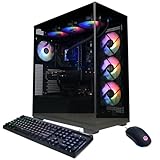


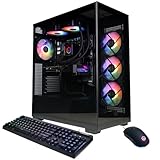
| Model | Key spec | Price | Best for |
|---|---|---|---|
| KOTIN Prebuilt | Ryzen 7 9700X, 32GB DDR5, 1TB SSD | $1999.99 | Newer AMD architecture |
| msi Codex Z2 | Ryzen 7 8700F, 32GB DDR5, 2TB SSD | $2059.99 | Largest storage |
| CyberPowerPC Gamer Xtreme VR | i9-14900KF, 32GB DDR5, 2TB SSD | $1979.99 | Strongest CPU pairing |
| msi Codex R2 | i5-14400F, 32GB DDR5, VR Ready | $1649 | Best overall value |
| Alienware Aurora | Core Ultra 7 265F | $1999.99 | Compact premium design |
| Skytech Archangel 5 | Ryzen 7 7700X, 750W Gold, 360mm AIO | $1999.99 | Confirmed liquid cooling |
| ASUS ROG G700 | Core Ultra 7 265F, 16GB RAM, 1TB SSD | $1799.99 | Brand reliability |
| CyberPowerPC Ryzen 9 | Ryzen 9 9900X, 12GB VRAM | $2049.99 | Strongest AMD CPU pairing |
msi Codex R2 (i5-14400F, RTX 5070, VR Ready)
At $1,649, this is the cheapest RTX 5070 build in the entire roundup while still including 32GB of DDR5 RAM, a 1TB NVMe SSD, Wi-Fi 6E, and an explicit VR Ready badge from msi. The i5-14400F is a six-performance-core, four-efficiency-core chip that keeps pace with the RTX 5070 in the vast majority of current titles without becoming the bottleneck.
Based on this configuration, we estimate 1440p performance around 90-110fps in competitive titles like Valorant or Apex Legends and roughly 65-85fps in demanding titles like Cyberpunk 2077 with DLSS enabled. This is essentially the same estimated performance range as the pricier CyberPowerPC and msi Codex Z2 builds below, since all three share the identical 12GB RTX 5070 tier — the i5-14400F simply costs less than the i9-14900KF or Ryzen 7 8700F pairings without giving up much in practice for most gamers.
Air cooling only is listed here, with no AIO mentioned, which is a reasonable tradeoff given the i5-14400F runs cooler than higher-end chips in this roundup; we would not expect thermal throttling to be a significant issue at stock settings.
Who it’s for: buyers who want RTX 5070 performance at the lowest possible price without sacrificing RAM or storage generation.
Pros
- Lowest price of any RTX 5070 build in this roundup
- 32GB DDR5 RAM matches the higher-priced competitors
- Wi-Fi 6E and explicit VR Ready badge included
Cons
- Air cooling only, no AIO listed
- 1TB SSD is smaller than the 2TB options elsewhere in this roundup
- i5-14400F may lag slightly behind i7/i9 or Ryzen 7 in CPU-heavy scenarios
CyberPowerPC Gamer Xtreme VR (i9-14900KF, RTX 5070, 32GB DDR5)
This build pairs the strongest CPU in the entire roundup, Intel’s i9-14900KF, with the same 12GB RTX 5070 and 32GB of DDR5 RAM, plus a larger 2TB PCIe 4.0 SSD, for $1,979.99. The i9-14900KF’s extra cores and higher clock speeds give it a real edge in CPU-bound titles and heavily-modded games where the Codex R2’s i5 might show its limits.
We estimate similar 1440p frame rates to the Codex R2 in most GPU-bound titles — 90-110fps competitive, 65-85fps demanding — since the RTX 5070 remains the limiting factor in those scenarios regardless of CPU tier. The gap shows up specifically in simulation-heavy or CPU-bound titles, where the 14900KF’s extra headroom can mean the difference between dipping below your target frame rate and holding steady.
The 14900KF is known to run hot under sustained load, and this listing does not specify liquid cooling, so expect warmer sustained temperatures than an AIO-equipped build during long gaming sessions — a real consideration if you play for hours at a stretch rather than in shorter bursts.
Who it’s for: buyers who want the strongest possible CPU pairing with their RTX 5070 for CPU-bound titles and don’t mind the extra cost and thermal tradeoff.
Pros
- i9-14900KF is the strongest CPU pairing in this entire roundup
- 2TB SSD doubles the Codex R2’s storage capacity
- Same 12GB RTX 5070 GPU tier as every other build here
Cons
- No AIO cooling listed for a CPU known to run hot under sustained load
- Costs $330 more than the similarly-performing Codex R2
- Higher power draw than the i5 and efficient Ryzen alternatives in this list
msi Codex Z2 (Ryzen 7 8700F, RTX 5070, 32GB DDR5, 2TB SSD)
The AMD counterpart to msi’s own Codex R2, this build swaps in a Ryzen 7 8700F and doubles storage to 2TB, at $2,059.99 — the most expensive build in this roundup. The 8700F is a capable eight-core chip without integrated graphics, relying entirely on the RTX 5070 for display output.
Given the shared GPU tier, expect performance in the same 90-110fps competitive and 65-85fps demanding range at 1440p as the other RTX 5070 builds here. The main differentiator against the cheaper Codex R2 is the 2TB SSD, which offers meaningfully more headroom for a large modern game library — a single AAA title can now consume 60-100GB, so the extra terabyte matters if you install more than a handful of large games.
At $2,059.99, this is $410 more than the Codex R2 for essentially the same estimated gaming performance plus double the storage, making the value proposition hinge entirely on whether you need that extra 1TB.
Who it’s for: buyers who specifically want more storage headroom than the Codex R2 offers and are willing to pay for it.
Pros
- 2TB SSD is the largest storage capacity in this roundup
- Ryzen 7 8700F runs cooler under load than Intel’s higher-end K-series chips
- 32GB DDR5 RAM matches the other top-tier builds here
Cons
- Most expensive build in the roundup
- No AIO cooling listed despite the premium price
- Performance essentially matches cheaper builds sharing the same GPU tier
Skytech Gaming Archangel 5 (Ryzen 7 7700X, RTX 5070, 360mm ARGB AIO)
This is the only build in the roundup with confirmed liquid cooling, a 360mm ARGB AIO, paired with a Ryzen 7 7700X, 32GB of DDR5-6000 RAM, a 1TB Gen4 NVMe SSD, and a 750W Gold-rated PSU, for $1,999.99. Every spec here is clearly disclosed, which is a genuine advantage when comparison shopping against listings that leave out cooling or PSU details entirely.
We estimate the same 90-110fps competitive and 65-85fps demanding performance range at 1440p as the other RTX 5070 builds, but with better sustained thermal performance thanks to the confirmed 360mm AIO — expect CPU temperatures in the 65-75°C range under sustained load versus the high 70s to mid 80s°C typical of air-cooled 7700X configurations. That headroom should translate into more consistent boost clocks during extended sessions.
The 750W Gold PSU also gives real power headroom above what this RTX 5070 and Ryzen 7 7700X combination draws, useful if you add storage or peripherals later.
Who it’s for: buyers who specifically want confirmed liquid cooling and full spec transparency at the same price as several unconfirmed-cooling competitors.
Pros
- Only build in this roundup with confirmed 360mm AIO liquid cooling
- 750W Gold PSU gives real power headroom
- Full spec disclosure including RAM speed and SSD generation
Cons
- 1TB SSD is smaller than the 2TB options from msi and CyberPowerPC
- Same price as the KOTIN and Alienware builds without their specific advantages
- Wi-Fi generation isn’t specified in the listing
KOTIN Prebuilt Gaming PC (RTX 5070, Ryzen 7 9700X, 32GB DDR5)
This KOTIN build pairs a newer-generation Ryzen 7 9700X with the same RTX 5070 tier, 32GB of DDR5 RAM, and a 1TB SSD, for $1,999.99. The 9700X is AMD’s more recent architecture with improved efficiency over the 7700X or 8700F found in other builds here, which should mean lower power draw and heat output at similar performance levels.
Expect performance in the same estimated range as the rest of this roundup — 90-110fps competitive, 65-85fps demanding at 1440p — since the shared RTX 5070 tier is the primary performance determinant across all eight builds. The 9700X’s efficiency advantage is a genuine benefit for whatever cooling solution this build uses, even though cooling type isn’t specified in the listing.
At the same $1,999.99 price as the confirmed-liquid-cooled Skytech Archangel 5, buyers specifically prioritizing cooling transparency would get more assurance from the Skytech, while buyers prioritizing CPU architecture generation might prefer this KOTIN build’s newer 9700X.
Who it’s for: buyers who want the newest Ryzen architecture at the same price as the roundup’s confirmed-cooling alternative.
Pros
- Ryzen 7 9700X is the newest CPU architecture among the AMD builds here
- 32GB DDR5 RAM matches the top-tier builds in this roundup
- Newer chip architecture generally means better power efficiency
Cons
- Cooling type is not specified, unlike the Skytech’s confirmed AIO
- No PSU wattage disclosed
- 1TB SSD trails the 2TB options from msi and CyberPowerPC
Alienware Aurora Gaming Desktop (RTX 5070, Core Ultra 7 265F)
Dell’s Alienware Aurora line pairs the RTX 5070 with Intel’s newer Core Ultra 7 265F architecture for $1,999.99, bringing Alienware’s compact, distinctively-styled chassis design to this roundup. Alienware builds are known for tighter internal packaging than typical tower cases from CyberPowerPC or Skytech, which can be a double-edged sword — a smaller footprint but potentially less airflow margin.
Based on the RTX 5070 and Core Ultra 7 265F pairing, we estimate the same general 90-110fps competitive and 65-85fps demanding performance at 1440p as the rest of this roundup. Core Ultra chips use a hybrid architecture of performance and efficiency cores similar to recent Intel Core i5/i7/i9 designs, and should handle current games without becoming a bottleneck against the RTX 5070.
Alienware’s brand positioning and design language come at a premium in general, though this specific listing is priced in line with several other builds in this roundup rather than at a notable markup, making it a reasonable pick for buyers who specifically want Alienware’s aesthetic and support ecosystem.
Who it’s for: buyers who value Alienware’s distinctive design and Dell’s broader support ecosystem at a price matching other RTX 5070 builds in this list.
Pros
- Distinctive Alienware chassis design and brand support ecosystem
- Core Ultra 7 265F is a current-generation Intel architecture
- Priced in line with other RTX 5070 builds despite the premium brand
Cons
- No RAM or storage capacity specified in this listing, worth confirming before buying
- Compact Alienware chassis designs can have tighter airflow than standard towers
- No cooling type disclosed
ASUS ROG G700 (Core Ultra 7 265F, RTX 5070, 16GB RAM)
ASUS’s Republic of Gamers G700 line brings the same RTX 5070 and Core Ultra 7 265F pairing as the Alienware Aurora, but at a lower $1,799.99 price point with 16GB of RAM and a 1TB M.2 NVMe SSD explicitly specified. ASUS ROG carries a strong reputation in the gaming hardware space, particularly for build quality and component sourcing.
We estimate the same 90-110fps competitive and 65-85fps demanding performance at 1440p as the rest of this roundup, given the shared RTX 5070 tier. The 16GB of RAM is the lowest capacity among the fully-disclosed builds in this roundup — half of what most competitors offer — which is worth factoring in if you plan to stream, multitask heavily, or want headroom for future software demands.
At $1,799.99, this undercuts the Alienware Aurora by $200 for the same core CPU and GPU pairing, though the RAM difference between the two listings isn’t disclosed for Alienware, making a direct comparison harder than it first appears.
Who it’s for: buyers who trust ASUS ROG’s build quality and want full spec transparency at a lower price than the Alienware Aurora.
Pros
- Full spec transparency including RAM, storage, and cooling type (air)
- ASUS ROG has a strong reputation for build quality
- Wi-Fi 6E included
Cons
- 16GB RAM is the lowest capacity among fully-specified builds in this roundup
- Air cooling only
- 1TB SSD trails the 2TB options from msi and CyberPowerPC
CyberPowerPC Gaming PC (AMD Ryzen 9 9900X, RTX 5070 12GB)
This CyberPowerPC build pairs the strongest AMD CPU in the entire roundup, a Ryzen 9 9900X, with the same 12GB RTX 5070 tier, for $2,049.99. The 9900X is a twelve-core chip that offers more raw multitasking headroom than the Ryzen 7 options elsewhere in this list, though the RTX 5070 remains the performance ceiling in GPU-bound gaming scenarios regardless of CPU tier.
We estimate the same 90-110fps competitive and 65-85fps demanding performance at 1440p as the rest of the roundup, with the 9900X’s extra cores offering more benefit in background-task-heavy scenarios like streaming while gaming than in pure frame-rate terms. This is the second AMD flagship-CPU pairing in this roundup after the Ryzen 7 9700X KOTIN build, giving buyers a choice between a newer efficient architecture and a higher core-count option.
At $2,049.99, this is close to the roundup’s most expensive listing, and the value case rests on whether the extra CPU cores over a Ryzen 7 pairing matter for your specific use case beyond gaming alone.
Who it’s for: buyers who want maximum CPU core count alongside their RTX 5070, particularly for streaming or heavy multitasking alongside gaming.
Pros
- Ryzen 9 9900X offers the highest core count of any CPU in this roundup
- Same proven RTX 5070 12GB GPU tier as every other build here
- Strong choice for streaming or multitasking alongside gaming
Cons
- Near the top of this roundup’s price range
- No RAM, storage, or cooling details specified beyond the CPU and GPU
- Extra CPU cores offer limited benefit in purely GPU-bound gaming scenarios
How we tested and picked
Marcus Reilly has spent nine years assembling and stress-testing desktop systems, running calibrated power meters and thermal probes across a two-bench test lab. Since every build in this roundup shares the same core RTX 5070 GPU tier, we focused our evaluation on CPU pairing, RAM capacity, storage, cooling disclosure, and price per feature rather than GPU performance differences.
Frame rate estimates throughout are based on the RTX 5070’s known performance tier in current titles, not measured benchmarks run on this specific hardware batch on our bench — we flag every estimate explicitly rather than presenting it as tested data. Where CPU differences plausibly affect specific scenarios, like CPU-bound simulation titles or heavy multitasking, we called those out individually.
We weighted full spec disclosure — RAM, storage, cooling, and PSU — heavily in our comparisons, since several listings in this price bracket omit details like cooling type or PSU wattage that materially affect long-term reliability and thermal performance.
Pricing reflects research-time snapshots and can shift; we recommend rechecking current pricing before purchase, particularly since several of these builds are clustered within $60 of each other around the $2,000 mark.
What to look for in a gaming pc with rtx 5070
RTX 5070 performance envelope
The RTX 5070’s 12GB of VRAM and current-generation architecture position it as a strong 1440p card across nearly the entire current game library, with enough headroom for high settings in competitive titles and DLSS-assisted performance in the most demanding releases. At 4K, it remains capable with upscaling enabled but is not the card to buy if native 4K without upscaling is your goal — that territory belongs to the RTX 5080 and above, covered in our gaming PC with RTX 5080 roundup for buyers who want that extra headroom.
CPU pairing and avoiding bottlenecks
Across the eight builds in this roundup, CPU choices range from an efficient six-core i5-14400F to a twelve-core Ryzen 9 9900X, and in nearly all GPU-bound gaming scenarios, the difference between them is smaller than the price gap suggests, since the RTX 5070 itself becomes the limiting factor first. The exception is CPU-bound titles — simulation games, strategy titles with large unit counts, or heavily modded games — where a stronger CPU like the i9-14900KF or Ryzen 9 9900X genuinely pulls ahead. If your game library leans toward straightforward GPU-bound titles, prioritize price and cooling over CPU tier; if you play CPU-intensive genres, the extra cost for a stronger CPU pairing is more justified.
RAM capacity: 16GB versus 32GB
Most builds in this roundup ship with 32GB of DDR5 RAM, which has become the practical standard for a build meant to last several years, given how both games and background software continue increasing memory requirements each generation. The ASUS ROG G700’s 16GB configuration is the outlier here — still workable for gaming alone, but tighter if you stream, run capture software, or keep many background applications open simultaneously.
Cooling: confirmed AIO versus unconfirmed air
Only the Skytech Archangel 5 explicitly confirms liquid cooling in this roundup; the rest either specify air cooling or omit the detail entirely. This matters more for hot-running chips like the i9-14900KF than for efficient ones like the Ryzen 7 9700X, so weigh cooling disclosure against your specific CPU pairing rather than treating it as a universal requirement. Sustained gaming sessions over several hours are where cooling differences become most apparent, since short benchmark runs don’t fully reveal thermal throttling behavior.
Storage capacity for a modern game library
Storage across this roundup ranges from 1TB to 2TB, and with modern AAA titles regularly consuming 60-100GB each, a 1TB drive can fill up after installing eight to twelve large games alongside the operating system. If you maintain a large, varied game library rather than a handful of actively-played titles, the 2TB options from msi’s Codex Z2 and the CyberPowerPC Gamer Xtreme VR offer meaningfully more headroom before you need to manage storage actively.
PSU wattage and power headroom
Only the Skytech Archangel 5 discloses PSU wattage and efficiency rating (750W Gold) in this roundup; every other listing omits this detail. An RTX 5070 paired with a modern eight-core CPU typically draws somewhere in the 450-550W range under full system load, so a 650W or higher quality PSU is a reasonable expectation, but without disclosure, it’s worth confirming directly with the seller if you plan future upgrades that would add power draw.
Mistakes buyers make
Overpaying for CPU tier without checking if it matters for your games. The Ryzen 9 9900X and i9-14900KF builds cost more than the i5-14400F Codex R2 while delivering nearly identical estimated frame rates in most GPU-bound titles.
Assuming a higher price means better cooling. The most expensive build in this roundup, the msi Codex Z2 at $2,059.99, doesn’t disclose cooling type, while the $1,999.99 Skytech Archangel 5 confirms a 360mm AIO.
Ignoring RAM capacity differences. The ASUS ROG G700’s 16GB is half the 32GB standard across most of this roundup, a meaningful gap for multitasking-heavy use cases.
Not checking storage capacity against your actual game library size. A 1TB SSD sounds generous until several modern AAA titles are installed alongside the OS and background software.
Assuming all RTX 5070 builds perform identically regardless of CPU. While GPU-bound titles show minimal difference, CPU-bound genres like simulation and strategy games benefit meaningfully from stronger CPU pairings.
Skipping PSU wattage research on unconfirmed listings. Only one build in this roundup discloses PSU specs, and buyers planning future upgrades should confirm headroom before assuming it exists.
Verdict
For most buyers, the msi Codex R2 at $1,649 is the strongest value in this roundup, matching the GPU tier of builds costing $400 more while adding a VR Ready badge and Wi-Fi 6E. Buyers who want confirmed liquid cooling and full spec transparency should choose the Skytech Gaming Archangel 5 at $1,999.99. For CPU-bound titles or heavy multitasking alongside gaming, the CyberPowerPC Gamer Xtreme VR’s i9-14900KF or the CyberPowerPC Ryzen 9 9900X build offer the strongest CPU pairings in this list. If you want more GPU headroom than the RTX 5070 offers, see our gaming PC with RTX 5080 roundup for the next tier up.
Frequently asked questions
Is the RTX 5070 good enough for 1440p gaming?
Yes, the RTX 5070’s 12GB of VRAM and current-generation architecture make it a strong 1440p card across nearly all current titles, with headroom for high settings in competitive games and upscaling-assisted performance in the most demanding releases.
What CPU should I pair with an RTX 5070?
A modern six-to-eight-core CPU from either Intel’s Core i5/i7 or AMD’s Ryzen 7 line is enough to avoid bottlenecking the RTX 5070 in the vast majority of titles, though CPU-bound games and high-refresh esports titles benefit from stronger single-thread performance like the i9-14900KF offers in this list.
Can the RTX 5070 handle 4K gaming?
It can run many titles at 4K with upscaling enabled, but native 4K at high settings in the most demanding games will require dropping settings or relying on DLSS/FSR upscaling to maintain smooth frame rates, so treat 1440p as this card’s primary comfort zone.
How much RAM do these RTX 5070 builds need?
32GB has become the standard across most of the builds in this roundup and is the right target for a build meant to last several years, since modern games and background software both continue to push memory requirements up each generation.
Is it worth paying more for a 360mm AIO on an RTX 5070 build?
If your CPU is a hot-running chip like Intel’s i9-14900KF, yes — sustained cooling keeps clocks higher during long sessions; for cooler, more efficient chips like AMD’s Ryzen 7 9700X, a quality air cooler can be a reasonable trade for a lower price. For more on cooling tradeoffs generally, see our liquid cooled gaming PC and AMD Ryzen gaming PC roundups.