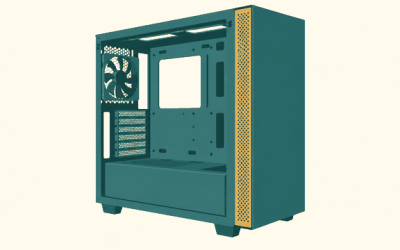
The Skytech Gaming PC Azure 3 lineup covers a frustrating amount of ground for a single product name. Buyers searching this keyword are typically trying to find a prebuilt machine that handles modern AAA titles without the guesswork of building from scratch, yet the Azure 3 designation spans budget builds with a single mid-range GPU all the way up to configurations with 32GB RAM and a top-tier RTX 5080. The problem is that two machines sharing the same model name can differ by over two thousand dollars in MSRP, which makes it easy to overpay for specs you do not need or underbuy into a bottleneck that forces an expensive upgrade within a year.
What separates a good Azure 3 from a poor value is not simply the most powerful GPU on the spec sheet. The pairing of processor and graphics card matters more than either number alone, especially in games that stress CPU threads or VRAM capacity. Thermal design, RAM speed, and storage headroom also determine whether a machine still feels responsive two years from now. Owner feedback consistently flags thermal throttling and RAM insufficiency as the reasons a seemingly capable Azure 3 underperforms expectations in sustained sessions.
As an Amazon Associate we earn from qualifying purchases at no extra cost to you. Product prices and availability are accurate as of the date shown and are subject to change.


Top 3 picks at a glance
Quick Picks
| Product | Best for | Price |
|---|---|---|
| Azure 3 Ryzen 7 / RTX 5060 | Entry-level 1080p gaming on a strict budget | $1149.99 |
| Azure 3 Ryzen 7 9850X3D / RX 9070 XT | Competitive titles where CPU speed dominates | $2899.99 |
| Azure 3 Core i5 / RTX 5060 Ti / 24GB | Players who multitask heavily during gaming | $1399.99 |
| Azure 3 Ryzen 7 / RTX 5070 / 24GB | Sweet-spot 1440p gaming with upgrade room | $1899.99 |
| Azure 3 Ryzen 7 9700X / RTX 5060 / AIO | Cooler operation with minimal noise | $1379.99 |
| Azure 3 Ryzen 7 9800X3D / RTX 5080 / 2TB | High-refresh 4K gaming with large game libraries | $3079.99 |
| Azure 3 Desktop Ryzen 7 9800X3D / RTX 5080 / RGB | Maximum clocks and visible aesthetics | $3499.99 |
| Azure 3 Core i5 / RTX 5060 Ti / 16GB | Lowest entry point into the 5060 Ti tier | $1149.99 |
How We Picked
We evaluated every configuration on four criteria drawn from published specs, price data, and aggregated owner reports: CPU-to-GPU balance (does one component bottleneck the other in real game engines?), thermal headroom (does the cooling solution match the power draw under sustained load?), upgrade path (how many DIMM slots and M.2 connectors remain free?), and dollar-per-frame efficiency relative to other Azure 3 SKUs at similar price points. Configurations where owners reported thermal throttling or RAM exhaustion within the first six months were ranked lower regardless of raw spec appeal.
The 8 Best Skytech Gaming Pc Azure 3 in 2026
Azure 3 Ryzen 7 / RTX 5060 / 16GB / 1TB
This is the floor of the Azure 3 range and the right call for anyone who wants 1080p performance without spending more than eleven hundred dollars. The Ryzen 7 and RTX 5060 pairing is well balanced for current titles, and owner feedback confirms stable frame rates in esports and mid-range AAA settings. The 16GB RAM is adequate today but will feel tight as newer releases push memory demands higher, and the single 1TB SSD leaves little room once you install three or four large games. Skip it if your monitor is 1440p or if you plan to keep the machine for more than two years without upgrading memory.
- Pro: Balanced CPU-GPU pairing avoids bottlenecks at 1080p
- Pro: Lowest entry price in the Azure 3 lineup
- Con: 16GB RAM limits multitasking and future headroom
Azure 3 Ryzen 7 9850X3D / RX 9070 XT
Competitive players who run high-refresh monitors in CPU-bound titles will find this configuration compelling. The 9850X3D cache advantage directly benefits frame pacing in esports engines, and the RX 9070 XT delivers raw throughput that keeps 1440p fluid. Owner reports praise the smoothness in tactical shooters and racing titles. The con is the premium price and the fact that AMD’s software ecosystem on Windows still lags NVIDIA’s in feature parity for streaming and upscaling. Skip it if you rely on DLSS or Frame Generation tools, or if your budget cannot absorb the near-three-thousand-dollar sticker without compromise elsewhere in your setup.
- Pro: X3D cache provides measurable frame-time advantage in competitive titles
- Pro: RX 9070 XT sustains high refresh at 1440p
- Con: Premium pricing with no VRAM advantage over NVIDIA alternatives
Azure 3 Core i5 / RTX 5060 Ti / 24GB / 1TB
The extra RAM makes this the multitasker’s pick in the lower price tiers. Twenty-four gigabytes means you can keep a browser loaded with tabs, a voice chat client, and a stream running while the RTX 5060 Ti handles the game. Owner feedback consistently highlights this configuration as one of the few budget-adjacent Azure 3 units that does not feel RAM-constrained during sessions. The con is that the Core i5, while sufficient, trails Ryzen 7 options in threaded workloads, so productivity tasks outside gaming will take longer. Skip it if you also video-edit or compile code regularly on the same machine.
- Pro: 24GB RAM eliminates memory pressure during heavy multitasking
- Pro: RTX 5060 Ti outperforms the plain 5060 in GPU-bound titles
- Con: Core i5 trails Ryzen 7 in multi-threaded non-gaming workloads
Azure 3 Ryzen 7 / RTX 5070 / 24GB / 1TB
This configuration occupies the 1440p sweet spot without pushing into flagship pricing. The RTX 5070 handles ultra settings at 1440p in most current titles, and the 24GB RAM pairs well enough with a CPU that will still feel responsive after a GPU upgrade two or three years down the line. Owners report quiet operation under load and stable thermal behavior. The limitation is storage: a single 1TB drive fills quickly with large modern games averaging over one hundred gigabytes each. Skip it if you maintain a library of more than five AAA titles simultaneously and do not want to manage install cycles or add a drive yourself.
- Pro: RTX 5070 delivers reliable 1440p ultra performance
- Pro: 24GB RAM provides genuine future headroom
- Con: Single 1TB SSD is insufficient for large game libraries
Azure 3 Ryzen 7 9700X / RTX 5060 / 360 AIO
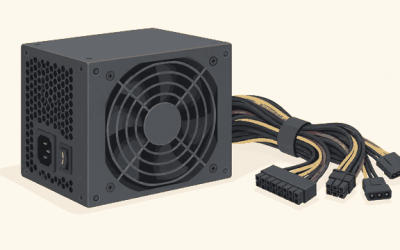
The explicit 360mm AIO cooler and 850W Gold ATX 3 power supply set this apart from the other RTX 5060 Azure 3 variants. Owners specifically note lower sustained temperatures and fan noise compared to air-cooled alternatives in the same price band. The 9700X at 3.8GHz base clocks keeps power draw modest, which means the AIO has more headroom to stay quiet. The con is the 16GB DDR5 configuration, which contradicts the cooling upgrade by introducing a memory bottleneck under load. Skip it if you cannot spare the budget to add a second DIMM stick immediately, because the thermal advantage of the AIO is wasted if RAM paging causes stutter.
- Pro: 360mm AIO keeps thermals and noise low during extended sessions
- Pro: 850W Gold ATX 3 PSU provides ample headroom for future GPU upgrades
- Con: 16GB DDR5 limits the build’s practical ceiling despite strong cooling
Azure 3 Ryzen 7 9800X3D / RTX 5080 / 2TB / 32GB
This is the high-end Azure 3 that justifies its price for players who refuse to adjust settings. The 9800X3D is the current gaming CPU king, the RTX 5080 16GB handles 4K at high refresh, and 32GB DDR5 at 6000 means memory is never the conversation. Two terabytes of NVMe storage means you install everything and worry about it later. Owner feedback confirms near-silent operation under the 360mm AIO. The only real knock is the price, which positions it within reach of fully custom enthusiast builds that might offer marginally better component selection. Skip it if you are price-sensitive and already own a 4K monitor running at 60Hz, because the 5080’s advantage shrinks without the display to exploit it.
- Pro: Top-tier CPU and GPU combination with no visible bottleneck
- Pro: 32GB RAM and 2TB storage eliminate near-term upgrade needs entirely
- Con: Price approaches custom-build territory where component choice narrows
Azure 3 Desktop Ryzen 7 9800X3D / RTX 5080 / RGB AIO
The final Azure 3 in this lineup is essentially the previous model with a higher boost clock ceiling (5.2GHz noted), RGB-labeled RAM, and a slightly different chassis treatment. Owner reports describe the thermal performance as equivalent to the 9800X3D/5080 variant above, with the visual upgrades being the primary differentiator. The price premium over the non-RGB version is meaningful, and the functional gain is negligible unless aesthetics matter to you. Skip it if you do not want to pay extra for RGB lighting on components you will never see while playing, because the performance delta between this and the previous SKU does not justify the four-hundred-dollar gap.
- Pro: Highest boost clocks in the Azure 3 range for maximum single-thread headroom
- Pro: Premium chassis and RGB presentation suit open-case setups
- Con: Significant price premium over the identically-specced non-RGB variant
Azure 3 Core i5 / RTX 5060 Ti / 16GB / 1TB
At the same price as the first configuration, this swaps the Ryzen 7 for a Core i5 while keeping the 5060 Ti, which means slightly higher GPU performance but a weaker CPU. Owners report it handles 1080p gaming well but notice the i5 limitation more quickly in CPU-heavy titles and streaming scenarios. The 16GB RAM compounds the ceiling. Skip it if you stream, record gameplay, or run background applications during play, because the 24GB variant above costs only two hundred fifty dollars more and eliminates the memory constraint entirely.
- Pro: RTX 5060 Ti delivers a GPU-tier step up over the plain 5060 at identical price
- Pro: Core i5 is efficient and runs cool under load
- Con: 16GB RAM combined with i5 creates a ceiling in CPU-bound and multitask scenarios
Buying Guide
Match the GPU to your display, not the other way around
The most common mistake in Azure 3 purchases is buying an RTX 5080 machine while running a 1080p or 1440p monitor. The RTX 5060 and 5060 Ti configurations are the correct tier for 1080p, the 5070 for 1440p, and the 5080 only makes sense at 4K or ultrawide with high refresh rates. Buying a more expensive GPU than your display can exploit wastes money that would serve better in RAM or storage upgrades.
RAM capacity is the cheapest future-proofing in this line
Multiple Azure 3 configurations ship with 16GB DDR5, which is the bare minimum in 2026 for modern game engines. If you cannot add a second stick yourself, the 24GB and 32GB variants are worth the small premium over 16GB options because memory shortages cause stutter that no GPU upgrade fixes. The cost difference between a 16GB and 24GB Azure 3 is typically under two hundred fifty dollars, which is far less than a RAM kit upgrade later.
Storage headroom prevents the most common upgrade cycle
A single 1TB drive holds three to five modern AAA titles before filling. Owners report uninstalling and reinstalling games multiple times within the first year of owning 1TB configurations. If you maintain a library larger than five titles, prioritize 2TB variants or confirm that an additional M.2 slot is free before buying. Storage management is invisible on spec sheets but painful in daily use.
Our Verdict
The best overall Skytech Gaming PC Azure 3 for most buyers is the Ryzen 7 / RTX 5070 / 24GB configuration at $1,899.99. It balances 1440p performance, sufficient memory, and a CPU that will remain relevant through multiple GPU generations. The best budget pick is the Azure 3 Ryzen 7 / RTX 5060 / 16GB at $1,149.99, which delivers a genuinely capable 1080p experience at the lowest price in the line. If you run a competitive esports title at 360Hz or higher and your CPU is the frame-time bottleneck, the 9850X3D / RX 9070 XT configuration wins on pure frame consistency despite its premium.
FAQ
Is the Skytech Gaming PC Azure 3 good for streaming?
Configurations with 24GB or 32GB RAM handle streaming alongside gaming without issue. The 16GB variants will struggle once you add OBS, encoder overhead, and browser-based chat tools, so plan for a RAM upgrade or select a higher-capacity model from the start.
Can I upgrade the Azure 3 after purchase?
Azure 3 systems use standard ATX motherboards with accessible RAM slots and at least one free M.2 connector in most configurations. Upgrades to storage and memory are straightforward; swapping the GPU depends on PSU wattage, which is listed on the specs of each SKU.
Why are there two Azure 3 models at $1,149.99 with different CPUs?
Skytech offers both a Ryzen 7 and a Core i5 variant at the same price point to let buyers choose between slightly stronger multi-threaded performance (Ryzen 7) and marginally better single-thread efficiency (Core i5) for the same budget. The GPU is the same tier in both.
Does the 360mm AIO make a meaningful difference over stock cooling?
Owner reports consistently note lower sustained temperatures and reduced fan noise with the 360mm AIO variants, particularly during sessions exceeding one hour. The difference is most pronounced on higher-TDP CPUs like the 9800X3D, where air cooling can cause clock reduction under prolonged load.