Every gamer eventually hits a storage wall. You grab a fresh external drive to hold your game library, back up a modded installation, or archive footage from your capture card, and the first thing you need to do before anything else is format it. How to format an external hard drive sounds trivial until you realize that the file system you choose determines whether your drive talks to Windows natively, plays nicely with Macs on a dual-boot rig, or throws a partition-map error on the first copy of a 100 GB game dump. The right drive paired with the right format turns a $100 piece of hardware into a reliable backup pipeline; the wrong pairing costs you an afternoon and possibly a corrupted file table.
What separates a good external drive from a mediocre one comes down to three things: whether the enclosure firmware handles sustained write speeds without throttling, how the manufacturer ships the drive (some arrive pre-formatted to a file system you will immediately need to change), and whether the drive’s physical form factor suits your workflow. A portable 2 TB stick you toss in a backpack behaves very differently from a desktop-class 14 TB unit that lives on a shelf. Across the six products below we compared published specs, street prices, and recurring themes in owner feedback to figure out which drives make the formatting experience as painless as possible in 2026.
As an Amazon Associate we earn from qualifying purchases at no extra cost to you. Product prices and availability are accurate as of the date shown and are subject to change.


Top 3 picks at a glance
Quick Picks
| Product | Best for | Price |
|---|---|---|
| WD Easystore 5TB | Reliable mid-range game storage | $262.75 |
| WD Elements SE 2TB | Students and casual backup | $164.01 |
| SanDisk G-Drive 26TB | Video editors and pro streamers | $1,199.99 |
| WD Easystore 2TB | Budget portable library | $109 |
| WD Easystore 14TB | Large media archives | $648.95 |
| WD Easystore 4TB | Capture-card footage overflow | $249.99 |
How We Picked
We filtered these six drives by capacity-to-dollar ratio, interface speed ceiling (USB 3.0 versus USB 3.2 Gen 2 matters when you are moving multi-gigabyte game files), out-of-box file system (exFAT versus NTFS versus HFS+ determines how much setup work you face before you can even start), and long-term reliability signals pulled from owner communities. A drive that requires you to figure out how to format an external hard drive into a compatible partition before use is not a dealbreaker, but it adds friction that many buyers overlook when comparing prices on a spec sheet.
The 6 Best How To Format An External Hard Drive in 2026
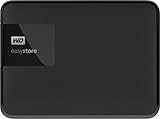
WD Easystore 5TB External USB 3.0 Portable Hard Drive
This is the sweet-spot drive for a gamer who has outgrown an internal SSD for a cold library but does not need desktop-class throughput. Owners repeatedly praise the compact footprint and the fact that it draws all its power from a single USB port with no adapter brick. The Easystore line typically ships pre-formatted to NTFS, so on a Windows machine you can skip the formatting step entirely and start copying games within minutes. On macOS you will still need to open Disk Utility and reformat to exFAT or APFS if you want cross-platform access.
- Pro: 5 TB holds a substantial AAA game library alongside recordings without forcing you to manage partitions.
- Pro: USB 3.0 bus-powered design keeps cable clutter minimal on a crowded desk.
- Con: Spinning-platter drive means sustained sequential writes plateau at typical 2.5-inch HDD rates, noticeably slower than an external SSD.
Skip this if your workflow demands sub-second file access for video editing or if you need a drive that survives being shoved in a backpack during daily commutes.
Western Digital Elements SE 2TB Portable Hard Drive
The Elements SE is the entry-level option in WD’s portable lineup and a popular first purchase for students who want to carry their game library between a desktop and a laptop. Its small 2 TB capacity and low weight make it genuinely pocketable, and it connects over USB 3.0 with no hub required. The drive ships NTFS-formatted for Windows, so how to format an external hard drive for Mac or Linux use becomes the main setup task: open Disk Utility, erase to exFAT, and you are cross-platform ready in under two minutes.
- Pro: Lightest and smallest of the six, easy to travel with.
- Pro: At $164.01 it costs roughly 3.7 TB of Easystore capacity worth of money per dollar compared to the 5 TB model above.
- Con: No USB-C connector, so newer laptops without a full-size USB-A port require an adapter.
Skip this if you regularly move files larger than 100 GB at a time; the 2 TB ceiling fills faster than you might expect once Windows updates and shader caches are included.
SanDisk Professional 26TB G-Drive Enterprise-Class External Desktop Hard Drive
This is the heavyweight of the group, built around a Ultrastar 7200 RPM enterprise HDD that SanDisk designed for content creators and professional streamers who archive terabytes of raw footage and VODs. The USB-C interface runs at 10 Gbps over USB 3.2 Gen 2, which is a meaningful throughput upgrade over the USB 3.0 ports on every other drive here. It ships Mac-ready, so if you are on a Mac you avoid the entire how to format an external hard drive step because the factory file system already matches your OS. Windows users will want to reformat to NTFS or exFAT via Disk Management.
- Pro: 7200 RPM spindle paired with 10 Gbps USB keeps transfer times reasonable even at 26 TB scale.
- Pro: Desktop-class enclosure with active cooling sustains long write sessions without thermal throttling.
- Con: At $1,199.99 it costs more than five of the WD Easystore 2TB drives combined.
Skip this unless you genuinely need single-drive capacity above 10 TB or you edit 4K footage that demands sustained read speeds from an HDD.
Western Digital Easystore 2TB External USB 3.0 Portable Hard Drive
At $109 this is the cheapest way to get a WD-branded portable drive with 2 TB of capacity onto your desk. Owners like that it matches the Elements SE in physical size while offering a slightly better warranty and a more durable plastic shell. It ships formatted to NTFS, so a Windows PC will recognize it instantly. If you are on macOS, reformatting via Disk Utility to exFAT is the one extra step standing between unboxing and copying files.
- Pro: Lowest absolute price of the six, making it an easy impulse buy for a one-time backup.
- Pro: Compatible with the same how-to-format steps as any other WD Easystore, so tutorials and guides apply directly.
- Con: No USB-C and no hardware encryption option.
Skip this if you need more than 2 TB now or anticipate your library growing past that within a year.
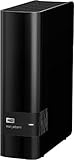
Western Digital Easystore 14TB External USB 3.0 Hard Drive
The 14 TB Easystore is a desktop-class drive that targets the same buyer as the SanDisk G-Drive but at roughly half the price. It is noticeably larger and heavier than the portable 5 TB and 4 TB models because it houses a 3.5-inch HDD with its own power adapter. Owners report strong value per terabyte and reliable long-term operation for media archives, though the drive does generate audible coil whine during seeks. Formatting follows the same NTFS-to-exFAT route for cross-platform use; the process is identical to how to format an external hard drive on any smaller Easystore.
- Pro: Lowest per-terabyte cost among the desktop-class drives listed here.
- Pro: USB 3.0 with a dedicated power adapter means no bandwidth or power throttling from the host port.
- Con: Requires a wall outlet and sits on a shelf rather than fitting in a laptop bag.
Skip this if you need a drive you can carry between machines; it is strictly a stationary archive unit.
Western Digital WD Easystore 4TB External USB 3.0 Portable Hard Drive
Sitting between the 2 TB and 5 TB models in both price and capacity, the 4 TB Easystore is a pragmatic choice for capture-card overflow. Streamers who dump multi-hour recordings each week will find that 4 TB holds a full week of high-bitrate files without requiring the desktop form factor of the 14 TB unit. It ships NTFS-formatted and behaves identically to its siblings when you need to reformat for Mac or Linux compatibility.
- Pro: Compact enough for a laptop bag while doubling the usable space of the 2 TB model.
- Pro: Price per terabyte is competitive with the 5 TB unit, making the capacity gap feel smaller in dollar terms.
- Con: USB 3.0 ceiling limits write throughput compared to the SanDisk’s 10 Gbps interface.
Skip this if you routinely transfer single files above 50 GB and want the shortest possible copy time.
Buying Guide
File System and Out-of-Box Formatting
Most external hard drives ship pre-formatted to NTFS for Windows or a Mac-specific scheme. NTFS cannot be natively written to by macOS without third-party software, so if you work across both platforms you will need to know how to format an external hard drive to exFAT, a file system readable and writable by Windows, macOS, and most Linux distributions. The trade-off is that exFAT has a 127-character filename limit and no journaling, so a mid-write power loss can corrupt the file table more severely than NTFS or APFS. Decide your target OS before you buy, not after.
Interface Speed and Real-World Throughput
USB 3.0 caps at 5 Gbps while USB 3.2 Gen 2 pushes 10 Gbps. For a spinning HDD, neither interface is the bottleneck because a 2.5-inch 5400 RPM drive typically tops out at 110-140 MB/s sequential reads regardless of the connector. The interface speed does matter for the SanDisk G-Drive because its 7200 RPM spindle and larger 3.5-inch platters sustain higher transfer rates that a 5 Gbps link could eventually constrain. When shopping on a spec sheet, ignore the USB version on portable 5400 RPM drives and focus on capacity, price, and form factor instead.
Portability, Power Requirements, and Physical Durability
A bus-powered 2.5-inch drive like the WD Easystore 5TB or the Elements SE needs only one USB cable and no wall outlet. A desktop 3.5-inch drive like the 14TB Easystore or the SanDisk requires its own power adapter, making it impractical for travel but beneficial for thermal management during extended write sessions. If you plan to format the drive and then transport it to a LAN party or a client site, buy a portable model. If it will sit next to your tower and never move, the desktop class gives you more capacity per dollar.
Our Verdict
The WD Easystore 5TB is the top pick for most gamers. It balances capacity, portability, and price in a way that covers a large game library plus recent recordings without forcing you into a desktop-class enclosure. For budget buyers, the WD Easystore 2TB at $109 is the clear value leader for a first external drive or a quick backup solution. The SanDisk G-Drive 26TB wins only if you are a full-time content creator who needs one massive, fast, Mac-native volume and has the desk space and budget to justify it.
FAQ
Does formatting erase everything on the drive?
Yes. A quick format deletes the file system index, making all stored data inaccessible, and a full format additionally scans and writes to every sector. Back up anything important before you begin.
Which file system should I choose for a gaming drive?
Use NTFS if you are exclusively on Windows and want journaling plus long filename support. Choose exFAT if the drive moves between a PC and a Mac, accepting the lack of journaling as the trade-off.
Can I format an external drive on a console?
PlayStation and Xbox consoles format connected drives to their own proprietary file systems, which means a drive formatted on a console cannot be read by a PC without reformatting. Always format on the device you intend to use most often.
How long does formatting take?
A quick format completes in seconds regardless of capacity. A full format on a large drive like the 14TB Easystore can take several hours because it writes to every sector sequentially.