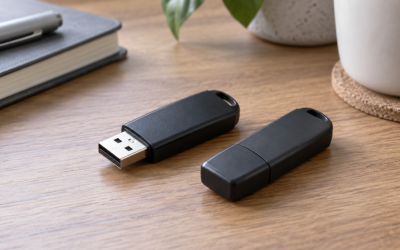
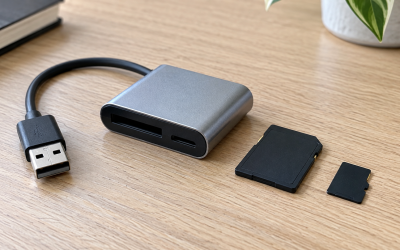
A gamer building a library that spans multiple consoles and a PC needs a reliable way to move save files, recordings, and large game installations without choking an internal drive. An external USB drive solves that problem, but the category is flooded with options that range from solid mainstream units to cheap replacements that fail within months. The difference between those two extremes is usually a combination of drive reputation, real capacity delivered after formatting overhead, and how well the enclosure handles repeated plug-and-unplug cycles.
We compared published specifications, current pricing, and aggregated owner feedback across eight drives in this roundup. The goal is straightforward: identify which external USB drive makes sense for a specific budget and use case, flag the ones that look attractive on paper but carry known reliability concerns, and help a buyer narrow eight choices down to one without wading through marketing fluff.
As an Amazon Associate we earn from qualifying purchases at no extra cost to you. Product prices and availability are accurate as of the date shown and are subject to change.




Top 3 picks at a glance
Quick Picks
| Product | Best for | Price |
|---|---|---|
| Seagate 2TB Portable | Balanced capacity and brand trust | $129.99 |
| UnionSine 500GB Ultra Slim | Ultra-budget single-console backup | $37.46 |
| YOTUO 500GB | Cheapest USB-C compatible option | $34.99 |
| WD 6TB Elements Portable | Max capacity for a PS5 or Xbox Series X library | $258 |
| Seagate Portable 5TB | Large-scale game archive on PC | $219.96 |
| Kosbees 500 GB | Temporary transfer or throwaway backup | $35.99 |
| Seagate Portable 1TB | Console owners who want a known brand at moderate size | $119.80 |
| WD 5TB Elements Portable | Windows-first users wanting a big WD drive | $214.10 |
How We Picked
Three criteria drove these selections. First, brand accountability: drives from manufacturers with established firmware and recovery programs (Seagate, WD) carry fewer unresolved owner complaints than white-label units. Second, price-per-gigabyte: for buyers storing large game files, the difference between $35 and $130 matters when you need multiple drives. Third, cross-platform compatibility: drives that work across PC, Mac, PS4, and Xbox One without reformatting give the most flexibility for a household with multiple devices.
The 8 Best External USB Drive in 2026
Seagate 2TB Portable Hard Drive
This is the default recommendation for a gamer who wants a no-decision drive at a reasonable midpoint. Two terabytes fits a substantial library without breaking the budget ceiling.
- Pro: USB 3.0 interface is universally compatible with every current console and PC without adapters.
- Pro: Seagate’s Rescue Data Recovery Service adds a layer of safety that budget brands cannot match.
- Con: USB 3.0 tops out at 5 Gbps, so moving multi-hundred-gigabyte files is noticeably slower than USB 3.2 Gen 1 drives in this list.
Skip this if your primary use is streaming games directly from the drive to a PS5, where the interface ceiling becomes a real bottleneck.
UnionSine 500GB Ultra Slim Portable External Hard Drive
At under $38, this is the lowest-cost path to any portable storage at all. Owners praise the slim form factor for travel, but long-term reliability feedback is thin compared to the branded options here.
- Pro: Price is roughly a quarter of the Seagate 2TB while still delivering a usable half-terabyte.
- Pro: USB 3.0 keeps transfer speeds functional for occasional backups rather than daily streaming.
- Con: No published recovery service or multi-year warranty comparable to Seagate or WD.
Skip this if the data stored is anything you cannot afford to lose permanently. Treat it as disposable convenience.
YOTUO 500GB External Hard Drive
This unit is the cheapest drive on the list and the only one in this price tier offering a USB-C connector alongside USB 3.0. That dual-port design matters for anyone pairing the drive with a laptop that has dropped full-size USB-A ports entirely.
- Pro: USB-C and USB 3.0 compatibility out of the box, broad device support including smartphones.
- Pro: Lowest absolute price in this roundup at just under $35.
- Con: Owners report inconsistent build quality between units, with some enclosures developing loose ports within months.
Skip this if you need a drive that survives being carried in a backpack every day for more than a year.
WD 6TB Elements Portable External Hard Drive
The capacity king in this group. Six terabytes absorbs an entire multi-console library and then some, and the USB 3.2 Gen 1 interface keeps write speeds competitive for game installs.
- Pro: Highest raw capacity in this roundup by a wide margin over the next tier.
- Pro: USB 3.2 Gen 1 is backward compatible and forward-leaning enough to stay relevant on new hardware.
- Con: $258 is the highest sticker price here, putting it out of reach for casual buyers.
Skip this if you need portability as the primary concern; a 6TB drive is the heaviest in this group by design.
Seagate Portable 5TB External Hard Drive
Sits between the WD 6TB and the smaller drives as a high-capacity option with brand support. The Rescue Data Recovery Service is included for one year, which addresses the biggest anxiety around large single-drive archives.
- Pro: Five terabytes gives serious headroom for 4K game captures and large PC libraries.
- Pro: Included recovery service and wide OS compatibility from a mainstream brand.
- Con: Price is close to the WD 6TB, which offers more space for a similar outlay.
Skip this if raw capacity is the only metric that matters; the WD 6TB delivers more gigabytes per dollar.
Kosbees 500 GB External Hard Drive
Another ultra-budget entry with a USB 3.0 interface and plug-and-play simplicity. It shares the same price neighborhood as the UnionSine and YOTUO, and owner reviews cluster around the same mixed sentiment: works on day one, uncertain after a year.
- Pro: Functions without drivers on Windows, macOS, PS4, and Xbox One simultaneously.
- Pro: Among the lowest prices in this roundup for any drive that ships with a cable.
- Con: No published warranty tier that matches anything from Seagate or WD.
Skip this if you value long-term support over initial savings.
Seagate Portable 1TB External Hard Drive
The volume seller for console gamers who want a trusted name at a manageable size. One terabyte handles a dozen or more modern AAA installs or a full PS4 library without anxiety about running out mid-session.
- Pro: Seagate brand reputation and one-year Rescue Service provide peace of mind absent from budget rivals.
- Pro: Mid-range price point undercuts the 2TB by a full $10 while keeping identical support features.
- Con: USB 3.0 interface limits sustained transfer rates for anyone moving multi-gigabyte files regularly.
Skip this if you already own multiple drives and need a single high-capacity replacement; the 2TB or 5TB versions make more sense.
Western Digital WD 5TB Elements Portable External Hard Drive
A Windows-first drive with USB 3.2 Gen 1 speeds and plug-and-play setup. Owners on forums frequently note the quiet operation during idle periods, which matters for desk-bound PC gaming setups where noise adds up.
- Pro: USB 3.2 Gen 1 offers faster sustained writes than the USB 3.0 drives in this list.
- Pro: WD’s established support network handles warranty claims reliably in owner reports.
- Con: Formatted for Windows out of the box, requiring reformatting for Mac users who want Time Machine compatibility.
Skip this if your setup is Mac-primary and you want plug-and-play without any reformatting step.
Buying Guide
Interface Generation Determines Real-World Speed
USB 3.0 caps theoretical bandwidth at 5 Gbps, while USB 3.2 Gen 1 pushes to 10 Gbps. For game installs measured in tens of gigabytes, that gap translates to several extra minutes per file transfer. If you move large files daily, prioritize a USB 3.2 Gen 1 or faster drive. For occasional backups, USB 3.0 remains adequate.
Capacity Should Account for Formatting Overhead
A drive labeled 5 TB will show roughly 4.5 TB of usable space after the file system formats it. Buyers planning to archive full game libraries should add a 10-15 percent buffer above their current total to avoid running out at the worst moment.
Warranty and Recovery Services Separate Brands
White-label drives often ship with minimal or unclear warranty terms. Seagate includes a one-year Rescue Data Recovery Service on select models, and WD provides its own limited warranty coverage. For any drive holding data you cannot easily re-download, this support layer is worth a price premium.
Our Verdict
Top pick: The Seagate 2TB Portable Hard Drive balances capacity, brand support, and price better than anything else on this list. It handles console and PC use equally well and carries a recovery service that reduces the risk of data loss.
Budget pick: The YOTUO 500GB External Hard Drive is the cheapest drive here and the only one under $35 with USB-C support. Accept the trade-off in long-term reliability.
Condition another wins: If you store game captures in 4K and move terabytes every week, the WD 5TB Elements Portable with its USB 3.2 Gen 1 interface will outperform every USB 3.0 drive in this group on sustained transfer speed.
FAQ
Can I use these drives on PS5?
PS5 supports USB 3.0 and faster external drives for storing and playing backward-compatible PS4 games. Native PS5 games require the internal SSD or an approved M.2 expansion drive, so a USB external unit works only for the PS4 library.
Do I need to format these drives before first use?
Most ship with a file system compatible with Windows. macOS users and anyone wanting Time Machine support will need to reformat the drive to APFS or Mac Extended. PS4 and Xbox One typically accept the factory format without changes.
Is a 500GB drive still worth buying?
For a single secondary console or as a quick-transfer tool between two PCs, yes. For a main game library on a modern system, 500GB fills quickly and the $30-40 saved is not worth the frustration of running out within months.
What causes external drives to fail?
Physical shock is the leading cause of failure in portable mechanical drives, followed by repeated unplugging without safe-eject and firmware bugs from low-cost controllers. Keeping the drive stationary during transfers and ejecting properly extends lifespan significantly.