Finding a reliable storage solution that won’t break the bank can feel like navigating a minefield of confusing marketing terms, exaggerated speeds, and questionable brand names. Whether you need a portable drive to shuttle game clips between rigs, store essential utility software, or back up important documents, the sub-twenty-dollar market offers plenty of viable choices if you know what to look for. Navigating this category requires looking past flashy packaging to focus on real-world performance metrics, build quality, and interface standards that align with modern computing needs.
In 2026, the baseline expectations for budget flash storage have shifted significantly, making slow, legacy drives obsolete even at the lowest price points. Manufacturers frequently cut corners on controller chips and NAND flash memory types to hit aggressive retail price targets, which can result in frustratingly slow write speeds and premature hardware failure. This guide breaks down the core specifications, physical attributes, and performance benchmarks that actually matter when selecting a cost-effective thumb drive, ensuring your hard-earned money goes toward hardware that performs reliably.
As an Amazon Associate we earn from qualifying purchases at no extra cost to you. Product prices and availability are accurate as of the date shown and are subject to change.

Understanding USB Standards and Interface Speeds
The single most important factor determining how fast your flash drive will transfer data is the underlying USB interface specification. When shopping in the budget tier, you will encounter a mix of older USB 2.0 drives and modern USB 3.2 Gen 1 or Gen 2 options. Always prioritize drives explicitly rated for USB 3.0 speeds or higher, typically designated by blue plastic inserts inside the connector or official SuperSpeed branding. USB 2.0 technology maxes out at painfully slow transfer rates that make moving large game installations or high-resolution video files an exercise in patience. Ensuring your drive matches the port capabilities of your motherboard guarantees you eliminate unnecessary hardware bottlenecks right out of the gate.
Read Speeds Versus Write Speeds
Manufacturers love to plaster eye-catching read speeds on the front of packaging, often highlighting numbers like “up to 400MB/s.” However, experienced PC users know that write speeds are the true metric of a drive’s day-to-day usability. While read speed dictates how fast you can open a file or launch a portable application, write speed determines how long you will stare at a progress bar when copying data onto the drive. Budget flash drives often feature a massive disparity between these two metrics, maintaining high read capabilities while plummeting to single-digit megabyte-per-second write speeds after an initial cache buffer fills up. Always research independent user benchmarks or look for sequential write specifications before purchasing.
Physical Form Factor and Clearance Issues
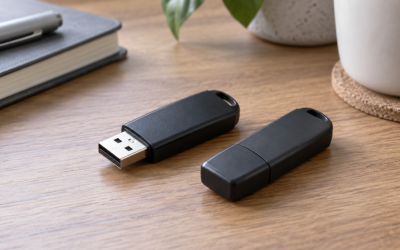
The physical dimensions of a USB flash drive play a surprisingly critical role in your overall user experience, particularly if you are plugging it into dense I/O shields on the back of a gaming desktop or crowded laptop ports. Oversized rubberized housings or bulky decorative casings frequently block adjacent USB ports, forcing you to unplug nearby peripherals just to fit your thumb drive. Conversely, ultra-miniature drives are easy to lose and can be notoriously difficult to grip when removing them from tight motherboard ports. Look for a balanced form factor with a retractable connector or a secure cap-less design that protects the USB interface without creating clearance headaches.
Material Durability and Heat Dissipation
Flash memory generates thermal energy during sustained read and write operations, and budget drives lack the advanced cooling solutions found in portable solid-state drives. Plastic casings trap this heat inside, leading to thermal throttling where the drive drastically reduces its transfer speeds to prevent hardware damage during long file transfers. Opting for a drive constructed from brushed aluminum or zinc alloy not only provides superior physical protection against drops and being crushed in a backpack, but it also acts as a passive heatsink to dissipate thermal buildup. Investing a few extra cents of manufacturing cost into a metal chassis significantly improves long-term reliability and sustained performance.
Storage Capacity Sweet Spots
Storage density economics change rapidly, and the ideal capacity tier for drives under twenty dollars has evolved. While you can easily find 32GB or even smaller drives at rock-bottom prices, they rarely offer good value per gigabyte and fill up instantly with modern game updates or media libraries. The current sweet spot for budget-friendly flash storage sits firmly at 64GB and 128GB capacities. These tiers provide ample breathing room for operating system installation media, diagnostic tools, and everyday file transfers without requiring you to constantly prune old data. Avoid obscure ultra-high-capacity budget drives from unknown storefront sellers, as these are frequently counterfeit units with falsified firmware designed to corrupt your data once real capacity limits are reached.
Security Features and Hardware Encryption
Data privacy is a major concern, even when dealing with inexpensive portable storage used for casual tasks. While hardware-based encryption and fingerprint scanners are typically reserved for premium enterprise drives, some budget manufacturers include software-based password protection suites. When evaluating these features, consider whether you actually need encrypted partitions or if cross-platform compatibility is more important. Proprietary security software can sometimes lock you out of your files if the application fails to run on newer operating system updates. For most users, managing your own encrypted file containers via open-source utilities offers better flexibility than relying on bundled vendor software.
Related Guides
To round out your storage setup and find the best deals currently available, explore our comprehensive expert roundups including the Best USB Flash Drives under 20 for top-tested recommendations, and our guide on the Best Nas Drives for Home if you are looking to expand your permanent network storage capabilities beyond portable flash media.
FAQ
Are expensive USB flash drives always faster than budget options?
Not necessarily, though higher-priced drives generally use better NAND flash memory and more capable controller chips that sustain consistent speeds. Some budget drives punch above their weight class by utilizing older generation high-tier components, while expensive drives can sometimes be overpriced due to brand recognition alone. Always check verified performance reviews rather than relying purely on price tags.
Why does my flash drive slow down during large file transfers?
Most budget flash drives utilize a small high-speed storage cache to absorb incoming data quickly and make the drive feel fast during short bursts. Once this temporary cache fills up, the drive is forced to write directly to slower underlying memory cells, causing transfer speeds to plummet drastically. This behavior is a normal physical limitation of inexpensive flash memory controllers.
Can I use a budget USB flash drive to play PC games directly?
While technically possible, running modern video games directly off a cheap flash drive will result in severe stuttering, long loading times, and asset pop-in issues due to slow random read speeds. Flash drives are engineered for sequential file transfers rather than the intense random input-output operations required by modern gaming engines. It is always best to copy games to an internal SSD or a portable NVMe drive for gaming.
How can I prevent my USB flash drive from corrupting data?
Data corruption usually happens when a drive is unplugged while the operating system is still writing data in the background cache. Always use the “Safely Remove Hardware” or “Eject” command in your operating system before physically pulling the drive out of the port. Additionally, avoid cheap unbranded drives from sketchy online marketplaces, as faulty counterfeit memory controllers are a primary cause of unexpected data loss.