Professional workflows in video editing and 3D rendering demand massive computational power, moving far beyond what standard consumer hardware can handle. Whether you are rendering complex cinematic scenes or scrubbing through raw high-resolution timeline footage, your hardware dictates your daily productivity and your ability to meet tight client deadlines without system crashes.
Navigating the high-end hardware market can feel overwhelming, especially with the advanced architectural shifts seen in 2026. This decision guide cuts through the marketing noise to help you understand what actually matters when investing in a high-performance system, ensuring your investment accelerates your creative output rather than introducing unexpected bottlenecks.
As an Amazon Associate we earn from qualifying purchases at no extra cost to you. Product prices and availability are accurate as of the date shown and are subject to change.

Understanding CPU Architecture: Cores versus Clock Speed
The central processing unit serves as the brain of your workstation, but choosing the right one requires balancing core counts against single-core clock speeds. Video editing software relies heavily on high clock speeds for timeline responsiveness, effects processing, and exporting timelines efficiently. Conversely, 3D rendering software scales exceptionally well with high core counts, utilizing every available thread to calculate complex lighting, textures, and geometry.
When configuring a professional machine, look for multi-core processors that offer a high baseline clock speed alongside robust boost capabilities. Avoid entry-level consumer chips if your primary workload involves heavy particle simulations or simultaneous multi-cam editing, as these tasks will quickly overwhelm lower-tier processors and stall your production pipeline.
GPU Selection: Prioritizing VRAM and Compute Engines
While the CPU handles overarching project logic, the graphics processing unit does the heavy lifting for modern GPU-accelerated renderers and real-time viewport manipulation. When evaluating workstation GPUs, video memory capacity is often more important than raw processing units alone. Editing 4K and 8K footage, combined with heavy color grading and complex compositions, consumes enormous amounts of VRAM. Similarly, dense 3D scenes packed with high-resolution textures will immediately crash if your graphics card runs out of onboard memory.
Ensure you select a card that supports modern hardware-accelerated ray tracing and deep learning features. Having ample VRAM headroom ensures you can load massive assets directly onto the GPU without swapping data to system memory, which drastically reduces render times and preview lag.
System Memory: Capacity and Bandwidth Requirements
RAM capacity is another critical factor that separates consumer rigs from true professional workstations. While basic memory capacities are sufficient for casual gaming, professional video editors and 3D artists frequently work with assets that demand 64GB, 128GB, or even more. If you are caching heavy visual effects compositions, working with uncompressed audio, or managing dense polygon counts in CAD and 3D suites, running low on RAM will cause severe system stuttering and data corruption risks.
Pay attention to memory channel architecture as well. Multi-channel memory configurations provide significantly higher data bandwidth, allowing your CPU to feed data to and from the RAM much faster. Always purchase matched memory kits from reputable manufacturers to guarantee stability during prolonged rendering sessions that can last for hours or days.
Storage Architecture: Fast NVMe and Dedicated Scratch Disks
Storage speed directly impacts how quickly you can import, scrub, and export large media files. Traditional hard drives are completely obsolete for professional creative work, and even standard solid-state drives fall short of the demands imposed by modern video production. You should build your workstation around multiple high-speed NVMe solid-state drives configured strategically across your motherboard.
A best practice is to separate your operating system and applications from your active project files and cache drives. Dedicating a fast NVMe drive specifically as a scratch disk for video editing software prevents read and write bottlenecks. Furthermore, look for motherboards that support the latest interface standards to ensure your transfer speeds keep pace with your evolving project sizes.
Power Supply Stability and Thermal Headroom
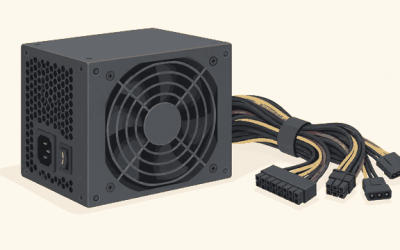
One of the most common mistakes professionals make is skimping on the power supply unit and cooling solutions. Premium workstation hardware draws massive amounts of electrical current under full load, generating substantial heat. A low-quality power supply can lead to sudden system shutdowns during a critical render, potentially corrupting project files and wasting days of computation time.
Invest in an adequately rated power supply with high energy efficiency certifications, leaving plenty of headroom above your calculated peak system draw. Coupled with this, advanced cooling solutions—such as robust liquid cooling loops or high-capacity dual-tower air coolers—are mandatory. Keeping your components cool ensures they can maintain maximum boost clocks during extended rendering tasks without throttling performance.
Avoiding Common Buying Mistakes and Overspending
It is easy to fall into the trap of buying the most expensive hardware available across the board, but targeted spending yields better practical results. Avoid wasting budget on flashy aesthetic upgrades like excessive RGB lighting or overpriced specialty chassis when that money could be better allocated toward higher-tier components like extra VRAM or faster storage interfaces.
Evaluate your specific software stack before finalizing your build. If you primarily edit video, invest more heavily in single-core CPU speeds and fast scratch storage. If you focus primarily on 3D rendering and architectural visualization, prioritize multi-core performance and high-end graphics hardware. Matching your hardware profile to your actual daily tasks prevents unnecessary expenses.
Related Guides
To explore specific pre-built configurations designed to handle heavy creative workloads, read our curated guide on the Best Premium Workstation Pcs for Professional Video Editing and 3d Rendering to compare top-tier options currently available on the market.
FAQ
How much RAM do I actually need for professional 3D rendering?
While 64GB is the baseline recommendation for handling moderately complex scenes, heavy architectural visualization and particle simulations often require 128GB or more. Insufficient RAM forces your system to use slower storage drives as virtual memory, which severely degrades rendering performance.
Is a gaming PC suitable for professional video editing?
High-end gaming PCs share components with workstations, but they are typically optimized for frame rates rather than sustained multi-threaded stability and large memory capacities. Professional workflows require enterprise-grade stability and specialized drivers that standard gaming setups generally lack.
Why is VRAM capacity important for video editing and 3D rendering?
VRAM holds the textures, effects, and active frames that your GPU processes in real time. If a project exceeds your available VRAM, the application must offload data to the system RAM or storage, causing catastrophic performance drops and potential render failures.
Should I choose liquid cooling or air cooling for a workstation PC?
Both options can be effective, but high-end liquid cooling generally manages sustained multi-hour thermal loads more efficiently on power-hungry processors. However, top-tier air coolers offer exceptional reliability with fewer failure points, making them a safer choice for unattended overnight rendering sessions.