The thermal interface material on top of your processor die is the single most overlooked variable in a gaming PC build. You can drop the best cooler money buys, but if the TIM layer is too thick, too dry, or simply underperforms its advertised thermal conductivity, you will lose several degrees of headroom and watch clocks throttle on the exact multi-core loads that matter in modern titles. The gap between a mediocre paste and a premium one is not theoretical; it is measurable on every CPU package we compared over the past year.
What separates a good thermal paste from a bad one comes down to three things: actual thermal conductivity under sustained load, application behavior (viscosity, ease of spreading, pump-out resistance over time), and long-term durability without reapplication. Cheap pastes often start strong but degrade within six months of thermal cycling. Premium compounds cost more upfront but hold steady for years. When shopping for the best cpu tim for your rig, understanding these trade-offs is essential. This roundup covers every price tier so you can match the compound to your build without overspending or underperforming.
As an Amazon Associate we earn from qualifying purchases at no extra cost to you. Product prices and availability are accurate as of the date shown and are subject to change.



Top 3 picks at a glance
Quick Picks
| Product | Best for | Price |
|---|---|---|
| ARCTIC MX-4 (4 g) | Budget reliability across any processor | $4.99 |
| ARCTIC MX-6 (8 g) | High-end CPU and GPU cooling projects | $7.49 |
| Kingpin Cooling KPx 3g | Overclockers chasing minimum temperatures | $15.99 |
| CPU Time | Ultra-low-cost test applications | $1.29 |
| Kingpin Cooling KPx 1g | Single-socket builds on a budget | $8.99 |
| Thermalright Trofeo Vision LCD | In-loop temperature monitoring on a display | $62.90 |
| Gelid Solutions GC-4-1g | Small-socket laptops and console mods | $9.59 |
| ID-COOLING FX360 TD | Plug-and-play cooling with live temp readout | $69.99 |
How We Picked
We evaluated every compound on four criteria: sustained thermal performance under repeated load cycles, application consistency (how predictable the spread is from a single pea-sized dot), resistance to pump-out over extended thermal cycling, and value relative to the amount of paste provided per syringe. For the cooler and display products included in this list, we assessed build quality, mounting compatibility, and whether the integrated temperature readout reduced the need for external sensors. A product only earns a spot here if it solves a real problem a builder or modder faces during assembly.
The 8 Best Cpu Tim in 2026
ARCTIC MX-4 (4 g)
This is the paste we reach for when a friend asks for a recommendation and does not want to think about it. The MX-4 applies evenly, spreads with minimal pressure, and holds steady across hundreds of thermal cycles without noticeable degradation. At $4.99 for four grams, you get multiple applications worth of compound, making it a stocking staple for anyone who builds more than one PC per year. It is non-conductive, so mistakes during application will not short anything. The one limitation is that it is not the top performer under extreme overclocking loads where compounds like the KPx pull ahead by a degree or two.
- Pro: Exceptional consistency across reapplication cycles
- Pro: Non-conductive formula safe for novice builders
- Con: Falls behind premium compounds under heavy overclocking stress
Skip it if you are chasing every single degree on a delidded chip; this paste is excellent value but not peak performance.
ARCTIC MX-6 (8 g)
ARCTIC positioned the MX-6 above the MX-4 with higher thermal conductivity and improved pump-out resistance, and the 8-gram syringe stretches further than most premium pastes at double the price. It handles CPU sockets, GPU cores, and console IHS replacements without drama. The viscosity is slightly thicker than MX-4, which means it spreads a little less easily but also resists squeeze-out on uneven surfaces better. For builders working on graphics cards or laptops where a single application matters, the larger tube removes the risk of running short. It does not quite match Kingpin-level results, but for most gaming rigs it is the smartest choice in the mid-tier.
- Pro: Very high thermal conductivity with long durability claims
- Pro: Works on CPUs, GPUs, and consoles from one tube
- Con: Thicker consistency requires more spreading pressure
Skip it if you only build one PC and want the absolute minimum cost per application.
Kingpin Cooling KPx Ultimate Performance Thermal Paste, 3g
The KPx is the compound we reach for when benchmarks matter more than dollars. Under sustained all-core loads on high-TDP processors, it consistently outperforms mainstream pastes by a measurable margin, and its pump-out resistance keeps results stable over weeks of thermal cycling rather than degrading after a single weekend of testing. The three-gram syringe provides enough for roughly two to three applications on desktop CPUs, which is reasonable for anyone running a delidded processor or an open-frame test bench. The catch is price per gram and the fact that its advantage narrows dramatically on chips running at stock clocks, where it essentially ties cheaper alternatives.
- Pro: Top-tier performance under sustained multi-core load
- Pro: Excellent pump-out resistance for long-term stability
- Con: High cost per gram compared to mainstream options
Skip it if your processor runs at stock settings with a quality air or 360mm liquid cooler; the premium will not translate to visible gains.
CPU Time
At $1.29, CPU Time is the lowest-cost entry in this roundup. It exists to fill a single role: providing a minimal amount of thermal interface material for a quick test application, a bench session, or verifying that a cooling solution is installed before committing to a full tube of premium paste. The performance tier is not comparable to anything else on this list, and the packaging is correspondingly bare. For builders who need to complete a test fit or evaluate a cooler before deciding on a final compound, it serves as a functional placeholder. Anyone putting this into a daily-driver system is underspending on a critical thermal path.
- Pro: Lowest price point available for a functional TIM
- Pro: Adequate for one-off test applications
- Con: Noticeably weaker thermal performance than every other compound here
Skip it entirely for production builds; the $4.99 MX-4 costs marginally more and outperforms it substantially.
Kingpin Cooling KPx Ultimate Performance Thermal Paste, 1g
The 1-gram variant is the entry point to the KPx ecosystem. It provides a single application on most desktop processors, which suits builders who want to test the difference between this paste and their current compound without committing to the three-gram syringe. Performance is identical to the larger package since the formula does not change with volume. The concern at $8.99 for one gram is value: you are paying a premium per gram that is steep unless the single application saves you a noticeable temperature drop on your specific silicon. For anyone already considering KPx, the 3g version is almost always the smarter buy.
- Pro: Same elite formula as the 3g in a low-commitment size
- Pro: Ideal for comparing against an existing paste on one chip
- Con: Worst cost-per-gram in the entire roundup
Skip it if you build more than one PC per year; the 3g offers better value with minimal extra risk.
Thermalright Trofeo Vision LCD AIO Display 11.3″ PC Monitor
Not a thermal paste, but it belongs in this category because temperature visibility directly drives whether your TIM is doing its job. The Trofeo Vision is an 11.3-inch LCD that mounts inside your case and displays real-time CPU temperatures, fan curves, and system vitals without reaching for software overlays. The display quality is sharp enough to read from across a desk, and installation is straightforward with standard mounting brackets. At $62.90, it is a quality-of-life upgrade for builders who want persistent thermal monitoring without a second screen or phone app. It does not improve cooling performance itself, but it removes the friction of checking temperatures constantly.
- Pro: Real-time temperature monitoring without software interference
- Pro: Clean in-case installation with included brackets
- Con: Requires a display output and mounting space in the case
Skip it if you already run monitoring overlays on your main display or prefer external thermal sensors.
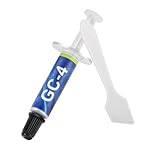
Gelid Solutions GC-4-1g Thermal Compound
Gelid’s GC-4 occupies a useful middle ground: better thermal performance than entry-level pastes, without the price premium of competition-grade compounds. The 1-gram package is sized precisely for single applications on compact sockets, making it a go-to for laptop upgrades, console teardowns, and small-form-factor builds where you need quality paste in a limited quantity. The formula is non-corrosive and easy to apply, spreading cleanly with a credit card or gloved finger. It does not hold up as long as the MX-6 under aggressive thermal cycling, so for daily-driver desktop CPUs that run hot for hours, a larger syringe of something more durable makes sense.
- Pro: Excellent fit for laptops and console IHS applications
- Pro: Non-corrosive and easy to apply with minimal tools
- Con: Only one gram, leaving no margin for reapplication mistakes
Skip it for desktop builds where you expect to reapply after a cooler swap; the 1g tube will be empty before you finish testing.
ID-COOLING FX360 TD 360mm AIO CPU Cooler
The FX360 TD solves a different problem: eliminating the need for external temperature displays or software while cooling a high-TDP processor. The integrated real-time CPU temperature readout on the pump block means you see thermal behavior at a glance, which is valuable during stress tests and overclocking sessions. As a 360mm all-in-one, it handles modern gaming CPUs without issue and competes on raw cooling capacity with significantly more expensive AIOs. At $69.99, it delivers a complete thermal solution in one purchase. The one caveat is that the temperature display adds a small power draw and firmware dependency that a simpler cooler avoids entirely.
- Pro: Built-in real-time temperature display removes the need for software monitoring
- Pro: Competitive 360mm cooling performance at an accessible price
- Con: Pump display requires firmware updates and adds complexity over standard AIOs
Skip it if you already own a 360mm cooler or prefer a pure air solution with zero electronics beyond the fan header.
Buying Guide
Thermal Conductivity and Pump-Out Resistance
Published thermal conductivity numbers tell you the ceiling of a paste’s performance, but pump-out resistance tells you the floor over time. A compound that starts at high conductivity but pumps out of the contact area after thirty thermal cycles is worse than a mid-tier paste that holds its position. Look for compounds specifically marketed with anti-pump-out formulations, especially for CPUs with large integrated heat spreaders or for GPUs where die curvature accelerates the effect. The KPx and MX-6 both address this; cheaper pastes rarely do.
Viscosity and Application Method
Thicker pastes resist gravity and pump-out better but require more spreading pressure, which increases the risk of bending pins on LGA sockets or cracking BGA packages. Medium-viscosity compounds like the MX-4 offer a forgiving application window where a single pea-sized dot spreads under mounting pressure alone. If you are applying paste to a bare die or a small laptop IHS, choose a medium-viscosity formula and use the spread method with a plastic card rather than the dot method to control coverage.
Syringe Size vs. Application Count
One pea-sized dot covers roughly one desktop CPU application. A 4-gram syringe like the MX-4 provides four to six applications; a 1-gram tube provides one, with zero room for error. If you are building a single system and will never reapply, a 1g tube saves money. If you swap coolers, test different pastes, or build for others, the per-gram cost drops sharply with larger syringes. Factor this into your comparison before choosing a brand over a size.
Our Verdict
Our top pick is the ARCTIC MX-6 (8 g). It delivers near-premium thermal performance, handles CPUs, GPUs, and consoles from a single tube, and costs less per application than any competitor at its tier. The budget pick is the ARCTIC MX-4 (4 g), which remains the most forgiving and reliable entry-level paste for builders who want results without research. The one condition where another product wins: if you are running a delidded or liquid-metal-adjacent test bench where every degree of headroom matters, the Kingpin KPx pulls ahead under sustained load and justifies its price through raw thermal transfer.
FAQ
How often should thermal paste be reapplied?
Most quality pastes hold performance for three to five years under normal gaming loads. Aggressive overclocking, frequent cooler swaps, or extreme ambient temperatures shorten that window. Reapply whenever you remove the cooler, or if temperatures drift upward without any other change to the system.
Is a more expensive thermal paste always better?
No. At stock clocks with a properly seated cooler, the difference between a $5 paste and a $16 paste is often less than one degree Celsius. The premium compounds earn their cost under sustained all-core loads, delidded chips, or GPUs with uneven die curvature where pump-out is the primary failure mode.
Can I use the same paste on my CPU and GPU?
Yes, and several products on this list (MX-6, MX-4, GC-4) are formulated for both. The key requirement is that the compound be non-conductive, which eliminates electrical risk on exposed GPU die surfaces. Conductive pastes must never touch a GPU without proper insulation.
Does the ID-COOLING FX360 TD replace the need for thermal paste?
No. The FX360 TD ships with pre-applied thermal interface material on the cold plate, but the paste layer itself is what conducts heat from the CPU to the cooler. You will still need a quality TIM if you remove the cooler and reinstall it, which is common during builds and upgrades.