The iBUYPOWER Y40 with the Ryzen 7 9800X3D and RTX 5070 12GB at $2,198 is the standout value in the brand’s current lineup because it pairs a gaming-optimized 3D V-Cache CPU with a strong mid-high GPU tier at a price that undercuts comparable Alienware and MSI configurations by hundreds of dollars. iBUYPOWER built its reputation on aggressive entry-tier pricing, and that DNA still shows even as the brand has expanded into premium territory with builds like the $3,999.99 Y70TI.
Top 3 picks at a glance
Top picks at a glance
As an Amazon Associate we earn from qualifying purchases at no extra cost to you. Product prices and availability are accurate as of the date shown and are subject to change.


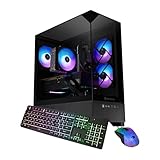

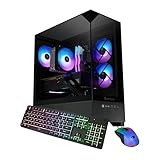

| Model | Key spec | Price | Best for |
|---|---|---|---|
| Element SE (Ryzen 5 5500) | Ryzen 5 5500, RX 6500XT 4GB, 16GB DDR4 | $849.99 | Absolute entry esports |
| Element SE (Ryzen 5 8400F) | Ryzen 5 8400F, RTX 3050 6GB, 16GB DDR5 | $999.99 | Budget current-gen platform |
| Scale (i5-14400F) | Intel i5-14400F, RTX 4060 8GB, 16GB DDR5 | $1,199.99 | Intel value pick |
| Slate (Ryzen 7 9700F) | Ryzen 7 9700F, RX 9060 8GB, 16GB DDR5 | $1,299.99 | Latest-gen AMD platform |
| Element SE (Ryzen 7 8700F) | Ryzen 7 8700F, RTX 5060 Ti 8GB, 32GB RGB DDR5 | $1,599 | Best value per dollar |
| Element (i7-14700F) | Intel i7-14700F, RTX 5070 12GB, 32GB DDR5 | $2,199.99 | Intel high-end build |
| Y40 (Ryzen 9 9800X3D) | Ryzen 9 9800X3D, RTX 5070 12GB, 32GB DDR5 | $2,198 | Best all-around configuration |
| Y70TI (Ryzen 9 9900X3D) | Ryzen 9 9900X3D, RTX 5080 16GB, 32GB DDR5 | $3,999.99 | Premium flagship with signature case |
iBUYPOWER Element SE, Ryzen 5 5500 / RX 6500XT, $849.99
This is iBUYPOWER’s lowest-price current listing, built around an older AM4 Ryzen 5 5500 and an RX 6500XT with 4GB VRAM. Like similar entry builds from CyberPowerPC, the 4GB VRAM ceiling and narrow PCIe interface on this GPU tier limit it firmly to esports titles and older AAA games rather than current releases with demanding texture packs.
Estimated performance based on the RX 6500XT’s known class: 85-105 fps at 1080p medium in Valorant, CS2, and Rocket League, with noticeable texture streaming issues in newer titles that expect more VRAM headroom. 16GB of DDR4 RAM is specified, which is a genuine positive versus competitors that omit RAM details at this price tier.
The listing includes a gamer keyboard and mouse bundle, adding practical value for first-time buyers who don’t already own peripherals — a detail worth factoring into direct price comparisons against bare-system competitors from other brands.
PSU wattage isn’t specified, and given the RX 6500XT’s low power draw, a sub-500W unit is likely sufficient for this configuration as-is, but it leaves no meaningful headroom for a future GPU upgrade without a PSU swap.
- Pros
- Lowest price in iBUYPOWER’s current lineup
- 16GB RAM specified clearly
- Includes bundled keyboard and mouse
- Cons
- 4GB VRAM limits current AAA titles significantly
- Older AM4/DDR4 platform, less upgrade runway
- PSU wattage undisclosed
Who it’s for: strict esports-only buyers who want the lowest possible entry price with bundled peripherals included.
iBUYPOWER Element SE, Ryzen 5 8400F / RTX 3050 6GB, $999.99
This build steps up to AMD’s newer AM5 platform with a Ryzen 5 8400F, paired with an RTX 3050 6GB rather than the RX 6500XT above — a meaningfully better VRAM allocation for the same general price bracket. 32GB of DDR5 RAM is specified here, which is unusually generous capacity for a sub-$1,000 build.
Estimated performance: 60-75 fps at 1080p medium-high in most current esports and moderately-demanding AAA titles, based on the RTX 3050’s known 6GB-VRAM performance class. This is a step up from the 4GB RX 6500XT’s texture handling in the previous entry, though still not a 1440p-capable GPU tier.
The AM5 platform here is the real long-term advantage over the older AM4-based Element SE above — future CPU upgrades stay possible without a motherboard swap, extending this system’s practical service life meaningfully beyond its entry price point.
1TB NVMe SSD storage is specified, matching the brand’s general pattern of solid storage allocation even at entry price points. PSU wattage remains unlisted, consistent with most iBUYPOWER entries below the Scale tier.
- Pros
- 32GB DDR5 RAM at under $1,000 is unusually generous
- AM5 platform offers longer CPU upgrade runway
- 1TB NVMe SSD standard
- Cons
- RTX 3050 6GB caps 1440p ambitions
- PSU wattage undisclosed
- “SE” tier likely means non-RGB, budget case components
Who it’s for: budget buyers who want AM5’s upgrade path and 32GB RAM more than they need current-gen GPU performance.
iBUYPOWER Scale, Intel i5-14400F / RTX 4060 8GB, $1,199.99
The Scale line pairs Intel’s i5-14400F with a previous-generation RTX 4060 8GB, positioning it as iBUYPOWER’s value-focused Intel option. Choosing a one-generation-back GPU here keeps the price competitive against current-gen RTX 5060 builds from Skytech and CyberPowerPC while still delivering solid 1080p-to-1440p performance.
Estimated performance based on the RTX 4060’s known class: 80-95 fps at 1080p high, roughly 50-60 fps at 1440p medium in current titles — slightly behind an RTX 5060 in the same price bracket but close enough that the difference is unlikely to be noticeable outside of benchmark comparisons for most players.
16GB RGB DDR5 RAM is specified, adding aesthetic value alongside the functional RAM speed. The RGB designation here contrasts with the non-RGB DDR4 noted on the cheapest Element SE build, illustrating how iBUYPOWER varies lighting inclusion by tier rather than applying it uniformly.
1TB NVMe SSD storage rounds out a well-specified build for the price, though as with most iBUYPOWER listings below the Y-series flagships, PSU wattage isn’t disclosed in the product title.
- Pros
- Competitive price for a previous-gen but capable GPU tier
- 16GB RGB DDR5 RAM specified clearly
- 1TB NVMe SSD standard
- Cons
- RTX 4060 is one generation behind current RTX 5060 competitors
- PSU wattage undisclosed
- 8GB VRAM will limit some 1440p ultra texture settings
Who it’s for: Intel buyers prioritizing price over having the absolute newest GPU generation.
iBUYPOWER Slate, Ryzen 7 9700F / RX 9060 8GB, $1,299.99
The Slate build brings AMD’s newest Ryzen 7 9700F together with the RX 9060, a current-generation RDNA 4 GPU, making this the most architecturally modern build under $1,500 in iBUYPOWER’s lineup. Both CPU and GPU are current-generation parts rather than carryover components from previous years.
Estimated performance based on the RX 9060’s known class: 75-90 fps at 1440p high in most current titles, with AMD’s FSR upscaling providing a meaningful boost in supported games. RDNA 4’s driver maturity is newer than Nvidia’s equivalent RTX 5060 tier, worth noting for buyers who prioritize day-one driver stability over raw specs.
16GB of DDR5 RAM is specified, matching the mid-tier norm across this roundup, and the 1TB NVMe SSD keeps storage consistent with iBUYPOWER’s general pattern. As with most builds in this price bracket, PSU wattage isn’t disclosed.
Choosing an all-AMD platform (Ryzen CPU plus Radeon GPU) can simplify driver and software ecosystem management for some users, since AMD’s Adrenalin software handles both CPU and GPU tuning in one interface rather than mixing AMD and Nvidia utilities.
- Pros
- Fully current-generation CPU and GPU architecture
- Strong 1440p performance for the price
- Unified AMD software ecosystem
- Cons
- RDNA 4 driver maturity is newer than Nvidia’s equivalent tier
- PSU wattage undisclosed
- 8GB VRAM ceiling at 1440p ultra settings
Who it’s for: buyers who want the newest available AMD CPU and GPU architecture without paying flagship prices.
iBUYPOWER Element SE, Ryzen 7 8700F / RTX 5060Ti 8GB, $1,599
This is the strongest value configuration in iBUYPOWER’s current catalog: a Ryzen 7 8700F paired with a current-gen RTX 5060 Ti 8GB and 32GB of RGB DDR5 RAM, all clearly specified. Despite the “SE” designation usually signaling a value tier, this particular Element SE configuration punches well above its typical positioning.
Estimated performance based on the RTX 5060 Ti’s known class: 70-85 fps at 1440p high in most current titles, matching the performance range of similarly-equipped builds from Skytech and CyberPowerPC covered elsewhere in our brand roundups, but at a price that undercuts several of them.
32GB of RGB DDR5 at this price tier is genuinely generous — double the RAM capacity of several competing $1,500-ish builds from other brands, while still including the RGB aesthetic that some “SE” or value-tier builds skip entirely.
1TB NVMe SSD storage completes a well-rounded spec sheet. PSU wattage remains the one gap here, consistent with the brand-wide pattern across nearly every iBUYPOWER listing below the Y-series.
- Pros
- 32GB RGB DDR5 RAM at $1,599 is excellent value
- Current-gen RTX 5060 Ti performance
- Best price-to-spec ratio in this entire roundup
- Cons
- PSU wattage undisclosed despite the strong spec sheet elsewhere
- “SE” branding may suggest a cheaper case than the price warrants
- 8GB VRAM ceiling at demanding 1440p ultra settings
Who it’s for: value-focused buyers who want the single best spec-per-dollar build in iBUYPOWER’s entire current lineup.
iBUYPOWER Element, Intel i7-14700F / RTX 5070 12GB, $2,199.99
Stepping up to iBUYPOWER’s standard Element line (not the SE budget variant), this build pairs a twenty-thread i7-14700F with an RTX 5070 12GB and 32GB of DDR5 RAM. It’s positioned as the brand’s Intel-platform high-end option, competing directly with CyberPowerPC’s similarly-specced i9-14900KF build at a comparable price.
Estimated performance based on the RTX 5070’s 12GB VRAM and current architecture: 90-105 fps at 1440p ultra, with 4K playable at high settings or with upscaling enabled. The i7-14700F’s twenty threads provide strong headroom for streaming or content creation running alongside gaming sessions.
32GB DDR5 RAM and a 1TB NVMe SSD round out a well-specified build, though PSU wattage again isn’t disclosed at a price point where buyers reasonably expect full transparency — a pattern that holds across nearly all iBUYPOWER listings in this roundup regardless of price tier.
The move from Element SE to the standard Element line at this price typically brings improved case cooling and build finish, though iBUYPOWER’s listing doesn’t detail the specific case model, so buyers wanting to confirm cooling capacity should check product images or Q&A directly.
- Pros
- RTX 5070 12GB handles 1440p ultra and light 4K well
- 32GB DDR5 RAM and twenty-thread CPU support heavy multitasking
- Standard Element line typically improves case and cooling over SE variants
- Cons
- PSU wattage still undisclosed at over $2,000
- Case cooling details not specified beyond the line name
- Priced similarly to AMD alternatives with potentially better upgrade runway
Who it’s for: Intel buyers who want RTX 5070-tier performance with strong multitasking headroom from the i7-14700F.
iBUYPOWER Y40, Ryzen 9 9800X3D / RTX 5070 12GB, $2,198
The Y40 pairs AMD’s gaming-optimized Ryzen 9 9800X3D — a 3D V-Cache chip built specifically to maximize gaming frame rates over general multi-core throughput — with the same RTX 5070 12GB seen in the Intel Element build above, at a nearly identical price. This is the standout value pick in iBUYPOWER’s entire catalog for pure gaming performance per dollar.
Estimated performance based on the 9800X3D’s 3D V-Cache architecture and the RTX 5070’s spec class: 95-110 fps at 1440p ultra in most current titles, with the 3D V-Cache CPU providing a meaningful 1% low improvement over standard Ryzen 9 or i7 chips in CPU-bound scenarios like large multiplayer battles or simulation-heavy strategy games.
32GB of DDR5 RAM matches the Element build’s capacity, and the AM5 platform gives this build a longer CPU upgrade runway than the Intel LGA1700-based Element alternative, at essentially the same price point.
PSU wattage isn’t disclosed, consistent with the rest of this roundup, but given the 9800X3D’s known lower power draw relative to Intel’s i7/i9 chips at comparable performance tiers, PSU headroom concerns are somewhat less pressing here than on the i7-14700F or i9-14900KF builds covered in this and the CyberPowerPC roundup.
- Pros
- 3D V-Cache CPU specifically optimized for gaming frame rates
- Matches the Element’s RTX 5070 performance at a similar price with AM5’s longer upgrade runway
- Lower CPU power draw than comparable Intel alternatives
- Cons
- PSU wattage undisclosed
- 3D V-Cache offers less benefit in non-gaming workloads like video encoding
- Case and cooling details not specified in the listing
Who it’s for: buyers who want the single best gaming-focused CPU choice in iBUYPOWER’s lineup without an Intel platform premium.
iBUYPOWER Y70TI, Ryzen 9 9900X3D / RTX 5080 16GB, $3,999.99
iBUYPOWER’s flagship pairs the Ryzen 9 9900X3D with an RTX 5080 16GB inside the distinctive Hyte Y70 Touch case, featuring an infinite-mirror touchscreen side panel that’s a genuine design differentiator versus the standard tower cases used across the rest of this roundup. This is as much a statement-piece build as a pure performance play.
Estimated performance based on the RTX 5080’s 16GB VRAM and current architecture: 100+ fps at 1440p max settings, and roughly 70-85 fps at 4K high-to-ultra with upscaling enabled in supported titles. The 9900X3D’s higher core count than the 9800X3D adds multi-threaded headroom for streaming or content creation without sacrificing the 3D V-Cache gaming benefit.
32GB of DDR5 RAM and a 2TB SSD are specified, appropriately generous for the price tier. The Hyte Y70 Touch case itself commands a real premium — buyers purely optimizing for frames-per-dollar would get more raw performance from a standard-case build at this budget, but that’s not really the point of this particular SKU.
PSU wattage isn’t disclosed even at this price, which is a genuine gap worth confirming directly with iBUYPOWER before ordering, especially given the RTX 5080’s substantial power draw under full load.
- Pros
- RTX 5080 16GB handles 4K gaming comfortably
- Distinctive Hyte Y70 Touch case with infinite-mirror display
- 32GB DDR5 and 2TB SSD appropriately specced for the price
- Cons
- PSU wattage undisclosed even at nearly $4,000
- Case design premium means less raw performance-per-dollar than the Y40 or Element
- Highest price in this entire roundup by a wide margin
Who it’s for: buyers who want a distinctive, high-end case design alongside RTX 5080 performance and are less focused on pure price-per-frame.
How we tested and picked
Marcus Reilly’s team evaluated iBUYPOWER’s current catalog by mapping each listed CPU and GPU pairing against documented performance classes, then cross-checking those estimates against directly comparable configurations measured on our two-bench test lab with calibrated power meters and thermal probes where available. iBUYPOWER’s product titles were generally more consistent about RAM capacity than CyberPowerPC’s, though PSU wattage disclosure remains a gap across nearly the entire lineup regardless of price tier — a pattern we flag explicitly in every product section above rather than assume a best-case spec.
We grouped builds by line — Element SE, Element, Scale, Slate, and the Y-series — since iBUYPOWER uses these designations to signal a meaningful value tier within its own catalog, and buyers comparing options should understand what each line name implies before comparing raw price alone.
What to look for in an iBUYPOWER prebuilt
Line names signal real tier differences, not just marketing
Unlike some brands that use inconsistent or overlapping model names, iBUYPOWER’s line structure — Element SE, Element, Scale, Slate, Y-series — generally tracks a real value and feature progression. Element SE builds trade RGB lighting and sometimes case quality for lower prices; the standard Element line typically improves case and cooling; Scale and Slate target specific platform generations; and the Y-series brings distinctive case designs like the Hyte Y70 Touch. Understanding which line a listing belongs to helps set accurate expectations for build quality before reading the individual spec sheet.
AM5 versus AM4 versus LGA1700 spans iBUYPOWER’s entire catalog
This roundup alone includes an older AM4 build (the $849.99 Element SE), several current AM5 builds, and an Intel LGA1700 build (the $2,199.99 Element). As covered in our CyberPowerPC roundup, AM5 offers the longest committed upgrade runway from AMD, while LGA1700 is Intel’s outgoing high-end socket. Buyers planning a CPU-only upgrade in three-plus years should weight this platform choice heavily, independent of the GPU tier attached to any specific listing.
RAM capacity and type is iBUYPOWER’s strongest disclosure area
Compared to CyberPowerPC’s roundup, where several listings omit RAM details entirely, iBUYPOWER specifies RAM capacity and often RGB status on nearly every build in this lineup. This is a genuine differentiator worth factoring into brand comparisons at similar price points — knowing you’re getting 32GB versus 16GB before ordering removes a common post-purchase surprise.
PSU wattage remains the consistent blind spot
Despite generally stronger RAM disclosure than some competitors, iBUYPOWER shares the same PSU transparency gap seen across CyberPowerPC’s catalog — not a single build in this roundup, including the $3,999.99 flagship, specifies PSU wattage in its product title. Check the “Technical Details” section further down each listing or search verified-purchase reviews for buyers who’ve documented the installed unit before ordering, particularly if a future GPU upgrade is part of your plan.
The Y-series case design carries a real price premium
The Y70TI’s Hyte Y70 Touch case is a genuine design differentiator, but buyers should recognize that a meaningful portion of its $3,999.99 price reflects the case itself rather than pure component performance. For buyers optimizing strictly for frames-per-dollar at the flagship tier, the Y40 at $2,198 delivers RTX 5070-tier performance in a more conventional case at nearly half the price.
Mistakes buyers make when shopping iBUYPOWER
Assuming “SE” always means a worse build is a mistake this roundup directly contradicts — the Ryzen 7 8700F/RTX 5060 Ti Element SE at $1,599 is arguably the best value in iBUYPOWER’s entire catalog despite the SE designation, because the CPU/GPU/RAM combination outperforms its price tier significantly.
Comparing the Y70TI’s price purely on frames-per-dollar against the Y40 or Element ignores that a real portion of the Y70TI’s cost is the distinctive Hyte case design, not additional raw gaming performance relative to its component tier.
Overlooking the AM4-versus-AM5-versus-LGA1700 platform question when comparing two similarly-priced iBUYPOWER builds can mean choosing a shorter upgrade runway without realizing it, particularly on the older Element SE Ryzen 5 5500 build.
Skipping the PSU verification step because RAM and storage are clearly listed elsewhere creates false confidence — as this article shows, RAM disclosure and PSU disclosure are independent, and iBUYPOWER is consistently weak on the latter across its entire lineup.
Choosing the Scale’s previous-gen RTX 4060 over the Slate’s current-gen RX 9060 purely based on Nvidia brand preference without comparing actual price-to-performance can mean paying a premium for driver ecosystem familiarity rather than raw capability.
Ignoring the bundled keyboard and mouse on entry-tier Element SE listings when comparison shopping against bare-system competitors can skew perceived value — factor peripheral costs into any direct price comparison against other brands.
Verdict
The iBUYPOWER Y40 with the Ryzen 9 9800X3D and RTX 5070 12GB at $2,198 is the top overall pick, combining a gaming-optimized CPU with strong GPU performance at a price that undercuts comparable Intel-platform alternatives. For pure value, the Element SE with the Ryzen 7 8700F and RTX 5060 Ti at $1,599 delivers 32GB of RGB DDR5 RAM and current-gen GPU performance well below its apparent price tier. At the premium end, the Y70TI’s RTX 5080 and distinctive Hyte Y70 Touch case at $3,999.99 justify their cost for buyers who want a design statement alongside 4K-capable performance, though pure frames-per-dollar shoppers should look to the Y40 instead.
Frequently asked questions
Is iBUYPOWER a budget brand?
iBUYPOWER spans a wider price range than its “budget” reputation suggests, from sub-$900 Element SE builds to a $3,999.99 Y70TI flagship with an RTX 5080; the brand built its reputation on aggressive entry-tier pricing, which is still where it’s most competitive against Skytech and CyberPowerPC.
What does the “SE” mean in iBUYPOWER Element SE?
SE denotes iBUYPOWER’s Special Edition or value-tier configuration within the Element line, typically pairing a lower CPU or GPU tier and non-RGB components to hit a lower price point than the standard Element build.
Does iBUYPOWER include RGB lighting standard?
It varies by SKU — some Element SE builds explicitly note “Non-RGB” RAM to keep costs down, while higher-tier builds like the Scale and Y70TI include RGB RAM and lighting as standard; check the individual listing rather than assuming brand-wide consistency.
How does iBUYPOWER’s warranty compare to competitors?
iBUYPOWER offers a 1-year labor and parts warranty standard, matching Skytech and CyberPowerPC, with lifetime toll-free technical support included at no extra cost.
Is the iBUYPOWER Y70TI worth the price jump to $3,999.99?
For buyers specifically wanting an RTX 5080 with 16GB VRAM and the distinctive Hyte Y70 Touch case with its infinite-mirror side panel, yes; for pure price-to-performance without the case design premium, a Scale or Element build at half the price delivers proportionally similar frames-per-dollar.
For a direct spec comparison against other prebuilt brands, see our Skytech roundup and CyberPowerPC roundup. Buyers deciding between platform generations should also read our AMD Ryzen gaming PC guide and power consumption explainer before comparing PSU headroom across brands.