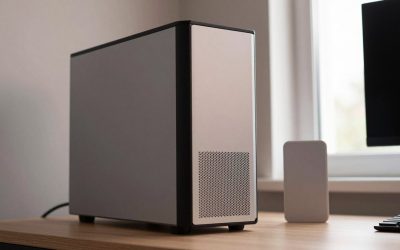
Barebones kits are the smart shopper’s loophole: you bring the CPU, RAM, and storage, and the manufacturer handles the hard part—the case, motherboard, cooling, and power supply. For most small apartments, dorms, and home offices, the problem is the same. You want desktop-class performance and upgrade flexibility, but a full tower is loud, ugly, and eats a third of your desk. A barebones kit solves it. You can spend under $500 total on a complete machine, then swap in better parts later instead of replacing the whole system.
We’ve compared and ranked the eight strongest barebones options currently priced under the $500 ceiling, from a around $170 1.92-liter mini that hides behind a monitor to a $319 gaming-capable rig with Radeon 780M graphics. Every kit below leaves the CPU/RAM/SSD decisions in your hands, so your real budget math is the kit price plus roughly $150–$250 in components for a mid-range build. Here’s how they stack up.
As an Amazon Associate we earn from qualifying purchases at no extra cost to you.




Our Top Picks


Top 3 picks at a glance
Quick Picks
| Product | Best for | Price |
|---|---|---|
| ASRock DeskMeet X300 | Best overall value desktop kit | Check on Amazon |
| ASRock DeskMini X300 2.5G | Best budget mini PC | Check on Amazon |
| ASRock DeskMeet B760 | Best for Intel upgraders | Check on Amazon |
| ASRock DeskMini B860 | Best for Core Ultra + Thunderbolt 4 | Check on Amazon |
| MINISFORUM BD775i SE | Best CPU power per dollar | Check on Amazon |
| ASRock DeskMini B760 | Best ultra-compact PCIe 5.0 storage | Check on Amazon |
| MINISFORUM UM870 Slim | Best for gaming and 8K output | Check on Amazon |
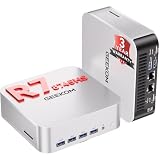
| GEEKOM A8 Max | Best polished office mini PC | Check on Amazon |
How We Compared
We focused on kits under $500 that ship as true barebones—no CPU, RAM, or storage included—so you control the component budget. We prioritized socketed platforms that accept currently available desktop CPUs, modern connectivity (2.5G LAN, USB4 or Thunderbolt, front Type-C), and chassis volumes between 1.92 and 8 liters, since anything larger defeats the purpose of going barebones. We weighed real upgrade paths: number of M.2 slots, SODIMM versus full-size DIMMs, PSU wattage headroom, and GPU expandability via PCIe x16. Prices were confirmed at the time of writing, and all specifications come from manufacturer listings—no synthetic benchmark claims, just what the hardware supports and what it costs to build on it.
The 8 Best Picks
1. ASRock DeskMeet X300 Mini PC Barebone Kit — around $200
The DeskMeet X300 is the sweet spot of this entire list: an 8-liter cube that takes a socketed AM4 Ryzen 5000/4000/3000G chip, two DDR4-3200MHz DIMMs, a full PCIe 3.0 x16 slot for a dedicated graphics card, dual M.2 slots, front USB 3.2 Gen2 Type-C, and a bundled 500W PSU. With a Ryzen 5 5600, 32GB of DDR4, and a 1TB NVMe drive, you’re at roughly $420–$460 total—and you can drop in a used GPU down the road. It’s the only cheap kit here with true discrete-GPU headroom.
- PCIe 3.0 x16 slot and 500W PSU support a dedicated graphics card
- Dual M.2 slots plus 2.5-inch drive bay for generous storage
- DDR4 and PCIe 3.0 are last-generation standards—fine, but not future-proof
Skip it if you’ll never add a GPU; a cheaper mini kit makes more sense.
2. ASRock DeskMini X300 2.5G Series — around $170
At 1.92 liters, the DeskMini X300 is barely bigger than a hardcover book, yet it accepts full AM4 Ryzen 5000/4000/3000/2000 Series APUs, DDR4 SODIMMs, and drives up to three displays simultaneously. The headline upgrade in this 2.5G Series revision is 2.5 gigabit Ethernet—genuinely useful for NAS access or gigabit-plus internet. Pair it with a Ryzen 5 5600G and 16GB of RAM and you have a silent, wall-mountable office PC for around $320 all-in.
- 1.92L chassis with triple-display output and VESA mounting options
- 2.5G LAN at the lowest price on this list (around $170)
- SODIMM memory and no discrete GPU option cap performance
Skip it if you need graphics power beyond integrated Radeon—there’s no upgrade path.
3. ASRock DeskMeet B760 Series — around $200
This is the Intel twin of the DeskMeet X300: an 8-liter barebone with an LGA1700 socket accepting 14th, 13th, and 12th Gen Core CPUs, DDR4 memory, a PCIe 4.0 x16 slot, and a 500W Bronze-rated PSU. The advantage is platform reach—a Core i5-13400 costs less than many Ryzen alternatives and destroys it in multi-threaded work. For a compact content-creation or hybrid-work build under $500 total, this is the Intel answer.
- Supports the full 14th/13th/12th Gen LGA1700 range, including 65W efficiency chips
- PCIe 4.0 x16 slot and 500W Bronze PSU allow a mid-range GPU upgrade
- DDR4-only platform, and Intel’s socket is now end-of-line
Skip it if you want a modern platform—consider its DDR5 sibling below or an AM5 route.
4. ASRock DeskMini B860 Series — around $210
The B860 DeskMini drags the 1.92L format into the modern era: Intel Core Ultra Series 2 CPUs at 65W, DDR5 SODIMMs, Thunderbolt 4, a PCIe Gen5 M.2 slot, and quad-display output—all in a chassis you can strap behind a monitor. Thunderbolt 4 alone justifies the price for anyone with a fast external SSD or a TB4 dock. A Core Ultra 5 225 plus 16GB of DDR5 lands around $450 total for a genuinely current-gen machine.
- Thunderbolt 4 and quad-display output in a 1.92L box
- PCIe Gen5 M.2 slot readies you for next-generation SSDs
- Capped at 65W CPUs and SODIMM memory—no GPU or overclocking ambitions
Skip it if Thunderbolt 4 means nothing to you; the B760 mini is $10 less.
5. MINISFORUM BD775i SE — around $300
The BD775i SE flips the script: instead of an empty kit, MINISFORUM solder-sets a Ryzen 7 7745HX—an 8-core, 16-thread mobile chip—onto the board. That’s desktop-class multi-thread muscle with Radeon 610M integrated graphics, fed by two DDR5 SODIMM slots, with HDMI, DisplayPort, and USB-C triple video output and 2.5G RJ45 networking. For video encoding, code compilation, or a homelab node, nothing else near $300 touches its CPU throughput.
- Ryzen 7 7745HX delivers 8C/16T performance rare at this price
- Dual DDR5 SODIMM slots and 2.5G LAN for a capable compact workstation
- Radeon 610M graphics are the weakest here—gaming is essentially off the table
Skip it if GPU power matters at all; the UM870 below is the better gamer.
6. ASRock DeskMini B760 Series — around $200
Don’t confuse this with the 8-liter DeskMeet: this B760 DeskMini is a 1.92L ultra-compact Intel kit for 14th/13th/12th Gen processors with DDR4-3200 support. Its standout spec is a Blazing M.2 slot running PCIe 5.0—exceptional in a chassis this small—plus USB 3.2 Gen2x2 Type-C at 20Gbps and DisplayPort, HDMI, and legacy VGA outputs. If you’re repurposing an older monitor and want screaming SSD speeds in a tiny Intel box, this is your pick.
- PCIe 5.0 M.2 slot is rare in any sub-$200 kit, let alone a 1.92L one
- 20Gbps USB-C plus DP/HDMI/VGA covers every display situation
- DDR4 memory and VGA feel dated for a current-gen platform
Skip it if you want DDR5 and Thunderbolt—the B860 DeskMini covers that for $10 more.
7. MINISFORUM UM870 Slim — around $320
The UM870 Slim is the gaming pick. Its Ryzen 7 8745H (8 cores, 16 threads) pairs with Radeon 780M graphics, which handle esports titles and older AAA games at 1080p with reasonable settings—no discrete GPU needed. You get HDMI and DP plus USB4 with 8K@60Hz output, one 2.5G RJ45 port, four USB ports, and dual-band Wi-Fi. Bring your own RAM and SSD (barebone, no OS), and a complete build runs roughly $440–$470.
- Radeon 780M is the best integrated graphics on this list for 1080p gaming
- USB4 with 8K@60Hz output and quad USB ports for a full desk setup
- No OS included, and 780M gaming still demands lowered settings
Skip it if you never game—the cheaper ASRock kits handle office work identically.
8. GEEKOM A8 Max — around $340
The A8 Max is the polished, no-drama option: a Ryzen 7 8745HS mini PC aimed squarely at office and productivity duty, with GEEKOM’s typical tight fit, finish, and warranty support. Performance per dollar trails the UM870, but you’re paying for refinement—quiet thermals, consistent build quality, and a system that behaves like a corporate mini PC you can deploy without fiddling. For a home office that runs all day, every day, polish counts.
- 8745HS comfortably beats the older 7735HS for snappy multitasking
- Refined, quiet, office-friendly design with strong brand support
- Highest price here at around $340, and it’s not the gaming value pick
Skip it if you’re comfortable assembling around a cheaper kit—the UM870 offers more for less.
Buying Guide
Match the Kit to Your Total Budget, Not Just Sticker Price
The kit is half the equation. A around $170 DeskMini plus a Ryzen 5 5600G (~$120), 16GB DDR4 (~$35), and a 500GB NVMe (~$40) totals about $365. The $319 UM870 plus 32GB DDR5 (~$70) and a 1TB NVMe (~$60) lands near $450. Decide your all-in ceiling first, then work backward. Budget $150–$250 in components for any kit on this list, and remember none include Windows—add $0 if you reuse a license or run Linux.
Socketed CPU vs. Soldered: The Upgrade Question
The ASRock kits (X300, B760, B860 lines) use real CPU sockets, so a CPU bought today can be swapped for a faster one later. The MINISFORUM BD775i SE and most complete mini PCs solder the processor down—your upgrade path is RAM and storage only. Socketed kits also demand more of you: installing a CPU and cooler takes 20 careful minutes. If you want a genuinely upgradeable machine over years, socketed wins; if you’ll never open it again, soldered is simpler and often better-cooled.
Size, Thermals, and What You Give Up
An 8-liter DeskMeet accepts a discrete GPU and a 500W PSU but needs a visible spot on or under the desk. A 1.92L DeskMini vanishes behind a monitor via VESA mount but caps you at integrated graphics and SODIMM memory. Check listed TDP support before buying: mini kits generally top out at 65W-class CPUs, while the DeskMeet’s cooler handles more. For gaming, prioritize the 780M graphics in the UM870 or a GPU slot; for silent office work, any 1.92L kit is effectively inaudible.
Our Verdict
For most buyers, the ASRock DeskMeet X300 at around $200 is the best barebones PC kit under $500. It’s the only affordable kit with a discrete GPU slot and a 500W PSU, making it a genuine long-term platform rather than an appliance. If desk space rules everything, the DeskMini X300 2.5G at around $170 is the value pick, and the DeskMini B860 at around $210 is the modern-standard pick with DDR5 and Thunderbolt 4. Gamers should spend up for the MINISFORUM UM870 at $319—Radeon 780M graphics make it the only sub-$500 all-in here that plays. Whatever you choose, price your CPU, RAM, and SSD before you click buy: the kit is the down payment, not the total.
FAQ
What else do I need to buy with a barebones kit?
A CPU, RAM, and an M.2 SSD at minimum—and most kits don’t include an operating system. Budget roughly $150–$250 for mid-range components: for example, a Ryzen 5 5600 (~$120), 16GB DDR4 (~$35), and a 500GB NVMe SSD (~$40). Check whether your kit needs SODIMM (mini) or full-size DIMM (DeskMeet) memory before ordering.
Are barebones kits cheaper than prebuilt mini PCs?
Usually yes, if you already own a Windows license or plan to run Linux, and if you shop component sales. A complete DeskMini X300 build lands around $320–$370, versus $400+ for a comparable prebuilt. The bigger benefit is control: you pick the exact CPU, memory speed, and SSD, and can upgrade each later.
Can a sub-$500 barebones build game?
Yes, within limits. The MINISFORUM UM870’s Radeon 780M handles esports titles and older AAA games at 1080p with reduced settings. The DeskMeet X300 or B760 can take a discrete graphics card thanks to their PCIe x16 slots and 500W PSUs—though the GPU itself will likely exceed your $500 ceiling unless you buy used.
How hard is assembly, and is it worth it going into 2026?
Mini kits are beginner-friendly: the CPU and cooler are the only delicate steps, typically 30–60 minutes total with a screwdriver. The DeskMeet’s 8-liter chassis is similarly approachable. And yes—it remains worth it in 2026, because socketed kits like the AM4 and LGA1700 platforms let you drop in a faster CPU years from now instead of replacing the whole machine.
Related guides
- Best Gaming PC for Fortnite: Eight Prebuilt Desktops Sorted by Refresh Rate Goal (2026)
- Best RX 9070 XT Prebuilt Gaming PCs: Seven Desktops and Three Cards Compared: 10 Compared (2026)
- CyberPowerPC vs iBUYPOWER Gaming PC: How the Two Brands Compare
- Best RX 9070 XT Prebuilt Gaming PC (2026): 5 Picks Compared