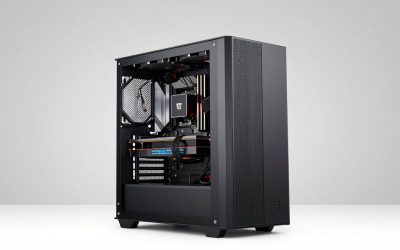
Small-form-factor (SFF) gaming PCs pack real performance into a tiny footprint, but they are also where the prebuilt-versus-custom decision gets most interesting. Compact systems have far less margin for error on cooling, power, and part compatibility, and the trade-offs between buying and building shift compared to a normal mid-tower. This guide compares both for anyone who wants a powerful PC that hides on a desk or slips into a media cabinet.
As an Amazon Associate we earn from qualifying purchases at no extra cost to you.


Our Top Picks


Top 3 picks at a glance
Why SFF Changes the Calculation
In a small case, every component interacts with the others. Thermals are tighter, power supplies are the smaller and pricier SFX format, and clearances for the CPU cooler and GPU are unforgiving. That reality is why some SFF prebuilts rely on proprietary parts to make everything fit — which can be a convenience up front but a headache later.
| Factor | SFF Prebuilt | SFF Custom Build |
|---|---|---|
| Fit and compatibility | Guaranteed to work as sold | You must plan clearances carefully |
| Proprietary parts | Common; limits upgrades | None; standard components |
| Thermals | Varies; some run hot/loud | Tunable with cooler and fan choice |
| Build difficulty | None | Harder than a full tower |
| Cost | Can be a premium | Better value, but SFX PSU costs more |
The Case for an SFF Prebuilt
SFF prebuilts remove the hardest part of small builds: making everything fit and cool well. A reputable compact prebuilt arrives tested, with cooling validated for the parts inside, and one warranty. For a media-cabinet or living-room machine you never plan to open, that convenience is compelling. The catch is proprietary motherboards, coolers, or power supplies that can make even a simple GPU or PSU upgrade impossible. Before buying, confirm it uses standard ITX components if you ever want to upgrade.
Watch the Thermals
Because small cases trap heat, a poorly designed SFF prebuilt can run hot and loud under gaming load. Look for reviews or specs indicating adequate cooling for the GPU and CPU inside, and be wary of the cheapest compact prebuilts that pair strong parts with minimal airflow.
The Case for an SFF Custom Build
Building your own ITX system gives you total control over the two things that make or break SFF: cooling and part selection. You can choose a case with the airflow you want, a low-profile or compact cooler sized to fit, a quality SFX power supply, and standard parts you can upgrade later. The trade-offs are a harder build — cable management and clearances are genuinely fiddly in a small case — and the higher cost of SFX PSUs and premium ITX cases, which narrows the usual custom-build value advantage.
Plan Every Clearance
An SFF custom build lives or dies on measurements: GPU length, CPU cooler height, radiator support, and PSU length must all be checked against the case spec before you buy anything. Get those right and a custom ITX machine can match a much larger PC’s performance in a fraction of the space; get them wrong and parts simply will not fit.
FAQ
Is a small-form-factor prebuilt or custom build better?
A prebuilt is better if you want guaranteed fit, validated cooling, and zero assembly and do not plan to upgrade — just confirm it uses standard ITX parts. A custom build is better if you want full control over cooling and components and the ability to upgrade later, provided you carefully verify every clearance first.
Do SFF prebuilts use proprietary parts?
Many do, especially the most compact models, using custom motherboards, coolers, or power supplies to fit everything. That can block future upgrades, so if upgradability matters to you, confirm the system uses standard ITX components and a standard SFX or ATX power supply before buying.
Bottom Line
For a small-form-factor gaming PC, a prebuilt trades upgradability for guaranteed fit and validated cooling, which suits a set-and-forget compact machine — as long as it uses standard parts. A custom ITX build offers full control over thermals and components and future upgrades, but demands careful clearance planning and costs more per part than a normal tower. Match the choice to whether you value convenience or control, and verify cooling either way.