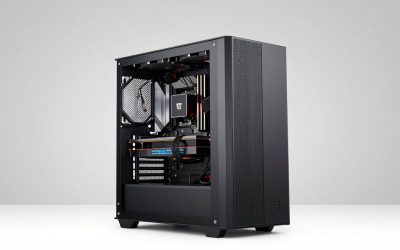
Rainbow Six Siege is a tactical shooter where destructible walls, precise gunplay and high frame rates decide rounds. Like other esports titles it runs on modest hardware, so a build aimed at competitive play prioritises a fast CPU and high refresh over an expensive graphics card, feeding a 240Hz or 360Hz monitor with stable frames.
As an Amazon Associate we earn from qualifying purchases at no extra cost to you.


Our Top Picks
 CORSAIR Vengeance RGB DDR5 RAM 32GB32GB (2 x 16GB)5.43 x 0.27 x 1.77 inches0.11 poundsCheck on Amazon
 CORSAIR Vengeance LPX DDR4 RAM 32GB2 count (pack of 1)5.32 x 0.28 x 1.32 inches0 poundsCheck on Amazon
 CORSAIR Vengeance RGB RS DDR5 32GB32GB (2 x 16GB)5.43 x 0.28 x 1.73 Inches0.11 PoundsCheck on Amazon

Top 3 picks at a glance
Why Siege favours CPU and refresh
The game is well optimised and light to render at competitive settings, which means frame rate is largely CPU-determined once you chase very high numbers. To hold 240 to 360fps for a high-refresh monitor you want a modern high-clock processor and fast RAM rather than a flagship GPU.
Destruction and gadget-heavy moments are the busiest, but a 60 or 70-class card covers 1080p or 1440p at high frame rates easily. The money is better spent on the CPU, memory and a genuine high-refresh display that turns those frames into an edge.
Recommended build tiers
Spend on a fast CPU, quick RAM and a high-refresh monitor, and keep the GPU mid-range. Siege does not need graphics muscle to compete.
| Budget band | CPU | GPU | RAM | Target performance |
|---|---|---|---|---|
| $850-1,050 | Modern 6-core | Current 60-class, 8GB | 16GB DDR5-6000 | 1080p 240fps+ competitive settings |
| $1,200-1,450 | Modern 8-core | Current 60/70-class | 32GB DDR5-6000 | 1080p 360fps or 1440p 240fps |
| $1,700+ | High-end 8-core | Current 70-class | 32GB DDR5-6400 | 1440p high refresh for serious play |
1080p 240Hz rig
A modern 6-core, 16GB of DDR5 and a 60-class card clear 240fps at competitive settings. At $850 to $1,050 it is a strong esports value machine, paired with a 240Hz monitor for ranked play.
360Hz rig
A modern 8-core with 32GB of fast RAM sustains 360fps even in destruction-heavy rounds. The GPU stays mid-range because the processor sets the ceiling in this lightweight game.
1440p competitive rig
A high-end 8-core and a 70-class GPU push high frame rates at 1440p for players who want more clarity without giving up refresh. Best paired with a high-refresh 1440p panel.
Where to spend and where to save
Spend on a fast CPU, quick RAM and a high-refresh monitor, because Siege is CPU-limited when chasing very high frame rates and the display is what turns them into an edge. Those parts produce and show the stable frames that decide precise, destruction-driven gunfights.
Save on the GPU, since a 60 or 70-class card covers competitive settings at high frame rates even at 1440p. A flagship graphics card is wasted on this lightweight game, so redirect that budget to the processor, memory and the best high-refresh panel you can fit in.
Tuning for the ranked ladder
Run competitive settings, uncap frame rate and enable a low-latency driver mode; steady frametimes and low input lag matter more than peak averages in a precise tactical shooter. Consistency during destruction is the real test.
Keep RAM at rated speed for a CPU-bound boost, close background apps, and match any frame cap to just under your monitor’s refresh. The high-refresh monitor itself is the upgrade that makes all those frames count on defence and attack.
Frequently asked questions
Does Rainbow Six Siege need a strong GPU?
No. A current 60 or 70-class card handles competitive settings at high frame rates. Siege is CPU-limited when chasing very high frames, so invest in the processor, fast RAM and a high-refresh monitor.
What frame rate should I target in Siege?
Match your monitor: 240fps for a 240Hz panel, 360fps for a 360Hz panel. Focus on stable frametimes during destruction-heavy moments rather than only peak numbers in quiet rounds.
Is a 360Hz monitor overkill for Siege?
For serious competitive play it is not, provided your CPU can sustain frames near that refresh. Siege is CPU-limited, so a fast processor plus a high-refresh panel delivers the low-latency feel a big GPU alone cannot.
Bottom line
For competitive Rainbow Six Siege, build like an esports player: a fast modern CPU, rated-speed DDR5, a mid-range GPU and a true high-refresh monitor. That machine delivers the hundreds of stable, low-latency frames that win gunfights, without spending on graphics power a lightweight tactical shooter never needs.