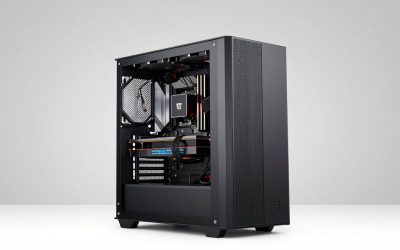
Factorio and games like it are a completely different kind of test: they barely stress a graphics card, but a sprawling megabase can bring even a strong CPU to its knees as it simulates thousands of belts, inserters and machines every tick. The build that keeps your factory running at full speed is all about the processor, cache and memory bandwidth.
As an Amazon Associate we earn from qualifying purchases at no extra cost to you.



Our Top Picks
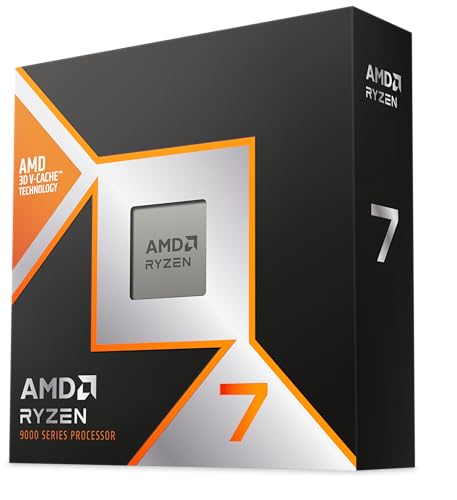


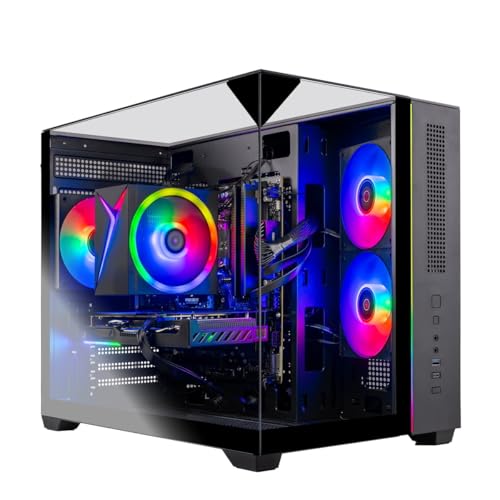
Top 3 picks at a glance
Why simulation games punish the CPU, not the GPU
Factorio’s update rate, measured in UPS, depends on how fast a single core can crunch the entire factory simulation each tick. Once your base grows huge, UPS drops and the whole game slows down, and no graphics card can fix that. This is a single-thread and memory-bandwidth problem.
A modern CPU with strong per-core performance and a large cache is the single most important part. Fast DDR5 helps because the simulation is memory-bandwidth sensitive, and 32GB gives headroom for enormous saves and mods. The GPU can be entry-level.
Recommended build tiers
Spend on the CPU, cache and fast RAM. A cheap graphics card is genuinely fine for these games.
| Budget band | CPU | GPU | RAM | Target performance |
|---|---|---|---|---|
| $700-900 | Modern 6-core, high clock | Entry/60-class | 16GB DDR5-6000 | Small to mid bases at full UPS |
| $1,000-1,300 | Modern 8-core, large cache | Current 60-class | 32GB DDR5-6000 | Large bases holding 60 UPS |
| $1,600+ | High-end large-cache 8-core | Current 60/70-class | 32-64GB DDR5-6000 | Megabases and heavy mods at 60 UPS |
Starter factory rig
A modern high-clock 6-core, 16GB of DDR5 and an entry GPU run early and mid-size bases at a full 60 UPS. At $700 to $900 it is the sensible starting point, and you can upgrade the CPU later.
Large-base rig
A modern 8-core with a large cache and 32GB of fast RAM holds 60 UPS well into large factories. Cache size matters a lot here, so favour CPUs known for gaming and simulation strength.
Megabase rig
For thousand-hour megabases and heavy overhaul mods, a high-end large-cache CPU with 32 to 64GB of DDR5 keeps UPS up. The GPU still only needs to be mid-range because rendering is trivial.
Where to spend and where to save
Spend on the fastest per-core, large-cache CPU you can afford and on quick DDR5, because a megabase’s UPS lives and dies by single-thread speed and memory bandwidth. This is the rare build where the processor and RAM deserve the lion’s share of the budget instead of the graphics card.
Save dramatically on the GPU, since rendering a factory is trivial and an entry or 60-class card is more than enough even for enormous bases. Money that would have gone to a big graphics card is far better spent on a stronger CPU, faster memory and an SSD for quick loads of gigantic save files.
Keeping UPS high
If your factory slows, check UPS rather than FPS; they are different numbers, and a low UPS means the simulation itself cannot keep up. The fix is a faster single-core CPU and quicker memory, not a new graphics card.
Run RAM at rated speed for a measurable simulation boost, keep saves on an SSD for faster loads, and prefer a large-cache CPU. These same principles apply to other heavy sims like Dyson Sphere Program and large modded colony builders.
Frequently asked questions
Does Factorio need a good graphics card?
No. Factorio is almost entirely CPU-bound. An entry or 60-class GPU is plenty; your processor’s per-core speed and cache decide how large a base you can run at full UPS.
Why does my megabase slow down even at low graphics?
Because it is UPS-limited: one CPU core cannot simulate the whole factory fast enough per tick. A faster large-cache CPU and quicker RAM are the only real fixes.
Does a bigger graphics card raise Factorio UPS?
No. UPS is set by how fast one CPU core can simulate the factory each tick, so it is a processor and memory-bandwidth problem. A faster large-cache CPU and quicker RAM are the only parts that raise it.
Bottom line
For Factorio and large-base simulation games, ignore the usual GPU-first advice: buy the fastest per-core, large-cache CPU you can, pair it with rated-speed DDR5 and 32GB or more, and keep the graphics card modest. That machine holds a full 60 UPS deep into megabase territory where a GPU-heavy build would stall.