An RV is a home that moves, and that breaks most of the assumptions behind ordinary security cameras. There is no permanent Wi-Fi, no wall to drill, the power budget is a battery bank or a pedestal that is not always there, and the neighbors change every few nights. The questions that matter are therefore practical: how does the camera get online, how does it stay charged, how does it mount without damaging the body, and what happens when you leave it parked at a campsite for the day?
This guide is for full-timers, weekend campers and seasonal parkers who want to watch the door, the awning area, the bikes on the rack or a pet left inside. Two items in the original list are backup-camera monitors for driving, not security cameras, so they are left out and six remain. Their strengths differ more than their headline resolution, which is 2K on nearly every listing. They split into solar wire-free cameras, window cameras that stick to glass, a battery camera with a spotlight, and one cellular unit for places with no Wi-Fi. As of 2026 the useful comparison points are connectivity, power and mounting.
Our Top Picks


Top 3 picks at a glance
Quick Picks
As an Amazon Associate we earn from qualifying purchases at no extra cost to you.



| Product | Best for | Key spec from the title |
|---|---|---|
| 2K Solar Wireless Camera System | Wire-free outdoor coverage | 2K, solar, dual-band Wi-Fi, AI detection |
| 2K No-Drill Window Camera (2-Pack) | Watching out through windows | Magnetic, stick-on glass, 5G and 2.4G Wi-Fi |
| 2K No-Drill Window Camera (4-Pack) | Covering every window | Four cameras, full color night |
| CINMOORE Solar Camera | Flexible mounting | Magnetic folding mount, AI human and vehicle detection |
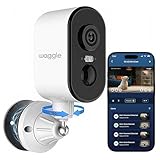
| Waggle 4G LTE Camera | Sites with no Wi-Fi, pets | 4G LTE, 2K HD, 300-degree pan, 9000mAh battery |
| 2K Battery Spotlight Camera | Outdoor and indoor coverage | Battery powered, AI motion detection, spotlight |
How to Choose
Connectivity: Wi-Fi, hotspot or cellular
Wi-Fi cameras need a network. On the road that means a mobile hotspot, a travel router or the campground Wi-Fi, which is often weak and shared. A camera like the Waggle 4G unit brings its own cellular connection, so it works where a router does not, though it needs a data plan and a cell signal. If you stay mostly at full-hookup parks with decent Wi-Fi, a standard camera on a travel router is the cheaper route. A hotspot with its own data plan also serves cameras, laptops and phones at the same time.
Power in a vehicle that moves
Solar and battery cameras avoid running cables through slides and compartments. A panel needs direct sun, and an RV parked under trees or backed against a wall will not recharge it. A larger battery, such as the 9000mAh figure in the Waggle listing, lasts longer between charges, but you will still want a routine for topping up. Pick a day each week to check battery levels and wipe dust off solar panels. Avoid hardwired cameras that need dedicated 12-volt wiring unless you plan a proper install.
Mounting without drilling
Magnetic mounts work on steel panels but not on fiberglass or aluminum, which many RVs use. Stick-on window cameras attach to glass and look outward, which suits an RV with large windows, though glare and tint affect the picture. A folding or pivot mount adds aim flexibility. Before you attach anything, think about vibration on the highway: remove the cameras before driving or confirm that the mount is secure. Try the adhesive on a small hidden spot first, since some paints and decals do not release cleanly later.
Detection, night vision and privacy
AI human and vehicle detection, as listed on several titles, reduces alerts from wind, leaves and passing campers. Color night vision helps identify people, and a spotlight or siren can scare off a would-be thief. At a campsite, the most common loss is gear left outside, such as bikes, coolers, grills and chairs, so aim at that zone first. Keep cameras aimed at your own site and equipment, check campground rules and local recording laws, and avoid pointing lenses at neighboring campsites, restrooms or other private spaces.
The 6 Best Options
2K Solar Wireless Camera System
This system lists 2K video, dual-band Wi-Fi, solar power, wire-free installation, AI detection, two-way audio and mobile alerts. It suits an RV owner who wants outdoor cameras with no cables running into the coach, perhaps watching the entry door and the storage bays from the awning side while the family is at the lake or in town for the afternoon.
- Solar charging reduces the number of times you climb up to recharge a battery.
- AI detection cuts false alerts from campground foot traffic and passing bikes.
- Trade-off: it relies on Wi-Fi, so you need a router or hotspot to bring it online at every stop.
Skip it if you camp in deep shade or at remote sites with no network at all, because the panel and the connection would both struggle.
2K No-Drill Window Camera (2-Pack)
A pair of 2K window cameras that stick to glass at an angle, with magnetic features, dual-band Wi-Fi and color night vision. They suit an RV owner who wants to watch the outside from inside the coach without drilling into anything, a real benefit for leased rigs, rentals and anyone who worries about resale value.
- No-drill mounting protects the body and the roof seals from new holes.
- Indoor placement keeps the electronics out of rain, dust and road spray.
- Trade-off: shooting through a window can cause reflections, particularly at night with interior lights on.
Skip it if you want to monitor the bikes, hitch or storage area outside the coach, where no window gives a view.
2K No-Drill Window Camera (4-Pack)
This is the same style of window camera sold as a set of four. With one camera per window, you can cover the door, the kitchen side, the bedroom and the cab area at once, which suits a large motorhome or fifth wheel with windows on every side.
- Four views cover almost every angle around a motorhome or travel trailer.
- The same no-drill, stick-on setup applies to each camera, so installation is repetitive but simple.
- Trade-off: four cameras mean more Wi-Fi traffic, more power points and more app notifications to manage.
Skip it if your RV has only a couple of useful windows or you would rather start with a smaller kit.
CINMOORE Solar Camera
The CINMOORE lists dual-band Wi-Fi, a magnetic folding mount, solar power, AI human and vehicle detection and full color night vision. The folding mount makes it quick to aim at the awning area, the hitch or the rear door, and just as quick to take down before you break camp and head to the next stop.
- A folding magnetic mount can be repositioned in seconds without tools.
- Human and vehicle detection filters out most background motion from trees and wind.
- Trade-off: a magnetic base needs a steel surface, so check the panel material before relying on it.
Skip it if your RV has mostly fiberglass or aluminum sides and no steel place to hold the magnet.
Waggle 4G LTE Camera
The Waggle is billed as a 4G LTE cellular camera for RV pet monitoring with no Wi-Fi needed, 2K HD video, a 300-degree pan, a 9000mAh battery, night vision and two-way audio. It addresses the hardest RV problem, which is staying connected at remote sites where no campground Wi-Fi exists or the signal is poor.
- Cellular connectivity works away from campground Wi-Fi and without a hotspot.
- The large battery and wide pan range suit checking on a pet or the cabin interior.
- Trade-off: cellular plans add a recurring cost and depend on local signal strength.
Skip it if you always stay at parks with reliable Wi-Fi, since you would pay for a connection you rarely need.
2K Battery Spotlight Camera
This battery-powered camera lists 2K video, AI motion detection, color night vision, two-way talk and a spotlight, for outdoor and indoor use. It is a simple choice for a camper who wants one flexible camera on a bumper, tongue or picnic-table side, moved between spots as the camp setup changes from stay to stay.
- Battery power means no wiring through the body or the compartments.
- A spotlight adds a visible deterrent, and two-way talk lets you speak to a visitor.
- Trade-off: the title mentions no solar charging, so recharging is a manual task.
Skip it if you want a solar or cellular design that stays up for long stretches without attention. Buyers who prefer a bare-bones setup with few moving parts may still find it the easiest to live with.
Which One Fits Your Situation
Full-timer at remote sites
The Waggle 4G LTE Camera brings its own connection, which is the key feature when campground Wi-Fi is unreliable. Add a plan that fits your travel area and keep the battery topped up between moves.
Weekend camper with a trailer
The CINMOORE Solar Camera mounts and moves fast, keeping setup quick for short stays. Park in the sun when you can, and fold the mount flat for travel days.
You hate drilling holes
The 2K No-Drill Window Camera (2-Pack) attaches to glass and leaves the exterior untouched. Clean the glass first and avoid tinted panes that can dim the view.
Large motorhome with many windows
The 2K No-Drill Window Camera (4-Pack) provides one view per window, so no side of the coach is left unwatched. Plan a router or hotspot strong enough for four streams. That is also the setup to pick if you park for months and want continuous coverage.
Common Mistakes
- Buying a Wi-Fi camera without a plan for getting online at remote sites, then discovering the campground network blocks or throttles streaming.
- Expecting solar charging in a shaded campsite, where a panel may barely register a trickle.
- Using a magnetic mount on fiberglass or aluminum, where it will simply not hold.
- Leaving cameras mounted outside while driving, which invites vibration damage, wind loss and cracked mounts.
- Aiming at neighboring campsites instead of your own.
Related guides
- How To Check Gpu Compatibility With Your Motherboard And Cpu
- High-Performance Gaming Desktop Specifications
- How To Plan An Upgradeable Mid Range Gaming Pc
Frequently Asked Questions
Do RV security cameras need Wi-Fi?
Most do. A cellular model like the Waggle works without it, but needs a data plan. Everything else on this list needs a router, hotspot or campground network to send alerts to your phone.
Can I leave cameras on while driving?
It is safer to remove external cameras before driving, and secure any indoor ones so they do not shake loose. Store removed cameras in a padded bin and keep the solar panels clean.
Are window cameras good enough?
They keep the electronics inside and see outward, which suits stays where rain or theft of exterior gear is a worry. Glare from interior lights can hurt night images, so switch lights off or angle the lens.
Is it legal to record at a campground?
Rules differ by park and region. Check campground policies and local recording laws, keep the view on your own site and let guests know when a camera is running.