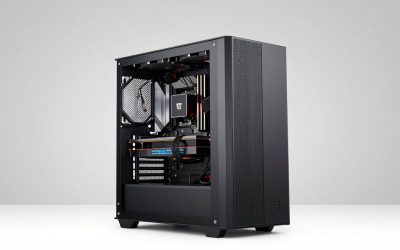
Dragon’s Dogma 2 is an action RPG whose towns are famously heavy on the CPU because of the large number of individually simulated NPCs. Out in the field it behaves like a normal GPU-bound game, but the cities are the real test, so the build centres on a strong processor and enough memory to keep those crowded settlements smooth.
As an Amazon Associate we earn from qualifying purchases at no extra cost to you.


Our Top Picks
 CORSAIR Vengeance RGB DDR5 RAM 32GB32GB (2 x 16GB)5.43 x 0.27 x 1.77 inches0.11 poundsCheck on Amazon
 CORSAIR Vengeance RGB RS DDR5 32GB32GB (2 x 16GB)5.43 x 0.28 x 1.73 Inches0.11 PoundsCheck on Amazon


Top 3 picks at a glance
Why the cities are a CPU bottleneck
Dragon’s Dogma 2 simulates each NPC in its towns as an individual, and with many of them active at once the CPU becomes the limiting factor, causing frame-rate dips in cities even on powerful graphics cards. In the wilderness the load shifts back to the GPU and frame rates recover, which is a clear sign of the CPU bottleneck in town.
A modern high-clock 8-core CPU is the most important part for holding frames in the cities, backed by 32GB of RAM. A 70-class GPU with 12GB of VRAM covers 1440p in the field, and quality upscaling helps everywhere.
Recommended build tiers
Prioritise a strong CPU and 32GB of RAM for the towns, then a GPU sized to your resolution for the field.
| Budget band | CPU | GPU | RAM | Target performance |
|---|---|---|---|---|
| $1,200-1,450 | Modern 8-core | Current 60/70-class, 12GB | 16GB DDR5-6000 | 1080p high with upscaling, steadier towns |
| $1,650-1,950 | Modern high-clock 8-core | Current 70-class, 12GB | 32GB DDR5-6000 | 1440p high with upscaling |
| $2,400+ | High-end high-clock 8-core | Current 80-class, 16GB | 32GB DDR5-6000 | 4K high with upscaling, best town frames |
1080p Arisen rig
A modern 8-core and a 60 or 70-class 12GB card run the game at 1080p high settings with upscaling, and the strong CPU is what steadies the crowded towns. At $1,200 to $1,450 it targets the game’s real bottleneck.
1440p RPG rig
A modern high-clock 8-core, a 70-class 12GB GPU and 32GB of RAM deliver smooth 1440p with upscaling. The high-clock processor is specifically chosen to help the CPU-heavy cities.
4K rig
A high-end high-clock 8-core with an 80-class 16GB card pushes 4K high settings with upscaling. Even at 4K the towns lean on the CPU, so the processor remains the key part for stable frames there.
Where to spend and where to save
Spend on a modern high-clock 8-core CPU and 32GB of RAM, because the game’s towns simulate each NPC individually and are firmly CPU-limited. A fast processor is the single most impactful purchase for holding frame rate in the crowded cities.
Save on the GPU by sizing it to your resolution and using quality upscaling, since in the field the game behaves like a normal GPU-bound title and frame rates recover. Money spent on a flagship card will not fix the CPU-bound towns, so prioritise the processor instead.
Getting the towns to behave
Because the cities are CPU-limited, lowering graphics settings barely helps there; a faster high-clock processor and rated-speed RAM are the real fixes. In the field, normal GPU-side tuning applies and frame rates are naturally higher.
Enable the built-in upscaler in quality mode for a frame-rate boost everywhere, keep the game on an SSD, and give it 32GB of RAM. Prioritise single-thread CPU performance since the NPC simulation leans on fast cores.
Frequently asked questions
Why does Dragon’s Dogma 2 run worse in cities?
Its towns simulate many NPCs individually, which is CPU-limited. Frame rate dips in cities even on strong graphics cards, then recovers in the field where the load shifts back to the GPU.
What CPU is best for Dragon’s Dogma 2?
A modern high-clock 8-core with strong single-thread performance, since the town NPC simulation leans on fast cores. That is the most impactful part for holding frame rate in the crowded cities.
Will a better graphics card fix Dragon’s Dogma 2 town stutter?
No. The towns are CPU-limited by their individual NPC simulation, so a faster high-clock processor and rated-speed RAM are the fix. A bigger GPU mainly helps in the field, where frame rates are already higher.
Bottom line
For Dragon’s Dogma 2, target the town bottleneck: a modern high-clock 8-core CPU, 32GB of DDR5, a 70-class or better GPU for the field and quality upscaling throughout. That machine keeps the CPU-heavy cities as smooth as possible, which is exactly where a GPU-first build falls short in this game.